How To Reduce Redness On Face: Simple Daily Care Guide
Wondering how to reduce redness on face without another product making the stinging worse? Start with the symptoms, the products you already use, and whether you need medical advice. A flushed face after exercise differs from a rash that keeps spreading. Neither a photograph nor a skincare label can settle the diagnosis.
Gentle care can make some irritated skin feel more comfortable, but the cause determines the next step. Rosacea, product reactions, and other skin conditions can overlap in appearance. Adding several calming serums makes that picture harder to untangle. A simpler routine gives you fewer products to assess.
Below, you will find basic cleansing, moisturizing, and sun-protection steps, plus guidance on testing products and recording possible triggers. Recovery has no universal seven-day deadline. The aim is to avoid further irritation while recognizing when professional care matters.
When Facial Redness Needs Medical Attention
Check for concerning symptoms before changing your skincare. A routine adjustment cannot address every rash or reaction.
Get Emergency Help For A Severe Reaction
Call your local emergency number for sudden lip, mouth, tongue, or throat swelling, breathing difficulty, or trouble swallowing. These can indicate a severe allergic reaction. Do not wait for a cleanser or cream to help.
Arrange Assessment For Persistent Or Worsening Symptoms
Seek medical advice when redness persists, repeatedly returns, or worsens despite stopping a suspected irritating product. Tell the clinician about eye symptoms, painful bumps, swelling, or spreading changes. Avoid using a two-week diary as a reason to postpone care.
Bring your product list and photographs showing how the appearance changes. Include prescription treatments, recent procedures, and when symptoms began. Those details help a clinician distinguish possible causes without relying on the color alone.
Look For Clues Without Diagnosing Yourself
Different patterns can help you explain the problem at an appointment. They do not establish whether you have rosacea, irritation, or an allergy.
Temporary Flushing
Heat, exercise, hot drinks, or emotional stress can coincide with flushing. Note whether it settles after cooling down and whether other symptoms remain. Repeated flushing deserves discussion if it concerns you or affects daily life.
A Reaction After Skincare
Stop using a non-prescription product that causes a reaction. If it remains on the skin, wash it off gently. Do not deliberately reapply a suspected product to prove that it caused the problem. Ask your prescriber about reactions to prescribed treatments.
Irritation and allergy can look similar, so timing alone cannot identify the mechanism or responsible ingredient. Save the packaging and ingredient list. Seek advice about a significant reaction before trying related products.
Possible Rosacea Or Another Skin Condition
The AAD’s rosacea guidance describes central facial redness, flushing, sensitivity, visible vessels, and acne-like bumps. Other conditions can share these features. Dermatologist Lycia Thornburg emphasizes that assessment must consider whether the condition is rosacea at all.
The rosacea-specific suggestions below are options to discuss if that diagnosis applies. They should not turn every red cheek into a rosacea diagnosis. Dryness, sun exposure, and reactions to products may require a different approach.
How To Reduce Redness On Face With Gentle Care
For mild symptoms without concerning signs, familiar basic products may reduce unnecessary exposure to irritants. Keep any clinician-directed routine in place unless your clinician advises a change.
Step 1: Cleanse Without Scrubbing
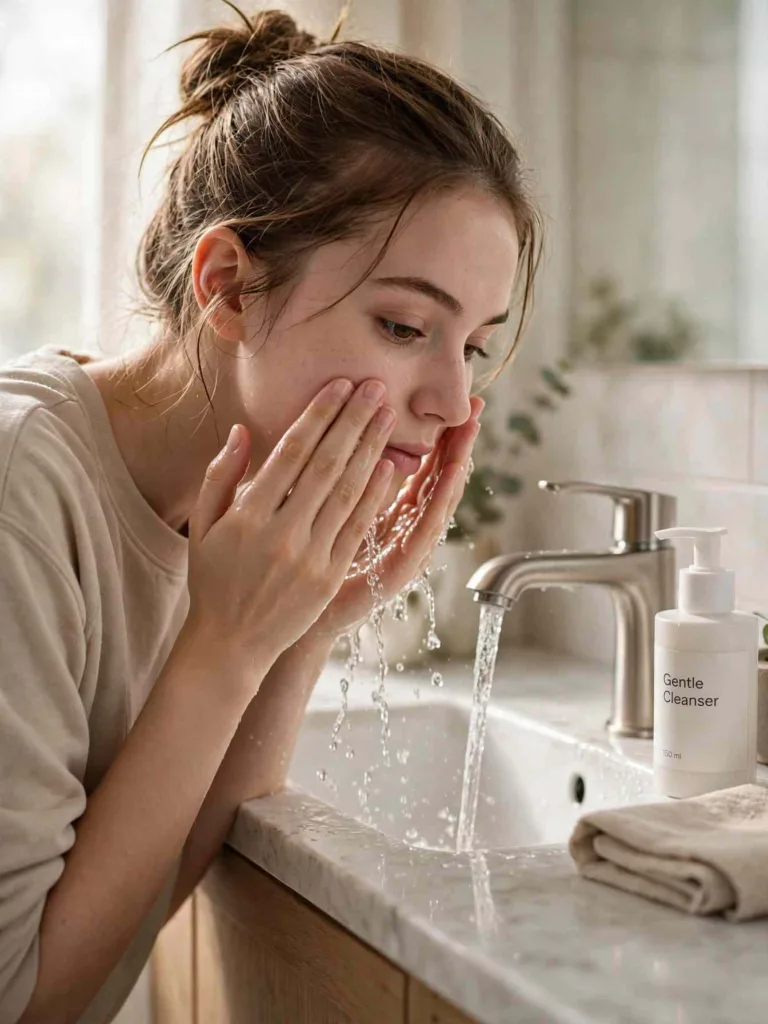
Use a mild cleanser you already tolerate, with lukewarm water and your fingertips. Avoid scrub particles, cleansing brushes, and vigorous rubbing while skin feels irritated. Rinse thoroughly and pat dry with a clean towel. There is no universal one-minute contact limit for every cleanser.
For rosacea, the AAD recommends gentle cleansing up to twice daily. Adjust around your clinician’s advice and how your skin responds. Our face-washing guide explains basic technique without adding exfoliation.
Step 2: Use A Tolerated Moisturizer
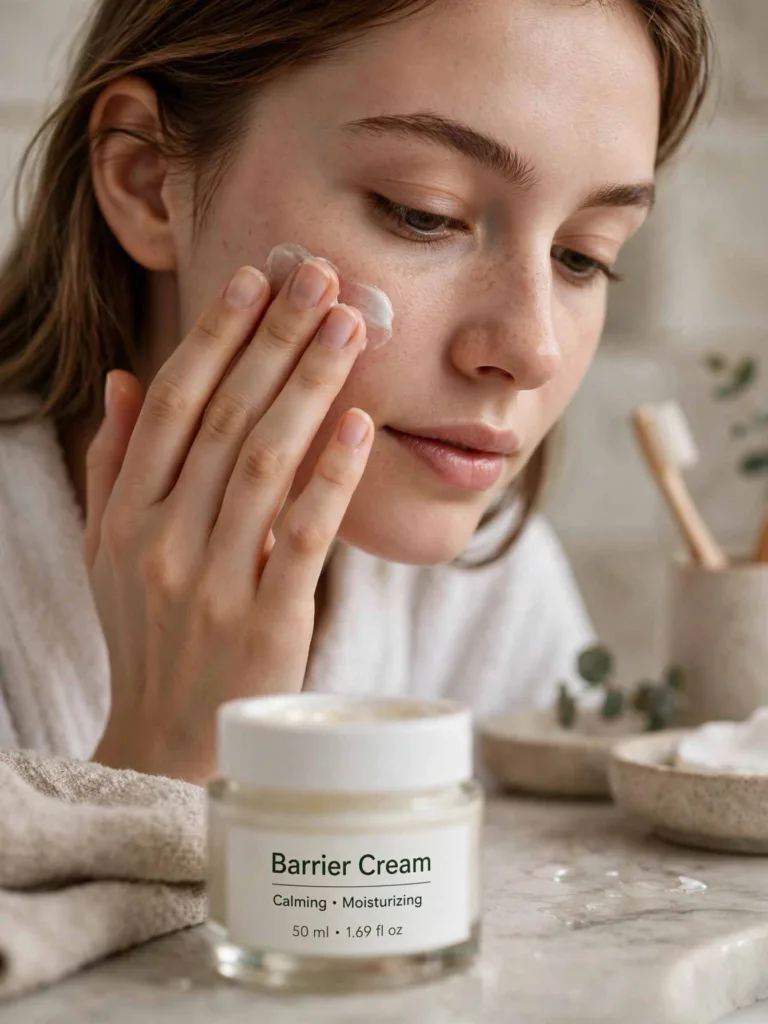
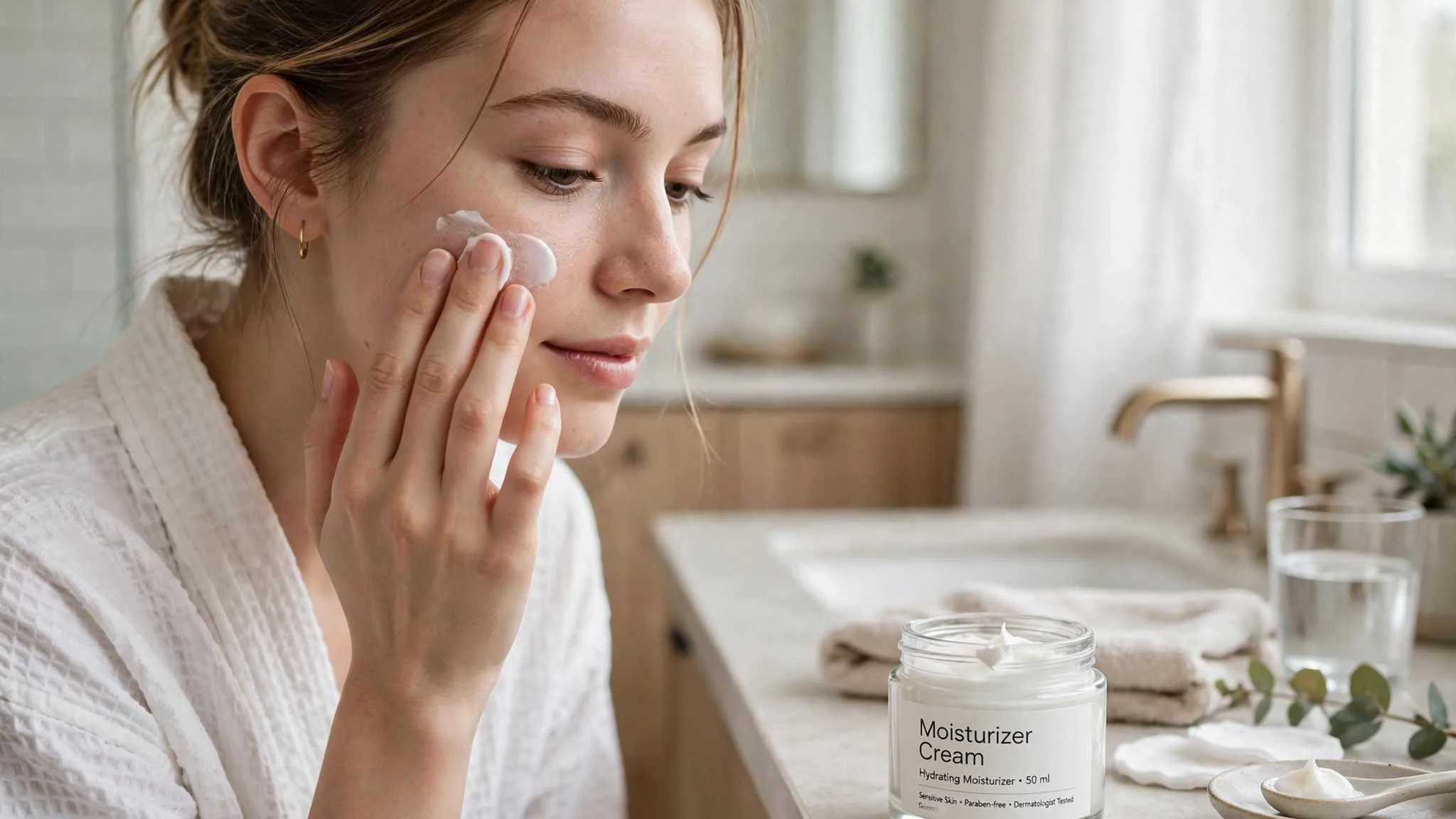
Apply a familiar moisturizer after cleansing, following its directions. Rosacea guidance supports daily moisturizing, including when skin feels oily. That does not mean every cream will suit every cause of redness. Stop a product that causes a reaction rather than applying more to push through it.
You do not need to add a serum to make this step complete. Choose a texture you can spread without dragging the skin. Avoid repeated rubbing or layering several unfamiliar products over the same sore area.
Step 3: Protect Skin From The Sun
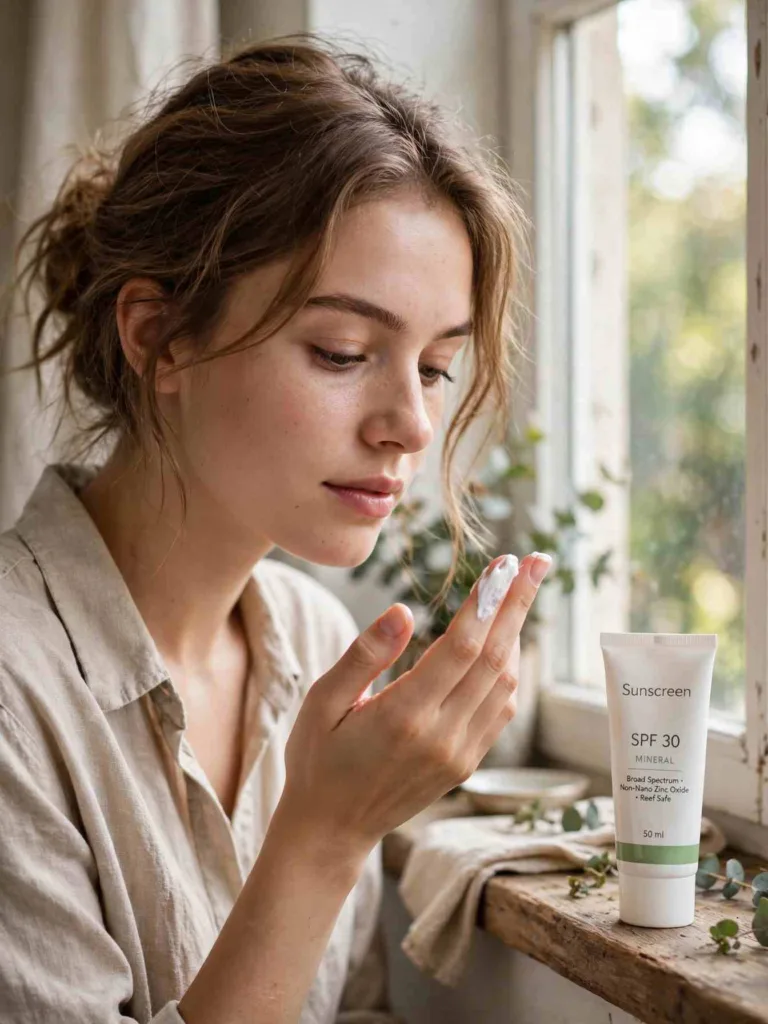
Use broad-spectrum SPF 30 or higher alongside shade and sun-protective clothing. For rosacea, the AAD recommends a water-resistant formula containing zinc oxide, titanium dioxide, or both. Product tolerance still varies; a mineral label does not guarantee comfort. Follow the sunscreen’s directions for amount and application timing.
Reapply at least every two hours outdoors, and after swimming or sweating, as the label directs. If sunscreen stings, seek shade and discuss a tolerated option with a clinician or pharmacist. Do not keep testing several new formulas on an actively irritated face.
Simplify Products Without Setting A Recovery Deadline
Reducing optional products can make the routine easier to assess. Improvement does not prove that you identified the cause.
Pause Optional Irritating Steps
Set aside non-prescription scrubs, exfoliating acids, and other optional products that seem to worsen symptoms. Keep a record of what changed rather than adding several replacements. A gentle routine supports comfort while you decide whether assessment is needed.
Avoid stopping prescribed treatment based on a general skincare article. Contact the prescriber if a medicine appears to irritate your skin. A suspected allergy also needs a different plan from simply reducing how often you use an active ingredient.
Restart Only When Appropriate
There is no automatic restart after seven days or a universal twice-weekly schedule for retinoids. Follow the product instructions and any treatment plan. Ask for advice before reusing something linked with a significant reaction. Introduce suitable new products separately so changes remain easier to track.
Choose Products With Realistic Expectations
Labels can narrow your search, but they cannot predict every reaction. Your previous tolerance and the complete formulation matter more than a soothing ingredient’s reputation.
Understand Common Label Terms
Fragrance-free products may be useful when fragrance is a concern. “Noncomedogenic” describes a product’s intended tendency to avoid clogged pores; it does not establish that it cannot irritate. A short ingredient list is not automatically safer. Products marketed for sensitive skin still need individual assessment.
Keep Rosacea Ingredient Advice In Context
The AAD lists several ingredients that can irritate rosacea, including fragrance, menthol, camphor, and exfoliating acids. That advice is specific to rosacea care and does not make every ingredient unsuitable for everyone. Discuss products with your dermatologist if you are following a treatment plan.
Niacinamide, centella, panthenol, and similar ingredients are optional formulation components rather than universal redness remedies. Concentration and other ingredients affect the experience. A product can contain a familiar soothing ingredient and still cause a reaction.
Test Suitable New Products Before Facial Use
A small-area home test can help predict a reaction before broader use. It is different from diagnostic patch testing performed by a clinician.
Follow A Consistent Home Test
The AAD’s product-testing method uses a small area on the inner arm or elbow bend. Apply the product twice daily for seven to ten days. Use the normal amount and contact time specified for that product. Wash-off products should be rinsed as directed.
If a reaction appears, gently wash the product off and stop using it. A clear test does not guarantee tolerance on your face or with repeated future use. Do not use this method to rechallenge a product that caused a significant reaction.
Record The Reaction Without Naming An Allergen
Write down the product, test location, application dates, and symptoms. Keep the ingredient list for a clinician if needed. Similar reactions across products do not prove that one shared ingredient is responsible. Professional assessment can help investigate suspected allergies.
Track Possible Triggers Without Treating Notes As Proof
A diary can help you describe recurring symptoms and exposures. It cannot confirm a trigger or replace a diagnosis.
Make A Useful Record
Record when symptoms start, how long they last, and whether they include heat, itching, pain, or bumps. Note products, weather, exercise, and other exposures you suspect. Take photographs in similar light when possible. Include symptom-free days so the record is not limited to flares.
Avoid Unnecessary Restrictions
Rosacea triggers differ between people. Heat, sun, stress, and certain foods or drinks are examples to consider, rather than a list everyone must avoid. Review repeated associations with your clinician before making extensive dietary or lifestyle restrictions. A repeated association is a clue to discuss rather than proof.
Optional Camouflage And Treatment Limits
Makeup can change visible color without treating the cause. Choosing to leave irritated skin uncovered is equally reasonable.
Try Camouflage Only If Comfortable
The AAD notes that green-tinted concealer can camouflage rosacea redness. Water-based or powder products may suit some people with rosacea. Use a tolerated formula and light pressure, then remove it gently. Avoid applying makeup over skin that is broken or reacting to the product.
Discuss Treatments For A Confirmed Diagnosis
Persistent redness or visible vessels may need diagnosis-specific treatment beyond skincare. A clinician may discuss medicines or procedures after assessing the cause and your medical history. A product advertised as redness-reducing cannot substitute for that evaluation. Avoid choosing prescription treatments from a symptom list alone.
Our sensitive-skin routine guide offers additional help with organizing basic products. Use it alongside appropriate medical advice, especially when symptoms keep recurring.
FAQs
The next step depends on the cause and severity of your symptoms. These answers distinguish supportive care from a treatment plan.
How Can I Reduce Facial Redness Quickly At Home?
For mild irritation, stop a suspected non-prescription product and avoid further rubbing or experimenting. Gentle care may help comfort, but improvement has no guaranteed timeframe. Seek care for concerning or worsening symptoms.
Does Facial Redness Always Mean Rosacea?
No, several conditions and reactions can cause facial redness. Persistent flushing, bumps, or sensitivity need assessment rather than a diagnosis from photographs.
Can A Home Product Test Rule Out Allergy?
No, a home test may reveal a reaction but cannot rule out allergy or identify its cause. A clinician can advise whether diagnostic patch testing is appropriate.
How Long Should I Wait Before Seeking Advice?
Do not wait for a fixed seven-day or two-week deadline if symptoms worsen. Persistent or recurrent symptoms deserve assessment, and severe reaction signs require emergency help.
Is Mineral Sunscreen Required For Every Red Face?
The AAD recommends mineral filters for rosacea-prone skin. Broad-spectrum protection and individual tolerance matter, so discuss alternatives if a product irritates.
Should I Restart Acids Once My Skin Looks Better?
Appearance alone does not determine whether restarting is appropriate. Follow product directions and ask your clinician about prescribed treatments or a previous significant reaction.
Final Thoughts
A useful record gives a clinician more to work with than a shelf of newly purchased calming products. Those details can guide a conversation about how to reduce redness on your face without another round of guesswork. Keep that information together, especially if redness repeatedly returns. Today, record the onset, recent products, and changes in symptoms for your next conversation with a clinician.