Create the Perfect Skincare Routine: 7 Steps That Work
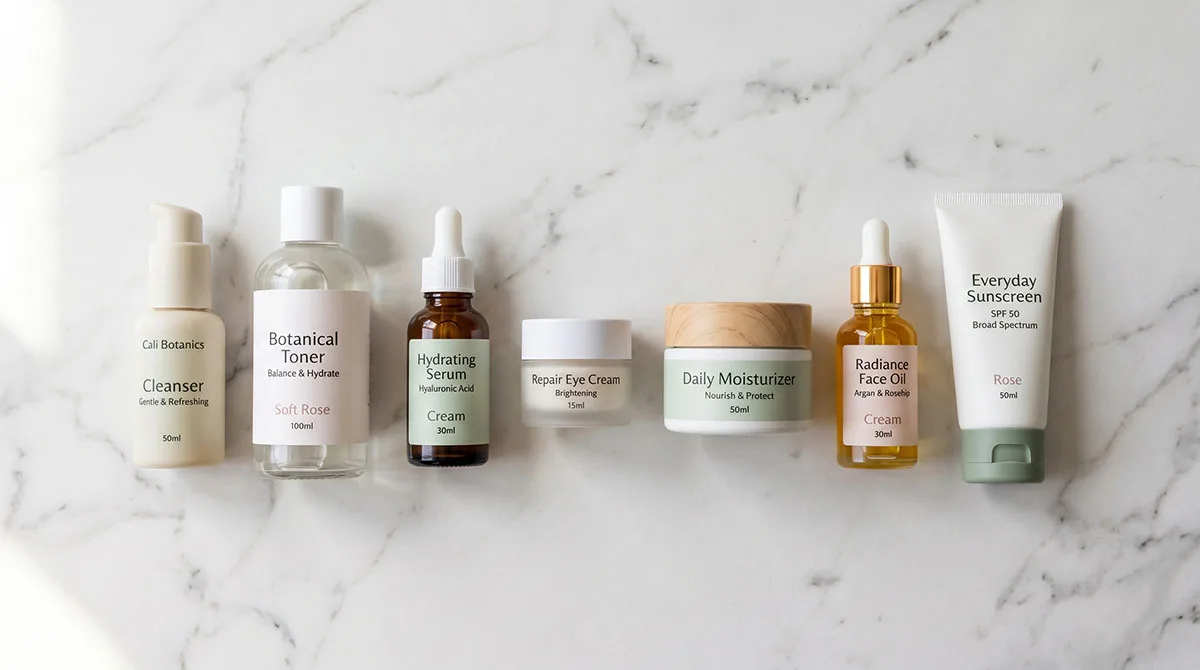
You have a shelf full of products. You use them every morning. And yet your skin still looks tired, dull, or broken out. The problem is almost never the products. It is the order, the combination, and whether those products actually match your skin type.
A good skincare routine does not need to cost a lot or take an hour. It needs to be right for your skin. Whether you have oily skin that gets shiny by noon, dry skin that flakes at the corners of your nose, or sensitive skin that reacts to everything, the routine that works for your best friend may actively harm your skin.
Start here. Get it right from step one.
What Your Skin Type Is (And Why It Changes Everything)
Most people skip identifying their skin type and go straight to buying products. That is where routines fall apart. A gel cleanser that keeps oily skin fresh will leave dry skin even tighter and more stripped. A rich cream moisturizer that saves dry skin can clog pores on oily skin within days.
Your skin type is the foundation of every product decision you will make. Get this right first. Everything else follows.
How to Test Your Skin Type at Home
The bare-face test takes 30 minutes and costs nothing. Wash your face with a gentle cleanser. Do not apply any product. Wait 60 minutes. Then look at your skin in natural light.
- Shiny all over, visible enlarged pores: oily skin
- Tight, flaky, or rough patches: dry skin
- Shiny across the T-zone (forehead, nose, chin) but dry on cheeks: combination skin
- Redness, stinging, or itching after washing: sensitive skin
- Breakouts alongside oiliness: acne-prone skin
No products. No guessing. Just sebum behavior and how your skin feels after 60 minutes with nothing on it.
The 5 Skin Types Explained Simply
Oily skin produces excess sebum throughout the day. Pores look larger. Skin feels greasy. Makeup slides off.
Dry skin lacks oil and moisture. It feels tight after washing. You may see flaking, redness, or rough texture. It rarely looks dewy without moisturizer.
Combination skin is oily in the T-zone and normal to dry on the cheeks and jawline. You need different products for different areas.
Sensitive skin reacts easily. Redness, stinging, and irritation appear after new products, weather changes, or stress. Fragrance, alcohol, and strong actives are frequent triggers.
Acne-prone skin is not a skin type on its own — it can be oily, dry, or combination. It just means your skin breaks out consistently and needs non-comedogenic formulas throughout.
One more: dehydrated skin is often confused with dry skin, but they are different. Dry skin lacks oil. Dehydrated skin lacks water. You can have oily, dehydrated skin. Both conditions need hyaluronic acid — but dehydrated skin does not need a heavier moisturizer unless dryness is also present.
The Correct Order to Apply Skincare Products
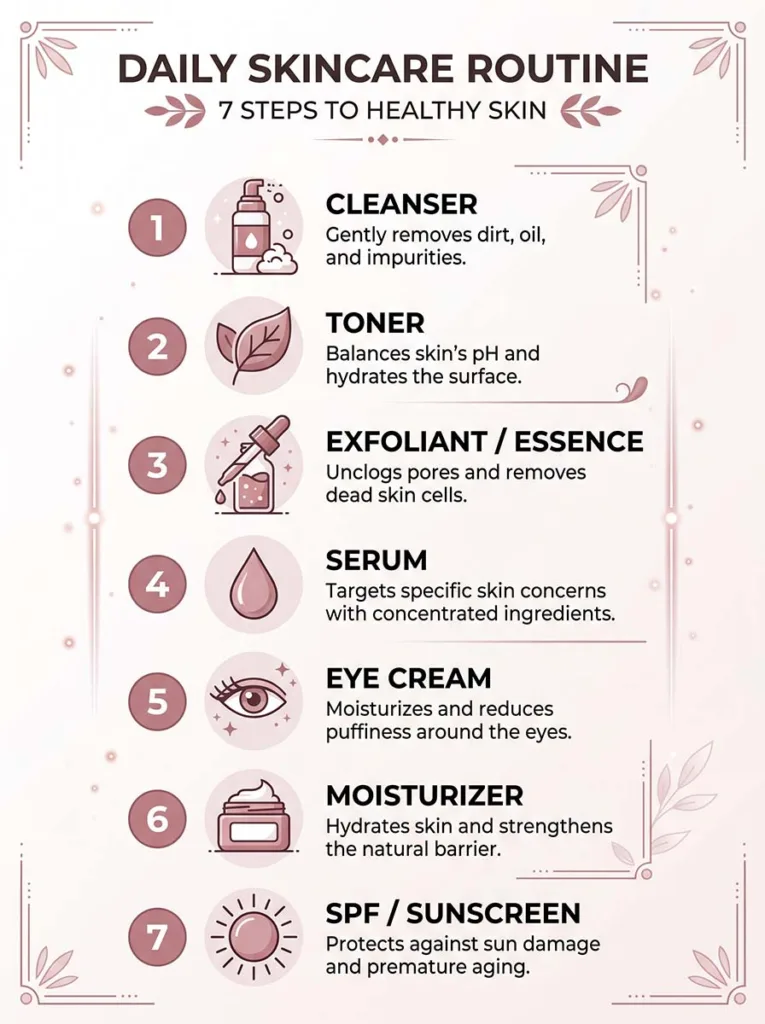
Most skincare mistakes happen at this step. People apply their products in whatever order feels right — or in the order they grab them off the shelf. Product order matters because it directly affects how much each product actually absorbs into the skin.
The rule is simple: thinnest consistency to thickest. Start with water-based, lightweight formulas. Finish with heavier creams and oils that form a seal. Apply SPF last in the morning, always.
Full 7-step application order:
- Cleanser
- Toner
- Serum or Treatment
- Eye Cream
- Moisturizer
- Face Oil (PM only — optional)
- SPF (AM only)
The reason this order works comes down to skinbarrier science. Each layer creates a slightly more occlusive environment. If you apply moisturizer before your serum, the serum cannot penetrate. The moisturizer has already formed a partial seal. Your expensive serum sits on top of it and does almost nothing.
Morning Skincare Routine Order
Your morning routine focuses on protection. Everything you apply in the AM is working against UV damage, free radicals, and environmental pollution for the next 8–12 hours.
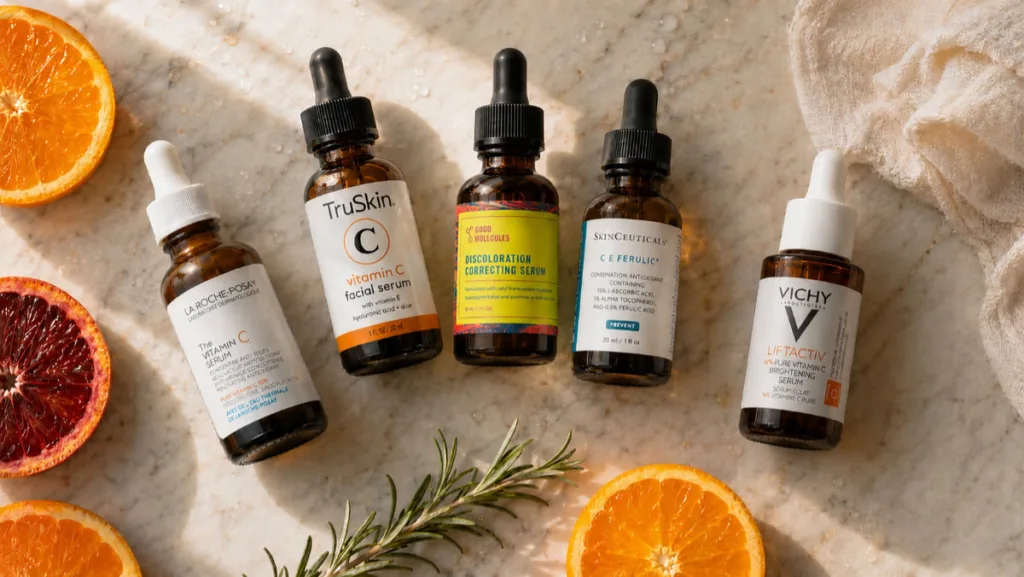
Vitamin C serum belongs in the morning. It is an antioxidant that boosts SPF effectiveness and targets hyperpigmentation. Apply it after toner, let it absorb for 2 minutes, then follow with moisturizer.
SPF 30 minimum goes last, always. The American Academy of Dermatology recommends broad-spectrum SPF 30 every single day, including cloudy days and days spent indoors near windows. UV light causes up to 90% of visible skin aging. No serum or moisturizer compensates for skipping SPF.
Do not use retinol or AHA/BHA exfoliants in the morning. Both increase photosensitivity. They belong exclusively in your night routine.
Night Skincare Routine Order
Your PM routine focuses on repair. Skin regenerates during sleep. Your skin cell turnover cycle runs every 28 days, but most of the active renewal happens at night. This is when actives like retinol and AHA/BHA exfoliants do their best work.
Follow the same order. Replace SPF with a face oil or sleeping mask after moisturizer if your skin needs the extra hydration.
Start retinol slowly: 1–2 times per week until your skin adjusts. Increase to every other night after 4–6 weeks. Apply retinol after toner, before moisturizer. Wait 20–30 minutes before moisturizing if you experience irritation. Never use AHA or BHA on the same night as retinol, at least while your skin is still adjusting.
Step-by-Step: What Every Product Does and How to Choose It
Understanding what each product actually does helps you stop buying things you do not need. Here is each step broken down plainly — what it does, how to choose the right one, and what ingredient to look for on the label.
Step 1 – Cleanser
A cleanser removes dirt, oil, sunscreen, and makeup from the surface of your skin. It is not supposed to strip or dry your skin. After washing, your face should feel clean, not tight.
Gel cleansers work well for oily skin and acne-prone skin. They remove excess sebum without being too abrasive. Cream cleansers suit dry skin and sensitive skin — they clean without disrupting the skin barrier.
For heavier SPF or makeup days, double cleansing in the PM is worth it. Use an oil-based cleanser first to dissolve SPF and makeup. Follow with your regular water-based cleanser. This method ensures no product residue blocks your actives from absorbing later.
Massage your cleanser for 60 seconds. Most people rinse in under 15 seconds, which is not enough time for a full cleanse.
Step 2 – Toner
A toner is the most misunderstood product in a skincare routine. There are two very different types and they do very different things.
Hydrating toners contain glycerin, hyaluronic acid, or rose water. They add a thin layer of moisture before your serum. Every skin type can use one. Apply after cleansing, pat gently into skin with hands.
Exfoliating toners contain AHA (like glycolic or lactic acid) or BHA (salicylic acid). They remove dead skin cells, smooth texture, and clear pores. Use them max 3 times per week to avoid over-exfoliation. Never use an exfoliating toner and retinol on the same night.
If your routine already includes a retinol serum or an active treatment, choose a hydrating toner. You do not need both an exfoliating toner and a retinol product in the same routine.
Step 3 – Serum
A serum carries a high concentration of active ingredients. It penetrates deeper than moisturizer because of its smaller molecular size. Match your serum to your skin concern, not just your skin type.
Hyaluronic Acid: Works for every skin type. Holds up to 1,000 times its weight in water. Draws moisture into the skin. Apply to slightly damp skin for best absorption. Use AM or PM.
Vitamin C (L-ascorbic acid): Brightens skin, fades hyperpigmentation, boosts SPF protection. Use in the AM only. Let it absorb for 15–20 minutes before SPF.
Niacinamide (Vitamin B3): Controls oil, minimizes the appearance of pores, reduces redness. Suits oily skin and combination skin. Safe for AM or PM.
Retinol: Speeds up skin cell turnover, reduces fine lines, improves texture. PM only. Start 1–2 times per week. Gradually increase based on tolerance. Wait 2 minutes after applying before the next step.
Peptides: Support collagen production. Low irritation risk. Safe to pair with almost any other ingredient.
Step 4 – Eye Cream
The skin around your eyes is thinner than the rest of your face — as thin as 0.5mm in some areas. It absorbs products differently. Using your regular face moisturizer around the eyes is usually fine, but a dedicated eye cream offers targeted actives like caffeine for puffiness or peptides for firmness.
Apply with your ring finger — it applies the least pressure of all your fingers. Pat gently outward from the inner corner. Never drag or rub.
If your budget is tight, skip this step first. It is the most optional step in the routine.
Step 5 – Moisturizer
Moisturizer seals everything in. It is not optional for any skin type, including oily skin. Skipping moisturizer on oily skin triggers your sebaceous glands to produce more oil to compensate for the dehydration. This makes oiliness worse.
For Oily Skin: A lightweight gel moisturizer with glycerin or niacinamide. No oils, no heavy butters.
For Dry Skin: A rich cream with ceramides, shea butter, or squalane. Look for a ceramide-based formula specifically if your skin barrier is compromised, red, or reactive.
For Sensitive Skin: A fragrance-free, dermatologist-tested cream with ceramides and glycerin.
Ceramides are lipids that naturally exist in your skin. They hold skin cells together and prevent transepidermal water loss (TEWL). When your barrier is damaged, ceramide-based moisturizers help rebuild it faster than any other formula type.
Step 6 – Face Oil (Optional, PM Only)
Face oils go after moisturizer, not before. This surprises most people. The reason: oils are occlusives. They form a seal on top of the skin that locks in everything beneath. Apply oil before moisturizer and the moisturizer cannot penetrate properly.
Squalane is the most versatile. It is lightweight, non-comedogenic, and suits almost every skin type including oily skin. Rosehip oil is rich in vitamin A and works well for dry skin and hyperpigmentation. Argan oil is deeply nourishing for very dry or mature skin.
If you have acne-prone skin, test oils carefully. Many people tolerate squalane with no breakouts, while coconut oil and flaxseed oil score high on the comedogenicity scale.
Step 7 – SPF (AM Only)
SPF is the most important product in your routine. Full stop. According to the American Academy of Dermatology, UV exposure causes up to 90% of visible skin aging — fine lines, dark spots, and loss of elasticity. No serum reverses sun damage as effectively as preventing it in the first place.
Mineral Sunscreen (Zinc Oxide, Titanium Dioxide): Sits on top of skin, reflects UV. Best for sensitive skin and acne-prone skin. Leaves a slight white cast on deeper skin tones — newer formulations are improving on this.
Chemical Sunscreen: Absorbs UV and converts it to heat. Lighter finish, easier to layer under makeup. Apply 30 minutes before sun exposure.
Use SPF 30 minimum, broad-spectrum (UVA and UVB protection), every day. Yes, in winter. Yes, indoors near windows. UVA rays pass through glass.
Skincare Routine by Skin Type
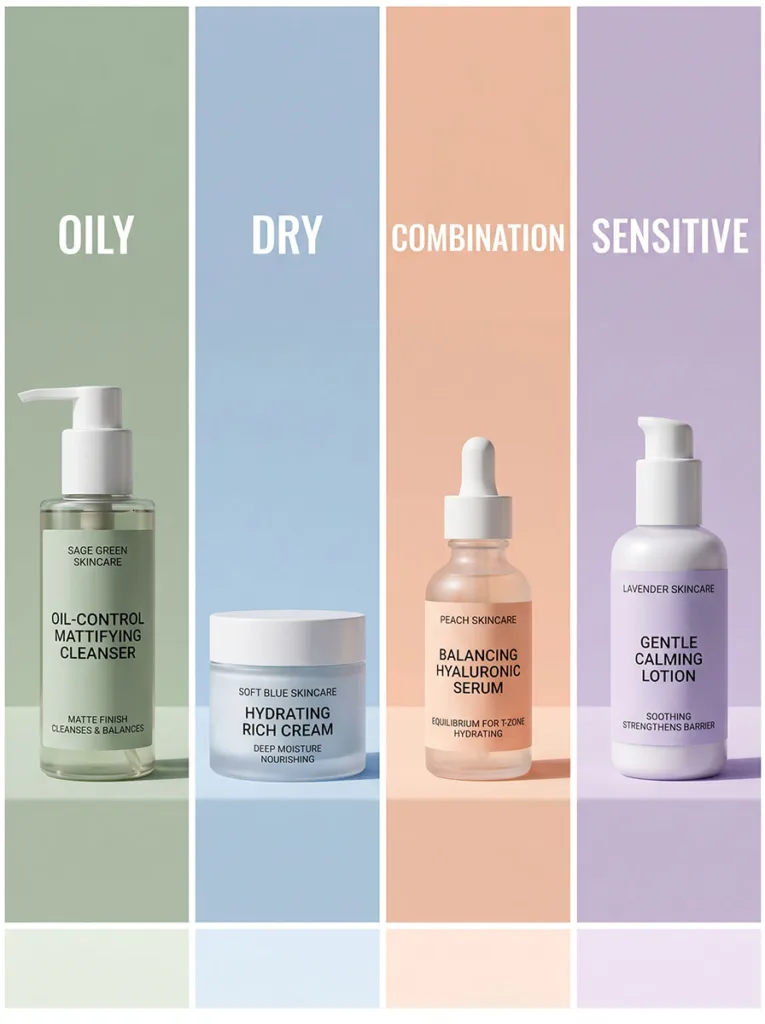
The 7 steps stay the same for every skin type. What changes are the products you choose at each step. Here is exactly what to prioritize and what to avoid for your specific skin type.
Oily Skin Routine
Priority Ingredients: Salicylic acid (BHA), niacinamide, glycerin
Use a gel cleanser with salicylic acid or a gentle pH-balanced formula. Add a BHA exfoliating toner 2–3 times per week to clear congestion inside pores. Choose a niacinamide serum to regulate sebum production and minimize pore appearance. Use a lightweight, oil-free gel moisturizer. Finish with a non-comedogenic chemical SPF in the morning.
Skip: Face oil, heavy creams, anything with coconut oil or cocoa butter
Avoid: Over-washing your face. Washing more than twice daily strips your skin barrier and triggers even more oil production as a response.
Dry Skin Routine
Priority Ingredients: Ceramides, hyaluronic acid, squalane, shea butter
Use a cream cleanser that does not lather. Apply hyaluronic acid serum on slightly damp skin so it pulls moisture from the air into your skin rather than drawing it from your deeper layers. Follow with a ceramide-rich moisturizer. Add a squalane or rosehip face oil in the PM after moisturizer. Use a sleeping mask 2–3 times per week over your regular moisturizer to wake up with noticeably softer skin.
Avoid: Foaming cleansers, alcohol-heavy toners, over-exfoliating (max once per week with a gentle AHA)
Combination Skin Routine
Priority Ingredients: Niacinamide, glycerin, BHA (targeted)
The key with combination skin is balance. Use a gentle foaming cleanser that cleans the T-zone without over-drying the cheeks. Apply a niacinamide serum across the whole face — it controls oil where you need it and supports the drier zones without making them drier. Use a lightweight moisturizer everywhere.
For The T-Zone Specifically: Use a BHA toner on that zone only, 2–3 times per week. Do not apply it to the cheeks if they are dry.
Avoid: Applying heavy cream to the entire face, using the same product amounts on every zone
Sensitive Skin Routine
Priority Ingredients: Ceramides, centella asiatica, glycerin, fragrance-free formulas
Sensitive skin responds best to fewer products, not more. A cream cleanser, a hydrating toner with glycerin, a ceramide moisturizer, and a mineral SPF is a complete routine. Start there.
Before Adding Any New Product, Do A Patch Test: Apply a small amount to your inner arm for 48 hours. If no reaction occurs, apply to a small area of your face for another 48 hours. If still clear, add it to your routine. Introduce only one new product every 2 weeks.
Avoid: Fragrance, essential oils (lavender, tea tree), physical scrubs, multiple active ingredients at once. If you experience persistent redness, see a dermatologist — rosacea and eczema require specific medical-grade ingredients.
Acne-Prone Skin Routine
Priority Ingredients: Salicylic acid, niacinamide, retinol, benzoyl peroxide (targeted, not combined with retinol)
Use a salicylic acid cleanser or toner to dissolve congestion inside pores. Niacinamide serum reduces redness and controls oil. A lightweight, non-comedogenic moisturizer is non-negotiable — skipping it will increase oil production and worsen acne.
Add retinol 1–2 times per week in the PM. It speeds up skin cell turnover and stops dead skin cells from blocking pores. As your skin adjusts, increase to every other night.
Never layer benzoyl peroxide and retinol in the same routine. Benzoyl peroxide oxidizes retinol and deactivates it completely. Use one in the AM and one in the PM, or alternate nights.
Avoid: Comedogenic oils, heavy cream moisturizers, physical exfoliants (scrubs), over-washing
Ingredients That Work Together (And What Never to Mix)
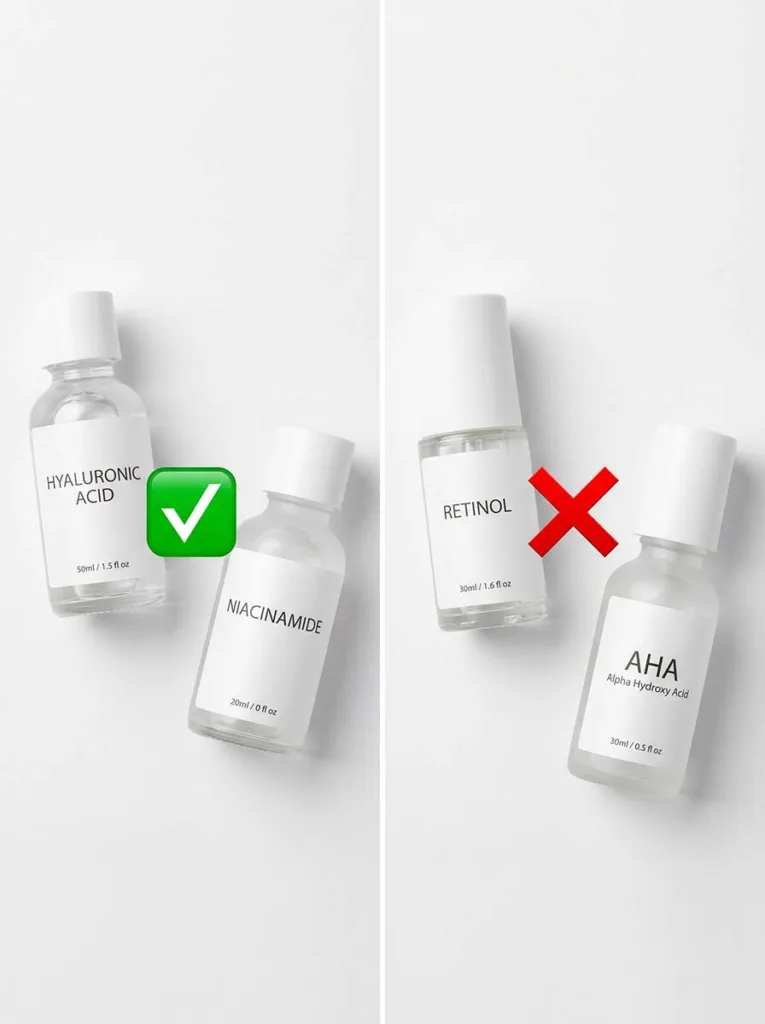
Adding more products to your routine without checking ingredient compatibility is one of the most common causes of sudden skin sensitivity. Some combinations cause irritation, barrier damage, or cancel each other out entirely.
Safe combinations – these work well together:
| Combine These | Why |
| Vitamin C + SPF | Antioxidant protection amplifies UV defense |
| Niacinamide + Hyaluronic Acid | Barrier support and deep hydration in one step |
| Retinol + Peptides | Cell turnover and collagen support, no conflict |
| Ceramides + any active | Repairs skin barrier after active use |
| AHA/BHA + Hyaluronic Acid | Exfoliate first, then immediately rehydrate |
Do not combine these — real consequences follow:
| Never Mix These | What Happens |
| Retinol + AHA or BHA | Severe skin barrier damage, chronic sensitivity |
| Retinol + Vitamin C | Irritation, reduced effectiveness of both |
| Benzoyl Peroxide + Retinol | Benzoyl peroxide oxidizes and deactivates retinol entirely |
| Multiple actives in one routine | Barrier breakdown, long-term sensitization |
The safest rule: use only one active ingredient per routine session while you are still building your routine. Add a second active after 4–6 weeks once your skin has adjusted. Most skin problems labeled as “product reactions” are actually stacking reactions — too many actives at once.
3 Natural and Budget-Friendly Skincare Routine Swaps
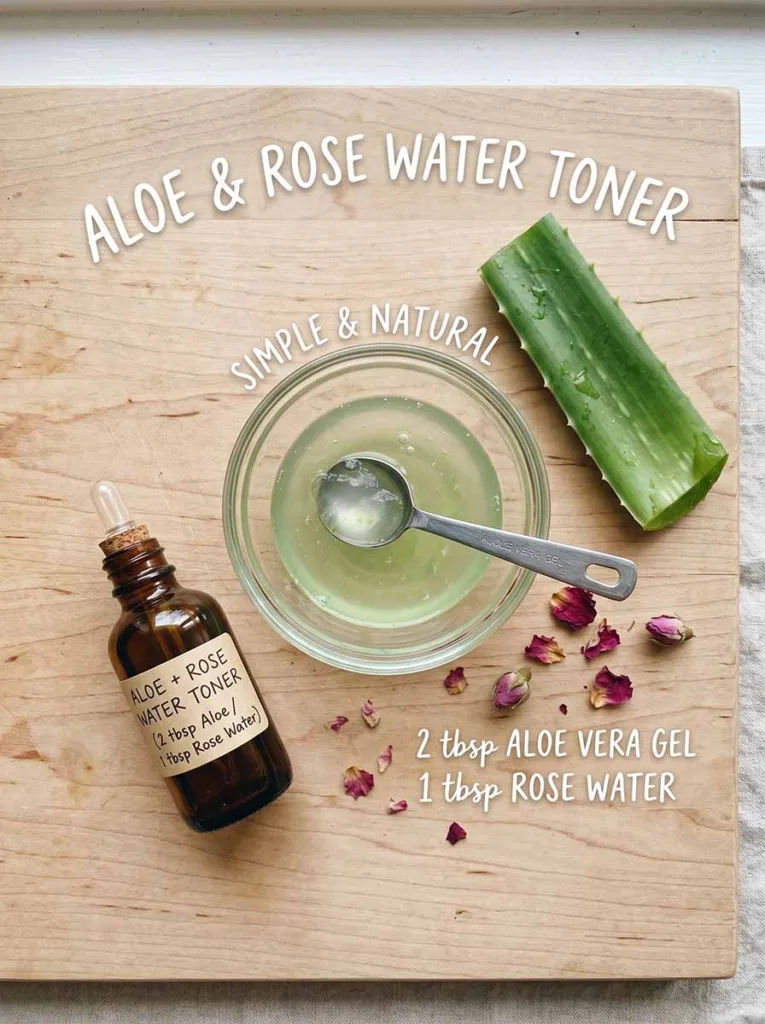
A solid routine does not require expensive products at every step. These three natural swaps replace purchased products with single-ingredient alternatives that genuinely work for the right skin type.
Swap 1 – Raw Honey as a Gentle Cleanser
Raw honey is naturally antibacterial and deeply moisturizing. It suits dry skin and sensitive skin. Apply a thin layer to damp skin, massage for 30 seconds, and rinse thoroughly with lukewarm water. It removes surface impurities without stripping the skin barrier. Not ideal for acne-prone skin — the sugar content can feed acne-causing bacteria in some people.
Swap 2 – Pure Aloe Vera Gel as a Hydrating Toner
Fresh aloe vera gel straight from the leaf is calming, anti-inflammatory, and adds a light layer of hydration after cleansing. It suits sensitive skin and oily skin. Apply with clean hands after washing, let it fully absorb, then proceed to serum. Look for pure aloe with no added alcohol or colorants if buying bottled.
Swap 3 – Oat Milk as a Soothing Toner for Sensitive Skin
Colloidal oat reduces redness and soothes irritation — it is clinically studied for use in eczema and reactive skin. Steep 2 tablespoons of rolled oats in half a cup of warm water for 10 minutes. Strain, cool, and apply with a cotton pad after cleansing. Store in the refrigerator for up to 3 days.
DIY Recipe – 2-Ingredient Calming Toner:
- 2 tablespoons pure aloe vera gel
- 1 tablespoon rose water
Mix both in a clean glass bottle. Apply with a cotton pad after cleansing. Refrigerate and use within 5 days. Safe for sensitive skin, oily skin, and combination skin.
Skincare Routine Mistakes That Are Ruining Your Results
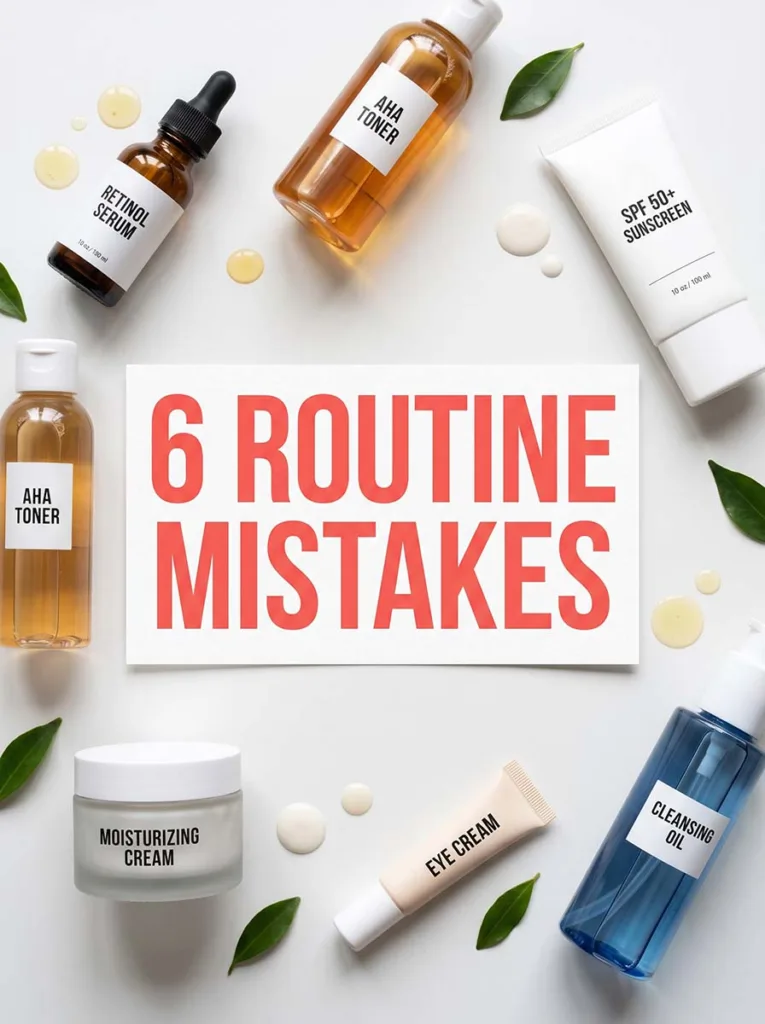
A consistent routine with the wrong habits still delivers poor results. These six mistakes are the most common reasons people give up on a routine that was actually working.
1. Applying Products in The Wrong Order
Moisturizer before serum means your serum absorbs into the moisturizer, not your skin. Always go thinnest to thickest. Active ingredients need direct skin contact to work.
2. Over-Exfoliating
More than 3 times per week with any exfoliant — AHA, BHA, or physical scrub — damages your skin barrier. Signs of over-exfoliation: sudden sensitivity, tightness, redness, or a burning sensation from products that never bothered you before. Stop all actives for 1–2 weeks and rebuild with ceramides only.
3. Skipping SPF Because It Is Cloudy or You Are Indoors
UVA rays penetrate cloud cover and glass. The American Academy of Dermatology estimates UV causes 90% of visible skin aging. Your vitamin C, retinol, and expensive serums are working against that statistic every day. SPF stops it at the source.
4. Introducing Too Many Products at Once
Your skin cannot tell you which new product caused a reaction if you added three new ones in a week. Introduce one new product every 2 weeks, always with a patch test first. This is especially critical for sensitive skin and acne-prone skin.
5. Using The Same Routine Year-Round Without Adjusting
Humidity, temperature, and indoor heating change how your sebaceous glands behave and how fast trans epidermal water loss (TEWL) occurs. In winter, most skin types need a richer moisturizer and less exfoliation. In summer, lighter formulas and more frequent SPF reapplication. Your routine should shift with the season.
6. Confusing Purging with A Breakout
When you start retinol or an AHA/BHA, your skin may break out for the first 4–6 weeks. This is purging: the accelerated skin cell turnover is pushing existing congestion to the surface. It clears on its own. A real breakout from a product that does not suit your skin does not stop after 6 weeks — it continues or worsens as long as you use the product. If the reaction is still getting worse at the 6-week mark, stop the product.
Frequently Asked Questions
1. What Is the Correct Order for A Skincare Routine?
Apply products thinnest to thickest: cleanser, toner, serum, eye cream, moisturizer, then SPF in the morning. At night, swap SPF for a face oil or sleeping mask after moisturizer.
2. How Many Steps Should a Beginner Skincare Routine Have?
Start with 3 steps: a gentle cleanser, a lightweight moisturizer, and SPF 30 in the morning. Add serums and treatments one at a time after your skin adjusts, with a 2-week gap between new products.
3. Can I Use Vitamin C And Niacinamide Together?
Yes. Vitamin C and niacinamide are safe to combine. Apply vitamin C first and let it absorb, then follow with a niacinamide serum or a moisturizer containing niacinamide.
4. How Long Does It Take to See Results from A New Skincare Routine?
Most routines need 28 days to show visible results — one full skin cell turnover cycle. Moisturizer and SPF improvements show faster, within one week. Retinol results typically appear after 8–12 weeks of consistent use.
5. Should I Use the Same Routine in Summer and Winter?
No. Adjust seasonally. In winter, switch to richer moisturizers and reduce exfoliation frequency. In summer, use lighter formulas and reapply SPF 30 every 2 hours during sun exposure.
6. What Skincare Ingredients Should Beginners Avoid?
Beginners should avoid combining retinol with AHA or BHA, layering multiple actives at once, and any fragrance-heavy products on sensitive skin. Start with one active ingredient and introduce it slowly over 4–6 weeks.
Conclusion
A perfect skincare routine is not about the most products on your shelf. It is about the right products, applied in the right order, for your specific skin type. Start with 3 steps if you are new: cleanser, moisturizer, SPF. Add actives one at a time. Give your skin barrier 28 days to show you results before you change anything.
Pick your skin type from the guide above and build your routine from that section. Save this page, start tonight, and give your skin one full month before you judge it.
For more insightful articles related to skin care, please visit VelvetBoard.