Rosacea Skincare Routine: Gentle Steps For Calm Skin
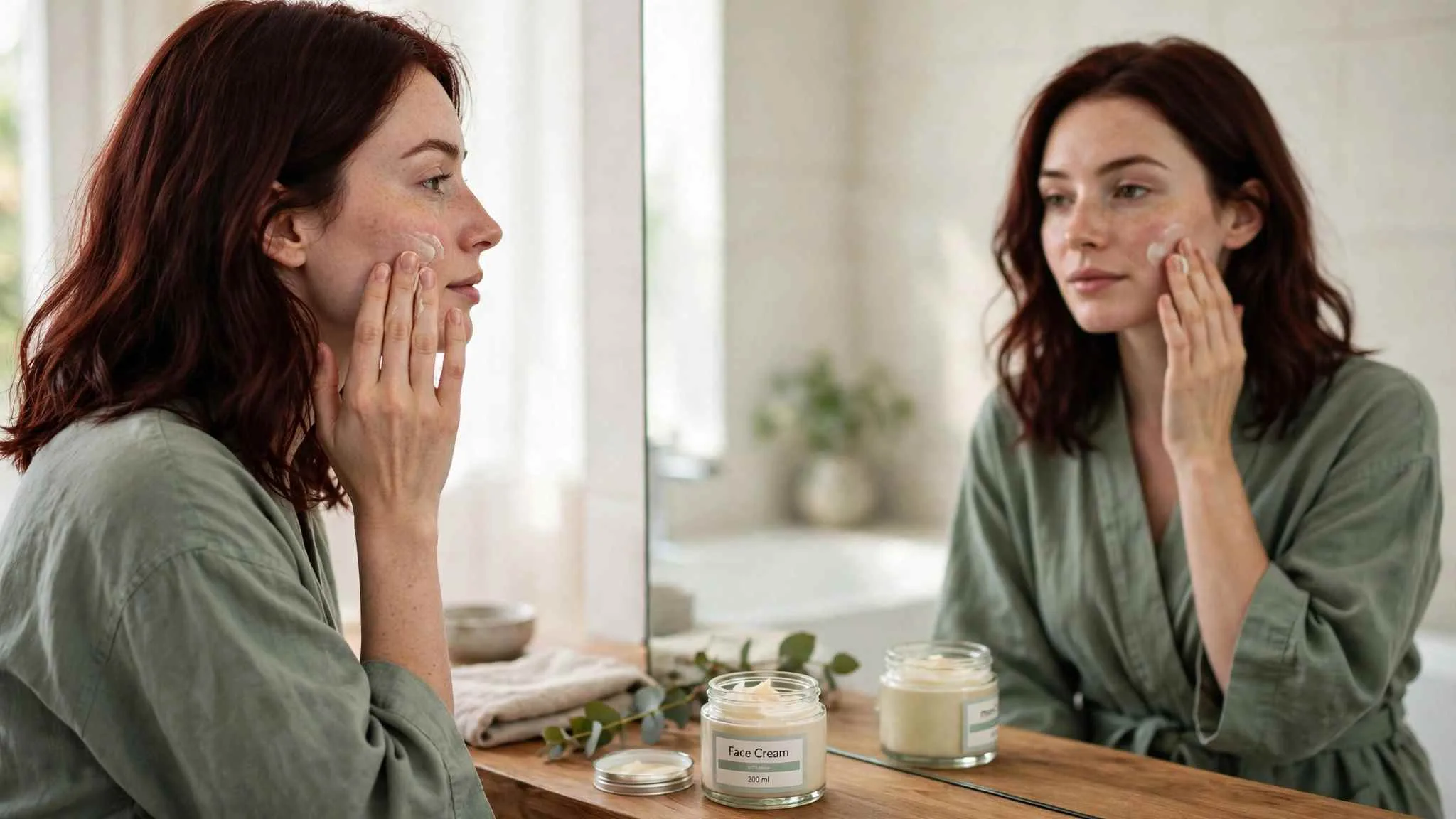
Does your rosacea skincare routine leave your cheeks stinging instead of feeling comfortable? Build your morning and evening care around products you tolerate, with room for any treatment your clinician prescribes. Start with gentle cleansing, moisturizer, and sun protection before deciding whether you need another product.
A shelf full of sensitive-skin products can make that decision feel harder. You might wonder which cream caused discomfort or whether to replace your cleanser again. Begin with what already feels comfortable, then test additions one at a time. Keep notes so you can describe changes without relying on memory.
The goal is a manageable routine with a clear purpose for each step. Follow the morning and evening order below, then use the product-testing guidance before making changes. Bring persistent irritation or uncertainty about treatment to your clinician.
What Rosacea Means For Daily Skin Care
Rosacea can cause facial flushing, persistent color changes, and bumps. Some people also develop eye symptoms. A clinician can distinguish it from other conditions that need different care.
Gentle skincare supports comfort, but it does not replace diagnosis or medical treatment. Avoid treating every red patch as rosacea, especially when symptoms are new or changing.
Signs Worth Discussing With A Clinician
Describe where symptoms appear and how they feel. Mention burning, stinging, visible blood vessels, or recurring bumps, even if photographs show little redness. Tell your clinician about dry or gritty eyes too.
Bring photographs taken during different episodes if symptoms disappear before your appointment. Use similar lighting when possible, and explain any changes in products or medicines. These details provide context without proving a diagnosis.
Why Gentle Care Matters
Rubbing and irritating products can make sensitive skin uncomfortable. Use light fingertip pressure and avoid scrubbing away flakes or bumps. More force does not make a cleanser more useful.
Your skin barrier helps retain moisture and limit exposure to irritants. Choose care you can repeat without persistent discomfort. A product that stings deserves reassessment, even when its label promises sensitive-skin benefits.
The Morning Rosacea Skincare Routine
Start with cleansing, follow with moisturizer, and finish with sunscreen. If you use prescription treatment, follow its specific application instructions. Ask your prescriber where it belongs rather than guessing its position.
Step One: Cleanse With Light Fingertip Pressure
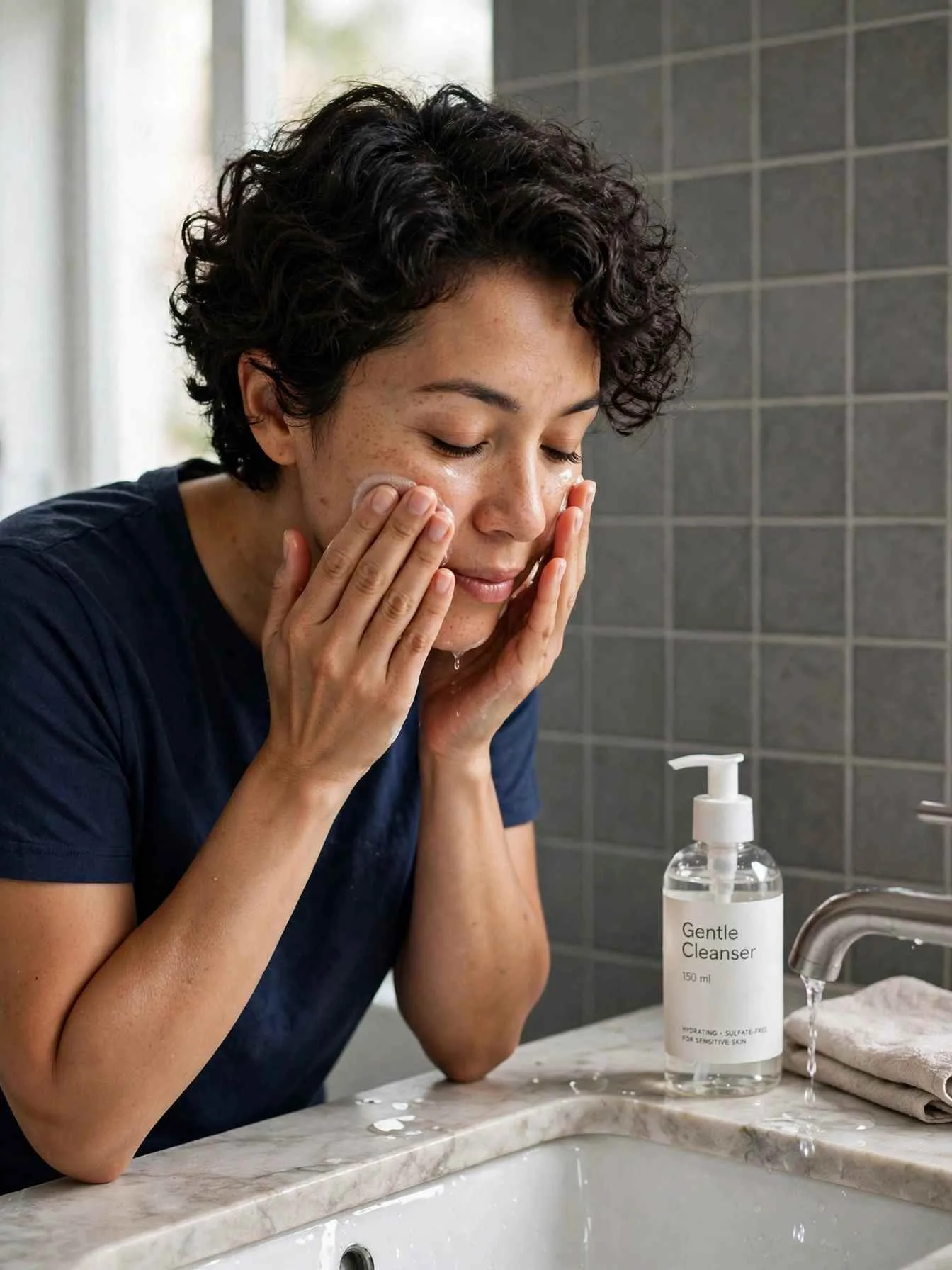
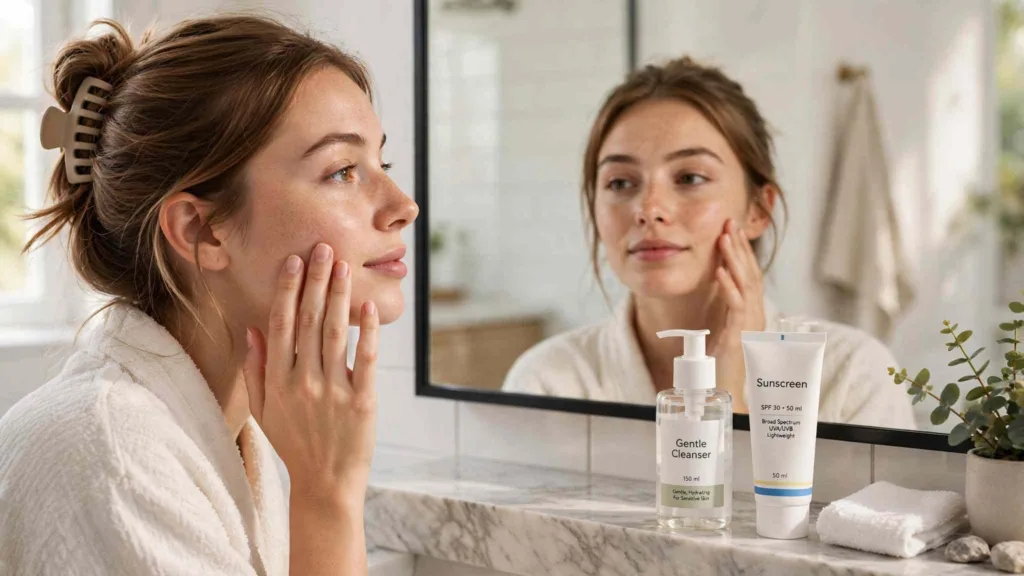
Use lukewarm water and a mild cleanser that you tolerate. Spread it with your fingertips, rinse thoroughly, and pat dry with a soft towel. Avoid vigorous rubbing around your cheeks and nose.
The American Academy of Dermatology offers rosacea skincare guidance covering cleansing and product selection. Discuss cleansing frequency with your clinician if washing leaves persistent tightness or burning. Follow any different instructions provided for your treatment.
Step Two: Apply A Comfortable Moisturizer
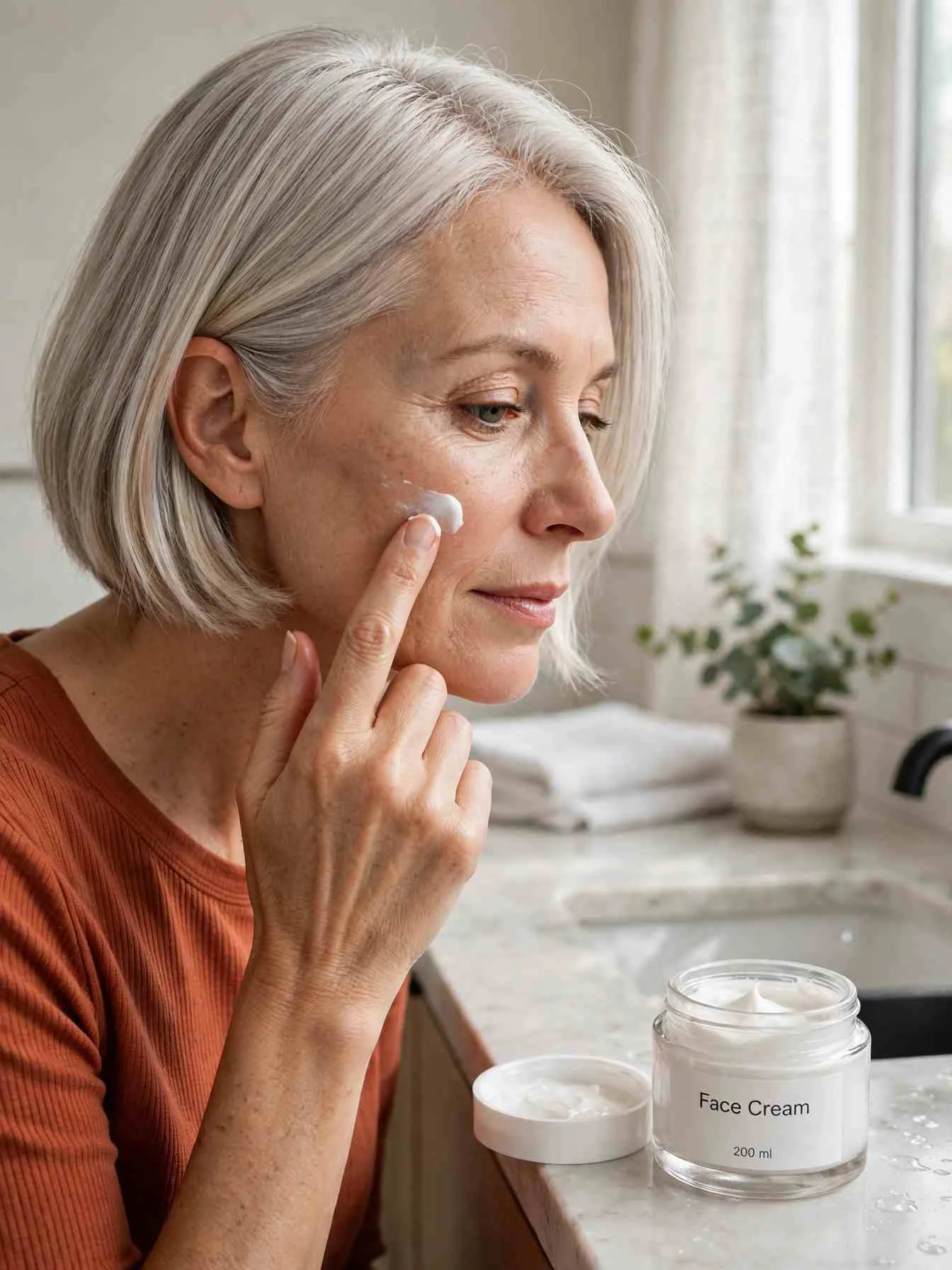
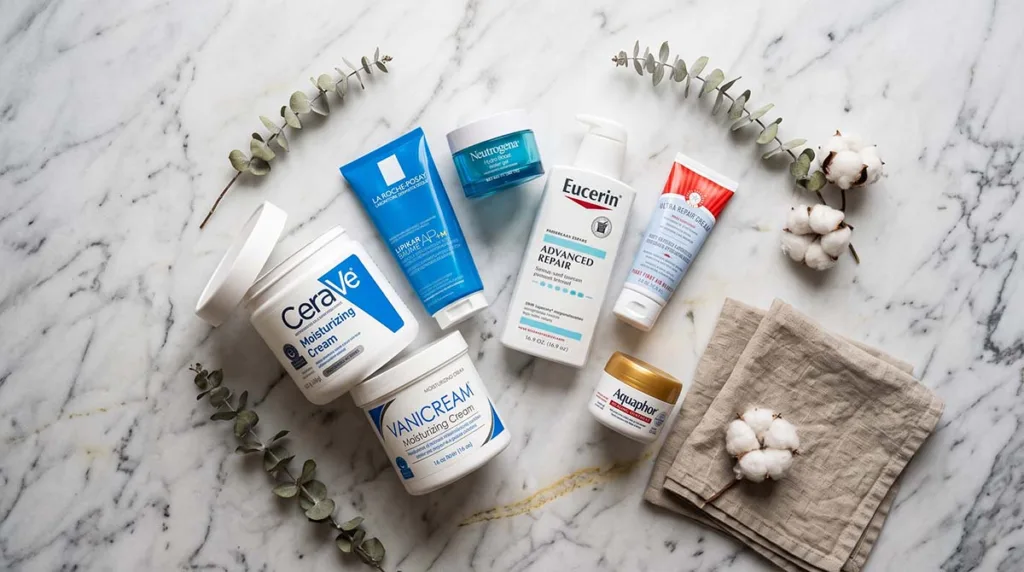
Choose a fragrance-free moisturizer and spread it with a light touch. Let your face dry after washing if applying products to damp skin causes stinging. Follow the application directions for your chosen product.
A cream may feel comfortable on dry areas, while some people prefer a lighter texture. Judge the product by comfort and tolerance. Avoid repeated rubbing to make a heavy layer disappear.
Allow the moisturizer to settle enough for sunscreen application, following both labels. Ask your pharmacist about timing around prescription products.
Step Three: Finish With Sun Protection
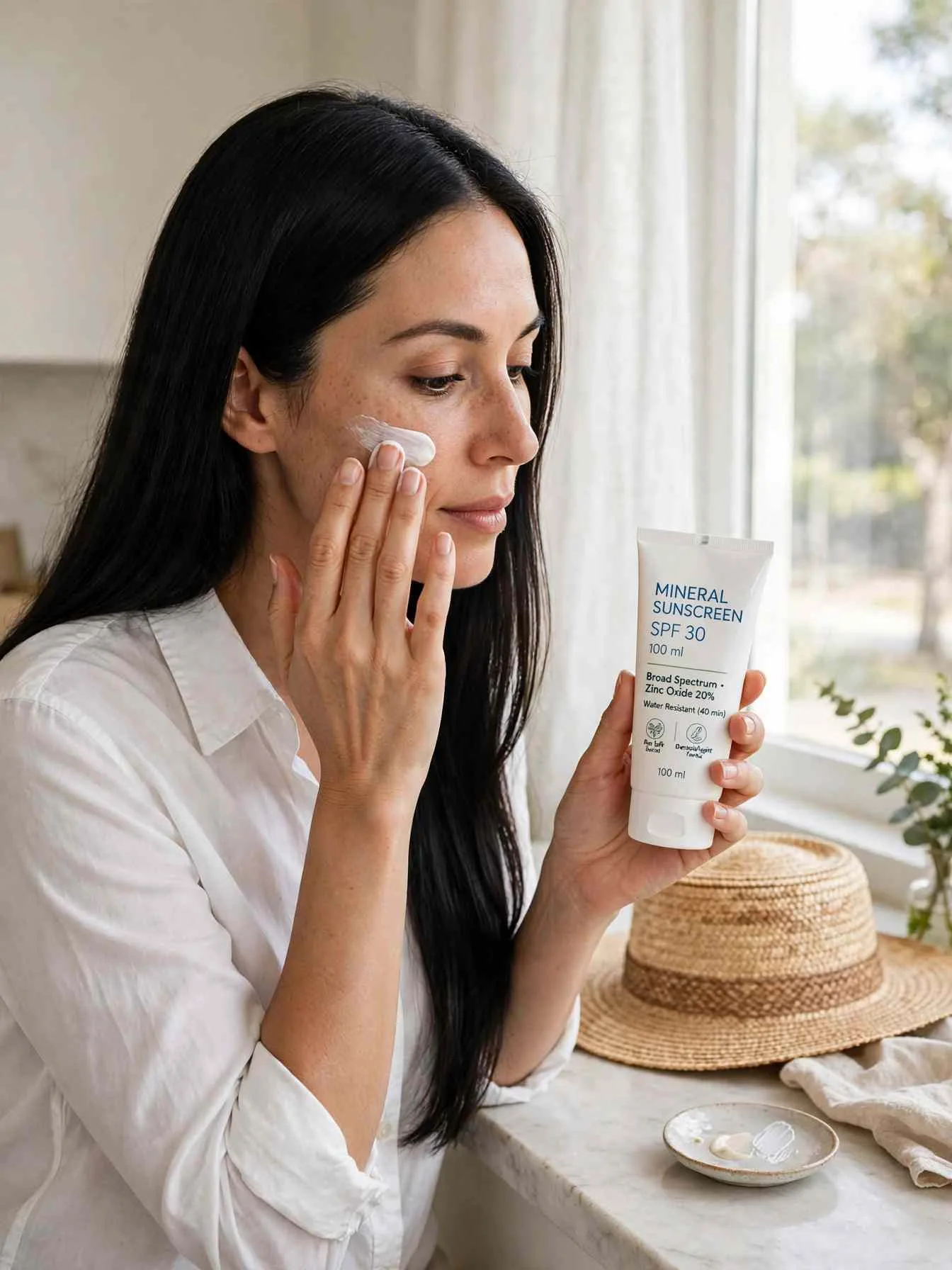
Choose broad-spectrum sunscreen with SPF 30 or higher and water resistance. Apply it according to its label, covering exposed areas such as your ears and neck. Sunscreen is the final skincare step before makeup.
Mineral formulas containing zinc oxide or titanium dioxide are options worth discussing if sunscreen stings. The complete formula still matters. A mineral label does not guarantee comfort for every person.
Reapply during outdoor exposure as directed, generally every two hours and after swimming or sweating. Add shade and a comfortable hat.
The Evening Rosacea Skincare Routine
Evening care removes sunscreen and makeup, then restores moisture. Prescribed medicines may also belong here, depending on your treatment instructions. Your evening routine should accommodate them.
Our skin barrier repair guide explains supporting care in more detail. Use it alongside the advice you receive for your diagnosed condition.
Step One: Remove Sunscreen And Makeup
Wash with your tolerated cleanser using the same light pressure as in the morning. Rinse away residue rather than wiping your face repeatedly. Follow the cleanser’s directions, including any guidance about removing makeup.
If makeup remains, ask about a suitable removal method instead of adding a scrub. Waterproof products may require different removal. Choose an approach that cleans adequately without leaving your skin sore.
Step Two: Follow Treatment and Moisturizer Instructions
Use prescribed treatment at the frequency and position your clinician recommends. Some products require dry skin or different timing. Confirm those details with your pharmacist when the directions are unclear.
Apply your tolerated moisturizer as directed, including areas that feel dry. Avoid introducing an exfoliant during the same trial as a new medicine. Report persistent irritation rather than changing a prescribed regimen yourself.
How To Choose Products You Can Tolerate
Build your rosacea skincare routine around tolerance, practical use, and clear product directions. Price and elaborate packaging do not establish suitability. Keep a record of products that have worked comfortably for you.
Read the ingredient list even when the front label says gentle. Sensitive-skin marketing cannot rule out a reaction. Check for ingredients you already know cause problems.
Read Ingredient Lists With Context
Fragrance, menthol, and strong exfoliating acids can be concerns for reactive skin. Ask your clinician about ingredients you should avoid. Do not assume an ingredient’s effect is identical across every formulation.
The word “alcohol” also needs context. Ingredient names such as “cetyl alcohol” and “stearyl alcohol” describe fatty alcohols used in moisturizers. Ask a pharmacist before rejecting a product based on that word alone.
Keep Product Selection Practical
Keep the ingredient list or a photograph for future appointments. Note the exact product name so you can identify it.
Change one product at a time so you have fewer possible explanations if irritation develops. Avoid buying an entire replacement routine before trying its individual products.
How To Test A New Product
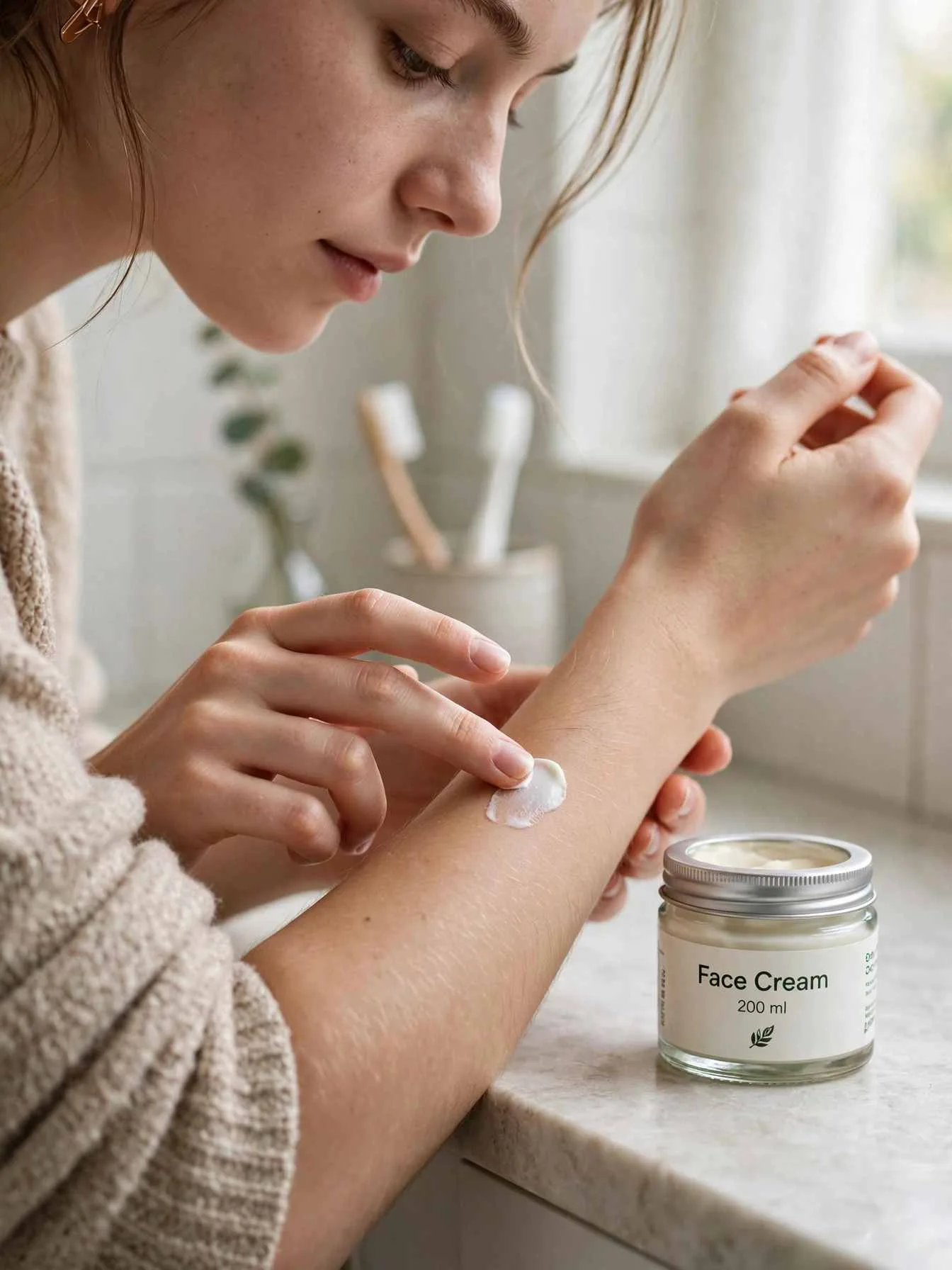
A small-area trial can help reveal irritation before you apply a product across your face. It cannot guarantee facial tolerance. It also differs from diagnostic patch testing performed by a clinician.
The AAD explains how to test skincare products before wider use. Its general method uses a quarter-sized patch on the inside of the arm, applied once daily for 7 to 10 days. Rinse-off products need their usual contact time.
Respond To Irritation
Stop the trial if you develop irritation, such as itching, burning, or swelling. Rinse off the product and seek advice when symptoms persist. Seek advice about a reaction without waiting for it to reach a fixed duration.
A clear arm test does not prove that your face will tolerate the same formula. Ask your clinician about testing when you have active symptoms or previous reactions. Follow prescription instructions separately.
Introduce One Change At A Time
After a tolerated trial, introduce the product without changing the rest of your routine. Record the start date and any symptoms. Allow enough observation time to judge comfort before adding something else.
Do not stop established skincare or prescribed treatment merely to test a cosmetic product. Your clinician can help plan changes when several products seem uncomfortable.
Track Triggers Without Restricting Everything
Possible rosacea triggers include sun exposure, heat, stress, and certain foods or drinks. Your pattern may differ from another person’s. Record observations before treating a general trigger list as personal instructions.
A diary can help you discuss patterns with your clinician. It cannot predict every flare or prove a cause from one episode. Avoid broad dietary restrictions based on a single coincidence.
Record Useful Details
Note the date, symptoms, and products used. Add relevant circumstances, such as a hot journey or a new medicine. Keep entries brief enough that you can maintain the habit.
Record symptom-free days too. They provide context when you compare similar activities. Bring the record to appointments instead of relying on memory.
Make Specific Adjustments
If hot drinks repeatedly coincide with discomfort, try letting them cool. For exercise-related heat, discuss cooler conditions or manageable breaks. Choose adjustments that preserve activities you enjoy.
Avoid treating stress as a personal failure or assuming you can eliminate it. Tell your clinician when symptoms interfere with work, sleep, or social plans.
Recognizing Symptoms On Deeper Skin
Visible redness can be less obvious on deeper skin tones. Describe warmth, tenderness, or stinging even when color changes are subtle. A clinician should assess persistent symptoms rather than relying on redness alone.
Compare your face with its usual appearance in similar lighting. Mention recurring bumps or changes in texture. Photographs can support that conversation, but they cannot establish the diagnosis.
Describe Changes Beyond Color
Explain whether a product hurts during application or leaves discomfort afterward. Note the location and duration without assigning a cause yourself. These observations can help your clinician decide what to examine.
When To Seek Medical Advice
Arrange an assessment for persistent facial symptoms or changes that concern you. Review treatment when your current plan remains uncomfortable. Bring your product list and describe how you use each item.
Eye pain, light sensitivity, or vision changes need urgent medical assessment. Mention recurring gritty or irritated eyes even when facial symptoms seem mild. Do not assume facial moisturiser will address eye symptoms.
Prepare For Your Appointment
Ask which symptoms your treatment targets and how long to wait before reviewing progress. Confirm application order and expected side effects. Request advice about reactions that should prompt earlier contact.
Frequently Asked Questions
These answers address common decisions about daily care. Your prescriber’s directions take priority for medicines and individual treatment.
Can A Rosacea Skincare Routine Cure Rosacea?
Rosacea has no cure at present. Gentle skincare can support comfort alongside medical treatment. A clinician can recommend care for your symptoms.
How Often Should I Cleanse?
Gentle cleansing commonly takes place morning and evening. Ask your clinician about frequency if washing causes persistent discomfort. Avoid repeated washing in response to flushing.
Which Sunscreen Should I Choose?
Choose broad-spectrum, water-resistant sunscreen with SPF 30 or higher. Mineral filters may be worth trying if other formulas sting. Follow label directions for application and reapplication.
Should I Stop Prescribed Treatment During A Flare?
Contact your prescriber if treatment causes discomfort or symptoms worsen. Do not change the regimen based on a general skincare article. Your clinician can assess the cause.
Does A Successful Product Test Guarantee Tolerance?
No. A small-area test cannot guarantee that facial skin will tolerate a product. Stop using it if irritation develops, and seek advice when needed.
Can Rosacea Be Harder To See On Dark Skin?
Redness may be less visible on deeper skin tones. Warmth, stinging, or recurring bumps still deserve assessment. A clinician can distinguish rosacea from other conditions.
Final Thoughts
A workable rosacea skincare routine needs to fit your daily life and any prescribed treatment. You should know each product’s purpose and feel able to ask about discomfort. An expensive purchase or complicated schedule does not establish better care.
If you are unsure about application order, leave space for your pharmacist’s advice. Write down your current products and medicines tonight, including their application order, for your next review.