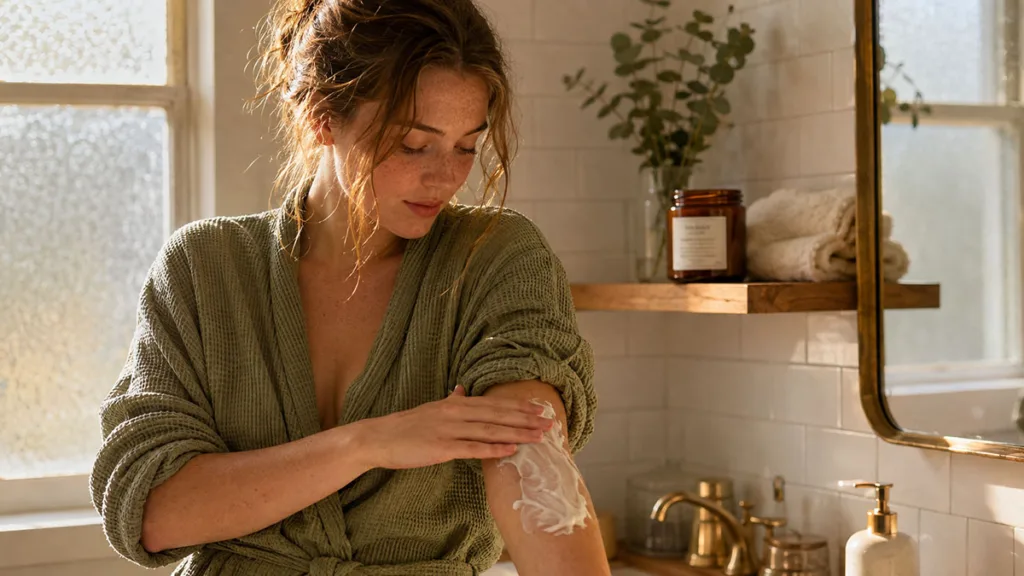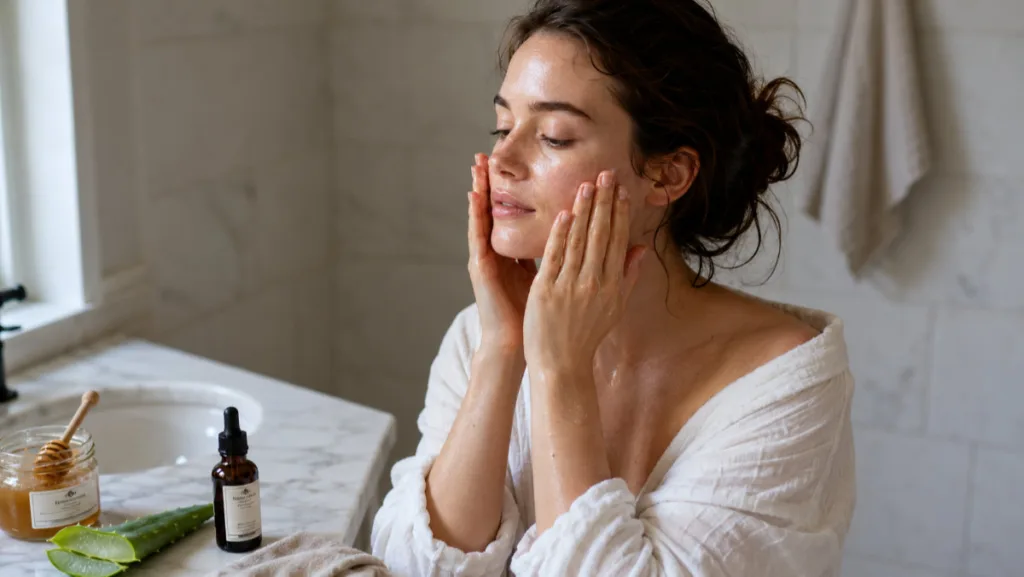
Natural Self Tanners: Best Picks for a Streak-Free Glow
Still getting orange patches from your self-tanner? The problem usually is not the product. It is the prep, the formula match, and a few steps most people skip entirely.
Natural self tanners use plant-derived ingredients to give you a sun-kissed glow without UV damage or a bottle full of harmful chemicals. But clean formulas are not all the same. Dry skin needs different ingredients than oily skin. Foam applies differently than lotion. And skipping exfoliation before any of them guarantees uneven results.
This guide covers how sunless tanners work, which toxic ingredients to avoid, how to prep your skin, the best picks by skin type and budget, and exactly how to fix streaks and dark patches when they happen. Follow these steps and you will get a natural, streak-free tan every time.
Why Natural Self Tanners Are Worth It
Your skin absorbs up to 64% of what you put on it, according to a study in the American Journal of Public Health. That makes ingredient choice a real health decision, not just a beauty preference. Most conventional self-tanners carry a list of ingredients worth skipping.
Toxic Ingredients to Avoid
| Ingredient | Why to Avoid |
| Mineral oil | Petroleum-based; clogs pores |
| Sodium hydroxymethylglycinate | Can break down into formaldehyde |
| Amyl acetate | A solvent also found in paint |
| Isopropyl myristate | May bond to skin as a carcinogenic nitrate |
| Artificial fragrances | Made from petrochemicals; common irritant |
What Makes a Self-Tanner Clean?
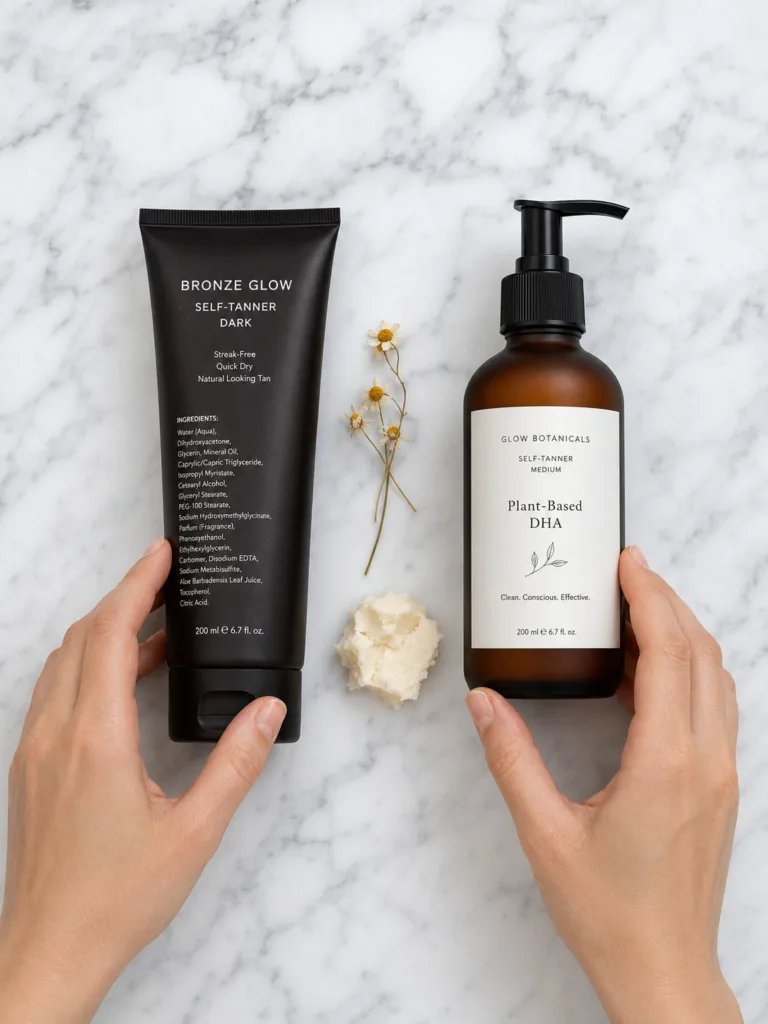
A clean self-tanner uses plant-derived or non-GMO DHA (dihydroxyacetone) as its active ingredient instead of synthetic chemicals. DHA reacts with amino acids in the top layer of your skin to create color. The best formulas also include nourishing ingredients like aloe vera, shea butter, coconut oil, jojoba oil, and hyaluronic acid. Look for products verified by the Environmental Working Group’s Skin Deep Database or made to the Credo Clean Standard. These are the same standards used to evaluate every nontoxic sunless tanner on this list.
How Natural Self Tanners Work
Natural self tanners are sunless tanning formulas made with plant-derived or non-GMO DHA instead of synthetic chemicals. Every self-tanner, clean or conventional, relies on DHA to create color. DHA is a simple sugar that reacts with amino acids in the dead cells of your skin’s outer layer. This is called the Maillard reaction—the same chemistry that browns bread. The tan develops over 4 to 8 hours and sits only on the surface, so it fades as those cells shed naturally. Moisturizing daily slows that process down.
Plant-based DHA comes from sources like non-GMO sugar beets or sugar cane. It works the same as synthetic DHA but without the petrochemical sourcing. Some formulas also use erythrulose, a slower-developing sugar that builds a more gradual color.
The smell many people associate with self-tanner comes from DHA reacting with skin proteins. Better-quality formulas mask this with essential oils or vanilla, or they simply use a lower DHA concentration so the reaction is lighter.
How to Prep Your Skin for a Flawless Tan
Most streaks and patches come from skipped prep steps, not from a bad product. This part matters more than people expect.
Step 1 — Exfoliate (24 Hours Before)
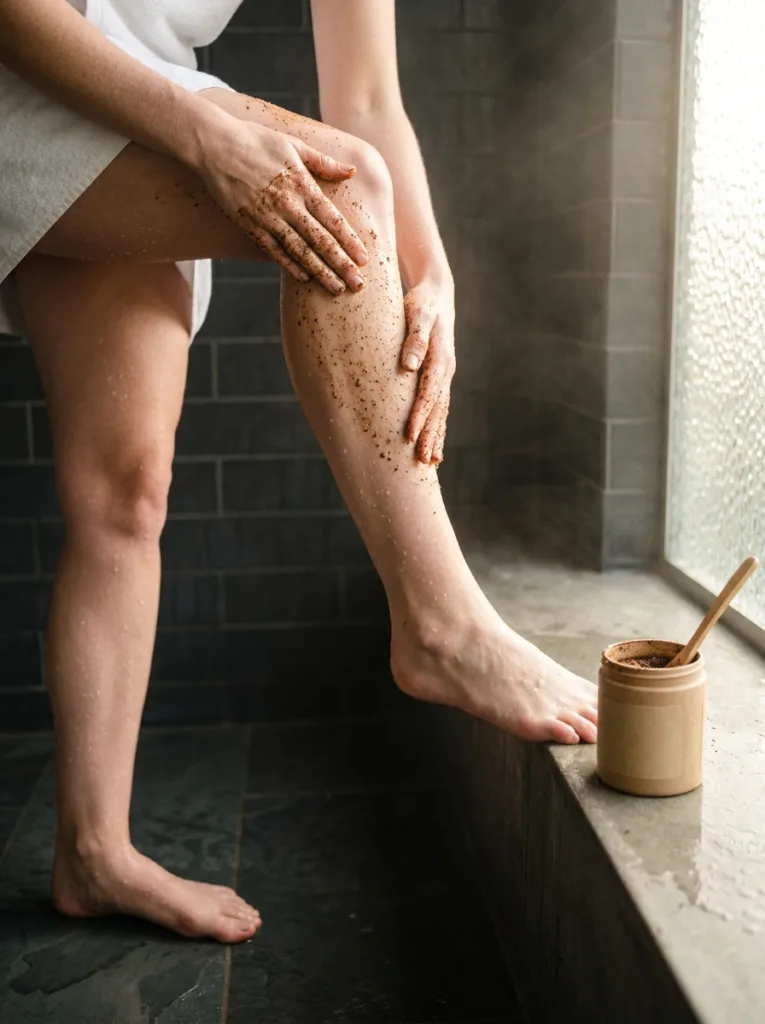
Use a body scrub or exfoliating mitt the day before you apply. Focus on rough areas: knees, elbows, ankles, and heels. Dead skin grabs extra DHA and turns darker than the skin around it. Do not exfoliate right before applying—your skin needs time to calm down, and open pores can cause a dotted finish.
Step 2—Moisturize Dry Patches (Day Of)
After your shower, apply a light fragrance-free moisturizer to your knees, elbows, ankles, and the backs of your hands. These areas absorb more product than the rest of your body. A thin layer here keeps them from going too dark. Wait 10 minutes so it fully absorbs before you apply tanner.
Step 3—Skip Deodorant and Perfume
Deodorant and perfume both react with DHA and can cause green or gray patches, especially under the arms. Skip them on application day. Apply your self-tanner first, let it dry completely, then use these products afterward.
Best Natural Self Tanners by Skin Type
The formula you pick matters as much as how you apply it. Here is what works for each skin type.
Best Natural Self Tanner for Dry Skin
Dry skin absorbs product unevenly unless the formula has enough moisture to compensate. Look for shea butter, avocado oil, squalane, and hyaluronic acid in the ingredients list.
- Beauty by Earth Self Tanner ($36)—blends sugar beet DHA with coconut oil, shea butter, and cranberry extract. Builds color gradually and applies like a body lotion. Good for beginners.
- Lux Unfiltered N°32 Gradual Self-Tanning Cream ($38)—cocoa butter, squalane, and sunflower extract. Gives a natural, buildable glow without going dark too fast.
Apply both in circular motions like a lotion for even coverage.
Best Natural Self Tanner for Oily or Acne-Prone Skin
Oily skin needs a lightweight, non-comedogenic formula that will not clog pores. Water-based or foam textures are the better choice here.
- Saltyface Tanning Water ($42) — organic sugar beet DHA with raspberry seed oil and chamomile extract. Certified acne-safe, meets the Credo Clean Standard, and dries fast.
- COOLA Sunless Tan Anti-Aging Face Serum ($54) — lightweight with argan oil, hyaluronic acid, and plant stem cell cultures. Works well for oily facial skin without leaving residue.
Let these dry fully before putting on clothing.
Best Natural Self Tanner for Sensitive Skin
Sensitive skin reacts to artificial fragrances, alcohol, and synthetic preservatives. Stick to formulas that are fragrance-free or use only gentle essential oils.
- Suntegrity Moisturizing Self Tanner ($40) — made with aloe vera, sweet almond oil, and coffee extract. Free from sulfates, parabens, and phthalates. Also reef-friendly.
- Coco & Eve Sunny Honey Bali Bronzing Foam ($38)—silicone-free, toxin-free, and gluten-free. A safer pick if your skin tends to react to ingredient-heavy formulas.
Patch test on the inside of your arm 24 hours before full application.
Best Natural Self Tanners by Budget
Under $40
Beauty by Earth Self Tanner ($36) is the most solid pick at this price. It is the closest thing to a classic organic self tanning lotion that is also genuinely clean—USDA organic, rated by the EWG Skin Deep Database, and available in two shades: fair to medium and medium to dark. The color builds gradually, so you can control how deep it goes.
Coco & Eve Sunny Honey Bali Bronzing Foam ($38) is the other strong option here. It has picked up 21 beauty awards, and the streak-free formula is genuinely well-reviewed across a range of skin tones.
$40–$60
Saltyface Tanning Water ($42) is the best face option in this range — goop-approved and Credo-certified. COOLA Sunless Tan Serum ($54) adds some anti-aging benefit alongside the color, which makes it useful if fine lines are also a concern. Lux Unfiltered N°32 ($38) and Suntegrity ($40) also fit comfortably in this tier.
Splurge Picks
True Botanicals Bronze Well Regenerative Glow Drops ($120) are not a traditional self-tanner. They are a treatment oil made with carotenoid-rich oils and calendula that gives skin a warm, luminous finish. Pregnancy-safe. Best for women who want a light glow rather than a full tan effect.
Typology Tan Complexion Serum ($70) uses buriti oil, which is rich in beta-carotene, for a subtle sun-kissed result that develops slowly over a few days.
How to Apply Self-Tanner Without Streaks
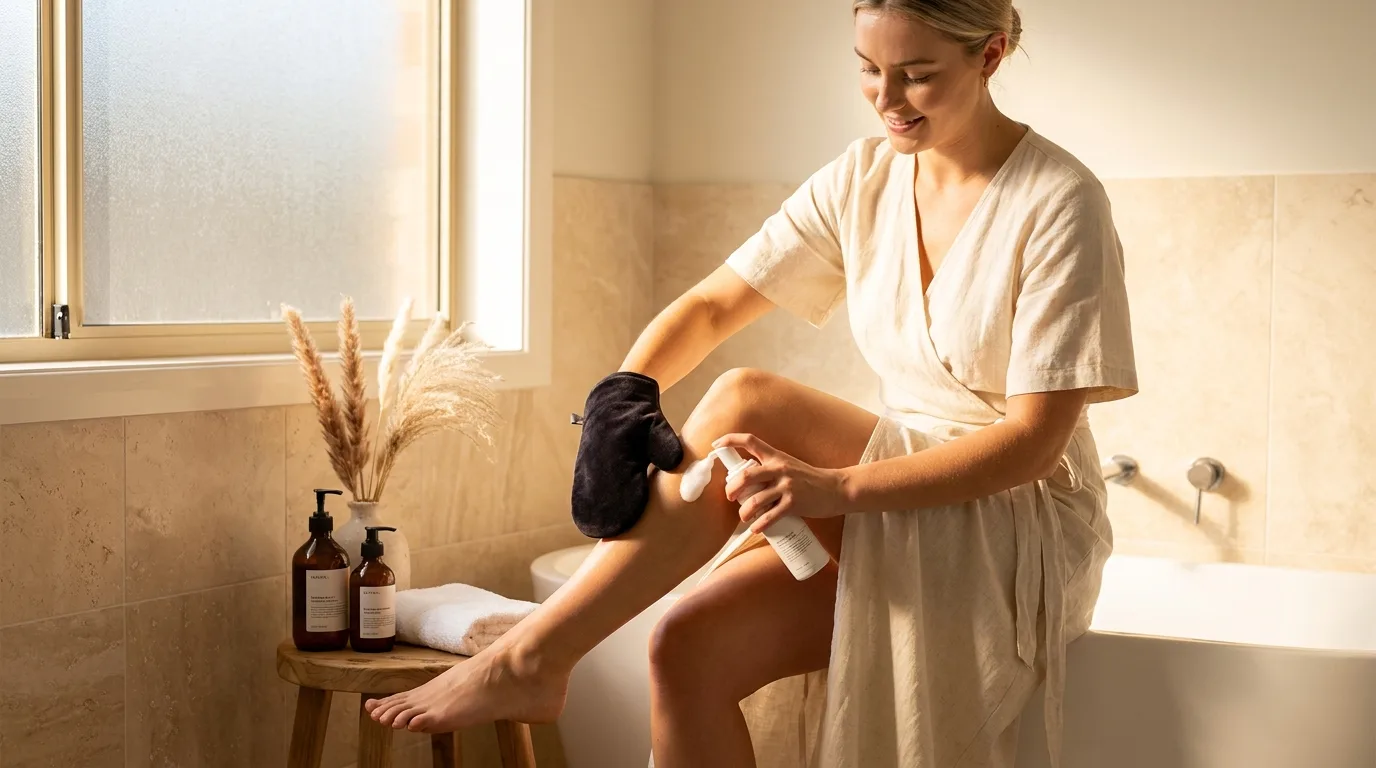
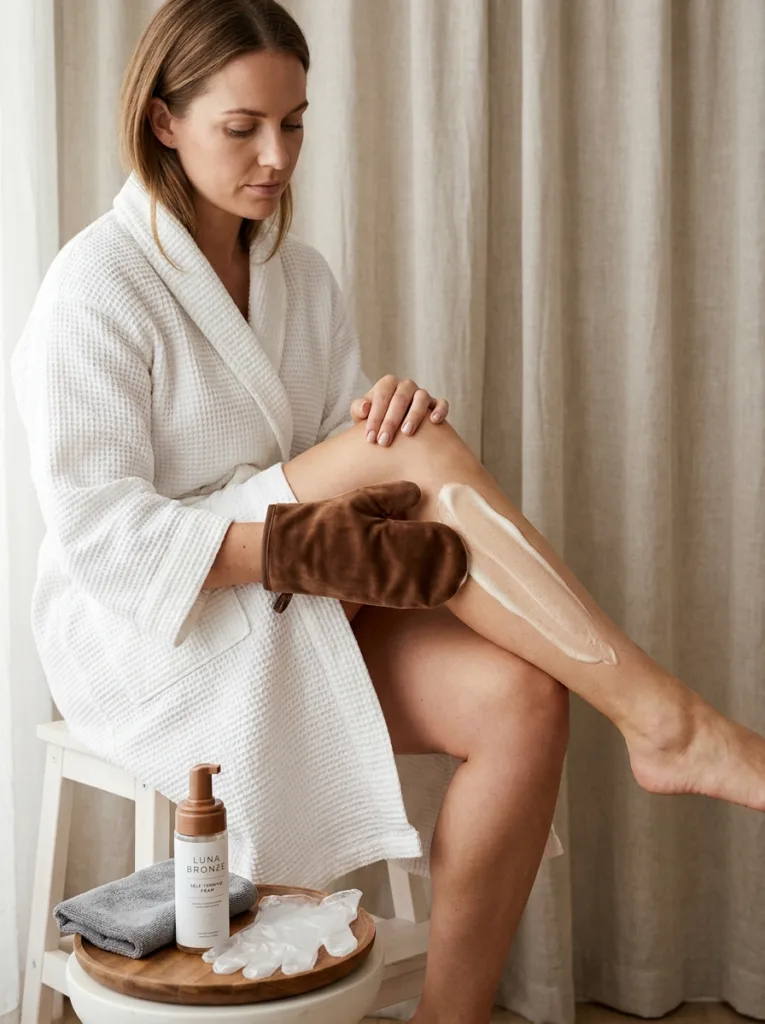
- Put on a tanning mitt or disposable gloves before touching the product.
- Start at your ankles and work upward in long, even strokes.
- Blend in circular motions at knees and elbows—these are the spots you moisturized earlier.
- Use the residue left on the mitt to tap lightly over your feet and hands. Never apply directly to these areas.
- Let the tanner dry fully—15 to 20 minutes—before dressing.
- Wear loose, dark clothing on application night to avoid transfer.
For your face, use a small kabuki brush or your fingertips. Apply downward from forehead to chin, then blend along your hairline and jawline. Use a very small amount near your eyebrows.
How to Fix Self-Tanner Mistakes
DHA sits only on the surface of your skin, so most mistakes are fixable before they fade on their own.
| Problem | Fix |
| Dark patches on knees or elbows | Apply a paste of baking soda and lemon juice for 2 minutes, then rinse. A gentle body scrub also works. |
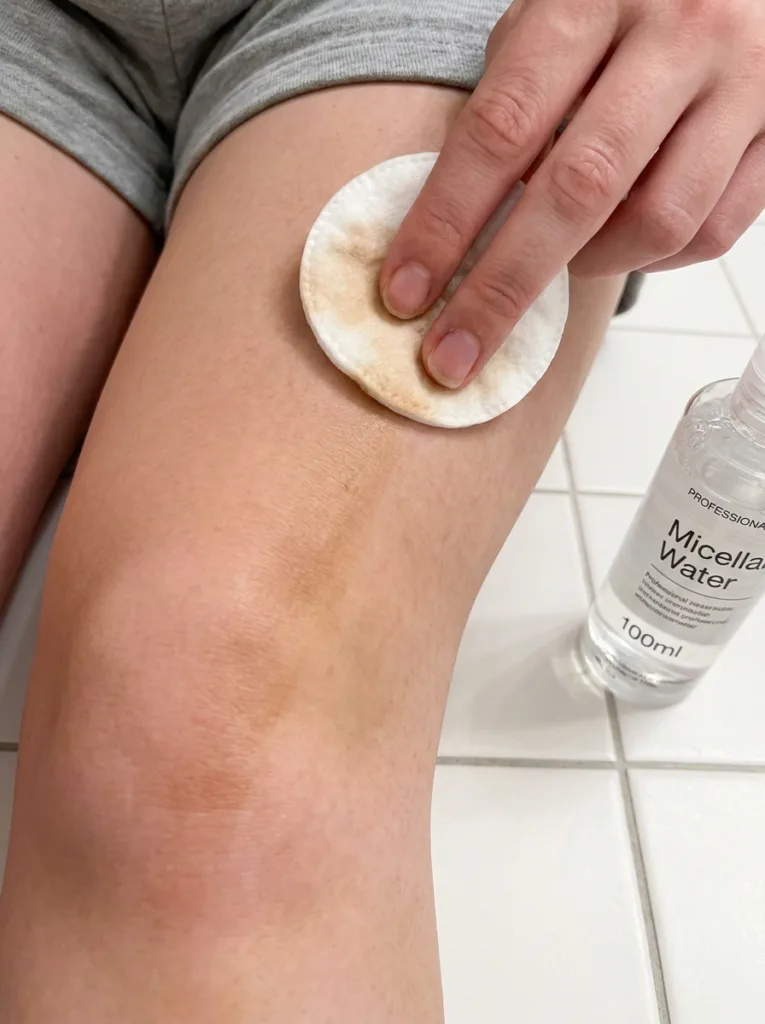
| Streaks | Wipe with a cotton pad soaked in micellar water or body oil, moving in one direction. |
| Green or gray tones (from deodorant) | Exfoliate lightly and skip deodorant 24 hours before your next application. |
How to Make Your Tan Last Longer
Most natural self tanners last 3 to 7 days, depending on how well you maintain the tan after application.
- Apply fragrance-free body lotion daily. Moisturized skin sheds dead cells more slowly, so the color sticks around longer.
- Avoid long hot baths, heavy exfoliation, and chlorinated pools while your tan is active.
- Reapply a light layer every 3 to 4 days to keep the base even.
FAQ
What is the safest natural self-tanner?
Look for plant-derived DHA from sugar beets and no parabens, sulfates, or synthetic fragrance. Beauty by Earth and Suntegrity are both EWG-rated and consistently well-reviewed for clean ingredient lists.
Do natural self-tanners work as well as conventional ones?
Yes. Plant-based DHA works the same way as synthetic DHA. The color depth depends more on concentration and how you apply it than on whether the formula is clean.
How long does a natural self-tanner take to develop?
Most take 4 to 8 hours to develop. Gradual formulas build color over 2 to 3 applications across a few days.
Can I use a natural self-tanner on my face?
Yes, but use a formula made for facial skin. Saltyface Tanning Water and COOLA Face Serum are both non-comedogenic and gentler than body formulas.
Do natural self-tanners smell bad?
Some do, some do not. The smell comes from DHA reacting with skin proteins. Formulas with lower DHA concentrations or added vanilla and essential oils tend to smell much better than conventional options.
Is self-tanner safe during pregnancy?
DHA is considered safe for topical use. True Botanicals Bronze Well Glow Drops is specifically marketed as pregnancy-safe. Check with your doctor if you have any concerns.
Conclusion
Natural self tanners work. The glow is real; the formulas have improved a lot in recent years, and going clean does not mean settling for weaker color. What it does mean is being more careful about which formula you pick and not skipping the prep work.
Match the formula to your skin type, exfoliate the day before, cover dry patches with a thin layer of moisturizer, and apply with a mitt. If it goes wrong, a baking soda paste or some micellar water fixes most issues fast.
Beauty by Earth is where most people should start — affordable, clean, and forgiving. If you want something more premium, Lux Unfiltered N°32 is worth the small price difference.
For more skincare tips, please visit VelvetBoard.