20 Stunning Wedding Updo Ideas Brides Are Obsessed With
Terrified your wedding updo won’t survive the reception? You’re not alone. Brides worry about their hair falling apart mid-dance more than almost anything else on the big day, and most wedding blogs never even mention it.
A great wedding updo holds through vows, photos, a first dance, and hours of hugging relatives without a single pin slipping. This guide breaks down 20 bridal updo styles brides are obsessed with, how to match one to your dress and hair type, and what a wedding updo really costs, usually $85 to $250 depending on your stylist and city.
You’ll also learn exactly when to book your wedding hair trial and how to make your updo last until the very last song plays.
Why a Wedding Updo Works for Almost Any Bride
An updo pulls hair away from your face and neck. That keeps you cool during a summer ceremony and photo-ready all night. It also plays well with veils, tiaras, and statement earrings, since nothing fights for attention.
It Pairs with Any Dress Neckline
Updos suit nearly every dress neckline. A high collar looks balanced with a sleek low bun. A strapless gown pairs well with a soft, textured updo that adds visual interest above the shoulders. Outdoor and beach weddings benefit too. Pinned hair resists wind far better than loose curls ever will.
It Handles Heat, Humidity, and Long Nights
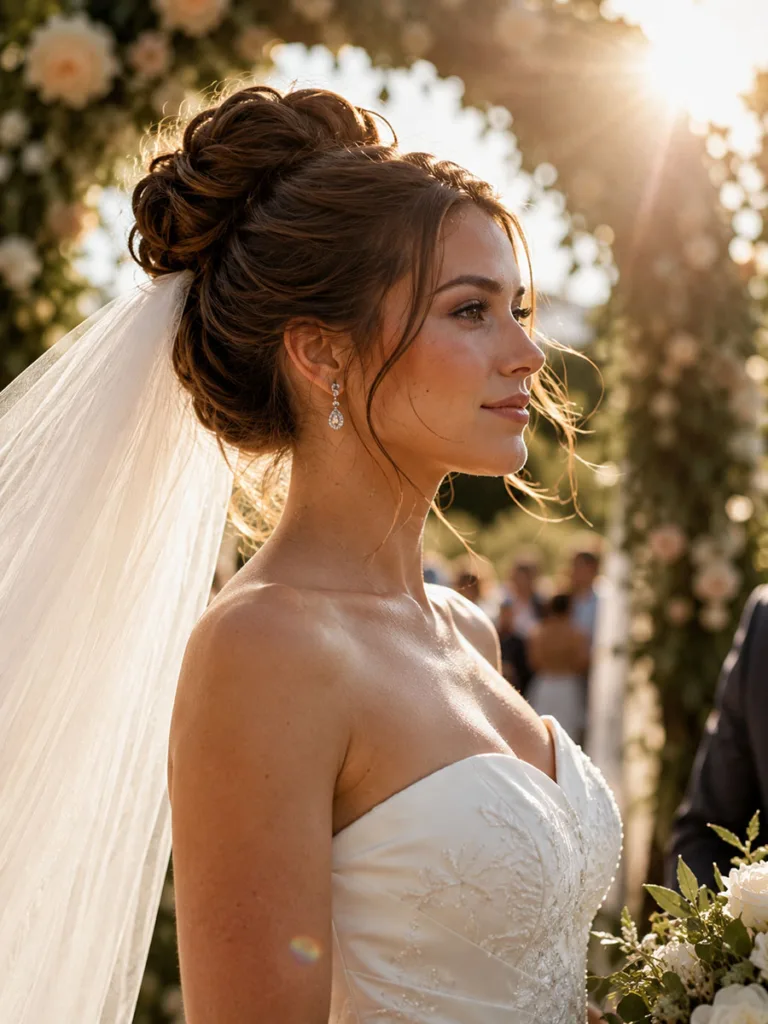
Pinned styles also protect your hair from the weather. Humidity causes loose curls to frizz within an hour, but a secured updo holds its shape through heat and moisture. Photographers often prefer updos too, since they keep your jawline and shoulders visible in every ceremony and portrait shot.
Comfort matters over a long day, too. A well-built updo distributes weight evenly across pins instead of pulling at one spot. It won’t tug at your scalp by hour six. Most brides are surprised how light it still feels by the end of the night.
How to Choose the Right Wedding Updo
Your dress, your hair type, and your wedding setting all point toward the same answer once you line them up. A stylist can adjust almost any style. But starting with the right base saves real time at your trial.
Match Your Dress Neckline
A sweetheart neckline or strapless gown looks stunning with a low chignon that shows off your collarbone. A high-neck or illusion-back gown calls for something different. Go higher so the back detail stays visible.
Consider Your Hair Texture
Fine hair often needs a hairpiece or some teasing for volume. Thick or curly hair holds shape naturally, so braided or textured updos suit it well. Short hair, generally above the shoulders, can still form a polished updo. Pins, a hairpiece, or clip-in extensions all get the job done.
Factor In Your Venue and Season
Think about where and when you’re saying “I do.” A humid outdoor wedding calls for a sleeker, pin-heavy style. A rustic barn wedding suits something looser and more tousled instead.
Let Your Face Shape Guide the Height
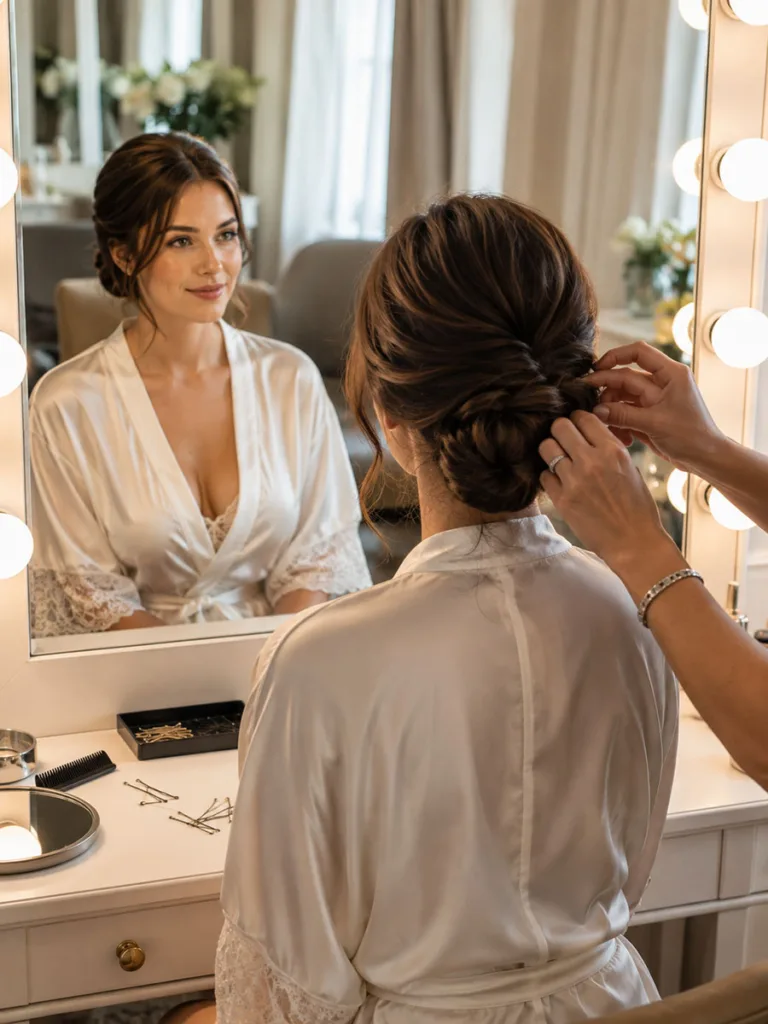
Your face shape also guides the height and placement of your bun. A round face often looks slimmer with height at the crown. A longer face balances well with a fuller, lower bun that adds width near the jaw. Bring a photo of your dress to your consultation. That way, your stylist can build the updo around your whole look, not just the hair.
20 Stunning Wedding Updo Hairstyles to Try
These bridal updo hairstyles cover classic, romantic, and modern brides, along with options for thin hair, curly hair, and shorter lengths that most galleries skip.
Quick reference: find your style in seconds.
| # | Style | Best For | Hair Type |
| 1 | Classic Chignon | Timeless, editorial brides | Any length |
| 2 | Soft Messy Bun | Boho, outdoor weddings | Fine to medium |
| 3 | Braided Crown Updo | Fairytale and woodland themes | Medium to long, textured |
| 4 | High-Volume Bun | Statement, regal looks | Medium to long |
| 5 | Twisted Low Updo | Soft structure | Fine to medium |
| 6 | Sleek French Twist | Black-tie, ballroom | Straight to wavy |
| 7 | Curly Updo with Face-Framing Pieces | Natural curl lovers | Wavy to curly |
| 8 | Low Ballerina Bun | Heavy dancing, long receptions | Any length |
| 9 | Textured Fishtail Bun | Detailed back views | Medium to long |
| 10 | Bridal Ponytail Updo | Modern, low-fuss brides | Medium to long |
| 11 | Vintage Finger Waves Updo | Gatsby, art deco themes | Any length |
| 12 | Half-Up Braided Updo | Brides who want length visible | Medium to long |
| 13 | Side-Swept Bridal Bun | Asymmetrical necklines | Medium to long |
| 14 | Updo for Short Hair | Shoulder-length or bob hair | Short |
| 15 | Boho Braided Bun with Flowers | Rustic, garden venues | Medium to long, textured |
| 16 | Sleek High Bun | Bold makeup, statement jewelry | Straight |
| 17 | Natural Curls Updo for Coily Hair | Protecting natural texture | Coily to kinky |
| 18 | Double-Braided Updo | Symmetrical, detailed back views | Medium to long |
| 19 | Loose Chignon with Waves | Destination: beach weddings | Any length, wavy |
| 20 | Jeweled Updo | Extra sparkle, any base style | Any length |
1. Classic Chignon
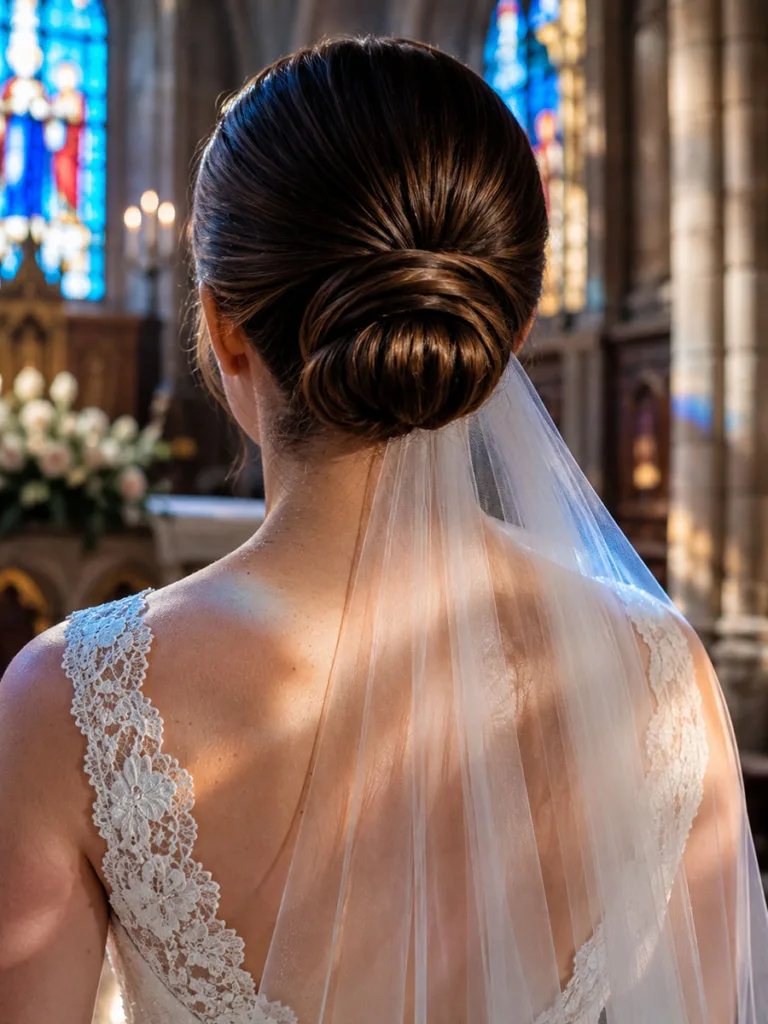
The chignon gathers hair into a smooth, low bun that sits at the nape of the neck. Stylists build it by twisting or looping a low ponytail, then pinning it flat against the head. This shape stays close to the scalp, so it holds through hours of dancing without shifting. It pairs naturally with a cathedral veil, since the veil comb anchors directly into the base without fighting for space. Brides who want a timeless, editorial look lean on this style most, and it flatters nearly every face shape because the low placement keeps the silhouette balanced rather than adding height.
2. Soft Messy Bun
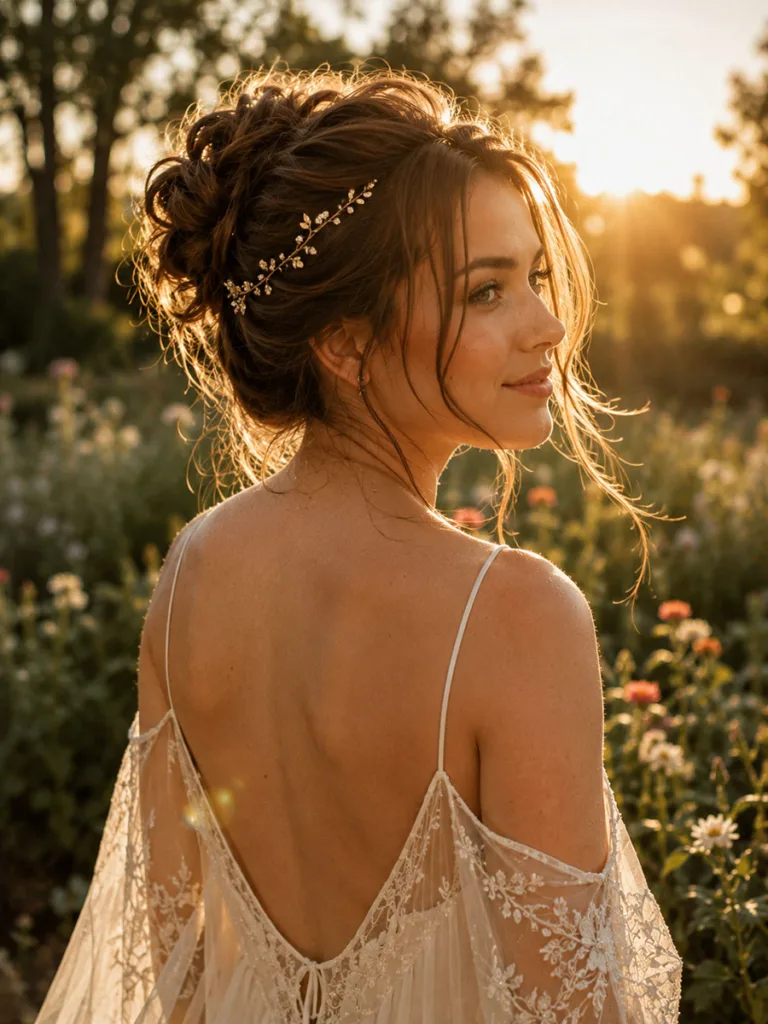
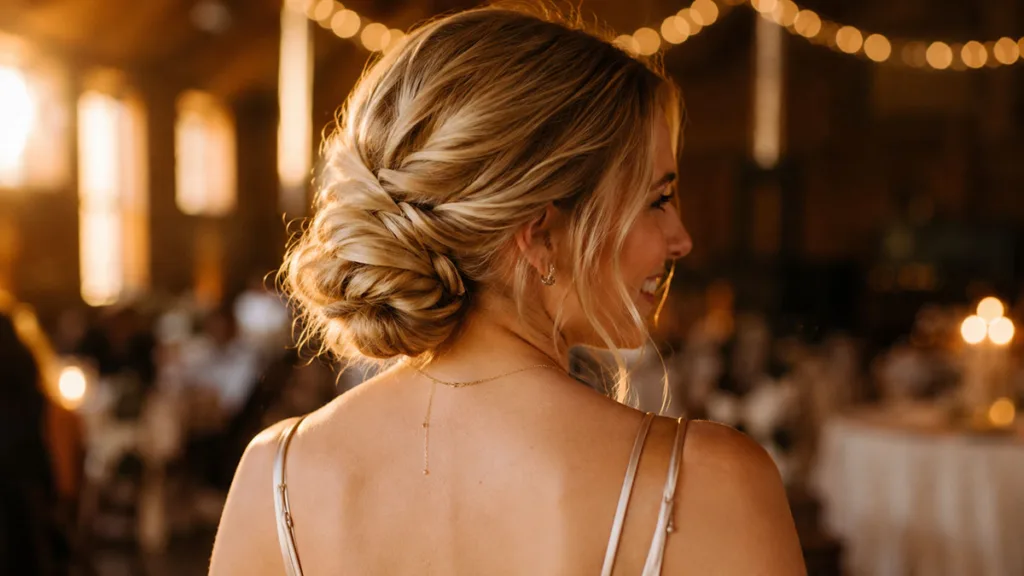
A soft messy bun starts with loose waves and then gathers hair into a bun with pulled tendrils left around the face and neck. Stylists tease the crown slightly before pinning to add lived-in volume instead of a flat finish. The relaxed texture reads romantic in photos and holds up well outdoors, since a few loose pieces already look intentional. Boho, garden, and vineyard weddings suit it best, anywhere a stiff, sleek updo would clash with the setting. Fine and medium hair both work well here too, since teasing compensates for thinner strands.
3. Braided Crown Updo
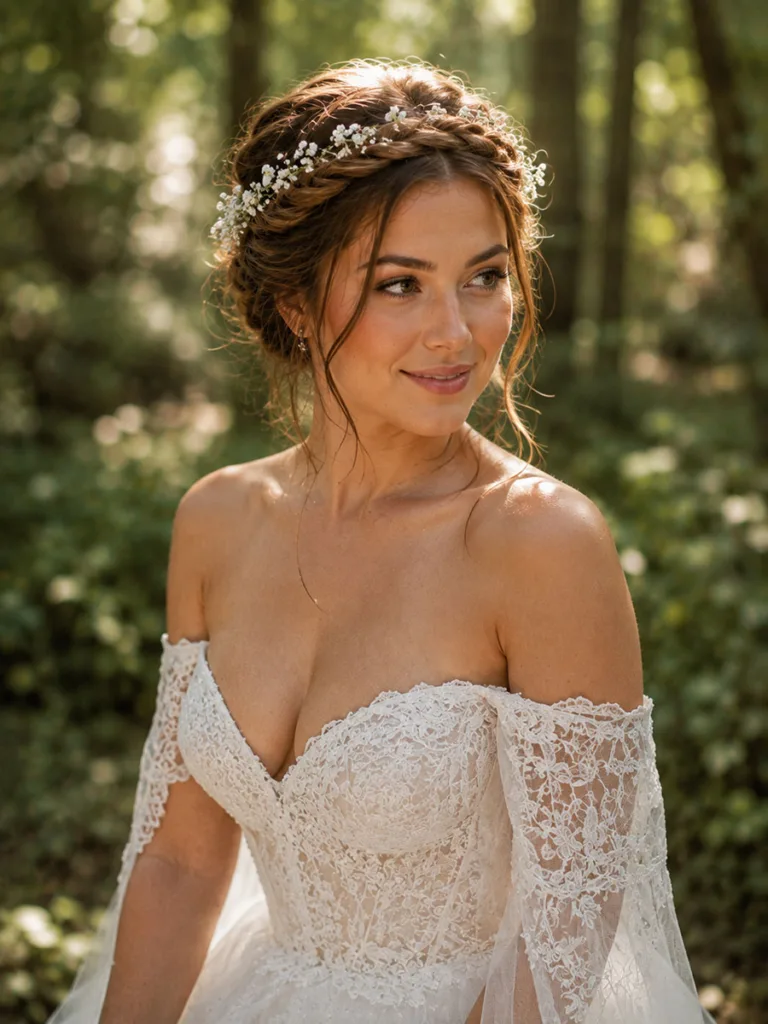
A fishtail or Dutch braid wraps around the head from temple to temple here, creating a halo effect without a headpiece. The braid becomes the decoration itself, so it needs less hairspray and fewer pins than a fully pinned bun. Medium to long hair with some natural texture works best, since texture keeps the braid from looking flat. Brides drawn to a fairytale or woodland theme often choose this look. Add a flower crown tucked along the braid line, and it feels complete.
4. High-Volume Bun
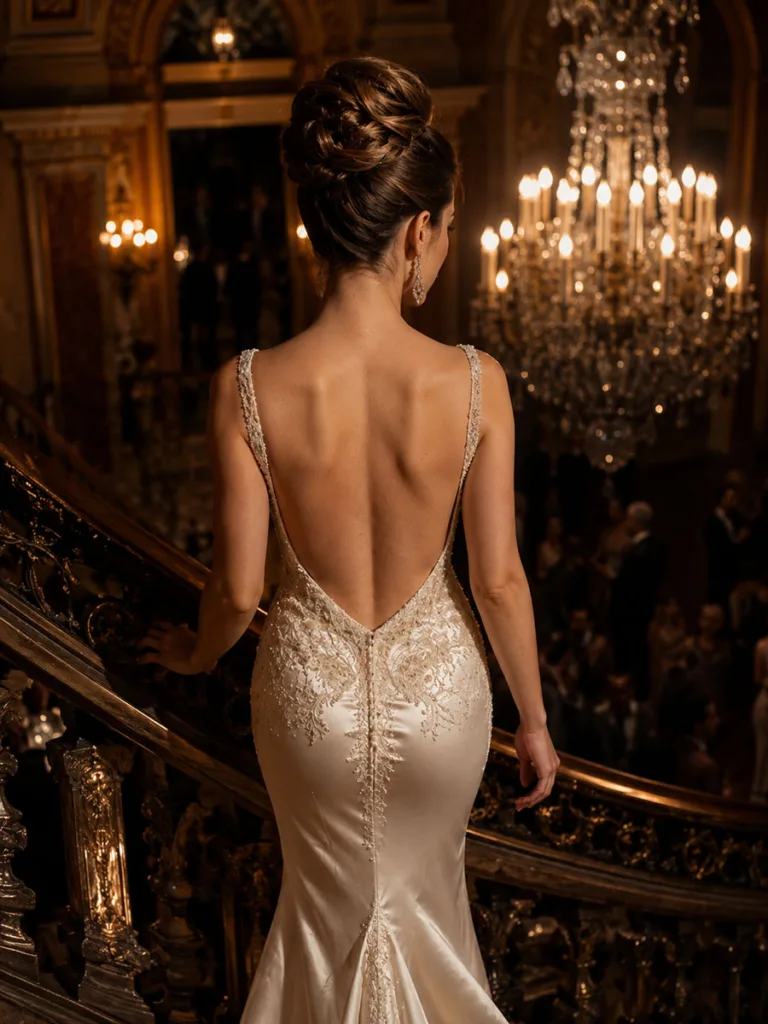
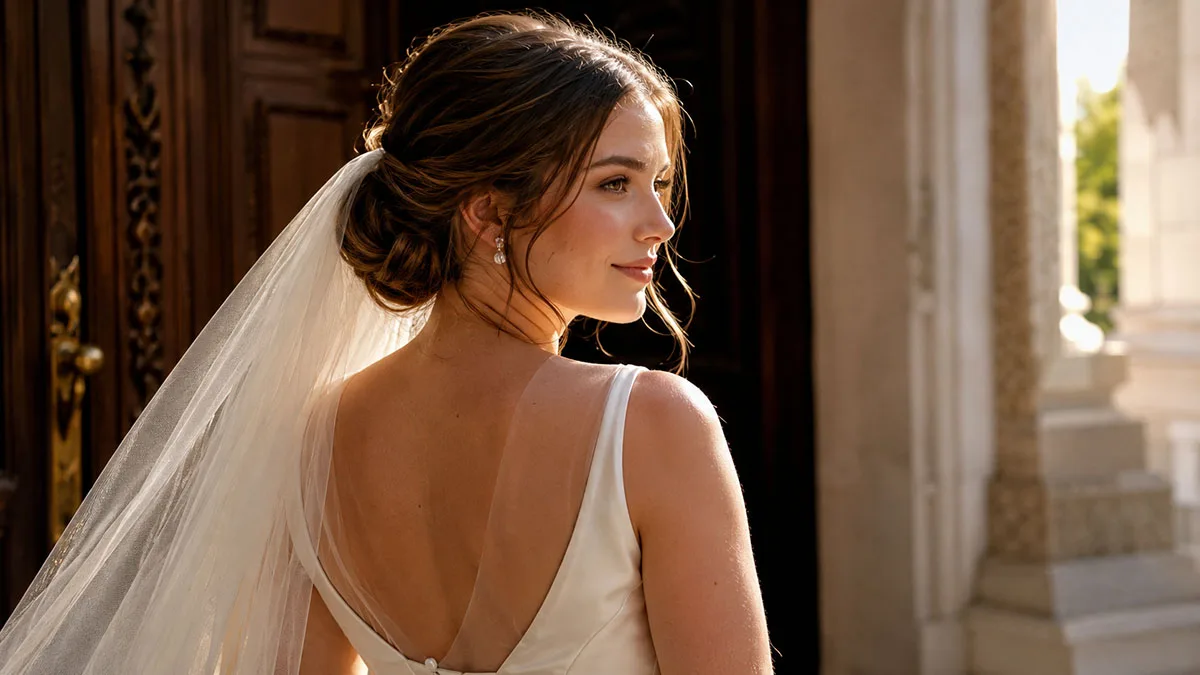
A high-volume bun sits at the crown rather than the nape, and stylists build height first by backcombing before shaping the bun. The added lift elongates the neck and creates a regal, statement-making silhouette from every angle. It photographs strongly from the front and back, too, which matters if your ceremony includes an aisle walk guests will see from behind. Pair it with drop earrings and an open-back gown, since the height draws the eye upward and keeps the back detail visible.
5. Twisted Low Updo
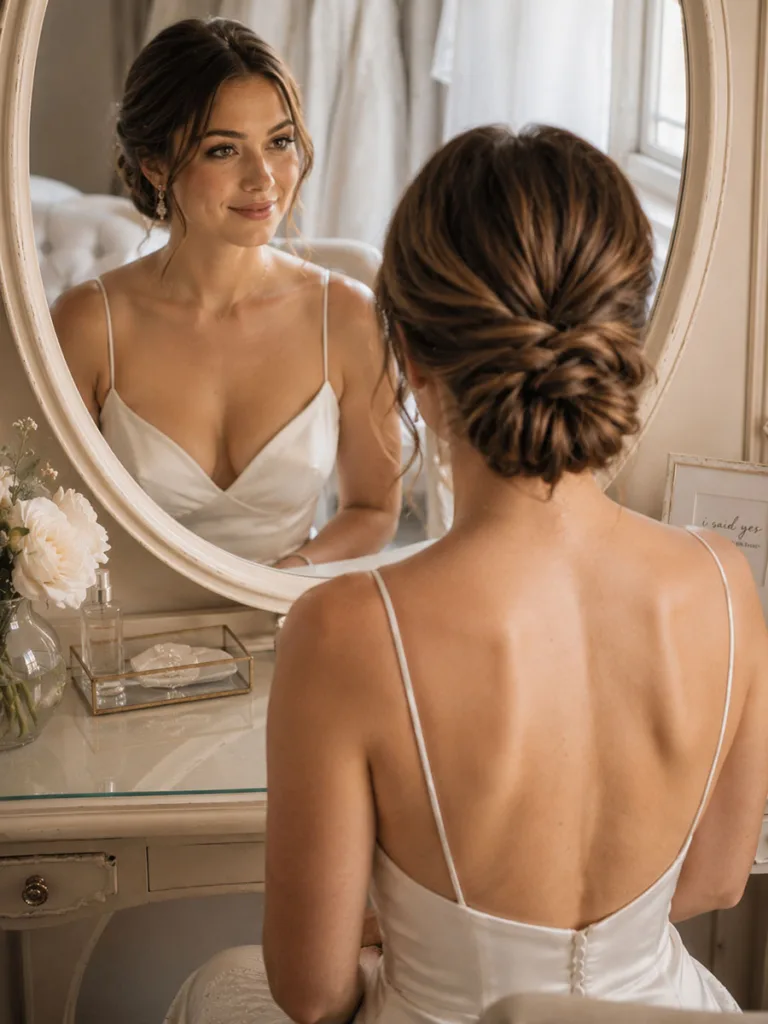
Twisted sections replace a single braid or bun shape, with two or three strands twisted individually before pinning into a low cluster. The result feels structured but softer than a plain chignon, since the twists catch light differently than smooth hair. Brides who want texture without the fullness of a braid tend to love this one. Fine to medium hair holds it securely, since each twist gets its own set of pins, spreading tension evenly across the head instead of one central point.
6. Sleek French Twist
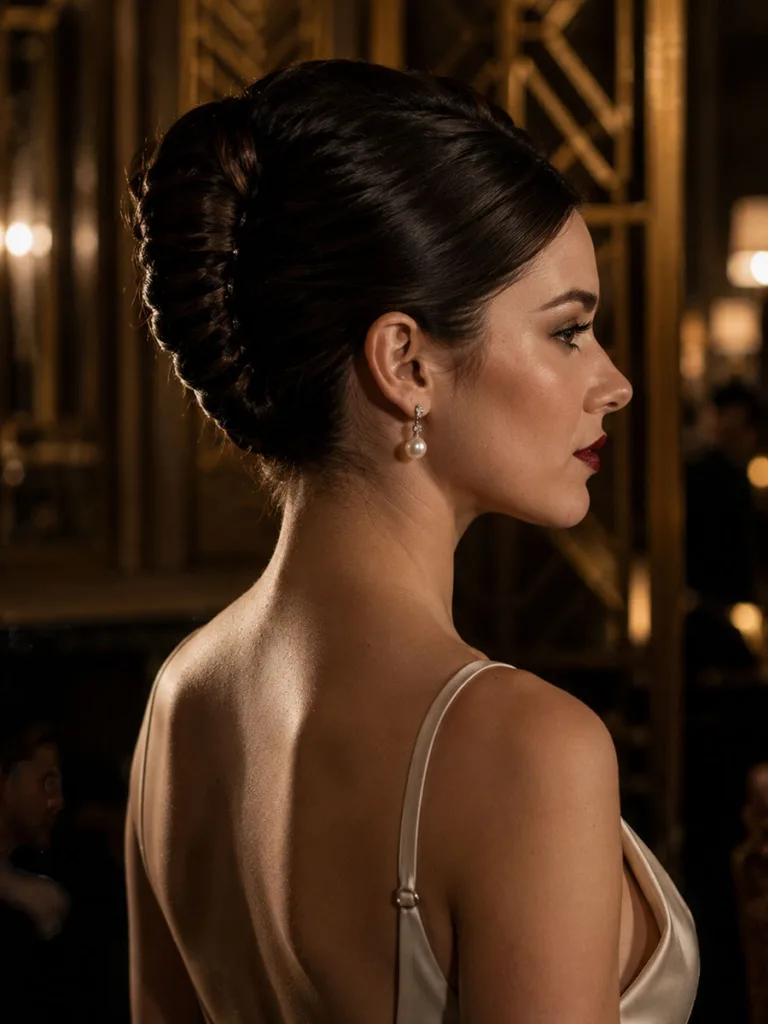
The French twist rolls hair vertically up the back of the head into a tight, polished seam, finished with a few pins along the center. It reads formal and slightly retro, making it a strong match for black-tie or ballroom weddings. Because the shape stays flat against the head, it works under a fitted veil or tiara without adding bulk. Stylists recommend this for straight or slightly wavy hair, since curly textures need extra smoothing product to get the smooth finish this look depends on.
7. Curly Updo with Face-Framing Pieces
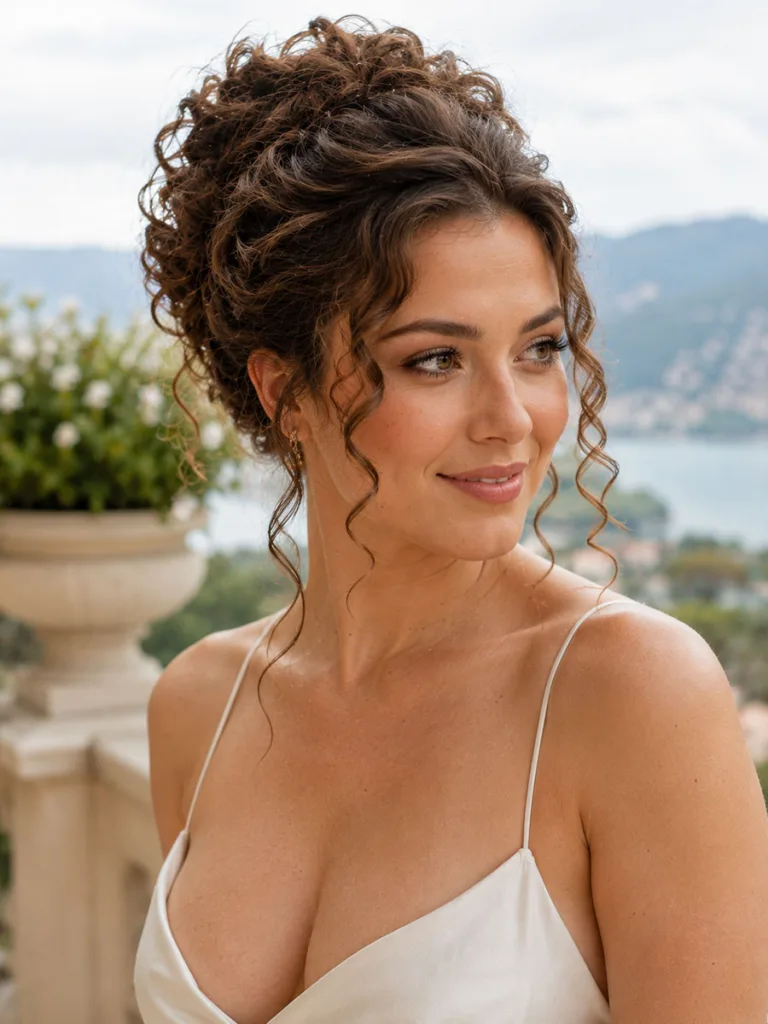
Stylists leave the natural curl pattern intact here instead of smoothing it out. They pin curls upward while two face-framing pieces stay loose. Wash-and-go curly hair works perfectly, so it needs less heat styling than sleeker updos. The face-framing curls soften the jawline and add movement to photos. Brides with type 2 or type 3 curls often prefer this option, since it celebrates their natural texture instead of fighting it. It also holds well, because curls grip bobby pins more securely than straight strands.
8. Low Ballerina Bun
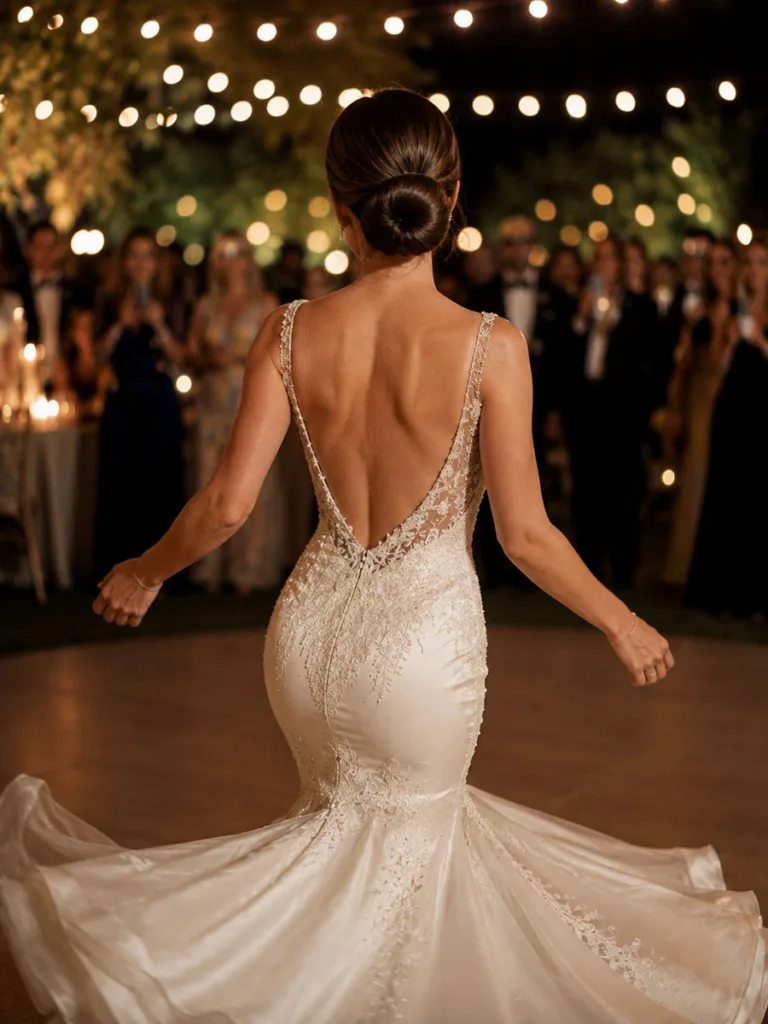
Inspired by classical dance, this bun sits centered at the base of the skull and stays sleek from root to tip. Stylists smooth flyaways with gel or pomade before wrapping hair into a tight coil. Because the shape is symmetrical and low, it distributes pin tension evenly, which is why stylists often recommend it for brides planning a long reception with heavy dancing. Minimalist gowns pair cleanly with it, especially with a middle or no part, giving a polished, sculptural look that rarely needs touch-ups.
9. Textured Fishtail Bun
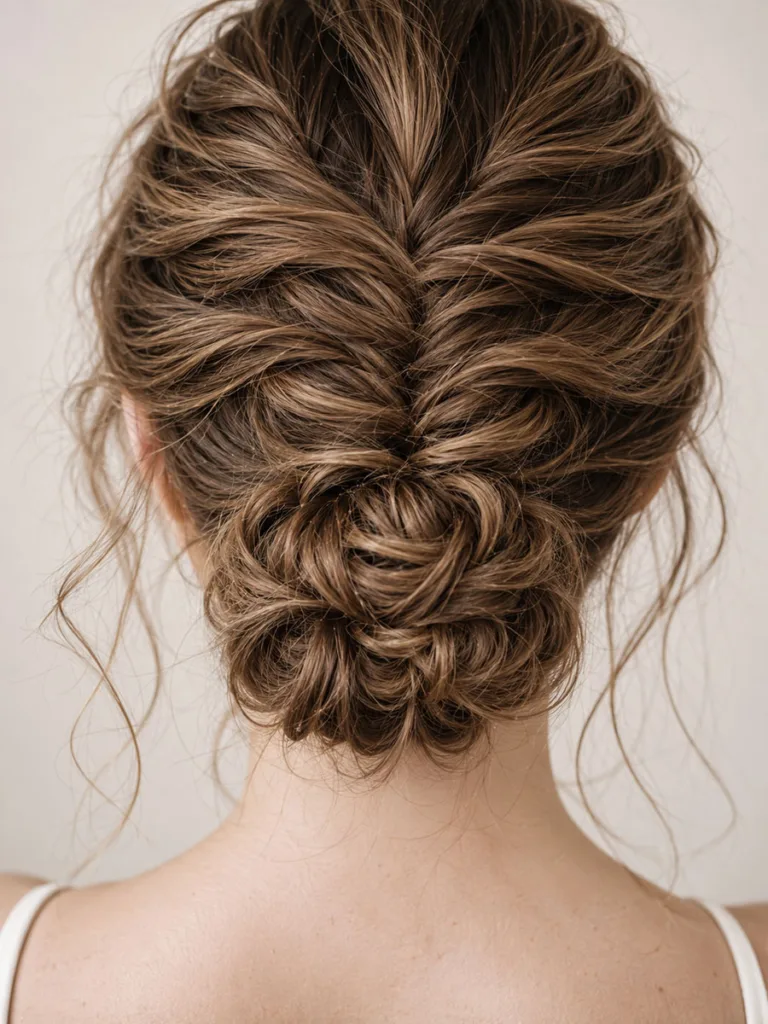
A fishtail braid feeds directly into a loose bun, with pieces gently pulled from both the braid and the bun for texture. This combination gives the detail of a braid with the fullness of a bun, so it photographs well from the back without needing extra accessories. Medium to long hair works best, and it holds through movement, since the braid itself acts as reinforcement, locking pins in place better than a plain twisted section would.
10. Bridal Ponytail Updo
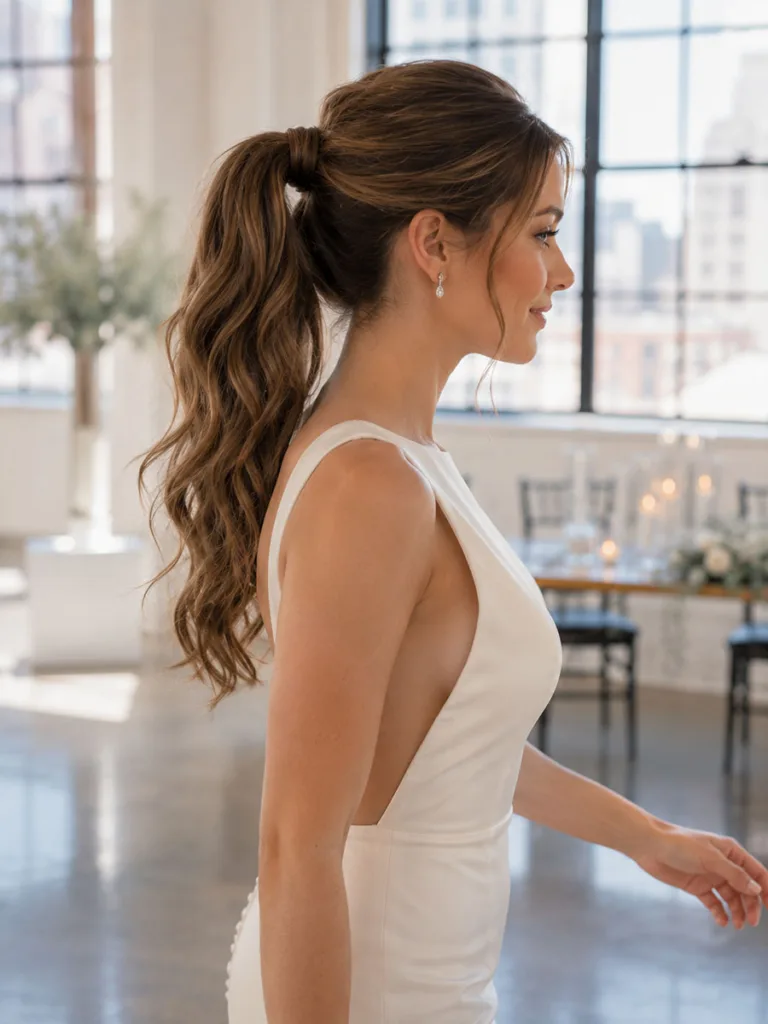
A modern alternative to a bun, this style pulls hair into a high or low ponytail, then wraps a small section of hair around the base to hide the elastic. Stylists smooth the front section first for a clean line before adding waves or curls to the tail itself. Brides who want length and movement without losing the updo shape tend to gravitate toward this one. It also transitions easily from ceremony to reception, since it needs minimal repinning if the tail loosens slightly over the night.
11. Vintage Finger Waves Updo
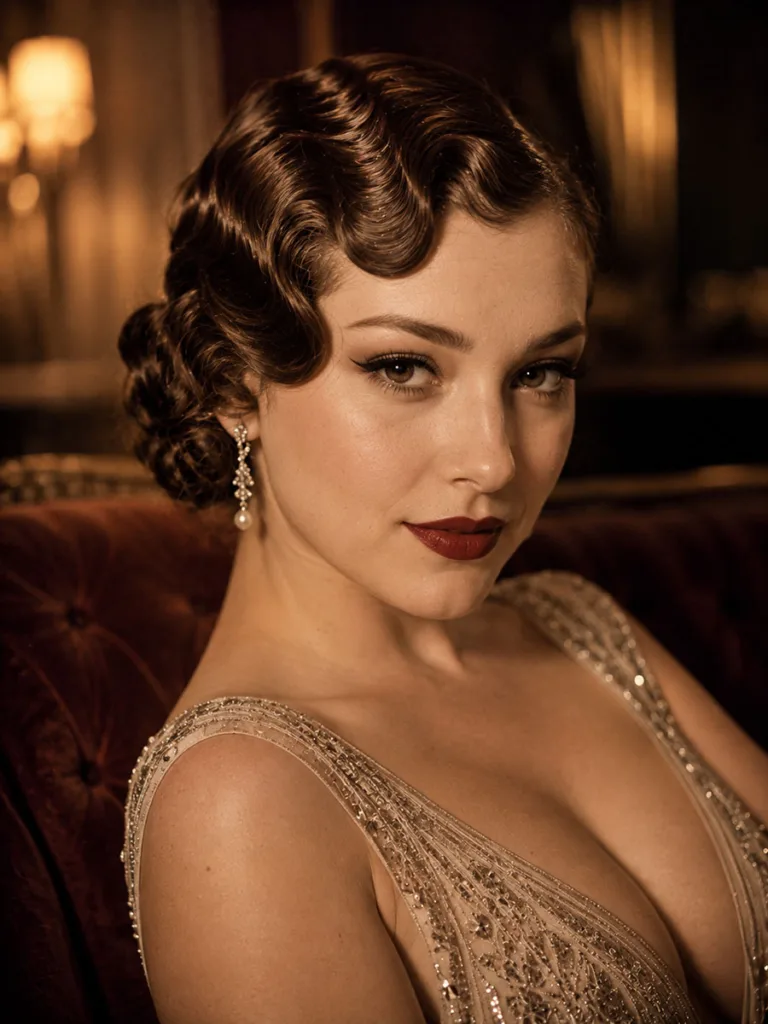
This 1920s-inspired look uses finger waves set close to the scalp, then pins the waved sections up into a low, structured updo. It requires setting lotion and a fine-tooth comb to create the S-shaped wave pattern before pinning. Because the waves sit flat against the head, this style holds exceptionally well under a birdcage veil or vintage headpiece. Brides planning a Gatsby, art deco, or old Hollywood theme choose this look most often, paired with a deep red lip and dramatic eyeliner.
12. Half-Up Braided Updo
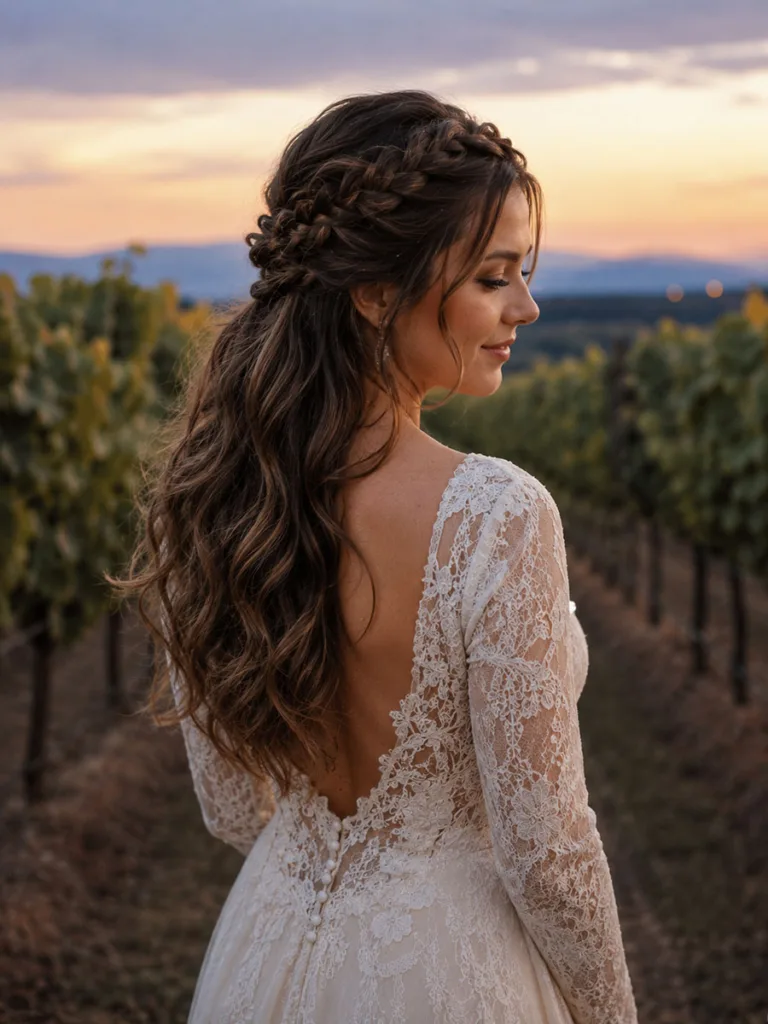
This hybrid style pulls the top and side sections into a braid that feeds into a small bun or twist, while the rest of the hair stays down. It gives the polish of an updo with the movement of loose hair, which suits brides who want length visible in photos. A Dutch braid works especially well here since it sits on top of the hair rather than underneath, keeping the raised texture visible even once the rest falls loose.
13. Side-Swept Bridal Bun
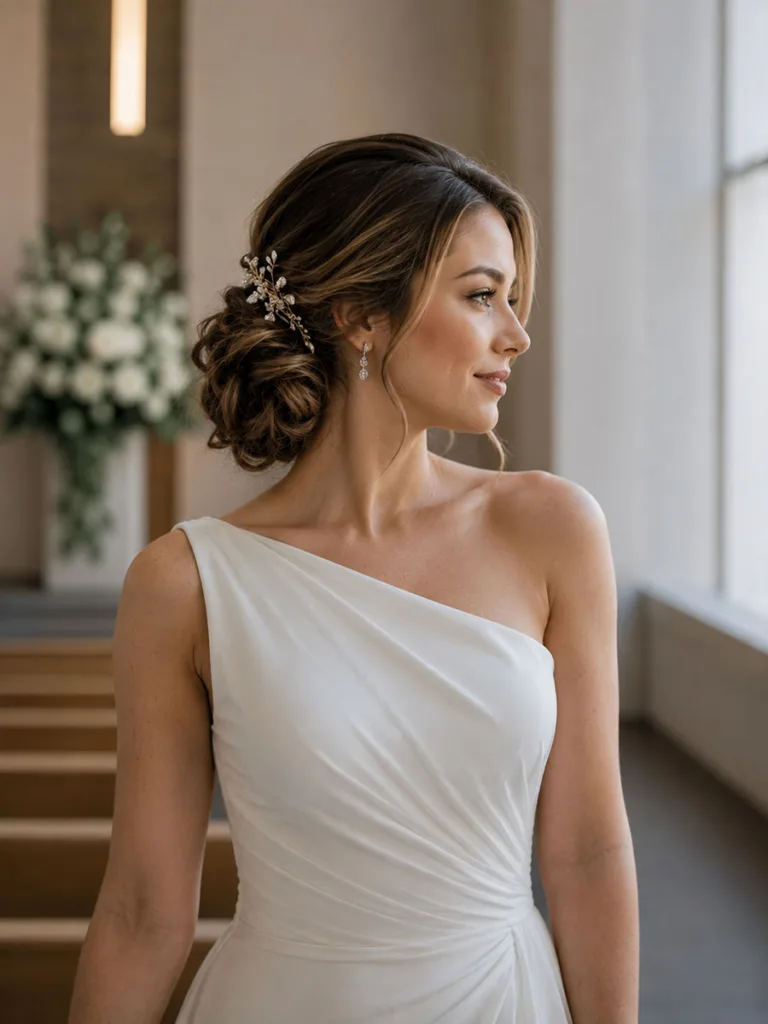
Instead of centering the bun, this style shifts it toward one side of the head for an asymmetrical, romantic finish. Stylists usually pair it with a deep side part to balance the composition. The off-center placement suits brides wearing a single-shoulder or asymmetrical neckline gown, since the hair mirrors the dress line. It also gives photographers a distinctive profile angle. A centered updo just can’t offer that. Pair it with a side-positioned veil or hair vine for the full effect.
14. Updo for Short Hair
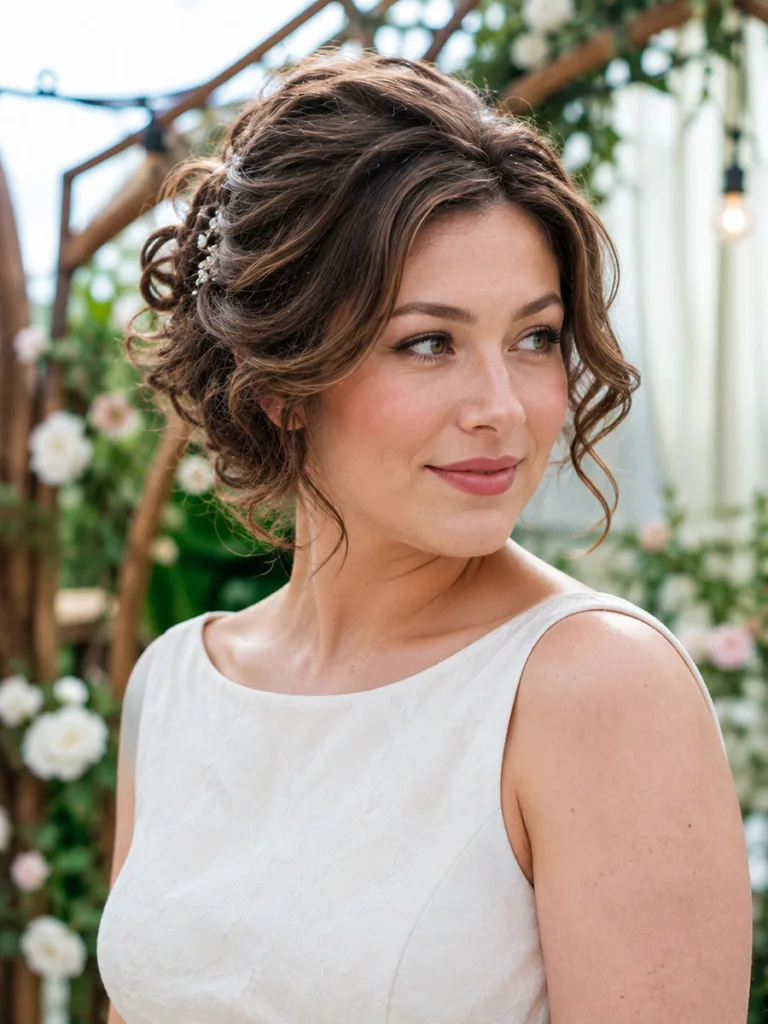
Shoulder-length or bob-length hair can still form a full updo. Stylists use small sections pinned individually, plus a discreet hairpiece to add volume where natural length runs short. They usually curl the hair first too, to create texture that hides the pins and gaps between sections. Long hair isn’t a requirement here. Shorter sections even hold better, since there’s less weight pulling against the pins throughout the day.
15. Boho Braided Bun with Flowers
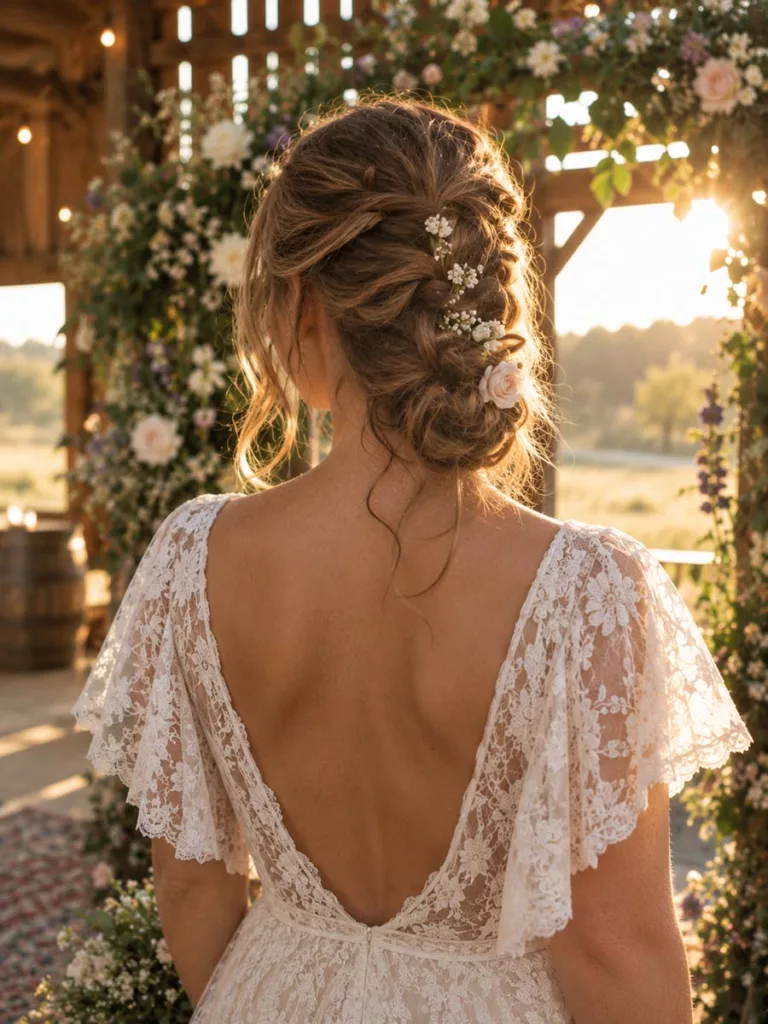
A loose, textured braid leads into a soft bun, finished with small fresh or dried florals tucked along the braid line. This style favors imperfection, so stylists intentionally pull pieces loose rather than smoothing everything flat. Rustic barns, gardens, and vineyard venues suit it best, anywhere a sleek updo would feel out of place. Baby’s breath, eucalyptus, or small roses work best here, since larger blooms can weigh down the loose structure and cause slipping over a long day.
16. Sleek High Bun
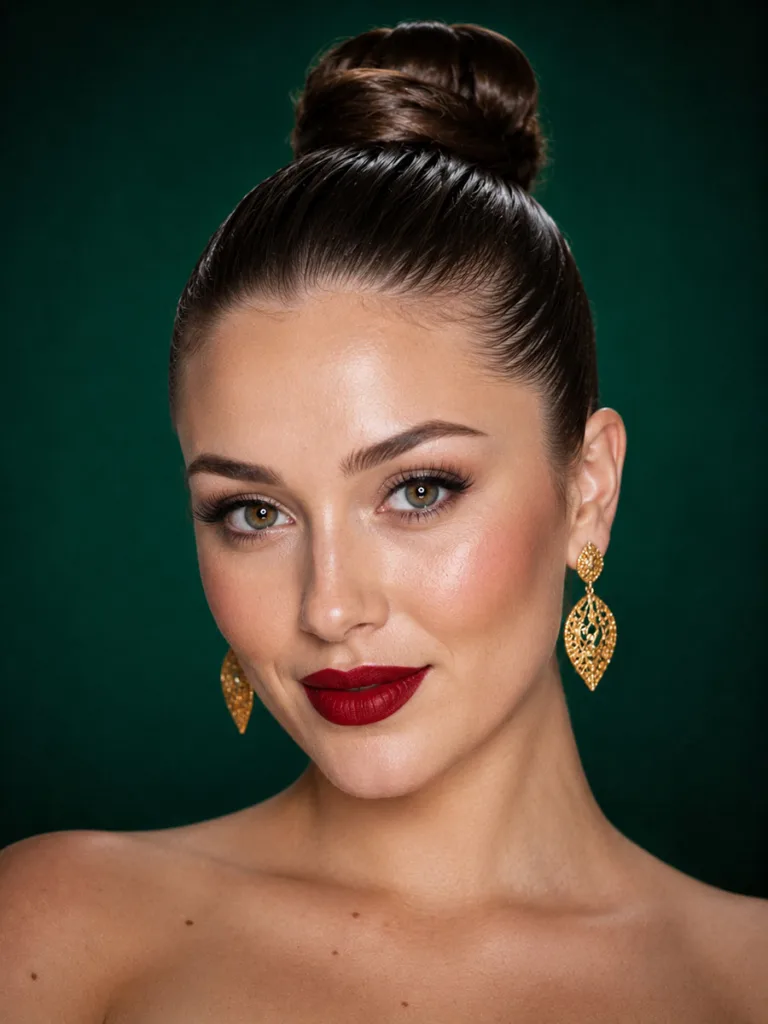
Stylists pull hair back tightly with gel or a fine-tooth comb here, then twist it into a high, glassy bun with almost no loose pieces. The tight finish flatters strong cheekbones and elongates the neckline, making it a favorite for brides who wear bold makeup or statement jewelry. Because there is little texture to hide movement, stylists use extra pins and a strong-hold spray to keep the shine and shape intact through the entire event.
17. Natural Curls Updo for Coily Hair
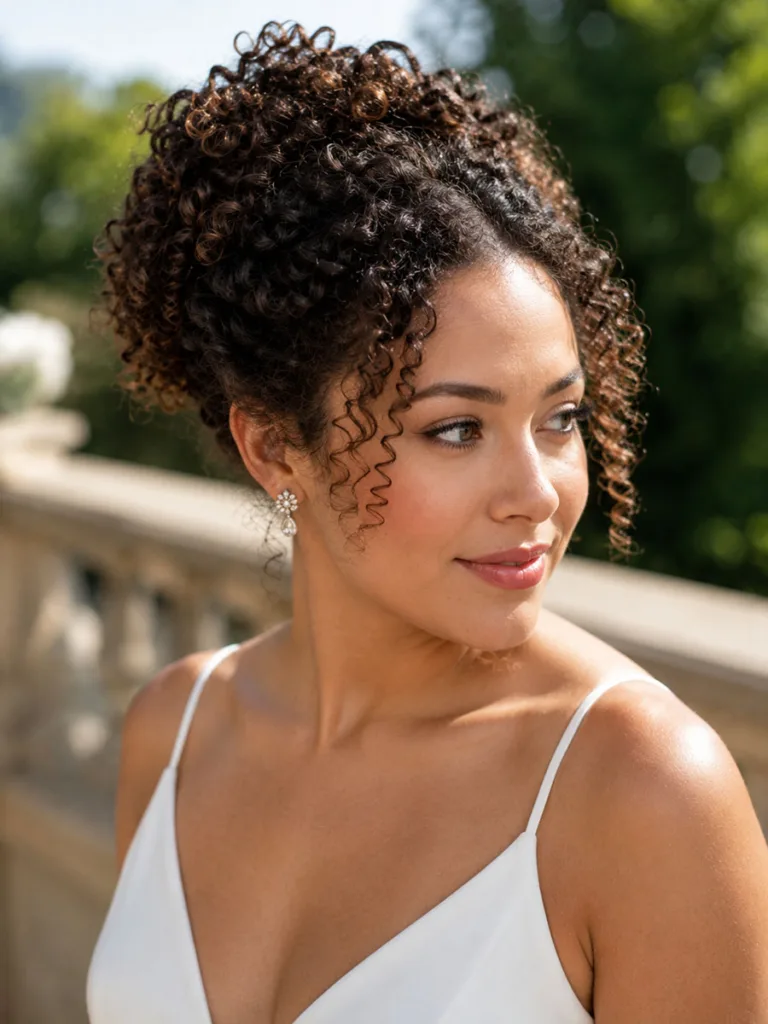
Stylists gather coily or kinky hair with minimal manipulation here, using twist-outs or bantu knots to shape the updo without heat damage. Stylists often incorporate a satin-lined hairpiece or pins designed for coarser textures to avoid breakage. This approach protects the curl pattern for the months after the wedding, since heat-heavy styling can take time to recover from. Brides who want their natural texture represented on their wedding day, not altered to match a straighter reference photo, tend to love this option.
18. Double-Braided Updo
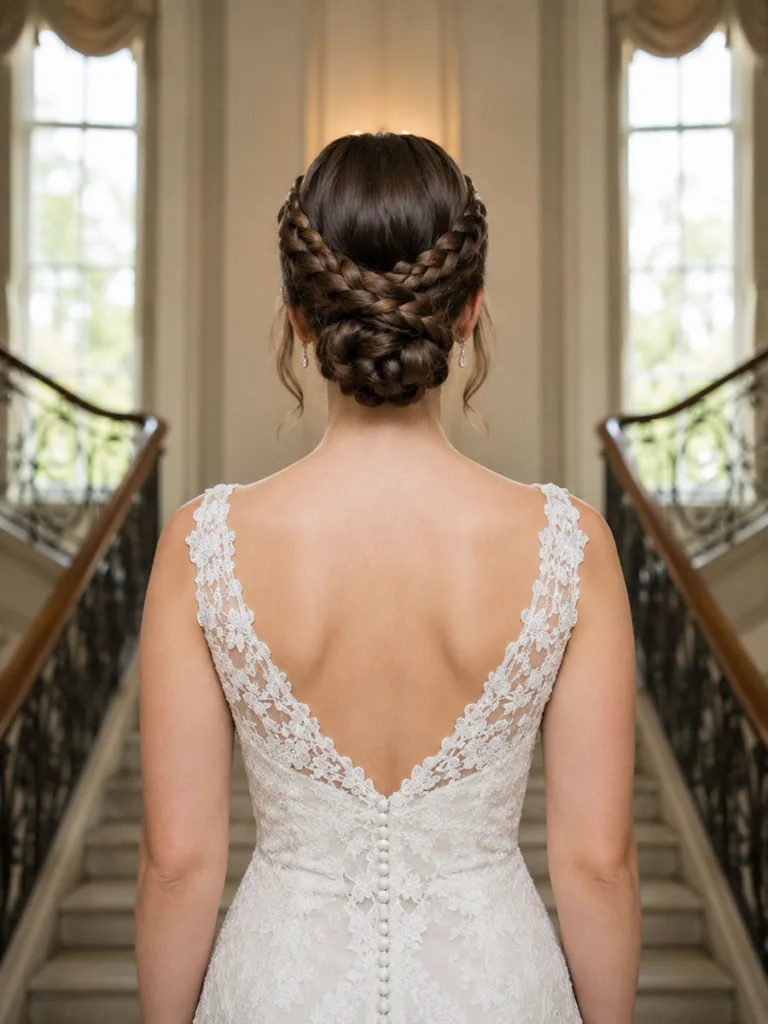
Two braids start at opposite temples and cross at the back of the head before pinning into a shared bun. This creates a detailed, symmetrical back view that reads well in ceremony photos taken from behind the altar. The crossed pattern also reinforces hold, since each braid locks against the other rather than relying on pins alone. Medium to long hair works best here, since you need enough length to complete two full braids before reaching the bun.
19. Loose Chignon with Waves
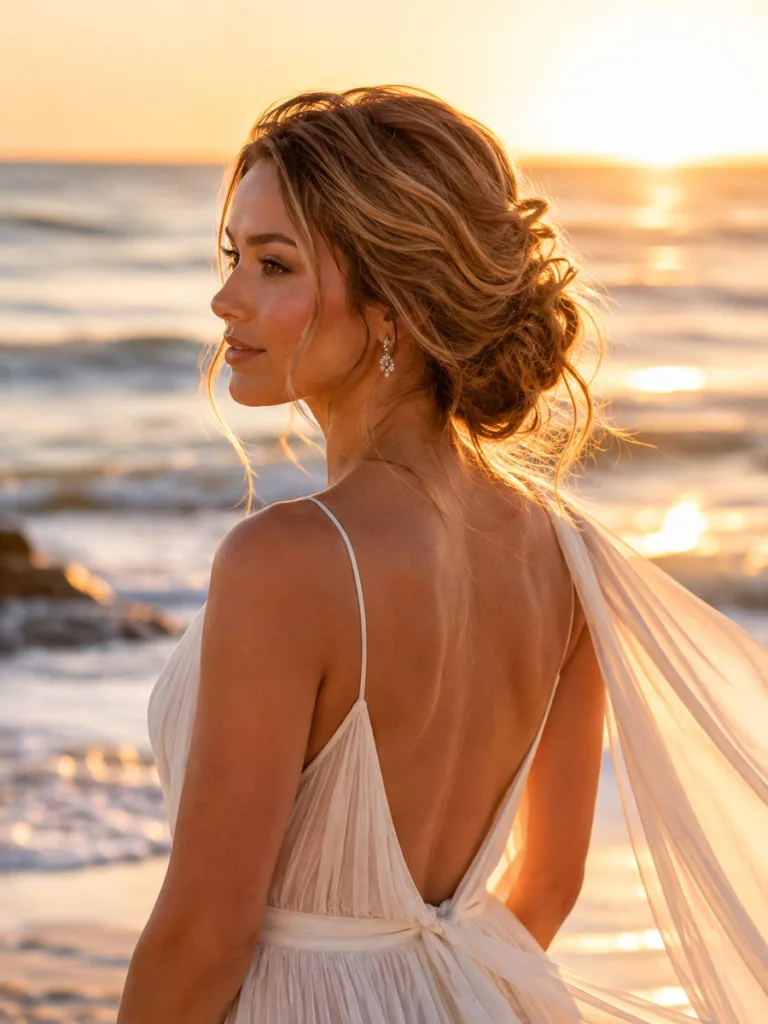
This variation on the classic chignon keeps soft waves throughout instead of smoothing hair flat before pinning. The result feels relaxed and beachy. That makes it a strong match for destination and waterfront weddings. Salt spray or a texturizing product helps the waves hold their shape once pinned. The finish already looks slightly undone, so a little humidity or wind won’t ruin the effect the way it would with a sleek style.
20. Jeweled Updo
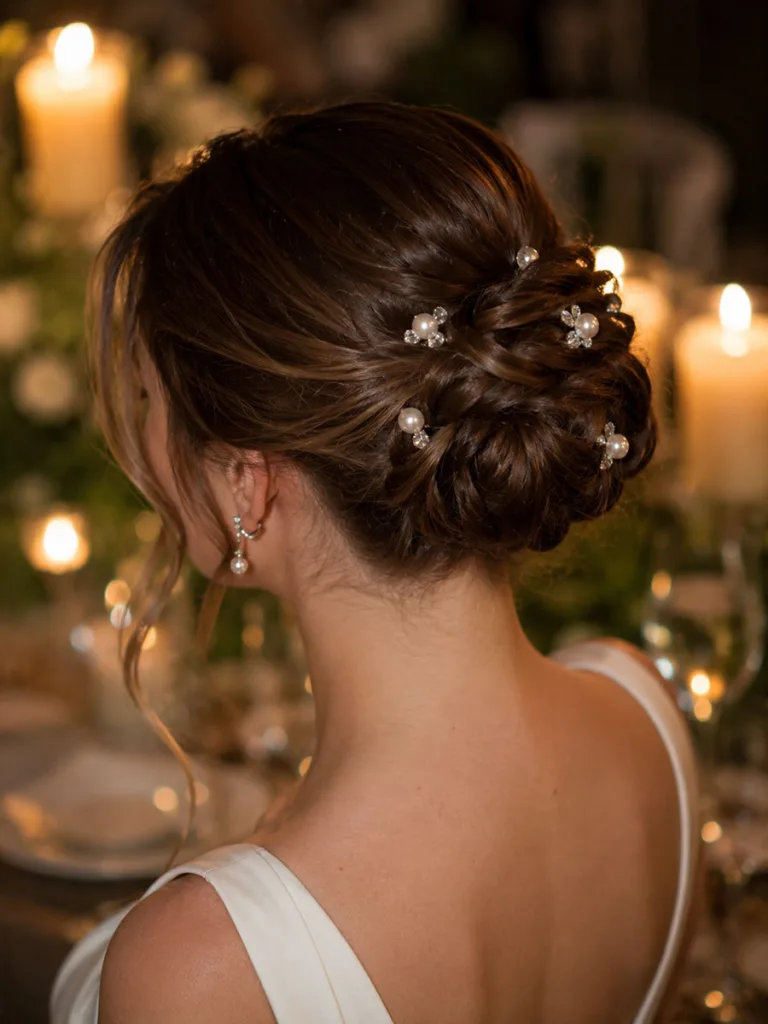
A classic bun or twist becomes the base for this style. Stylists finish it with pearl or crystal hairpins placed along the visible seams. This option suits brides who want extra sparkle without committing to a full tiara or hair vine. Stylists usually place three to five pins strategically rather than covering the whole updo, since a lighter touch reads more elegant in photos. Almost any base style on this list works with it, which makes it an easy add-on during your trial.
Save two or three favorites from this list before your consultation. Stylists work faster and more accurately when they can see a clear reference image instead of a verbal description. Bring photos from multiple angles too, including the back view. That’s the angle most guests and photographers will see for most of the ceremony.
What a Wedding Updo Really Costs
Most bridal galleries skip this part. But budgeting matters just as much as picking a style.
| Cost Item | Typical Range | Notes |
| Updo (day-of) | $85 to $250 | Varies by city and stylist experience |
| Hair trial | $50 to $150 | Sometimes credited toward your final bill |
| Travel fee | $25 to $100 | Skip it by booking a stylist at your venue |
| Bridal party discount | 10% to 20% off | Applies when booking as a group |
Base Updo Price
A wedding updo from a professional stylist typically runs $85 to $250. The exact number depends on your city and the stylist’s experience. Adding extensions, a hairpiece, or intricate braiding can push the price higher.
Trial Fee
Many stylists charge a separate fee for the hair trial, usually $50 to $150. Some salons apply that fee toward your wedding-day total if you book. Always ask this question before your trial appointment.
Travel Fee
Travel fees apply if your stylist comes to your venue. Expect an added $25 to $100, based on distance. Booking a stylist who already works at your venue can cut this cost entirely.
Bridal Party Discount
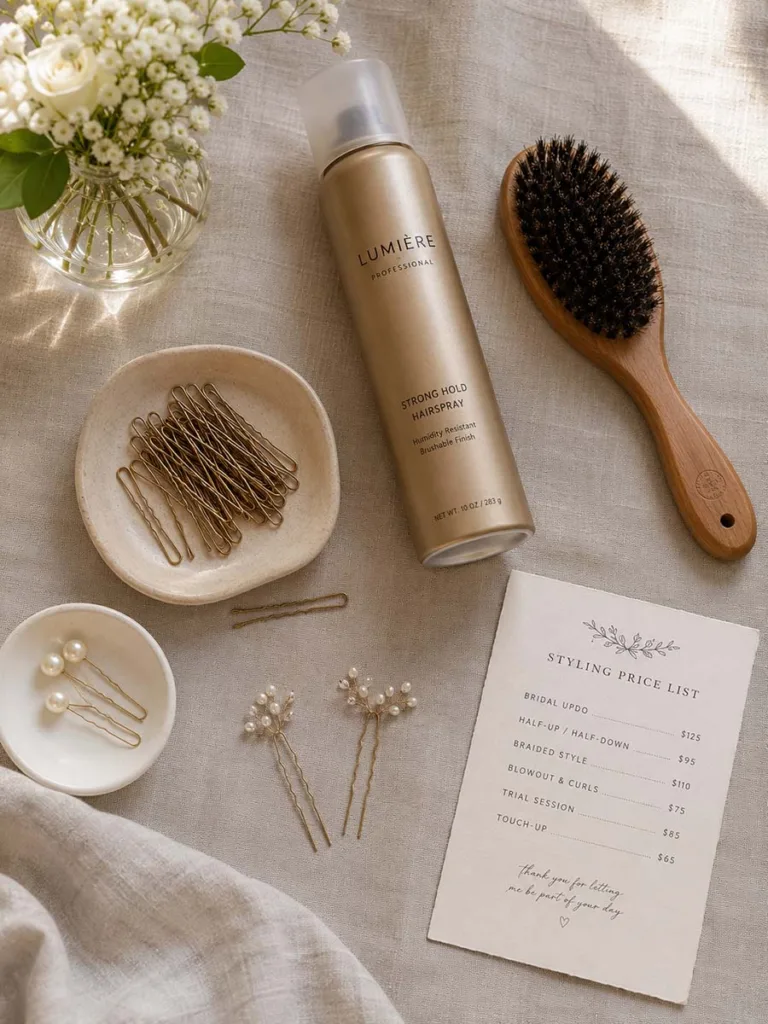
Ask about a bridal party package too. Many salons offer a discount when bridesmaids and the mother of the bride book updos on the same day. This can lower the per-person price by 10% to 20% compared to individual bookings. It also keeps the whole group on one shared schedule.
When to Book Your Hair Trial and Wedding-Day Timeline
Timing trips up more brides than style choice ever does.
Booking Your Stylist and Trial
Book your stylist six to nine months before the wedding, especially during peak season from May through October. Popular stylists fill their calendars fast. Schedule your hair trial four to eight weeks before the wedding. This gives you time to adjust the style if it doesn’t photograph well or just feels wrong once you see it in person. Bring photos, your veil, and any hairpiece you plan to wear.
Your booking checklist:
- 6 to 9 months out: book your stylist
- 4 to 8 weeks out: attend your hair trial
- 1 week out: confirm the day-of timeline
- Wedding morning: build in a 30-minute buffer
Your Wedding-Day Timeline
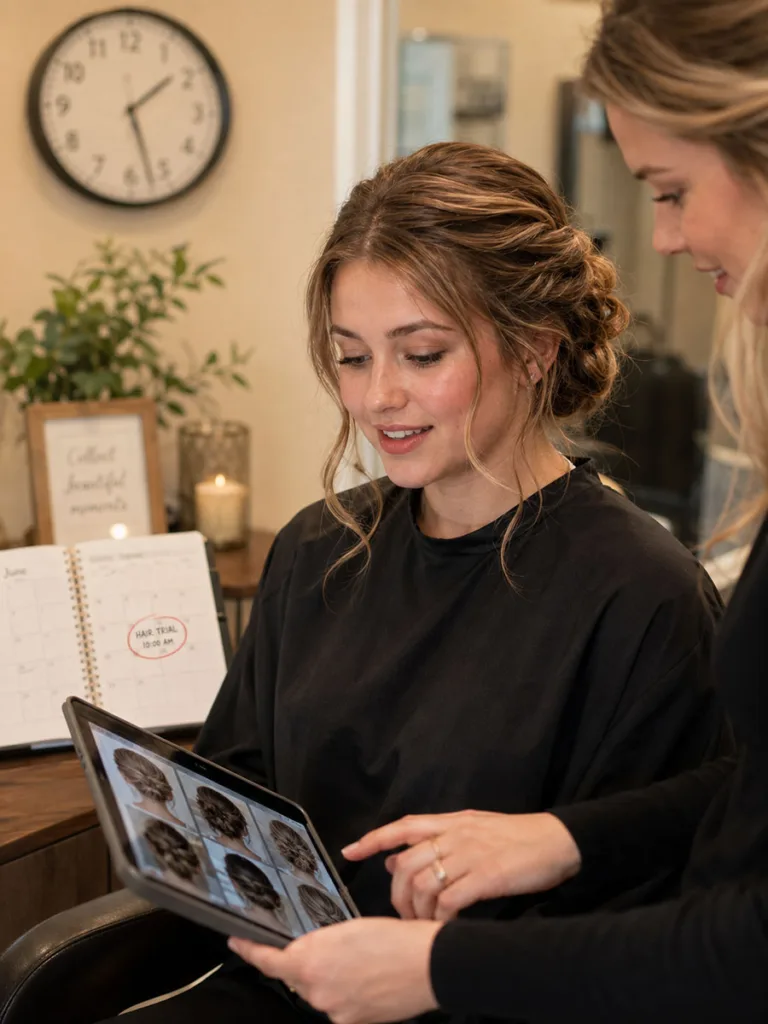
On the wedding day, updos typically take 45 minutes to 90 minutes, depending on complexity. Braided or curled styles take longer than a simple bun. Ask your stylist for a time estimate so your morning schedule stays realistic.
Build in a 30-minute buffer after your hair finishes, too. This gives you time for makeup touch-ups, photos with your bridal party, and a calm moment before you get into your dress. Rushing the final hour is one of the most common regrets brides mention after the wedding.
Tips to Make Your Updo Last All Day and Night
A great updo means nothing if it falls apart before the first dance. These small details make the real difference.
Ask for a Crisscross Pin Pattern
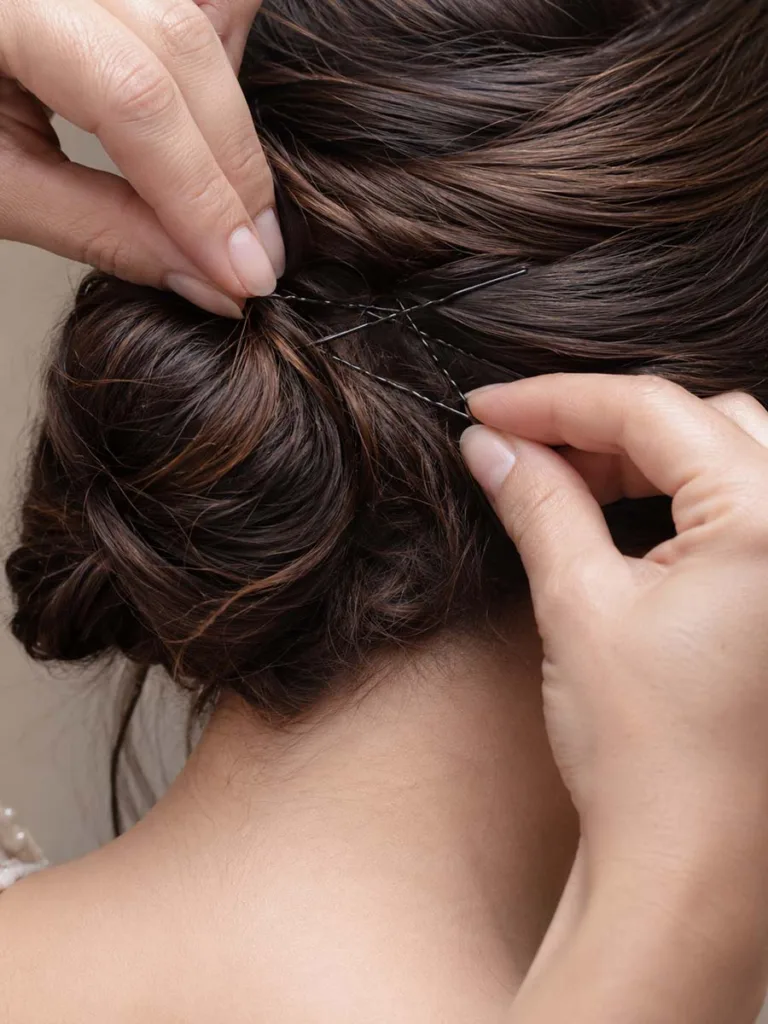
Ask your stylist to use a strong-hold hairspray and secure pins in a crisscross pattern. That pattern holds twice as long as parallel pins.
Match Your Pins to Your Hair Color
Bobby pins should match your hair color and slide in with the grip side facing down. This small detail keeps pins invisible in photos. It also gives the strongest hold against the scalp. A stylist with wedding experience will already know this, but it never hurts to ask during your trial.
Choose Texture Over a Perfectly Sleek Finish
Texture hides small movement and looks intentional, even after hours of wear. If you have fine hair, ask about a teasing technique at the crown for lasting volume.
Pack a Small Emergency Kit
Pack travel-size hairspray and a few extra pins. A quick touch-up before the reception keeps everything photo ready.
Skip Oily Products the Morning Of
Oily hair products weaken pin grip. That means more slipping by the evening. Ask your stylist about a light dry shampoo at the roots instead. It adds texture and helps pins hold through hours of dancing.
Frequently Asked Questions
1. How much does a wedding updo cost?
A professional wedding updo typically costs $85 to $250, plus a possible trial fee of $50 to $150 and travel charges if the stylist comes to you.
2. When should I book my wedding hair trial?
Book your trial four to eight weeks before the wedding, after you book your stylist six to nine months in advance.
3. Will an updo work with a veil?
Yes. Most updos, especially chignons and buns, are designed to anchor a veil securely at the crown or nape.
4. Can I get an updo with short hair?
Yes. Pinned curls, hairpieces, or clip-in extensions can create a full updo even on shoulder-length hair.
5. How long does a wedding updo last?
A well-pinned updo with strong-hold spray lasts through a full 8 to 10 hour wedding day, including dancing.
Ready to Book Your Wedding Updo?
The right wedding updo balances your dress, your hair type, and your venue. It’s a lot to weigh, but you don’t have to figure it out alone. Save your three favorite styles from this list and bring them to your hair trial. Book your stylist six to nine months out, budget $85 to $250, and ask about the bridal party discount if your whole crew needs hair done too. Small details like pin placement and product choice decide whether your updo survives the dance floor or falls apart by dinner. Book that trial today so you walk down the aisle with total confidence.