22 Faux Locs Hairstyles With Texture, Color And Updos
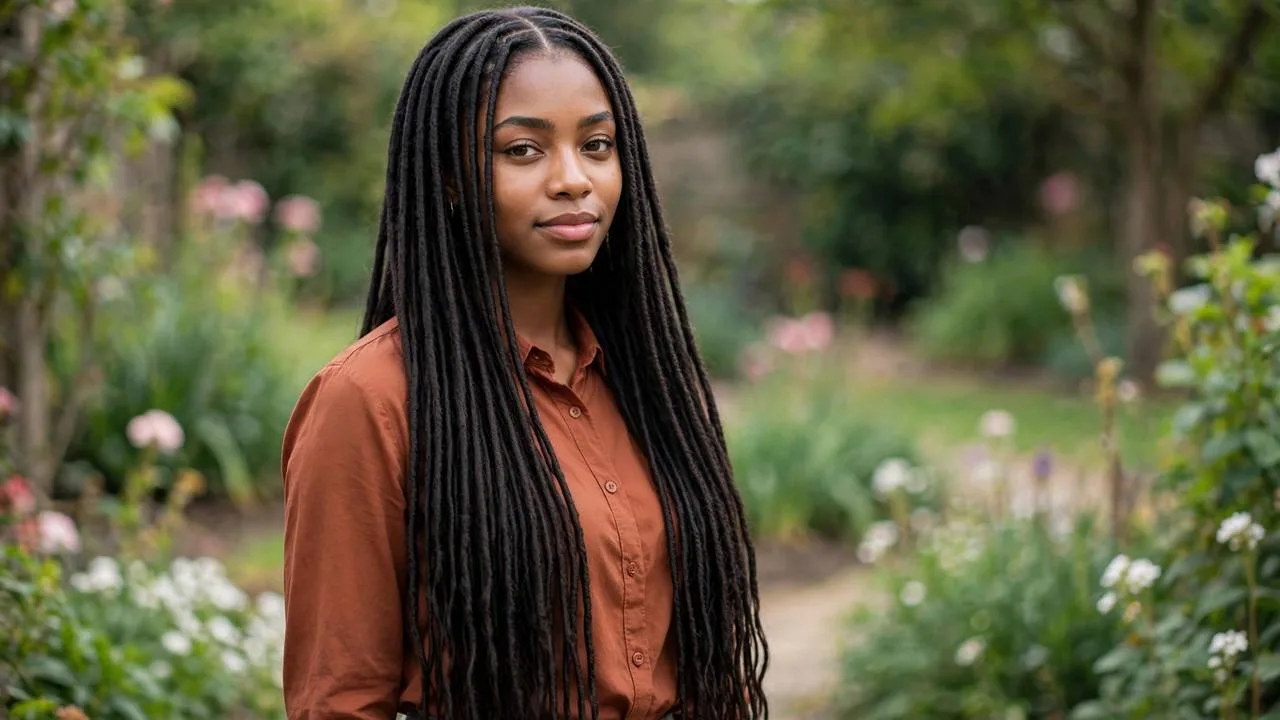
Which faux locs hairstyles give you the texture you want without a set that feels too heavy? These 22 ideas compare length, finish, color, and ways to wear an installation you can remove later. A smooth bob and a long curly set make different demands on styling and care. The photograph helps explain the appearance, while your stylist checks the construction and weight.
Softness does not establish how light an installation will feel, and a neat part does not prove comfortable tension. The amount of added hair, attachment method, and condition of your own hair matter too. Decide whether you want everyday loose wear or enough flexibility for updos. Those choices can affect the base pattern as well as length.
Use the descriptions to narrow your references before asking about materials, upkeep, and removal. A specific consultation is more useful than choosing by a style name alone.
How To Choose Faux Locs Hairstyles For Your Hair
Faux locs hairstyles create a loc-like appearance using added hair, but the construction varies. Choose the appearance and the attachment plan together rather than assuming every photograph uses the same method.
Confirm The Installation Method
Individual wrapped locs use extension hair around a braid or twist foundation. Individual crochet methods attach premade locs to separate sections, sometimes with additional wrapping. Cornrow-based crochet attaches pieces to a braided foundation across the scalp. The method affects parting, styling flexibility, installation, and removal.
In her interview with The Tease, trichologist and stylist Dr. Kari Williams identifies loose wavy ends as a goddess-locs characteristic. Modern style labels can overlap, so use a photograph to specify curl placement. Our butterfly locs guide compares a related looped finish. For the foundation, see our crochet braids guide.
Discuss Weight And Natural-Hair Condition
Length, fiber, strand count, accessories, and the amount of wrapping all contribute to the complete installation. A soft texture does not prove low weight. Small sections and wide bases are not safety guarantees. Tell the stylist about fragile edges, previous breakage, scalp symptoms, and chemical services before choosing the design.
If your hairline is thinning or the scalp is inflamed, seek advice before adding extensions. Ask about a lighter or shorter alternative when the requested set would put too much demand on the hair. Compare the extension sample and expected total amount. A single comfortable strand does not predict the feel of an entire head.
Plan Styling Before The Base Is Finished
Tell the stylist whether you want loose wear, a side part, or occasional gathered styles. A cornrow pattern can limit part changes, while short pieces may not reach an updo. Check the range of comfortable movement before styling tightly. Pain is a reason to adjust the installation rather than waiting for it to settle.
The AAD explains how repeated hairstyle tension can cause traction alopecia. Updos can introduce pulling even when the original installation felt comfortable. Persistent discomfort, bumps, breakage, or thinning deserve attention. Change a pulling style promptly and seek assessment for ongoing scalp symptoms or hair loss.
1. Classic Waist-Length Faux Locs

Classic waist-length locs emphasize long, fairly even wrapped strands rather than loose curls. Ask where the ends should fall while you are standing, since a cropped photograph can hide the final length. The amount of added hair determines much of the weight.
Check whether you can comfortably wear the set down before planning a large gathered style.
Best for: Long wrapped strands with an even silhouette.
Ask your stylist for: waist-length faux locs with consistent width and a total weight suited to your hair.
2. Goddess Faux Locs With Loose Wavy Ends

Goddess faux locs combine a wrapped body with loose wavy or curly ends. Some versions add tendrils along the length, so the term overlaps with boho styling. Specify the curl placement rather than relying on the name alone.
Ask which loose hair will be used and how to separate it without disturbing the wrapped sections.
Best for: Wrapped locs with loose movement at the ends.
Ask your stylist for: goddess faux locs with the end-curl length and any loose tendrils agreed first.
3. Butterfly Locs With Distressed Loops

Butterfly locs use projecting loops and a distressed surface to create irregular texture. The loops differ from separate loose curls woven between the locs. Ask for the amount of texture you want, since an exaggerated finish can add bulk.
A worn-in appearance does not mean the attachments should slip or pull at the roots.
Best for: Visible loops and a distressed wrap.
Ask your stylist for: butterfly locs with controlled loop size and secure, comfortable attachments.
4. Soft Locs With A Smooth Light Wrap
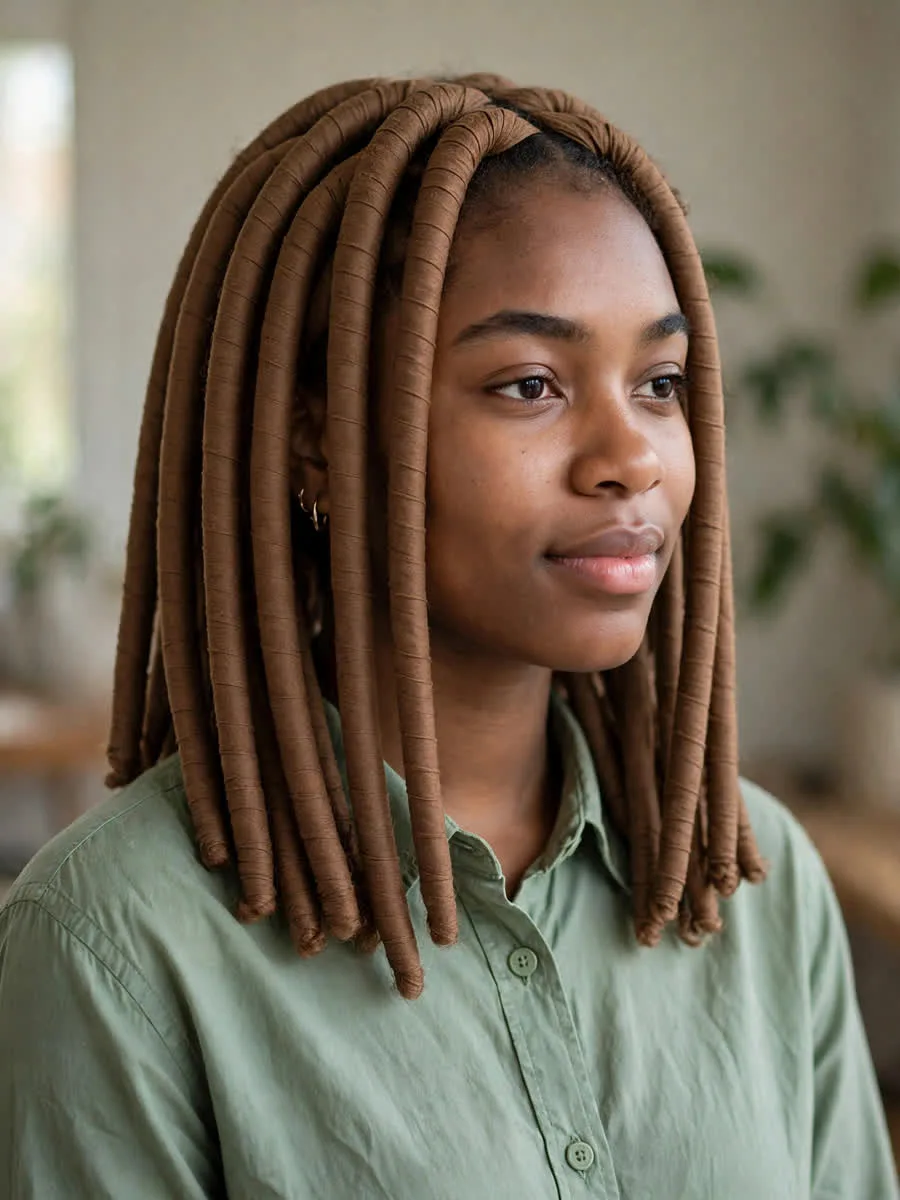
Soft locs describe a flexible finish rather than one guaranteed weight or attachment method. Some versions use premade locs with wrapping near the roots; others use a different construction. Ask your stylist to explain the intended approach.
A pliable sample helps you compare the material, but it cannot establish how a full installation will feel.
Best for: A flexible loc finish.
Ask your stylist for: soft faux locs with the material, attachment method, and amount of added hair confirmed.
5. Crochet Faux Locs On Cornrows
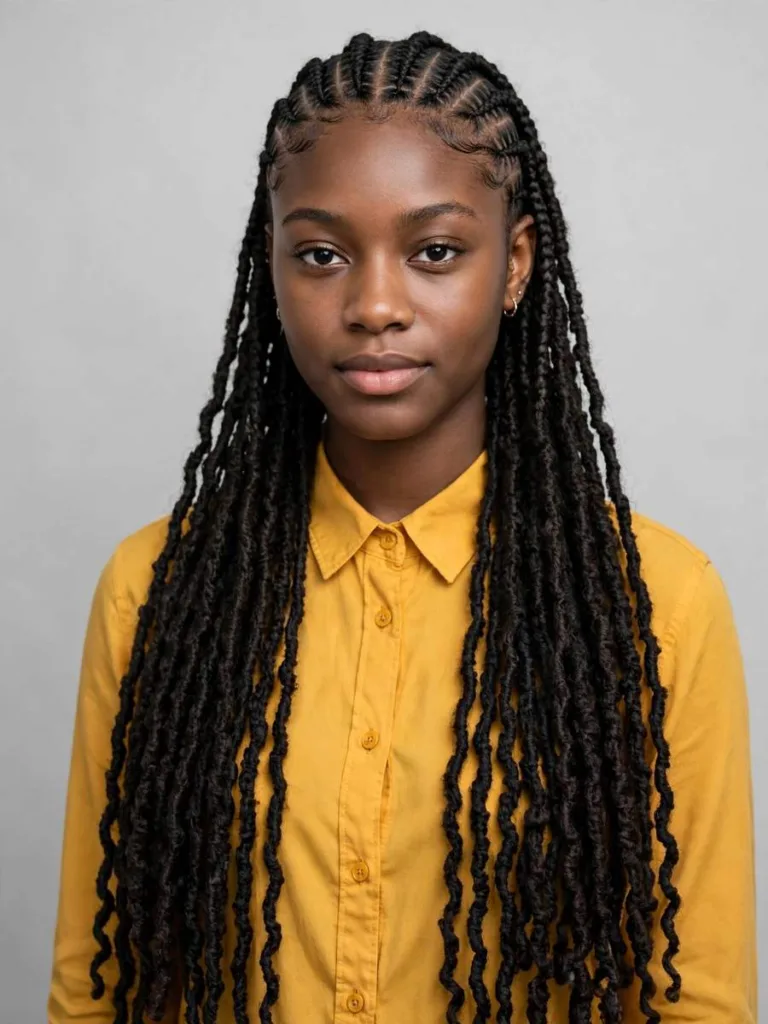
Cornrow-based crochet installs attach premade locs to a braided foundation rather than wrapping every individual section. The cornrow pattern influences where the hair can part and how it gathers. Some ready-made pieces may be reusable, depending on their condition and construction.
Confirm the intended part and styling options before the base is braided.
Best for: Premade locs on a cornrow foundation.
Ask your stylist for: crochet faux locs over a comfortable cornrow pattern planned for your preferred part.
6. Boho Locs With Curls Throughout
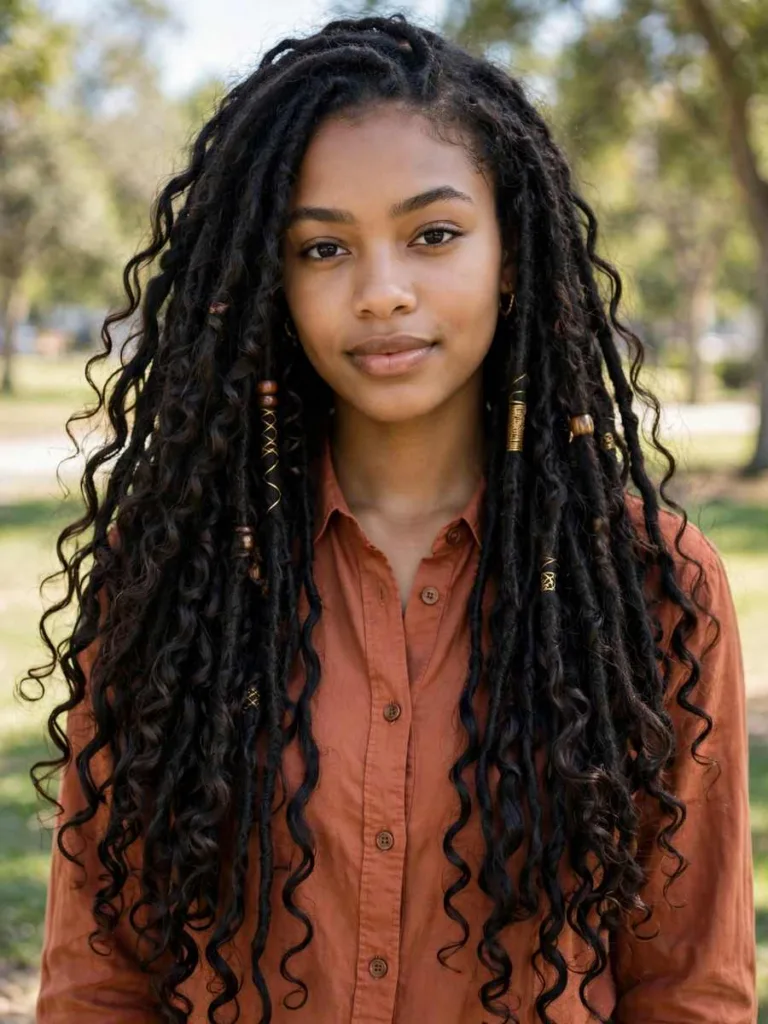
Boho locs distribute loose curls or waves between wrapped strands, adding movement through more than the ends. The amount and type of loose hair affect tangling and care. Show whether you want sparse tendrils or a fuller curly result.
Ask for care instructions suited to that fiber. Curl sprays and mousses are not interchangeable across materials.
Best for: Loose curls throughout the installation.
Ask your stylist for: boho faux locs with the curl density, length, and suitable home care specified.
7. Faux Locs Bob At Chin Length

A chin-length bob gives faux locs a compact outline with the ends visible around the jaw. Compared with an otherwise similar longer set, less length can reduce added weight. Density and materials still matter.
Check whether this length can reach a ponytail or bun. Ask which shorter pieces can be secured without pulling.
Best for: A compact bob silhouette.
Ask your stylist for: chin-length faux locs with an even outline and no unwanted longer back section.
8. Shoulder-Length Layered Faux Locs

Shoulder-length layers place shorter pieces around the front while retaining more length behind. They create a different outline from a blunt bob. Choose the shortest layer with your desired styling options in mind.
The stylist should plan the finished lengths before cutting. Your natural hair may extend within the loc.
Best for: Shoulder length with shorter front pieces.
Ask your stylist for: layered faux locs with the front length and remaining styling flexibility agreed first.
9. Jumbo Faux Locs With Thick Sections
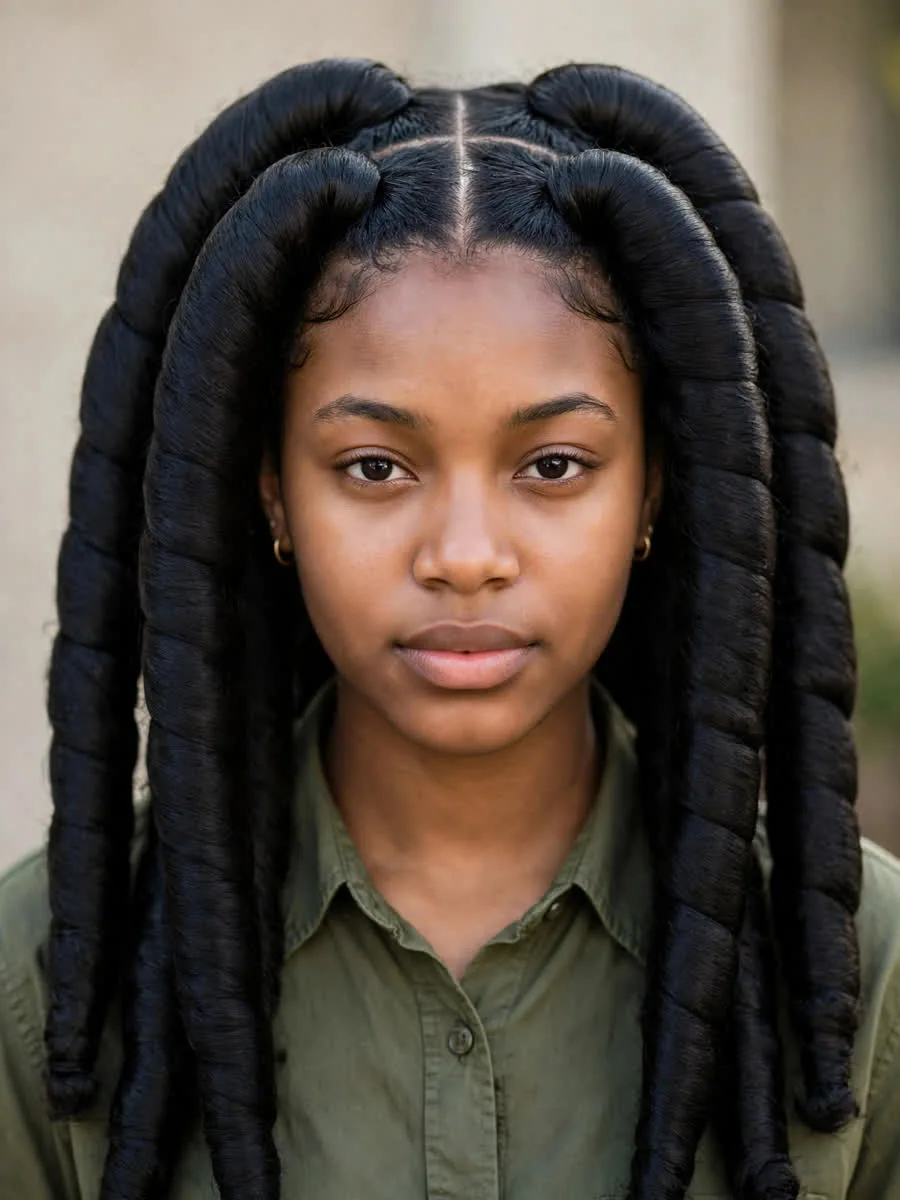
Jumbo locs use a larger visual scale, but thickness alone does not determine the installation method or safe weight. Fewer strands may still create a heavy set when each contains substantial added hair. Ask to compare the material and overall density.
Larger base sections do not guarantee protection from tension or make fragile hair ready for extensions.
Best for: A larger loc diameter.
Ask your stylist for: jumbo wrapped faux locs with the density and attachment size assessed against your hair.
10. Small Slim Faux Locs With Fine Parts

Slim locs give a finer outline and allow smaller sections to move separately. More strands can offer different gathering options, but the complete set still has a total weight. Small parts are not automatically safer for delicate roots.
Confirm the density, part size, and likely appointment time instead of choosing the smallest sections solely for their appearance.
Best for: A finer loc diameter.
Ask your stylist for: slim faux locs with section sizes and added-hair density suited to your natural hair.
11. Honey Blonde Faux Locs

Honey blonde extension hair adds golden and light-brown variation without requiring your own hair to be lightened. A darker root area can create contrast with the lighter lengths. Compare an actual material sample in daylight because photographs alter the shade.
Decide whether you want blended tones or a more uniform blonde before the stylist orders supplies.
Best for: Golden blonde extension color.
Ask your stylist for: honey blonde faux locs with the root depth and blend checked against a material sample.
12. Copper Brown Faux Locs

Copper brown adds a warm reddish-brown tone through the extensions. The shade can appear brighter outside than under subdued indoor light. Choose whether the color should remain consistent or include darker depth near the roots.
Colored extension hair can provide this change without dyeing your natural hair. Ask which materials achieve the intended finish.
Best for: A warm reddish-brown extension shade.
Ask your stylist for: copper-brown faux locs with the root-to-end color placement agreed using a sample.
13. Burgundy Faux Locs With Deep Red Tone

Burgundy introduces a deep red or wine cast, with the amount of visible red depending on light and material. A smoother wrap emphasizes the outline, while a distressed finish changes how the color reflects. Specify both instead of assuming the color name includes a particular texture.
Dark roots are optional according to the contrast you prefer.
Best for: A deep wine-red extension shade.
Ask your stylist for: burgundy faux locs with your preferred smooth or lightly textured finish.
14. Ombre Faux Locs With Dark Roots

Ombre extensions move from a darker root area to lighter lengths. Decide how gradual the transition should be and where the lighter section begins. Different blended colors are possible; there is no need to limit the ends to only brown or blonde.
A darker extension root may reduce color contrast, but it does not hide every sign of growth.
Best for: A gradual extension-color transition.
Ask your stylist for: ombre faux locs with the root shade, end shades, and transition point specified.
15. Half-Up Half-Down Faux Locs

Half-up styling gathers part of the installation while leaving the lower lengths loose. It can offer face clearance without lifting the entire set, but the gathered section still pulls if secured tightly. Ask which locs can move into that position with the chosen base.
A soft tie helps avoid snagging but does not guarantee comfortable tension.
Best for: Partial gathering with loose lengths.
Ask your stylist for: a half-up style that the base pattern supports without tightening the front attachments.
16. High Ponytail Faux Locs

A high ponytail lifts the installation toward the crown and leaves the ends hanging behind. The position concentrates the gathered weight, so comfort can change even after an initially comfortable install. Keep the fastening loose enough to avoid pulling.
A wrapped strand can conceal the tie, but skip that detail if it adds unwanted tension.
Best for: A high gathered silhouette when comfortable.
Ask your stylist for: a high faux-locs ponytail with supported weight and no pulling around the hairline.
17. Side-Part Faux Locs With Gold Cuffs

A side part changes where the locs fall, while a few cuffs add detail near the front. Plan the part before installation if the foundation limits movement. Choose cuffs that fit the diameter without crushing or snagging the fibers.
Place the pieces where you want them visible, and remove any accessory that catches or adds uncomfortable pull.
Best for: A side-swept arrangement with metal accents.
Ask your stylist for: a planned side part with a few well-fitting lightweight cuffs on selected front locs.
18. Space Buns With Faux Locs

Two space buns divide the hair into separate gathered shapes on either side of a center part. The result can have tucked ends or a looser finish with visible loc tips. Confirm which version you want.
Pins and ties both need comfortable placement; neither makes a tight updo safe by itself.
Best for: Two gathered buns with a center part.
Ask your stylist for: space buns with the bun height, end finish, and comfortable fastening agreed first.
19. Faux Locs With Curly Ends Only

This version keeps the loc bodies wrapped and places loose curls mainly at the ends. It overlaps with goddess locs rather than forming a wholly separate installation category. The distinction here is the absence of extensive tendrils through the upper lengths.
Specify the size of the curl zone and ask how the chosen hair should be refreshed.
Best for: Loose curls concentrated at the ends.
Ask your stylist for: wrapped faux locs with curls mainly at the tips and few loose upper-length tendrils.
20. Messy Undone Faux Locs

An undone finish uses soft surface texture and irregular wrapping rather than a polished outline. The appearance can disguise small surface changes, but it does not justify keeping an unhealthy installation longer. Ask for texture in the loc body with attachments that remain secure and comfortable.
Keep loose tendrils distinct from slipping wraps or developing root matting.
Best for: A textured, less uniform surface.
Ask your stylist for: undone faux locs with deliberate surface texture and stable, comfortable attachments.
21. Faux Locs With Beads And Shells
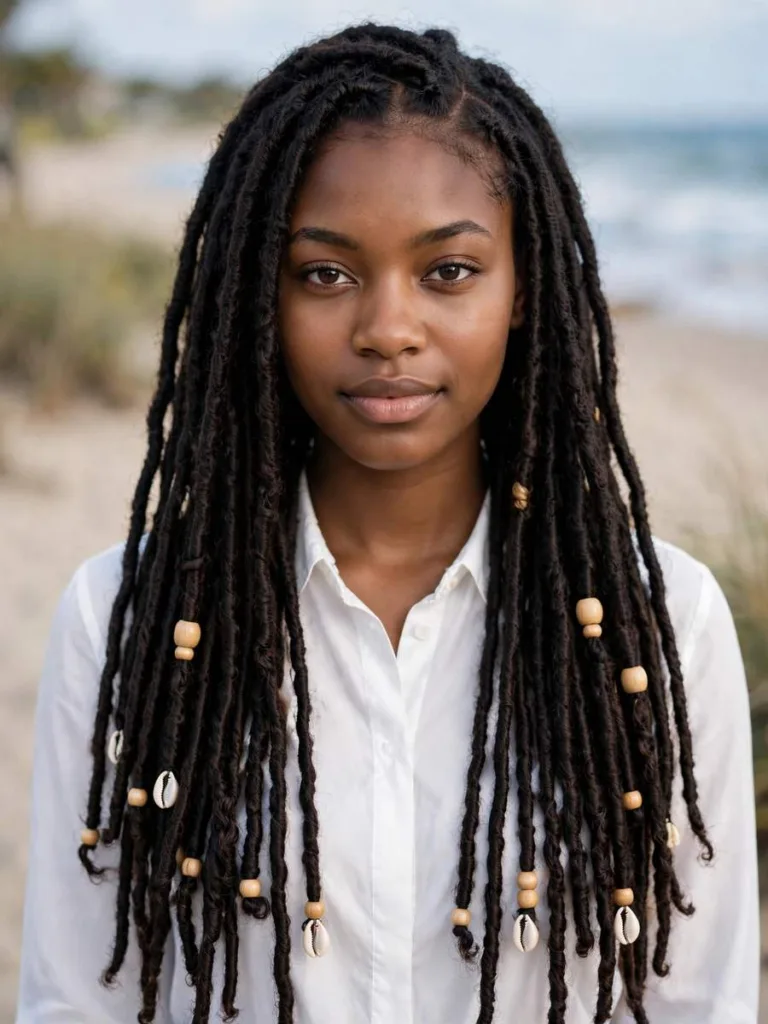
Beads and shells can sit near the ends or at selected points along the locs. Show the placement you prefer instead of treating every accessory as an end decoration. Lightweight pieces can still add up across a full installation.
Check their attachment, remove snagging pieces, and avoid loading already stressed sections with more accessories.
Best for: Selected bead and shell accents.
Ask your stylist for: faux locs with a few lightweight beads and shells placed where you want them visible.
22. Low Bun Updo With Faux Locs

A low bun gathers the locs near the nape, with either a smooth sweep or a looser front. The amount of hair affects how far the bun projects from the head. Ask which arrangement fits comfortably without forcing it flat.
Use enough support to hold the shape without prescribing a fixed number of pins.
Best for: A nape-level gathered style.
Ask your stylist for: a low faux-locs bun with comfortable support and the front finish you prefer.
Care For Faux Locs Hairstyles Between Appointments
An installation still needs cleansing, drying, and checks on the hair beneath it. Agree on a routine for the actual foundation, loose hair, and extension material rather than copying every product tip.
Cleanse And Rinse Thoroughly
Ask your stylist how to access the scalp and clean the locs without rough handling. Scalp cleansing does not mean the lengths must never be washed. Use a suitable shampoo and follow its directions, including any approved dilution instructions. Avoid treating dilution as compulsory for every product.
Adjust cleansing to sweat, activity, buildup, and scalp needs rather than relying only on a fixed calendar. Rinse thoroughly so cleanser and other residue do not remain trapped. Support heavy wet lengths while handling them. Allow the whole installation, including the concealed foundation, to dry fully before covering it for sleep.
Match Products To The Material
Human-hair curls and synthetic fibers may need different detangling and refresh methods. Use only compatible products and follow the extension supplier’s heat guidance. Avoid brushing through wrapped sections or forcing tangles apart. Ask the stylist to demonstrate how to separate loose tendrils without pulling at the attachments.
Oil is optional rather than a treatment for every itchy scalp. Repeatedly adding oils or sprays can leave residue without addressing the reason for irritation. Seek advice for persistent itching, rash, sores, or unusual discharge. Do not cover those symptoms with more styling products.
Reduce Snagging And Repeated Pulling
Use a comfortable satin covering or pillowcase if it helps reduce friction during sleep. Avoid tying the installation tightly just to fit it inside a bonnet. Check cuffs, beads, and shells for snagging, and remove pieces that pull. Release gathered styles when you notice pressure instead of keeping the same tight position all day.
Agree On A Removal Plan
There is no guaranteed safe wear period for every installation. Arrange a review and takedown plan based on the method, natural hair, scalp condition, and response. Do not extend wear solely because the outside still looks neat. Root matting, slipping attachments, discomfort, or scalp problems can require earlier attention.
Persistent symptoms need assessment rather than repeated tightening or a cosmetic refresh. Removing the extension hair may be necessary when tension continues. A qualified stylist can help if the attachment method is unclear. Avoid treating an eight-week mark as permission to ignore problems before then.
Takedown Without Blind Cutting
Removal should follow the way the extensions were attached. If the foundation or your natural-hair length is unclear, arrange professional help before using scissors.
Identify Natural Hair Before Cutting
Locate where your natural hair ends and understand which strands belong to the extension. Never cut near an assumed boundary hidden inside a loc. Unwrap or release attachments using the appropriate method instead of pulling them free. Stop if you cannot separate the materials without force.
Work Through Buildup Gently
Take time to release shed hairs and buildup in small sections without ripping through tangles. Avoid forcing a comb through compacted roots. Ask a stylist for help when matting is substantial or the scalp feels sore. After removal, reassess scalp comfort and hairline changes before deciding on another extension installation.
FAQs
These answers separate appearance, construction, and care for faux locs hairstyles. Confirm product and removal details with the stylist who knows your installation.
How Long Can I Keep Faux Locs In?
Wear time depends on the installation, natural hair, scalp condition, and maintenance. Agree on a review and removal plan rather than treating a general week range as a guarantee. Discomfort, matting, or scalp changes can require earlier attention.
Are Goddess Locs And Curly-End Locs Different?
They overlap because loose wavy or curly ends are a goddess-locs characteristic. Boho variations often add curls through more of the length. Specify the placement and amount of loose hair rather than relying on the name alone.
Can Faux Locs Damage Natural Hair?
Added weight, tight attachments, and repeated pulling can damage hair and contribute to traction alopecia. A protective-style label does not guarantee safety. Adjust pulling styles promptly and seek advice for persistent symptoms, breakage, or thinning.
Can I Wash Faux Locs?
Yes, using a cleansing method suited to the installation and materials. Clean the scalp and lengths as needed, rinse thoroughly, and dry the complete installation. Shampoo dilution is product-specific rather than compulsory.
How Many Packs Of Hair Will I Need?
The amount varies with the product, length, density, technique, and finished style. Ask the stylist for a supply list using the exact product and pack size. Confirm whether you or the salon supplies it before buying extras.
Which Faux Locs Length Is Best For A First Install?
A shorter set may reduce weight compared with an otherwise similar longer one, but density and materials still matter. Choose with your stylist according to comfort and styling needs. A chin-length bob may not reach a ponytail or bun.
Can I Wear Faux Locs In A High Ponytail?
Only if the installation and length allow it without pulling. Gathering the hair can concentrate weight even when loose wear feels comfortable. Release the style if it causes pressure, pain, or hairline tension.
Can I Remove Faux Locs Myself?
That depends on the attachment method and whether you can clearly identify your natural hair. Avoid blind cutting and forceful pulling. Get professional help when roots are matted or the materials cannot be separated confidently.
Final Thoughts
A useful faux locs hairstyles reference shows the texture, length, part, and end finish you want. The installation plan should account for your natural hair, total added weight, and preferred updos. Care and removal belong in that discussion before the first attachment is made, with comfort checked throughout wear. Send your stylist one clear reference with those preferences and ask for an installation and takedown plan.