Dehydrated Skin: Simple Steps To Restore Water Fast

Three clear signs separate dehydrated skin from dry skin, and each sign points to water loss, not oil loss. Skin can feel tight after washing yet look shiny by noon. Dull color and fine lines can appear on the same face. This guide shows how to restore water without heavy cream alone.
Dehydration is a temporary condition, not a fixed skin type. Any skin type can lose water through harsh washing, dry air, or strong actives. Oily skin can feel parched under its own shine. Dry skin can lose water on top of low oil.
Here is the direct answer. Dehydrated skin needs water first, then a seal. Layer humectants on damp skin, cover them with cream, and wear SPF 30 each morning. That order restores water without guesswork.
Dehydrated Skin Starts With The Signs
The signs of dehydrated skin tend to arrive together. One sign alone can have other causes. A cluster of signs makes water loss far more likely. Readers with steady sensitivity can compare our skincare routine for sensitive skin guide.
Tight Skin That Still Looks Shiny
Skin feels tight within minutes after cleansing ends. The forehead and nose can still shine by midday. That mix confuses readers who expect tight skin to look matte. Oil output and water content run on separate tracks. Tightness tracks water, while shine tracks oil.
Dull Color And Lines That Come And Go
Faces look tired even after a full night of sleep. Fine lines show more on dry, windy days. The same lines soften after a hydrating serum. Water fills the surface and changes how light reflects. Lines that shift with weather often point to water loss.
Makeup Clings And Skin Feels Thirsty
The foundation clings to small rough patches on the cheeks. Powder settles into lines around the mouth and eyes. Skin can feel thirsty an hour after cream. Those clues suggest water left the surface too fast. A seal over water layers often fixes the pattern.
Dehydrated Vs Dry Skin: The Core Difference
The dehydrated vs dry skin question decides the whole routine. Dry skin lacks oil and tends to stay dry year round. This condition lacks water and can change within weeks. The table of clues below keeps the two apart.
Dry Skin Lacks Oil, Not Water Alone
Dry skin makes less sebum than other skin types. Flakes, rough patches, and itches appear across most zones. Rich creams and oils usually bring clear relief. The pattern holds in summer and winter alike. Family members often share the same dry pattern.
Dehydrated Skin Lacks Water, Not Oil
Water loss can hit oily, combination, and dry skin alike. Skin may shine in the T-zone while cheeks feel tight. Dullness rises after flights, heating, or harsh products. Gentle weeks often restore comfort fairly fast. The condition shifts when habits and weather change.
A Simple Bare Face Check At Home
Wash gently, pat dry, and wait 30 minutes without products. Tight cheeks beside a shiny forehead suggest water loss. Rough flakes across every zone suggest dryness instead. This check gives a rough guide, never a diagnosis. Mixed results mean skin may carry both problems.
What Drains Water From Skin Each Day
Water loss rarely comes from one single cause. Small daily habits stack up across a week. Four drains appear again and again in reader routines. Finding your main drain matters more than buying products.
Hot Water And Harsh Cleansers
Hot water melts surface lipids during long washes. Strong foaming cleansers can leave skin squeaky and tight. That squeak signals stripped oils and lost water. Our guide on how to wash your face properly covers timing and pressure. Lukewarm water and fingertips protect the surface well.
Too Many Acids And Strong Actives
Acids and retinoids can thin the surface with daily use. A thin surface holds water for a shorter time. Sting from familiar products often follows within weeks. Our skin barrier repair guide explains the pause and return plan. Fewer actives often restore comfort faster than serums.
Dry Air, Sun, And Long Flights
Indoor heating dries room air for months at a time. Cabin air on long flights pulls water from skin. Ultraviolet light adds stress to bare, unprotected faces. The Cleveland Clinic winter dry skin guidance also names humidifiers and prompt moisturizing. Shade and sunscreen slow one major drain.
How To Hydrate Dehydrated Skin Each Morning
Mornings rebuild water levels and then lock them in. This routine holds three short steps in a fixed order. Each step does one job and then stops. Damp skin forms the base for every layer.
Step One: Rinse Or Wash Gently
Many readers need a plain water rinse in the morning. Oily zones may need a gentle cleanser instead. Use lukewarm water and fingertips for 30 to 60 seconds. Pat dry and leave skin slightly damp. Tightness after rinsing signals a product change.

Step Two: Layer Humectants On Damp Skin
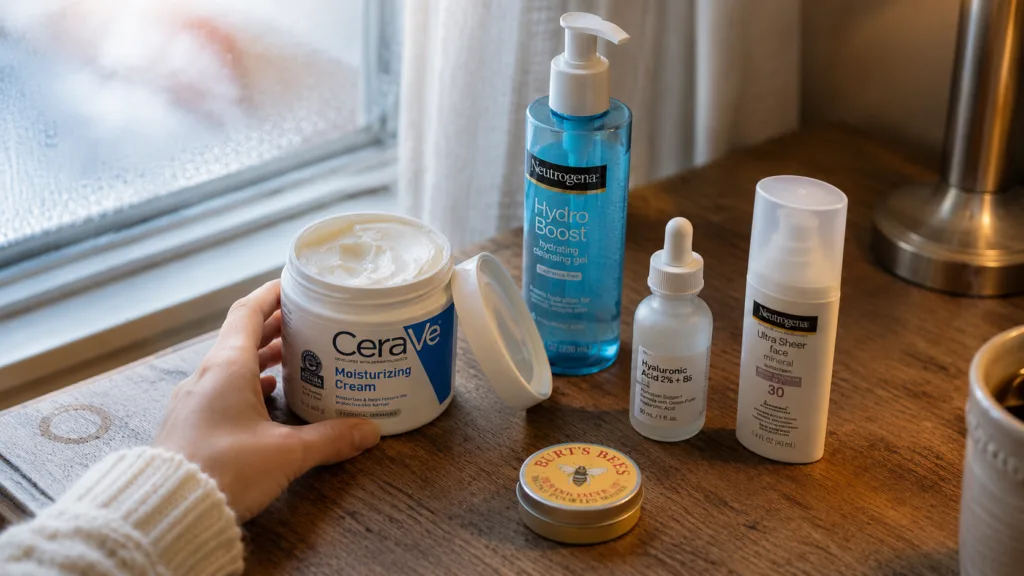
Press a hyaluronic acid or glycerin serum onto damp skin. Damp skin gives humectants water to hold onto. Use a pea-size amount for the full face. Wait a brief moment before the next layer. Skin should feel supple, never sticky or tight.

Step Three: Seal With Cream And Sunscreen
Cover the serum with a plain moisturizer at once. Cream slows water loss through the morning hours. Finish with broad-spectrum SPF 30 or higher. Use two finger lengths for the face and neck. Reapply every two hours during outdoor time and sooner after swimming or sweating.

Evening Care That Refills Skin Overnight
Evenings remove the day and refill the surface slowly. Skin loses water during sleep each night. One gentle wash and two layers do the work. The whole evening routine stays calm on purpose.
Wash Once With Lukewarm Water
Wash once at night with the morning cleanser. Sunscreen and makeup need 60 seconds of gentle massage. Heavy makeup may need a plain cleansing oil first. Rinse with lukewarm water, never hot water. Stop when skin feels clean and quiet.
Repeat The Hydrating Layer On Damp Skin
Mist or pat plain water onto clean skin first. Press the same humectant serum over that damp base. A second thin layer can help on very tight cheeks. Keep layers thin so skin stays comfortable. Thick layers can pill under night cream.
Add A Richer Seal On Dry Zones
Night cream can run richer than morning cream. Petrolatum on tight patches slows water loss overnight. Cheeks and the mouth area often need extra seal. The forehead may need a lighter layer instead. Morning softness shows where the seal worked.
Ingredients That Help Skin Hold Water
Short labels make hydration easier to track. Each ingredient group below does one clear job. None needs high strength to help skin. Steady daily use beats strong doses used rarely.
Hyaluronic Acid And Glycerin Draw Water In
Hyaluronic acid holds water at the skin surface. Glycerin draws water into the outer layer too. Both count as humectants in skincare formulas. They work best on damp skin under cream. Dry air can limit what they pull from air.
Panthenol And Aloe Calm Tight Skin
Panthenol supports hydration and eases dry sting. Aloe vera adds water with a light, cool feel. Both suit oily readers who fear heavy layers. They sit well inside serums and gel creams. Patch test each newcomer before full use.
Ceramides Help Keep Water From Leaving
Ceramides form part of the lipid wall between cells. That wall slows transepidermal water loss through the day. The ceramide ingredient breakdown explains this lipid in depth. Creams with ceramides pair well over humectant serums. This pairing gives dehydrated routines their staying power.
Mistakes That Make Dehydration Worse
Common fixes can deepen water loss when timed wrong. Three mistakes appear in almost every stalled routine. Each one has a plain and cheap fix. Our skincare mistakes guide covers wider routine errors in depth.
Using Heavy Cream Without A Water Layer
Thick cream alone seals in whatever sits beneath it. On dry, thirsty skin, that means sealing in dryness. Add a humectant layer on damp skin first. Then cover that layer with the heavy cream. The order change often fixes weeks of frustration.
Exfoliating Dull Skin Every Day
Dullness tempts readers toward daily acid use. Daily acids thin the surface and raise water loss. Flakes from water loss need moisture, not removal. Burning is a stop signal, never a progress sign. Give skin two calm weeks before exfoliating again.
Skipping Moisturizer On Oily Skin
Oily readers often skip cream to avoid extra shine. Skipped cream lets serum water escape within hours. A light gel cream seals without a greasy feel. Blot shine at midday instead of washing again. Water and oil need separate fixes, always.
When Tight Skin Needs A Dermatologist
Home care has clear limits with tight, sore skin. Mild cases should ease within a few gentle weeks. Signs that persist or spread need trained eyes. A clinician can check for eczema or allergy.
Warning Signs To Act On Fast
Cracked, bleeding, or blistered skin needs prompt care. Spreading rash with fever needs same-day help. Itch that blocks sleep matters as well. Yellow crusts can signal a skin infection. Seek care fast if swelling reaches eyes or lips.
FAQs
What Are The Main Signs Of Dehydrated Skin?
Tightness after washing, dull color, lines that come and go, and shine beside tight cheeks. Makeup clinging to rough patches adds another clue. Three signs appearing together often point to water loss.
How To Hydrate Dehydrated Skin Fast?
Layer a humectant serum on damp skin after gentle washing. Seal that layer with cream at once. Wear SPF 30 each morning outdoors. Comfort often improves within days of steady care.
Can Oily Skin Be Dehydrated Too?
Yes. Oil output and water content run on separate tracks. Oily skin can shine while cheeks feel tight and dull. Light humectant layers plus a gel cream suit this mix well.
Is Dehydrated Skin The Same As Dry Skin?
No. Dry skin lacks oil and tends to stay dry year round. This condition lacks water and can change within weeks. Many faces carry both problems at once.
Does Drinking Water Fix Dehydrated Skin Alone?
Drinking water supports overall health and skin comfort. Topical layers still decide how much water skin holds. Humectants on damp skin plus a cream seal do the direct work. Keep both habits in place.
How Long Does Dehydrated Skin Take To Recover?
Mild water loss often eases within one to two weeks of gentle care. Damage built over months can take longer to settle. Restarting strong actives too early extends the timeline most often.
Final Thoughts
Start with the water, then protect it. A steady plan for dehydrated skin needs gentle washing, humectants on damp skin, a cream seal, and morning sunscreen. Give that rhythm two full weeks before judging comfort or glow. Skip new actives until tightness fades for several mornings in a row. Tonight, set a humectant serum and cream beside your sink, ready for damp skin.