22 Stunning Long Square Nails for Bold, Polished Days
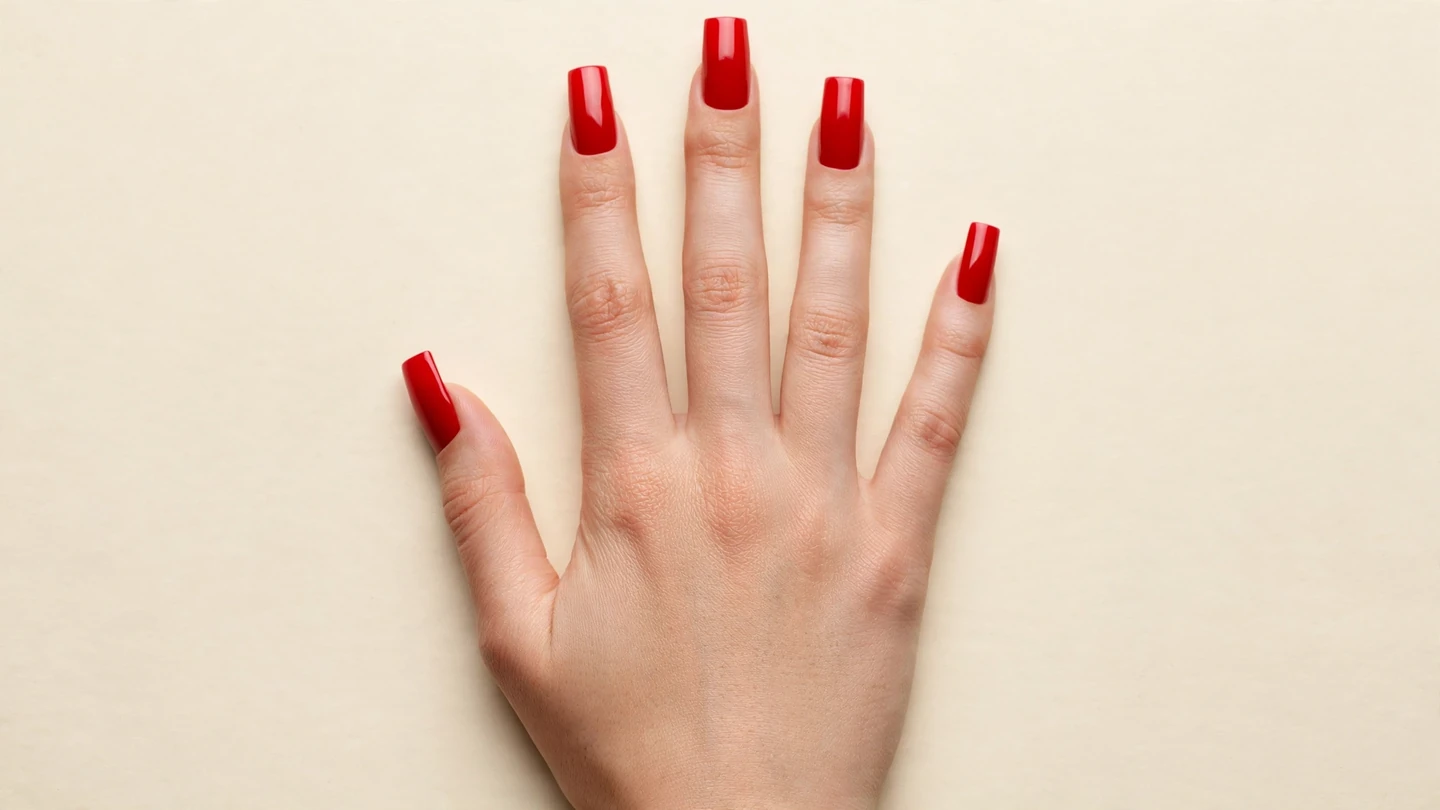
A crisp white French tip and glossy black polish create very different looks on the same long square shape. One highlights the border; the other emphasizes the whole outline. Foil, soft gradients, and tiny flowers offer more ways to use the extra nail space.
These 22 ideas for long square nails pair visual references with short salon requests. Some photographs have a softer or more tapered outline, so the descriptions identify where to request straighter sides. A square free edge should not be confused with a flat nail surface or a straight French smile line.
Start with a length you can comfortably manage, then choose colour and decoration. Typing, fastening clothes, and handling small objects can feel different with extensions. A saved design starts that conversation. It cannot guarantee that every detail will suit your nails.
Choose Length And Structure First
Square nails have relatively straight sidewalls and a flat free edge. Compare alternatives in our nail shapes guide if you prefer more taper or rounded corners.
Extensions add length beyond the nail bed; they do not lengthen the nail bed itself. Avoid treating acrylic or builder gel as a repair for splitting or damaged nails.
1. Classic Cherry Red
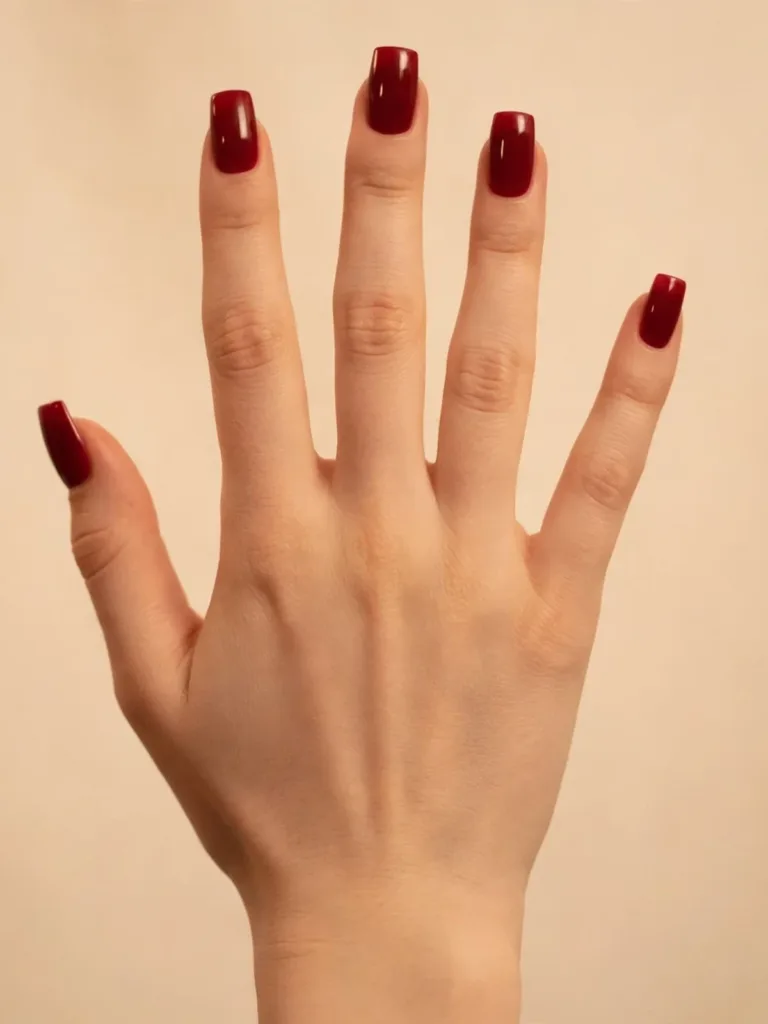
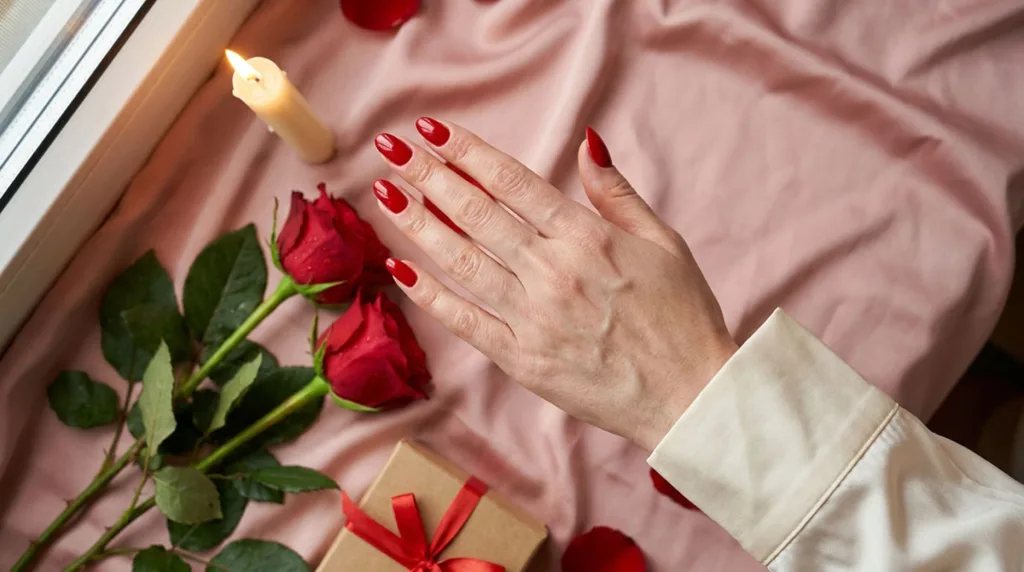
Cherry red puts the emphasis on colour and the flat free edge. The reference uses an opaque glossy finish without extra artwork. Compare brighter cherry and deeper blue-red swatches before choosing.
A plain colour also lets you judge the shape clearly. Ask for the length separately rather than copying every proportion.
Salon request: Cherry red, glossy finish.
2. Sheer Pink
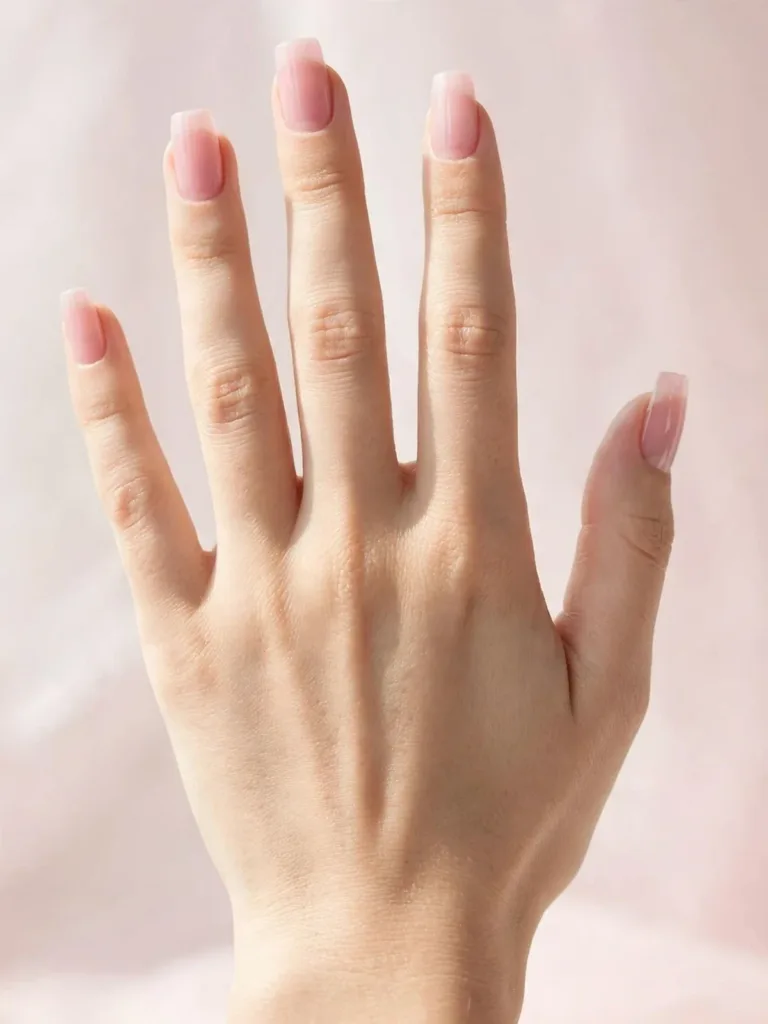
A pink tint leaves some natural nail visible beneath the glossy surface. Choose the amount of coverage you want rather than requesting a fixed coat count. Different formulas build differently.
A lighter wash emphasizes transparency, while more coverage makes the pink stronger. The shade can complement your skin without matching it.
Salon request: Sheer pink; confirm coverage.
3. Milky White
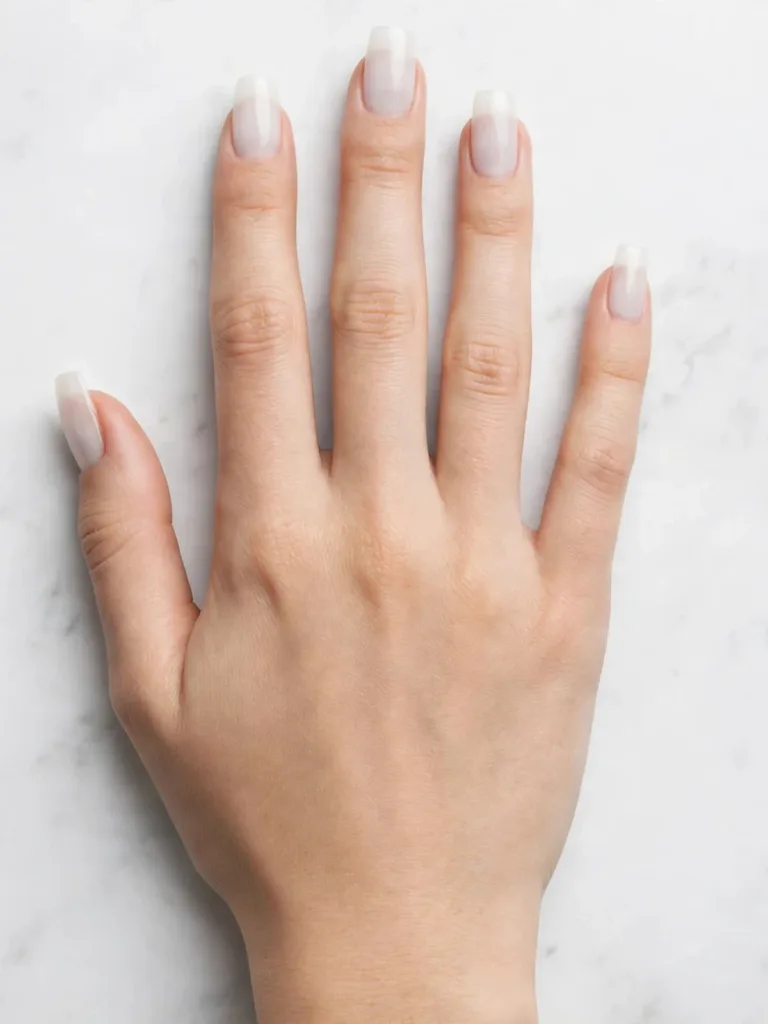
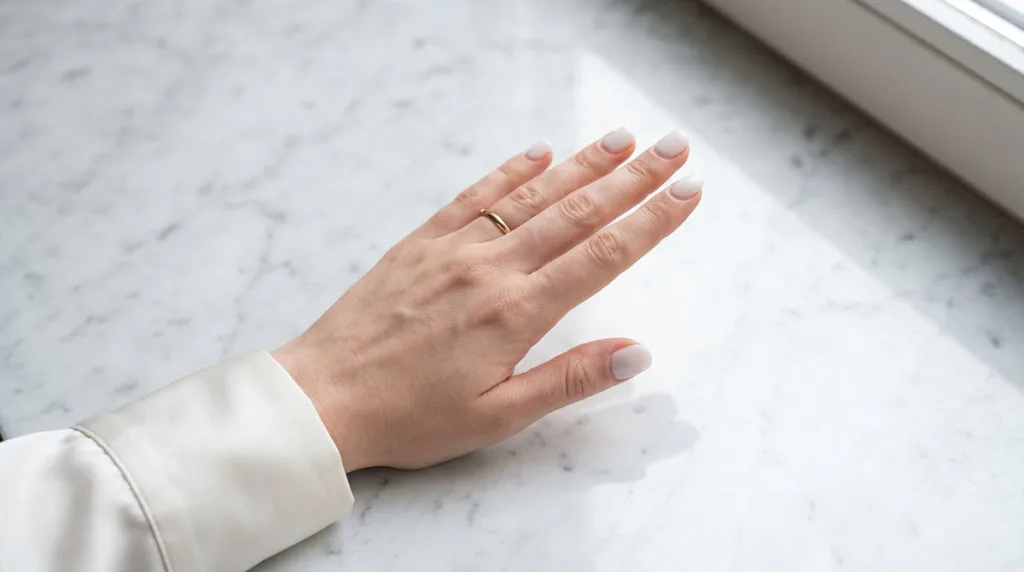
Milky white softens the contrast between the nail bed and the extended tip. The pictured finish is translucent rather than solid white. Ask to compare a sheer wash with a more opaque sample.
That choice changes the appearance more than the number of coats alone. Keep the surface plain to emphasize colour.
Salon request: Translucent milky white.
4. Classic French Tips
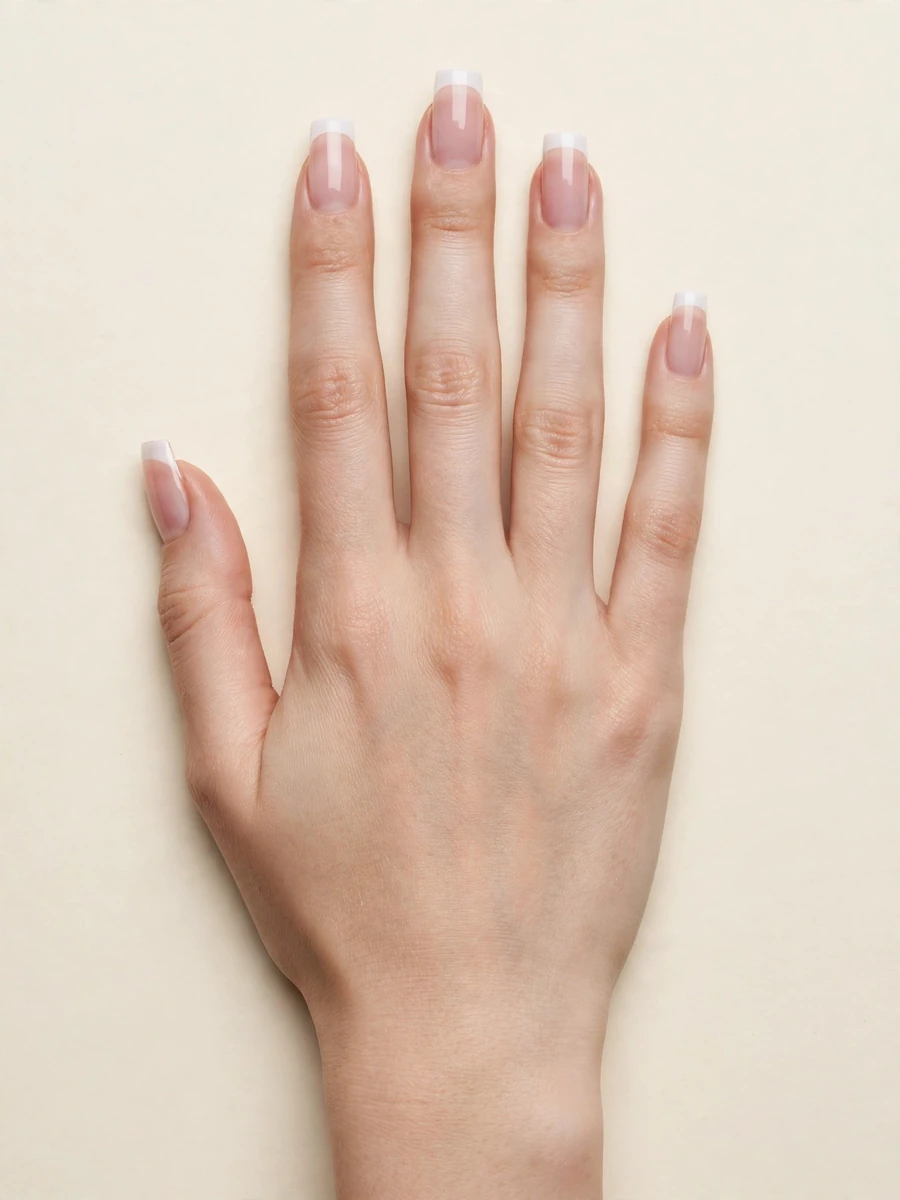
A pale pink base separates the white French tips from the rest of each nail. The reference uses a curved smile line above a flat free edge. Those are different parts of the design.
Choose the white band’s width before painting. A narrower band leaves more of the pink base visible.
Salon request: Pink base, curved white smile line.
5. Deep Burgundy
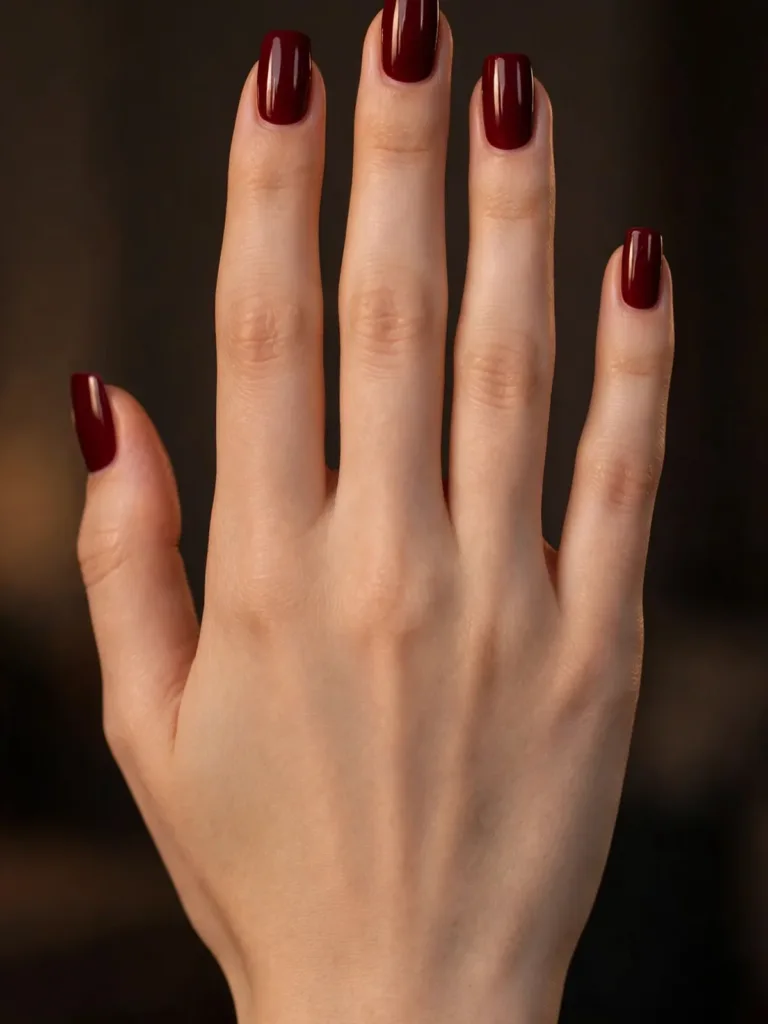
Deep burgundy gives this set a dark wine colour with a glossy surface. In low light, the shade may look close to black. Compare it in daylight if you want a clearly visible red tint.
A matte version is another option, but it would change the pictured finish. Keep your reference specific.
Salon request: Glossy wine red.
6. Espresso Brown
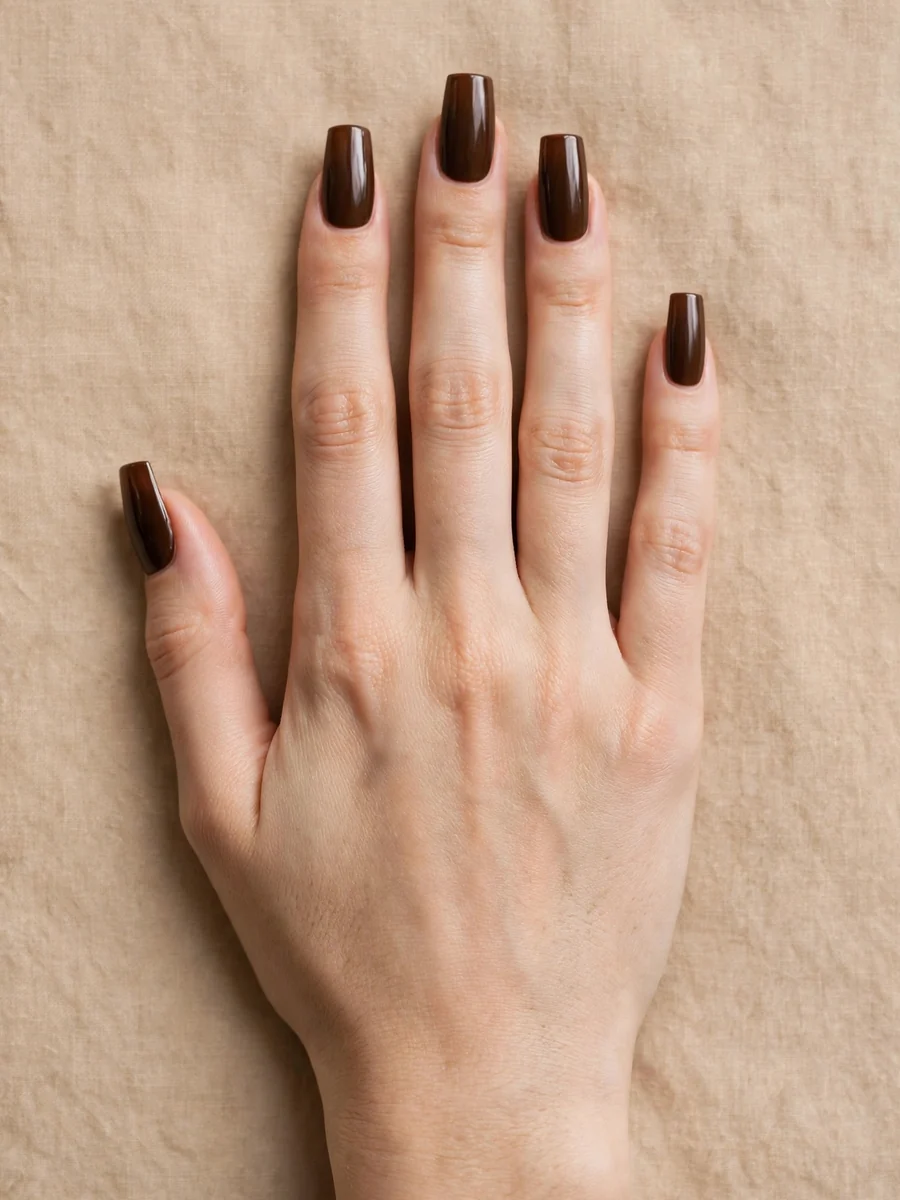
Espresso brown offers a dark brown alternative to black. The reference shows a glossy finish with highlights along the nail surface. Ask for a swatch if you want to compare cooler brown with a warmer cocoa.
Neither shade guarantees less visible wear. Choose the colour first, then discuss the shape and length.
Salon request: Glossy dark brown.
7. Glossy Black
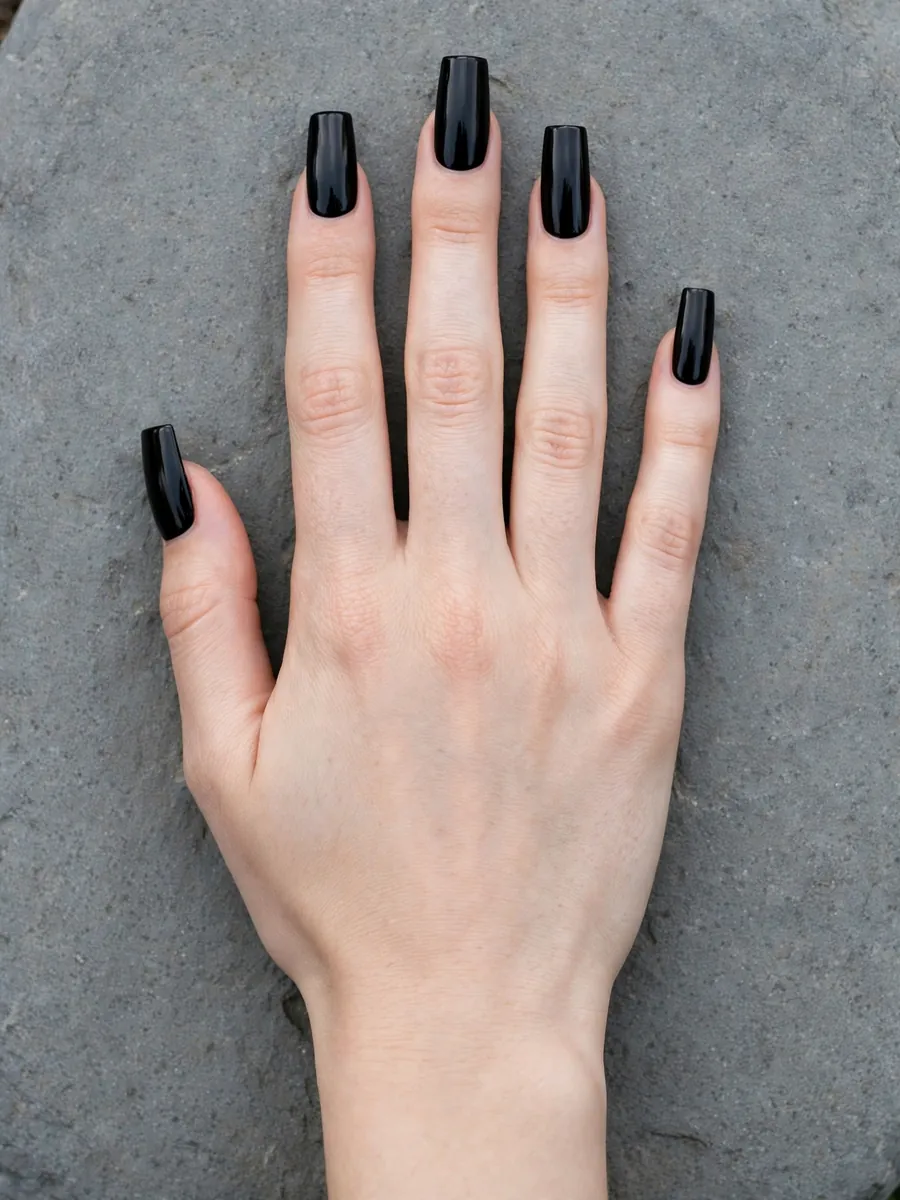
Glossy black makes the outline and highlights easy to see. The pictured nails taper somewhat toward the tips, so specify straighter sidewalls for a more distinct square shape. The technician should choose suitable coverage for the product.
A one-coat formula does not require an automatic second coat just to match the description.
Salon request: Black gloss, straight sidewalls.
8. Soft Nude Ombré
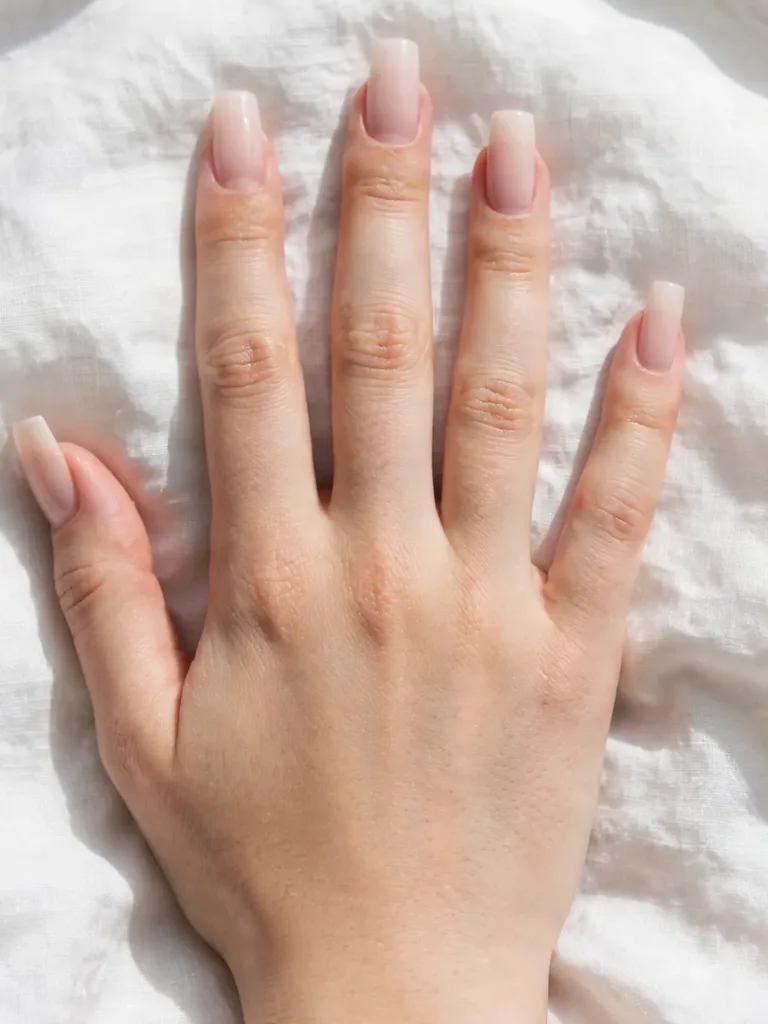
A soft gradient moves from pink near the nail base toward a paler tip. Unlike French tips, the transition has no sharply painted border. Ask how much contrast you want between the two ends.
A subtle blend leaves the colour change quieter. A sheer lower section may make regrowth less conspicuous.
Salon request: Soft pink-to-pale gradient.
9. Gold Foil Accent
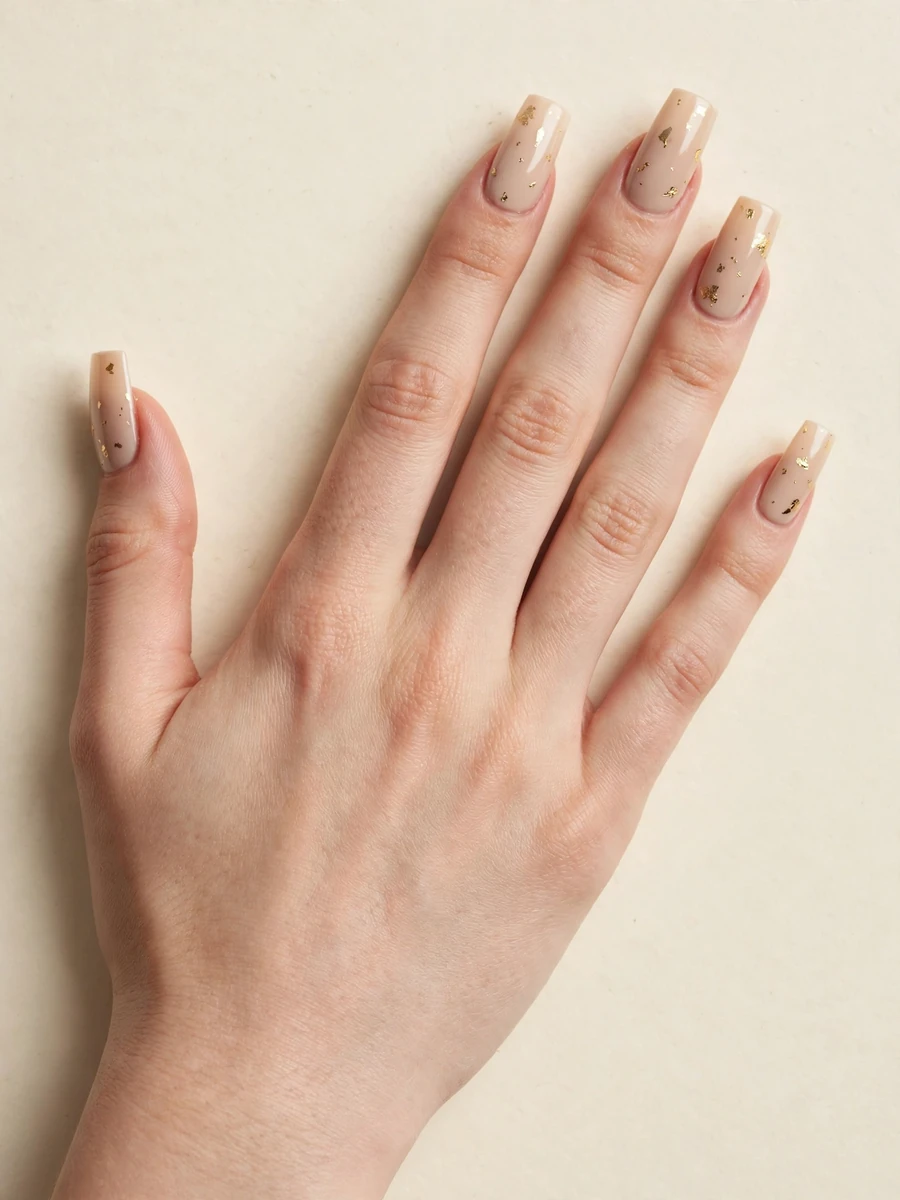
The reference uses small scattered gold foil fragments over a clearly visible nude base. The metallic flecks stay sparse, so the nude base shows through across most of each nail. Request larger foil patches if you prefer a more covered version.
Foil placement can vary across nails. Ask for a smooth finish using the compatible system, without specifying a thick coating.
Salon request: Nude base, small scattered gold foil fragments.
10. Metallic Pink Chrome
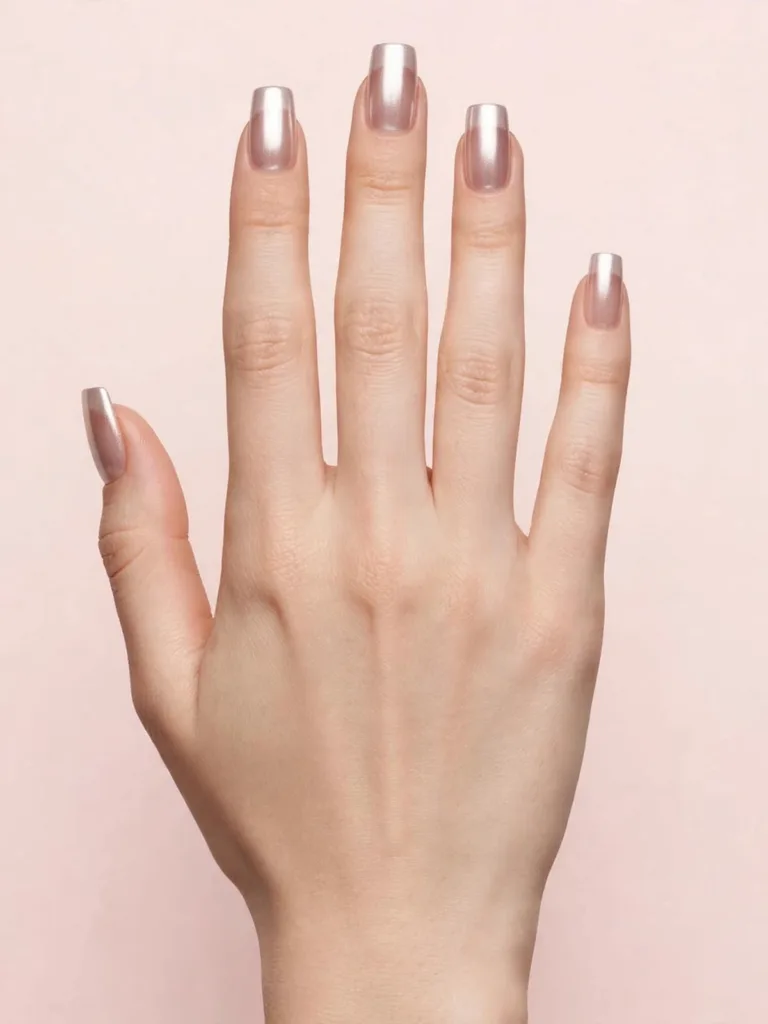
The pictured chrome is strongly reflective, with a pale pink metallic colour. Use this reference for a metallic finish rather than expecting an almost invisible glaze. A softer pearl overlay is a separate variation.
Compare the effect over different base shades. Lighting and viewing angle will change how the highlights appear.
Salon request: Pale pink metallic chrome.
11. Tortoiseshell
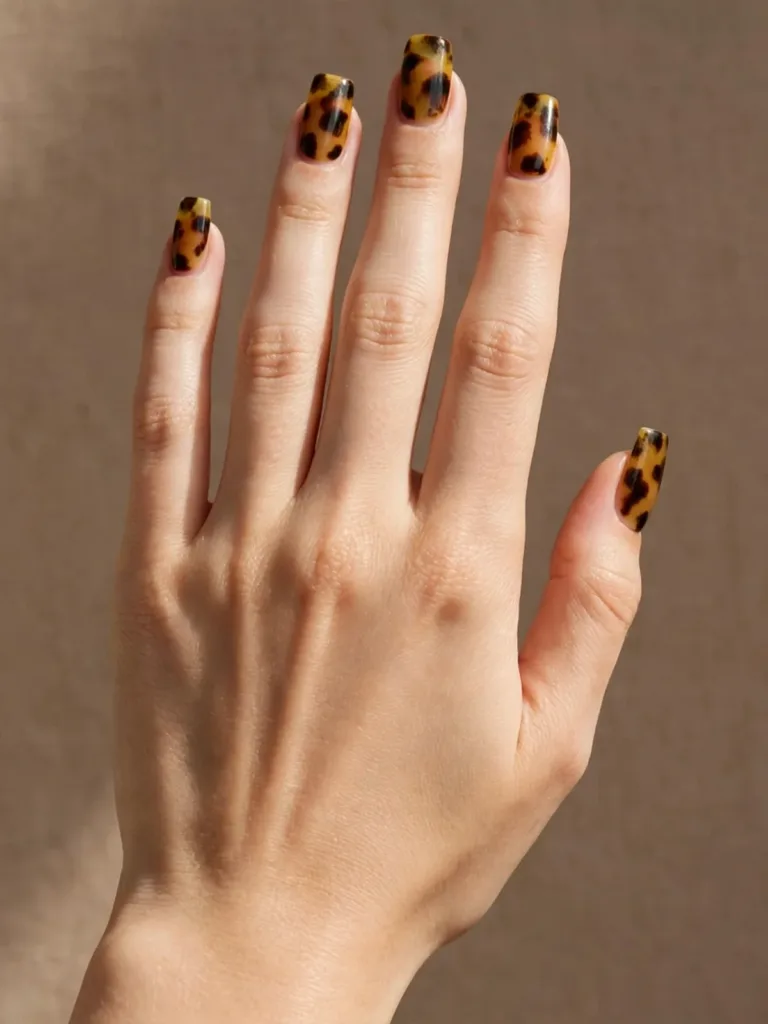
Amber, brown, and dark patches form a tortoiseshell pattern across the nails. The translucent layers create variation between lighter and darker areas. Ask whether you want full patterned coverage or selected accents.
The reference uses the pattern throughout. Larger patches and smaller mottled marks create different effects on the available nail space.
Salon request: Amber and dark brown mottling.
12. Sage Green
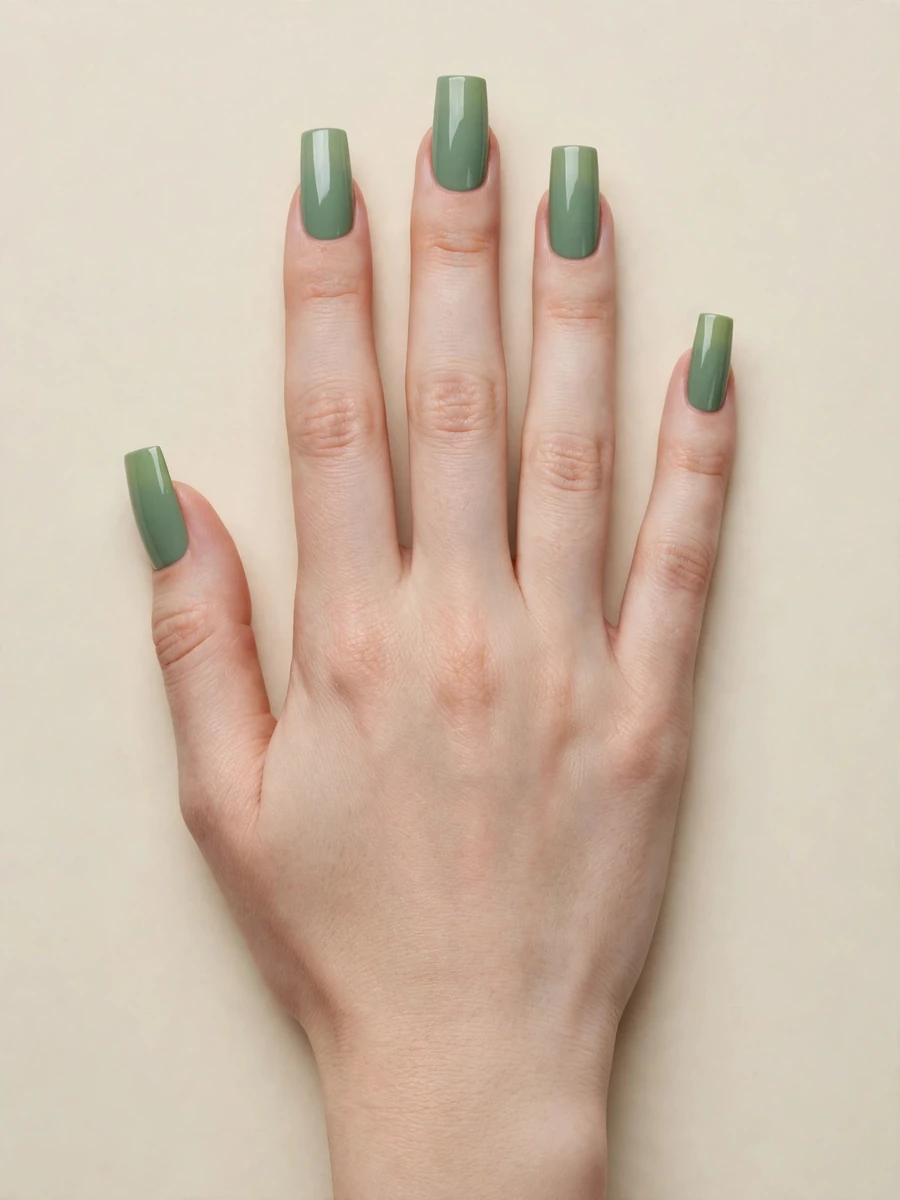
Sage green gives the set an opaque muted colour without added artwork. The reference has a glossy finish rather than a flat matte surface. Compare yellow-green and grey-green samples if you have a particular shade in mind.
For a true square outline, request parallel sides and a flat tip rather than tapering.
Salon request: Sage gloss, parallel sidewalls.
13. Powder Blue
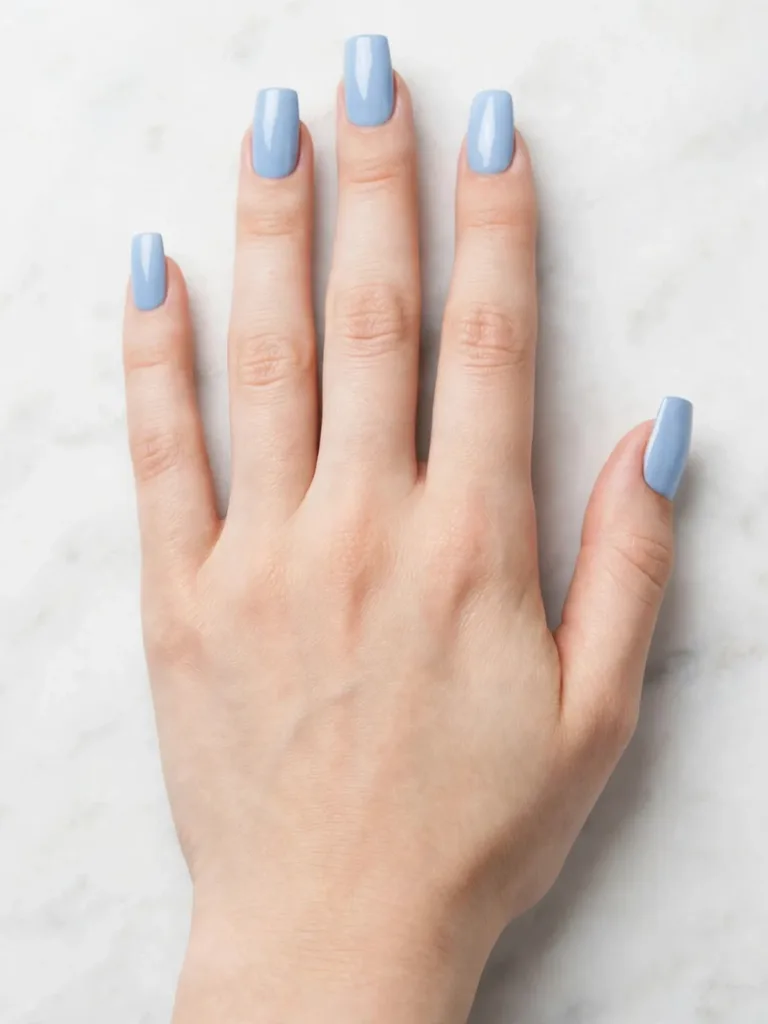
Powder blue creates a pale opaque manicure with a glossy surface. The uninterrupted colour leaves the nail outline easy to inspect. Check a sample against your hand because blue can look different under warm indoor lighting.
A matte version changes the texture rather than the shape. Neither finish guarantees a particular wear period.
Salon request: Opaque powder blue gloss.
14. Blush Aura
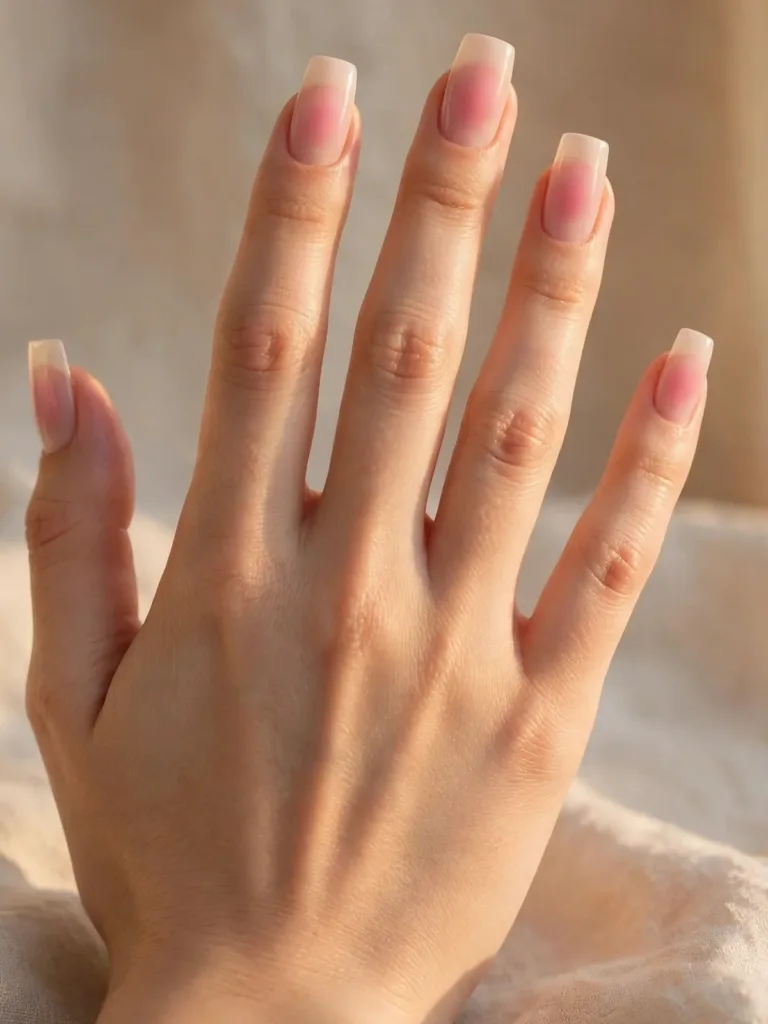
Blush pink blooms at the centre of each nail and fades into a lighter border. That diffused transition distinguishes aura art from plain pink polish. Ask to compare a smaller central bloom with a wider pink area.
Keep the surrounding base visible if you want the colour placement clear. Avoid a sharply outlined circle.
Salon request: Pink centre, diffused pale border.
15. Negative Space Lines
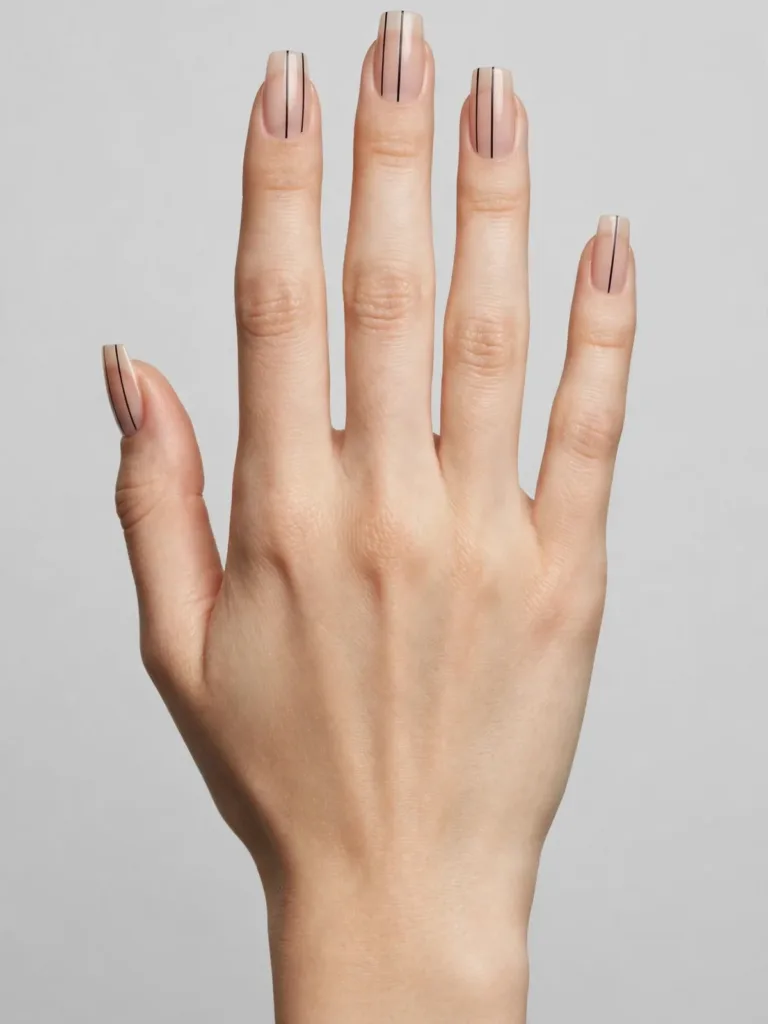
Fine dark lines run lengthwise over a pale translucent base. The space between the lines remains part of the design. Decide whether you want one line or several on each nail.
The reference uses multiple narrow stripes. Their position can repeat across the hand without requiring perfectly identical spacing on every nail.
Salon request: Translucent base, narrow dark stripes.
16. Checkerboard Accent
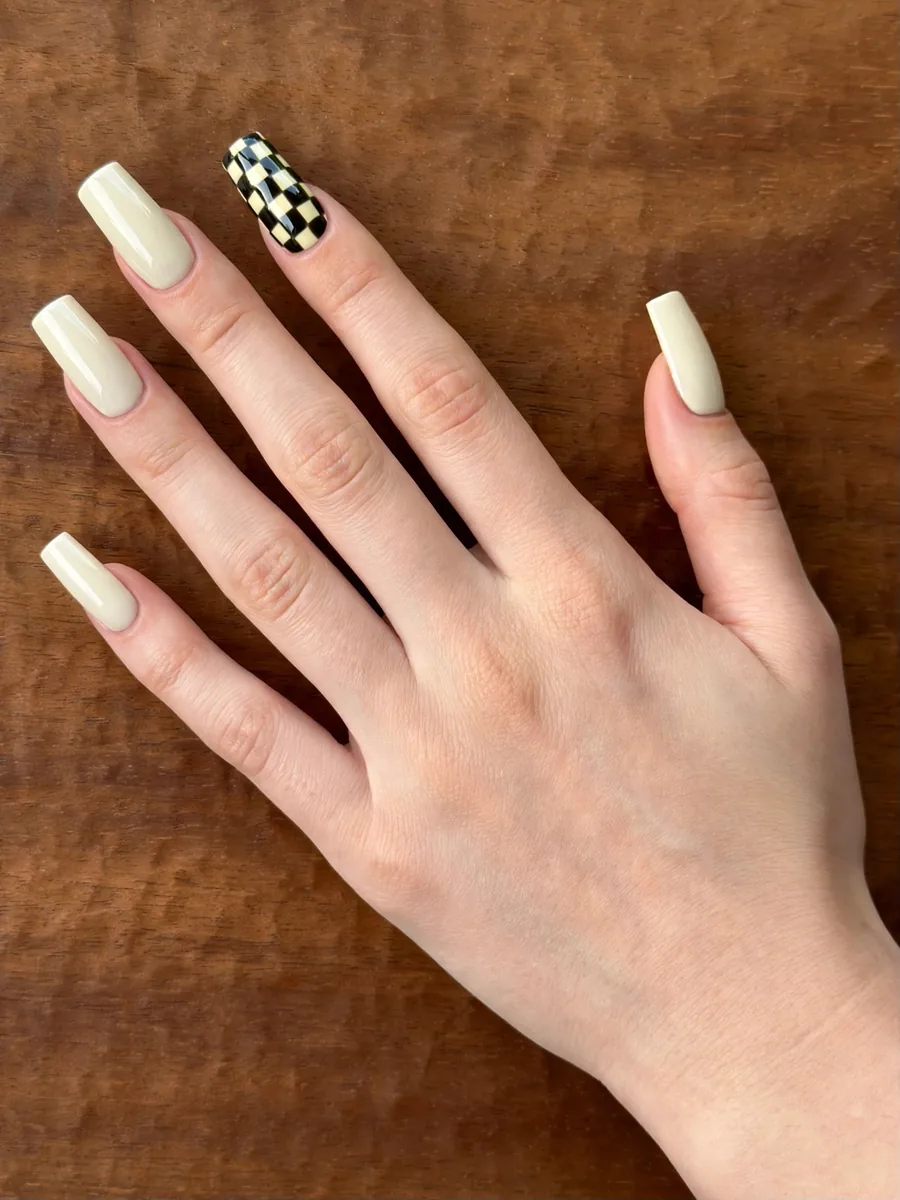
A black-and-cream checkerboard covers one visible accent nail in the photograph. The other nails remain plain cream. Specify whether you want one accent overall or one on each hand.
Smaller checks fit more squares into the pattern. The nail still curves naturally; a square tip does not mean a flat nail surface.
Salon request: Cream nails, one checkerboard accent.
17. Cherry Mocha
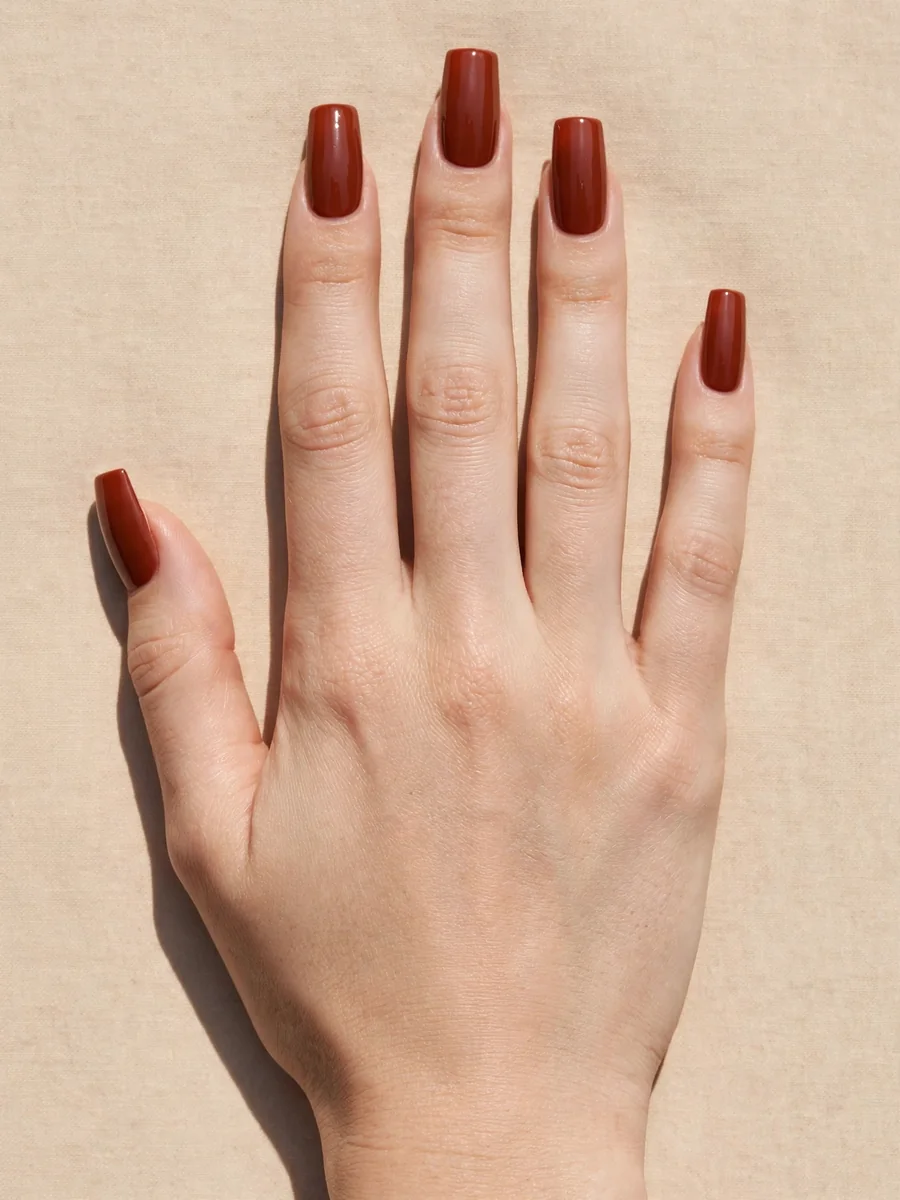
Cherry mocha combines a dark red tint with brown. The reference uses a glossy finish, though the low lighting makes the colour harder to compare. Ask to see a swatch in daylight before choosing.
A redder version and a browner version can share the same name. Describe your preferred balance rather than undertone rules.
Salon request: Glossy red-brown; compare a swatch.
18. Floral French
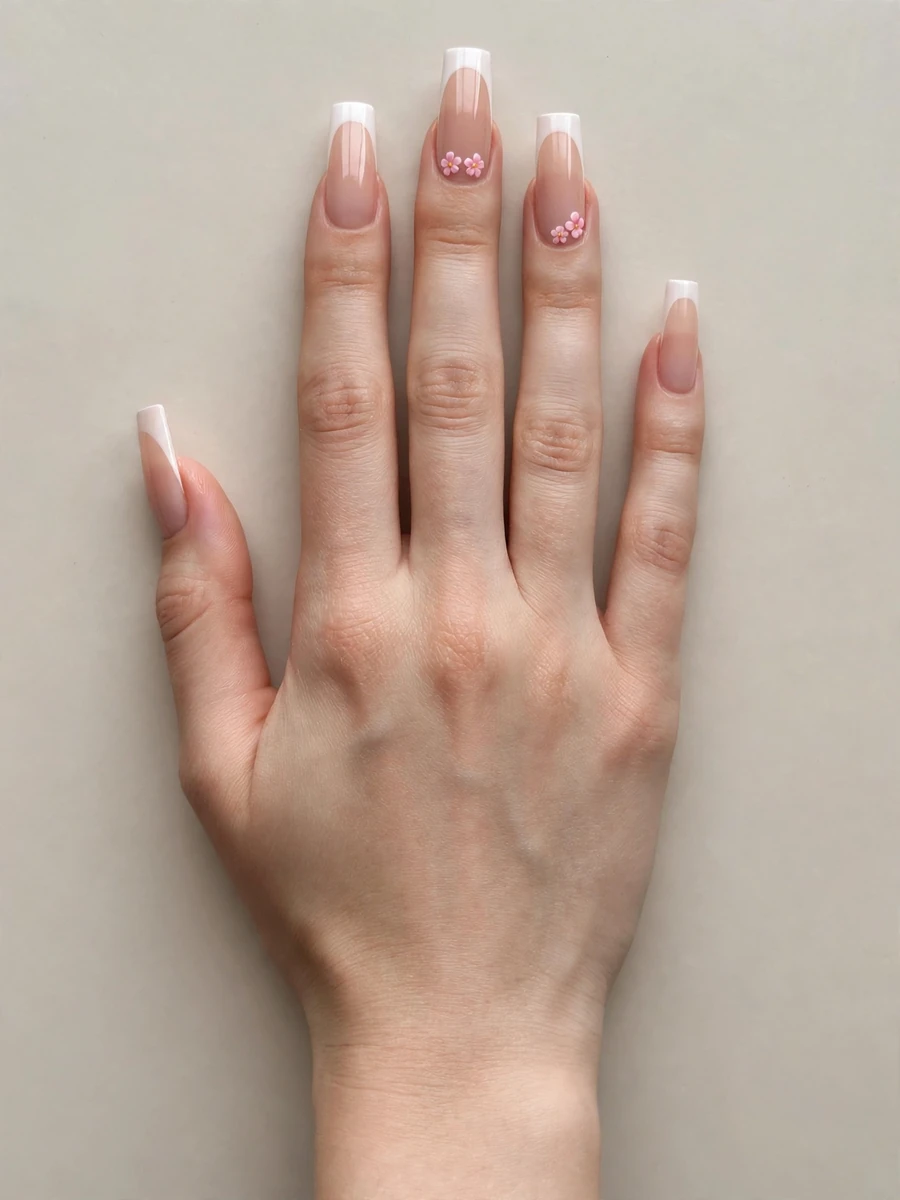
Small painted flowers decorate a French manicure with a pink base and white tips. The reference concentrates the floral detail on an accent nail. Ask which finger should carry the artwork before painting starts.
Tiny petals need enough contrast to remain visible. A larger flower can work as a deliberate alternative on one nail.
Salon request: Pink French, small floral accent.
19. Glitter Gradient
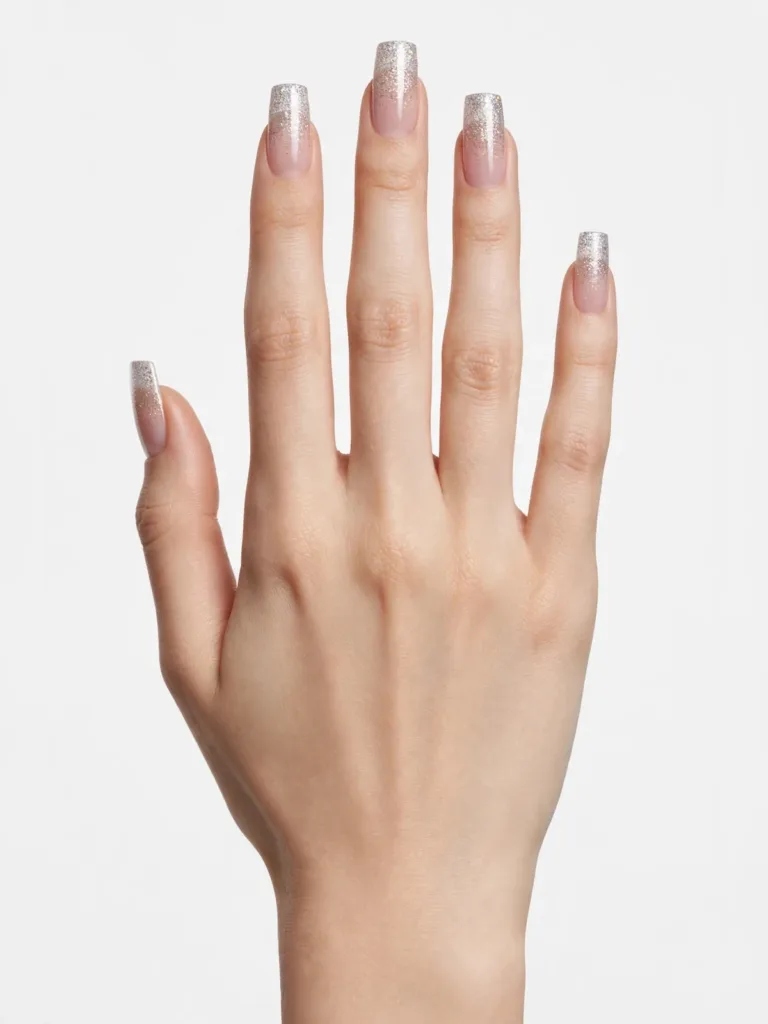
Silver glitter gathers at the tips and becomes sparser toward the pink base. The transparent sections make the fade visible. Ask for fine particles if you prefer a smoother-looking shimmer.
Larger pieces give a more distinct scattered pattern. Finishing thickness should follow the product system, rather than a universal two-top-coat instruction.
Salon request: Pink base, silver tip-focused fade.
20. Matte Plum
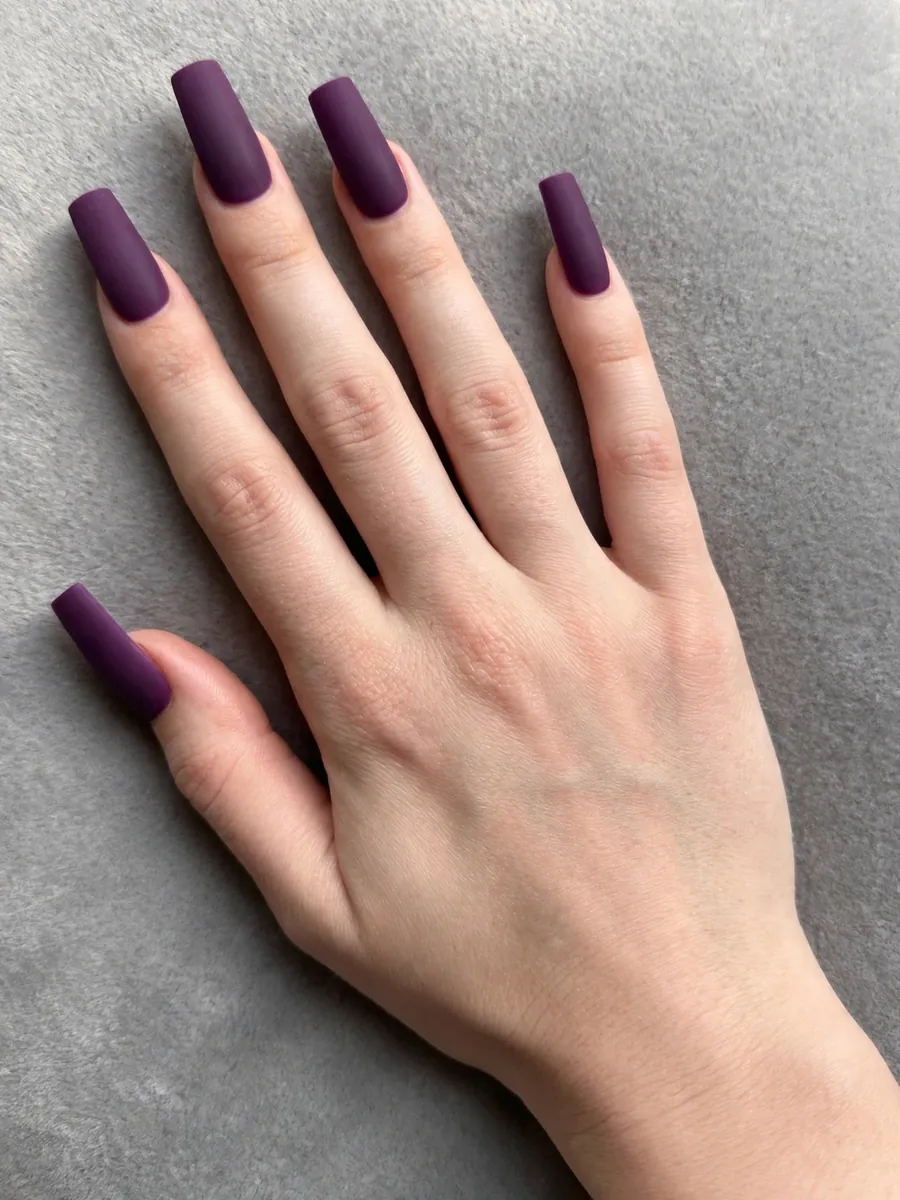
A matte finish gives the deep plum colour a low-shine surface. The reference also shows some tapering toward the free edge. Ask for straighter sidewalls if you want a clearer square outline.
Follow product-specific care rather than avoiding moisturizer altogether. The finish is cosmetic and does not establish stronger or healthier nails.
Salon request: Plum matte, straighter square sides.
21. Leopard French Tips
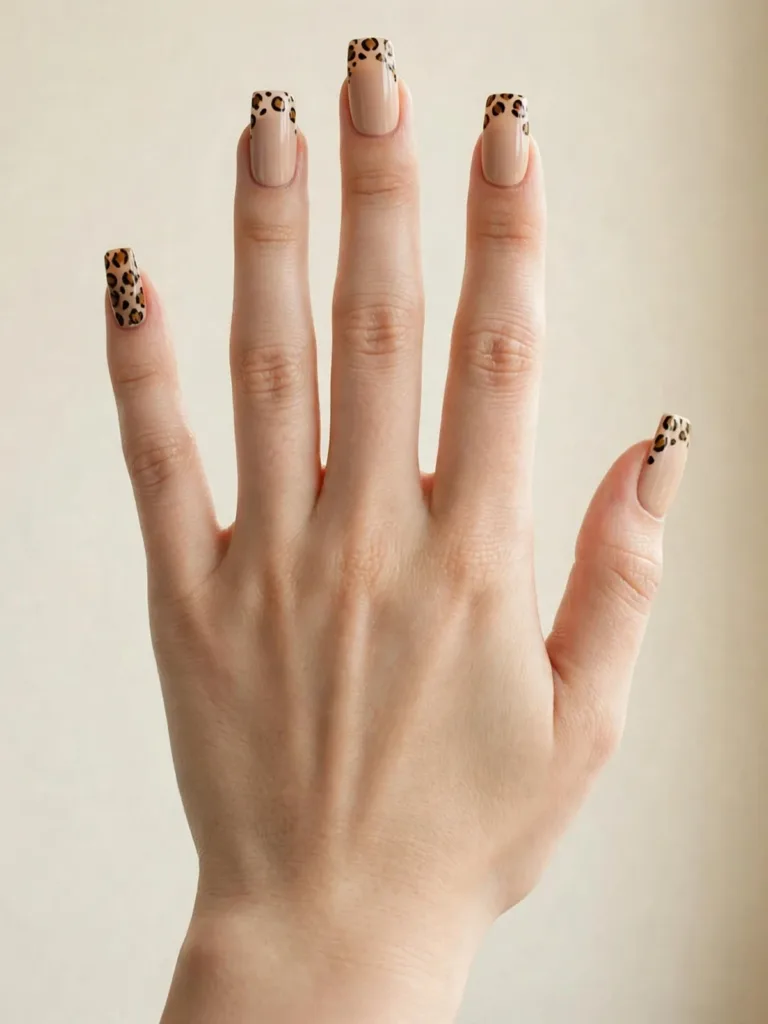
Leopard patterns run along most tips in the reference, with fuller coverage on the little finger. The pale nude base stays visible beneath the other tips. Request isolated accent nails if you prefer less pattern.
Irregular dark outlines around warm brown patches create the print. Keep your salon request consistent with the chosen placement.
Salon request: Nude base, leopard-patterned tips.
22. Crystal Cuticle Accent
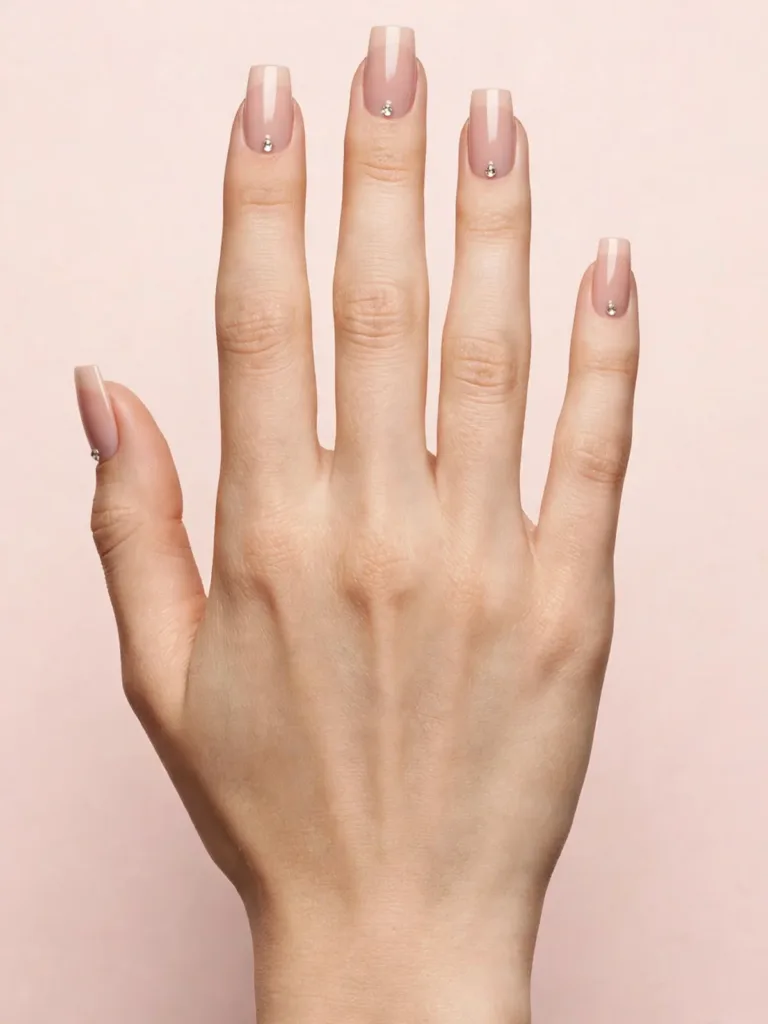
Small crystals sit near the bases of the pale pink nails. Their raised surfaces add detail without covering the whole nail. Ask for compatible nail-art adhesive and placement that avoids surrounding skin.
Even small stones may catch on fabric. Check for loose attachments, and ask the technician how to handle one safely.
Salon request: Pink base, small securely attached crystals.
Care For The Set Without Forcing Repairs
Avoid using nails to open cans or pry packaging. The AAD’s healthy nail tips recommend cleaning gloves and moisturizing after handwashing.
The AAD’s artificial-nail guidance warns that covering damaged nails may worsen problems. Ask about nail condition before choosing enhancements.
Have lifting, cracks, or painful nails assessed rather than hiding them with matching polish. Follow the identified system’s maintenance and removal instructions. Top-coat layers cannot guarantee that corners will not break.
Long Square Nails FAQ
Length and structure matter as much as the artwork. These answers cover practical choices before your appointment.
Can Short Nail Beds Wear This Shape?
Discuss a manageable length with your technician. Extensions can add free-edge length, but do not change the length of the nail bed.
Do I Need Acrylic Extensions?
No. The approach depends on your natural nails, desired length, and suitable product system. Avoid enhancements over damaged nails without advice.
How Can I Reduce Corner Snags?
Ask about slightly softening sharp points while keeping the tip square. Avoid sideways force and arrange assessment of cracks or lifting rather than attempting a cosmetic cover-up.
Which Colours Work With Square Tips?
Opaque colours emphasize the outline, while translucent bases leave more natural nail visible. Colour choice is personal and does not require a particular skin tone.
How Much Maintenance Will I Need?
It depends on length, product, nail growth, and daily activity. Follow your technician’s maintenance plan rather than a universal fill schedule, and seek advice sooner for pain or lifting.
Save A Clear Shape Reference
A useful long square reference makes the sidewalls, free edge, and artwork easy to see. Length should fit the way you use your hands, while colour and decoration can follow your preferences. A photograph may show a variation rather than the exact shape you want.
Save one design with notes on your preferred length, straight sides, corner softness, and finish for your appointment.