Best Simplistic Short Round Nails: 20 Chic Looks
Are your short nails making your hands look stubby — or is it just the wrong shape?
Most of the time, it is the shape. Short round nails follow the natural curve of your fingertip, which makes fingers look longer and hands look cleaner. They also break less than square or almond nails, snag on nothing, and take about two minutes to maintain.
The harder part is finding designs that work on a small canvas without looking cluttered or boring. This guide to the best simplistic short round nails covers 20 designs for 2026, a step-by-step shaping guide, skin tone recommendations, and the five mistakes that wreck an otherwise clean manicure.
Why Short Round Nails Are the Shape to Pick
Not all nail shapes are created equal. Some look incredible in photos but snap off by Thursday. Short round nails land where beauty and practicality actually overlap, which is why they have become one of the most requested shapes in nail salons.
The round shape follows the natural curve of your fingertip. That gentle arc distributes stress evenly across the nail tip rather than concentrating it at the corners, which is why round nails break far less often than square or almond styles. If you type all day or have naturally brittle nails, the rounded edge makes a real difference.
How Round Nails Compare to Other Shapes
- Round vs. square: Square nails have sharp corners that snag on fabric and break more easily. Round nails are gentler on the nail structure.
- Round vs. oval: Oval nails are similar but require more length to look right. Round nails work beautifully even when kept very short.
- Round vs. almond: Almond nails elongate the fingers and look elegant, but they demand more maintenance and are more fragile. Round is the low-maintenance alternative.
- Round vs. squoval: Squoval (square-oval hybrid) is also durable, but the round shape looks softer and suits wider nail beds better.
Round nails flatter most finger shapes. On short fingers in particular, the curved tip gives the illusion of length without requiring any actual growth.
How to Shape Your Nails Round at Home
Shaping round nails at home is straightforward once you know the technique. The goal is a smooth, symmetrical arc that mirrors the curve of your fingertip. Most mistakes happen because of the wrong tools or filing while nails are wet.
Tools You Need
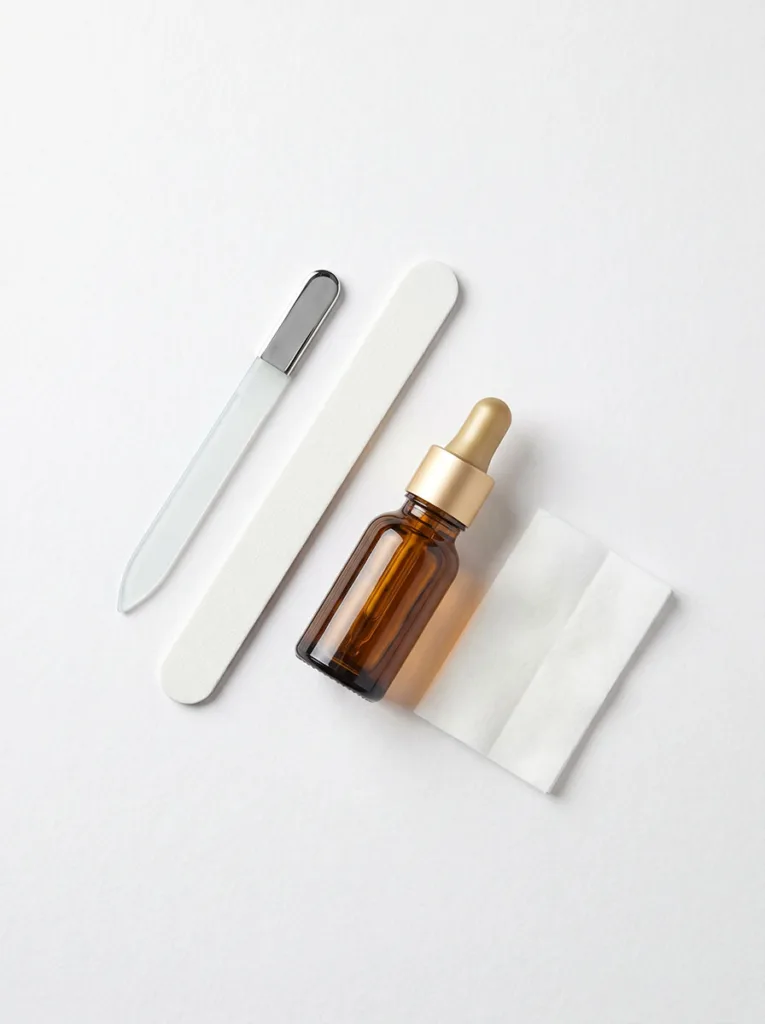
You do not need a professional kit. Keep these three items on hand:
- A glass nail file or fine-grit file (240 grit or higher) — coarser files cause micro-tears in the nail edge that lead to peeling
- A soft emery board — for sealing the nail edge after shaping
- Cuticle oil — to hydrate the nail and surrounding skin after filing
Avoid metal files. They are too aggressive for natural nails and can weaken the nail plate over time.
Step-by-Step Filing Guide
- Start with clean, dry nails. Wet nails are softer and more vulnerable to damage during filing.
- Trim nails to your desired length with a nail clipper, cutting straight across.
- Hold your file at a 45-degree angle underneath the nail tip, not on top of it.
- File from the outer edge toward the center in one direction. Do not saw back and forth — unidirectional strokes prevent splitting.
- Imagine a half-circle on the tip of each nail and follow that curve as you file both sides.
- Check symmetry by holding your hand flat and looking straight down at the nails.
- Finish with the emery board to seal the edge and eliminate any roughness.
Reshape every 7 to 10 days to keep the round shape clean and consistent.
Neutral and Nude Short Round Nail Designs
Neutral nails on a round shape are genuinely hard to get wrong. The soft curve of the tip does most of the work — even the plainest shade looks clean and intentional. These five work year-round on every skin tone.
1. Warm Beige
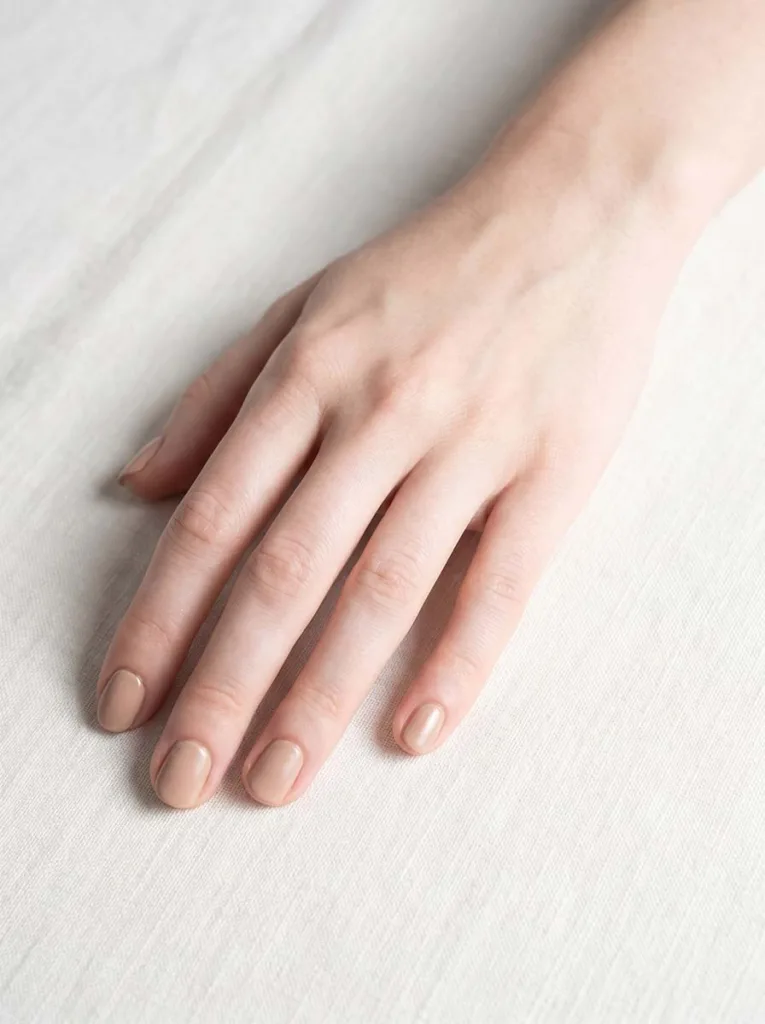
Warm beige sits close enough to your natural nail tone that the result looks clean without being obvious. On short round nails it creates a subtle illusion of length. For medium to deep skin tones, pick a formula with a pink or peach undertone. For fair skin, go cooler and more ivory.
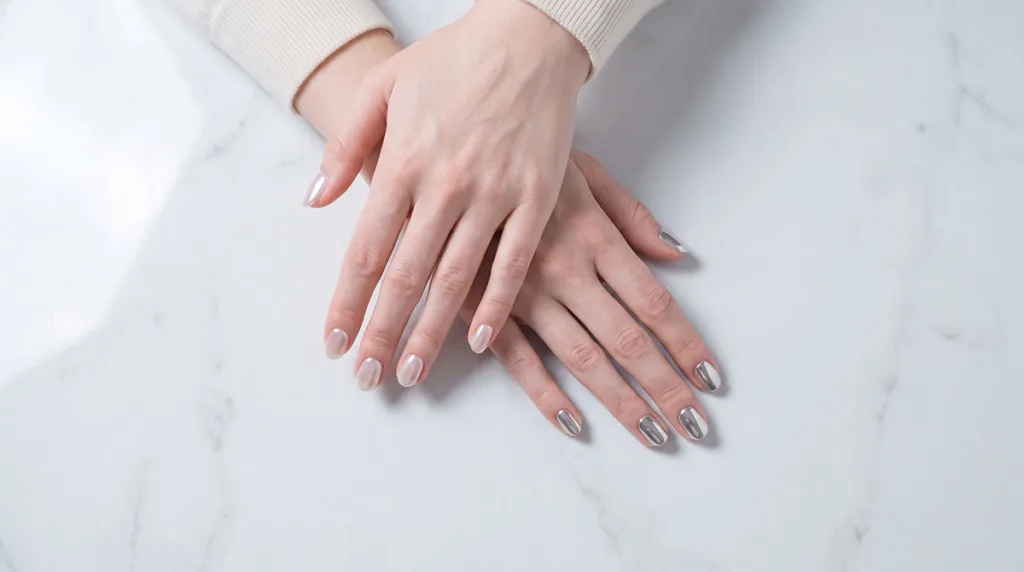
2. Milky White
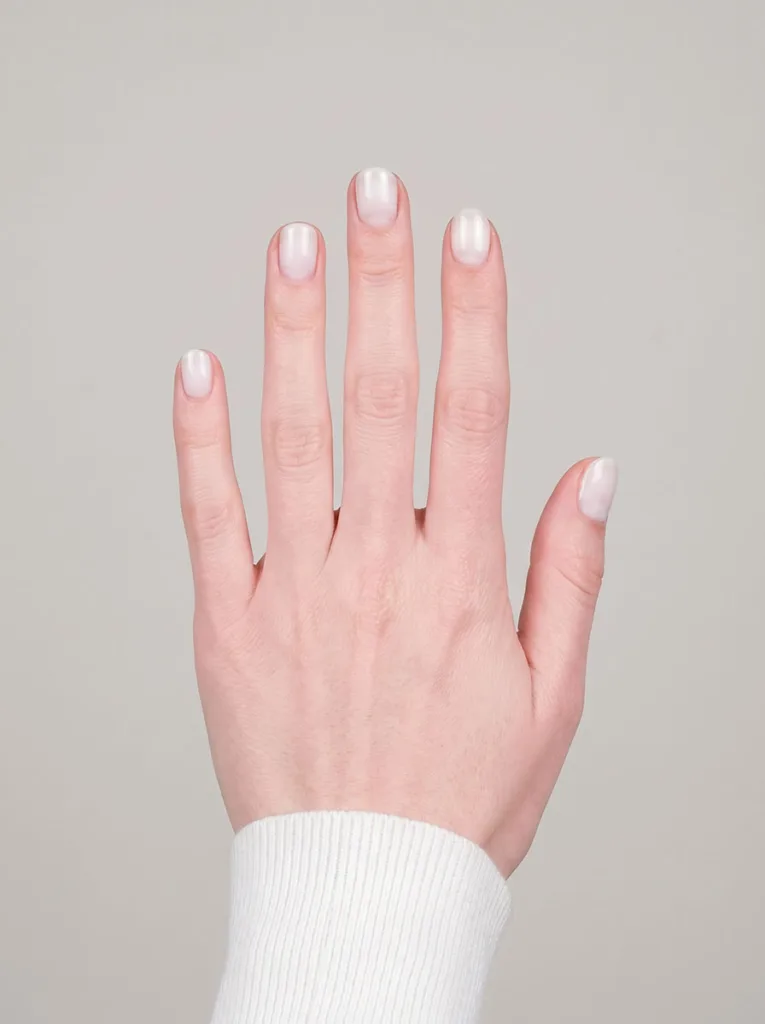
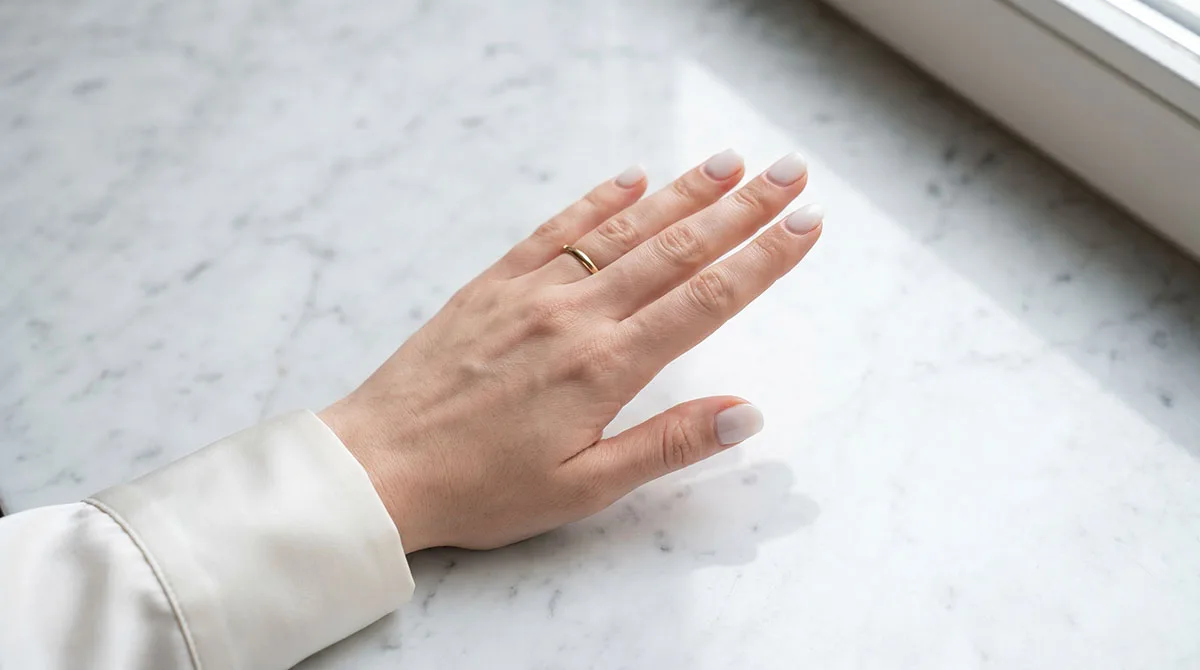
Milky white is the shade of 2026. Not stark white — sheer, glass-like, slightly translucent. Your natural nail shows through just enough to keep it soft rather than bold. On a short round shape, it looks clean and healthy. Two thin coats are all you need; a third coat goes too opaque and kills the milky finish.
3. Creamy Taupe
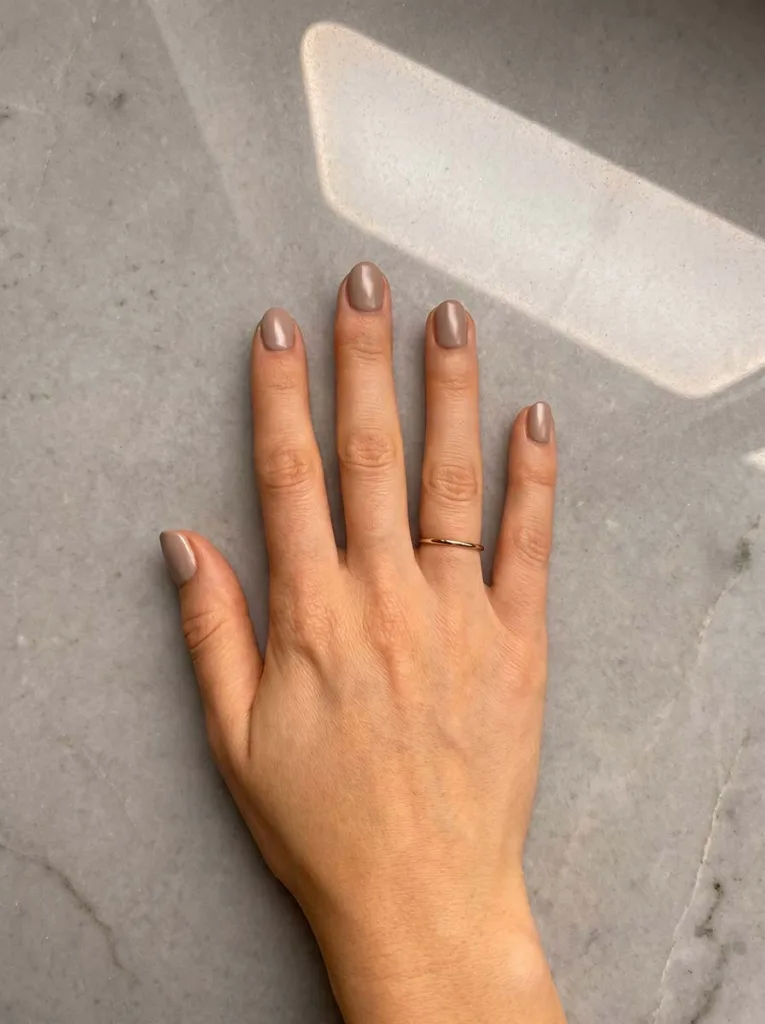
Taupe sits between gray and beige, which makes it work with almost any outfit. It photographs well in natural light, and the slightly muted tone adds more depth than a plain nude. On short round nails it looks intentional rather than understated. Satin finish over glossy — the lower sheen is what makes it feel current.
4. Sheer Blush
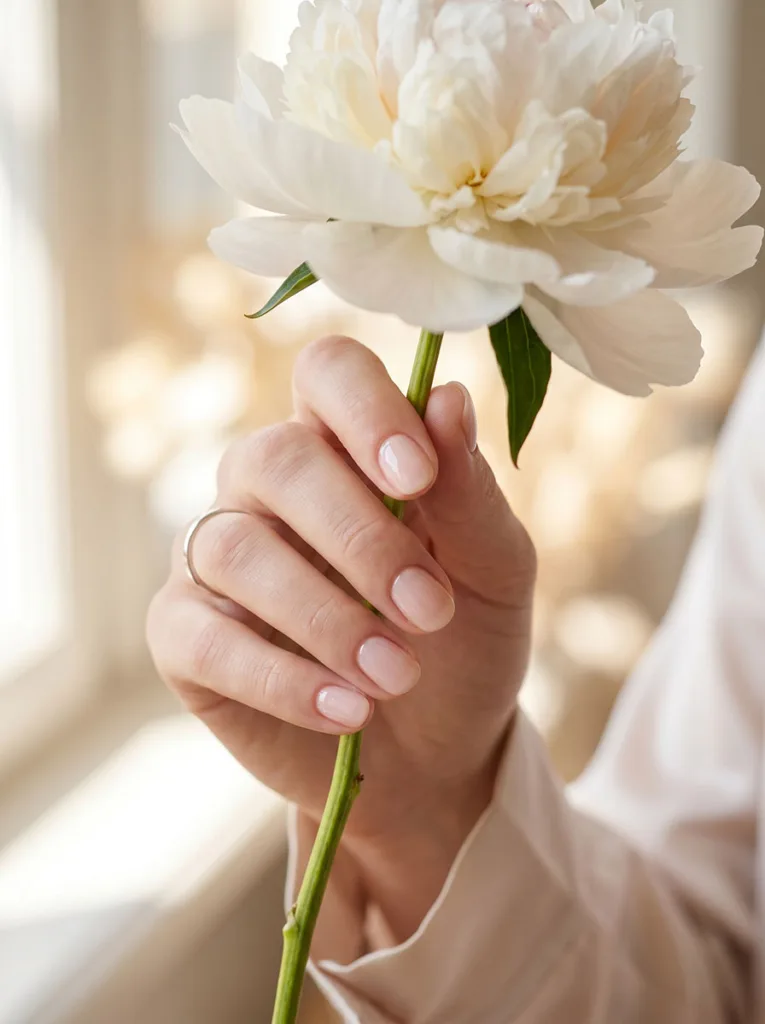
Sheer blush is the closest thing to wearing no polish while still wearing polish — a whisper of pink over a transparent base. It works everywhere, from a formal meeting to a Saturday errand run. On round nails it enhances the shape without drawing attention to it. It is also one of the most forgiving shades to apply. Uneven coverage blends naturally because the formula is sheer.
5. Greige (Gray-Beige)
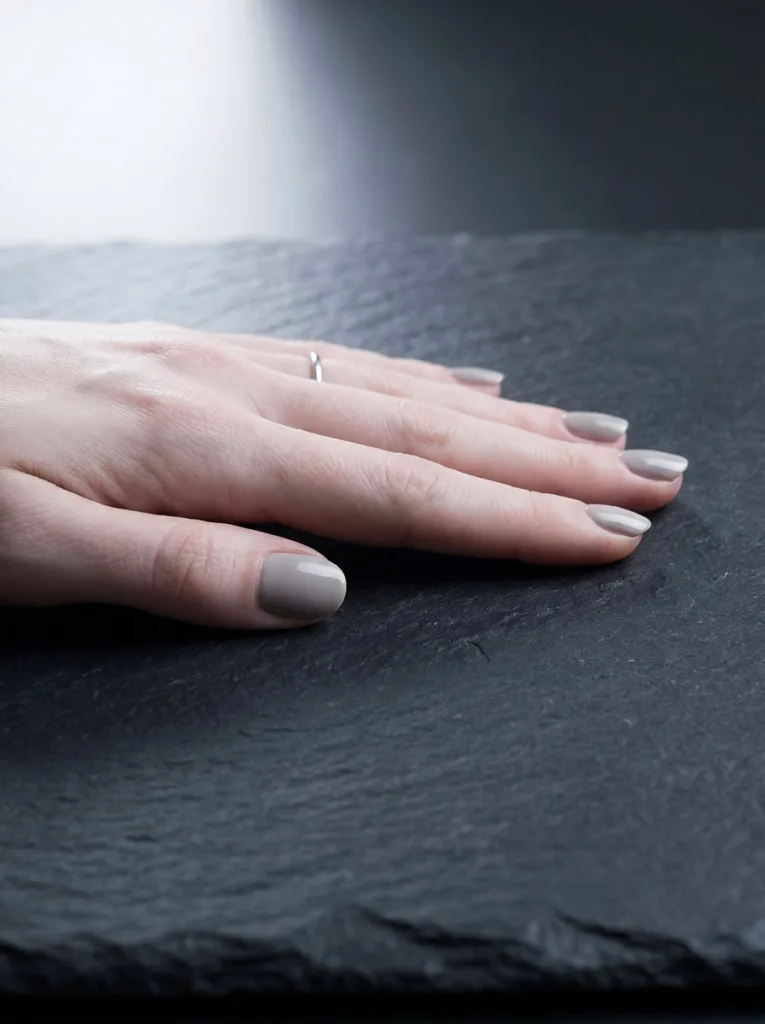
Greige is beige with enough gray to feel current rather than safe. On short round nails the muted tone keeps the look minimal without going plain. It holds color well as it ages too — the tip wear is barely noticeable compared to brighter shades. Pairs well with gold jewelry and white clothing.
Pro tip: Neutral tones show streaks easily. Apply two thin coats rather than one thick one, and let each coat dry fully before adding the next.
Best for: Everyday wear, office, professional settings, minimal makeup days.
Soft Pink and Blush Styles
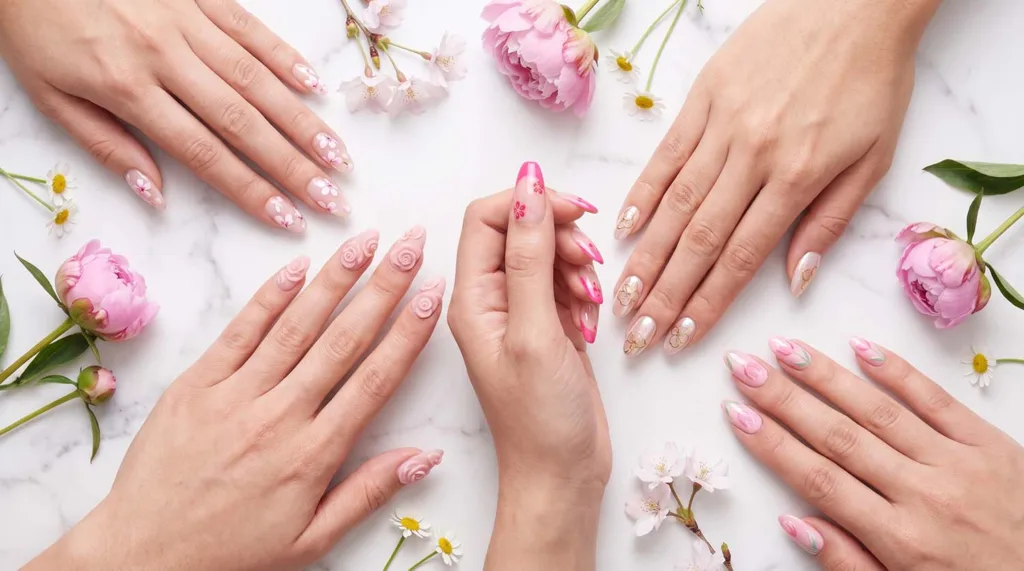
Pink is still the most popular color on short round nails. The 2026 versions are softer and dewier than before — less candy, more skin.
6. Baby Pink
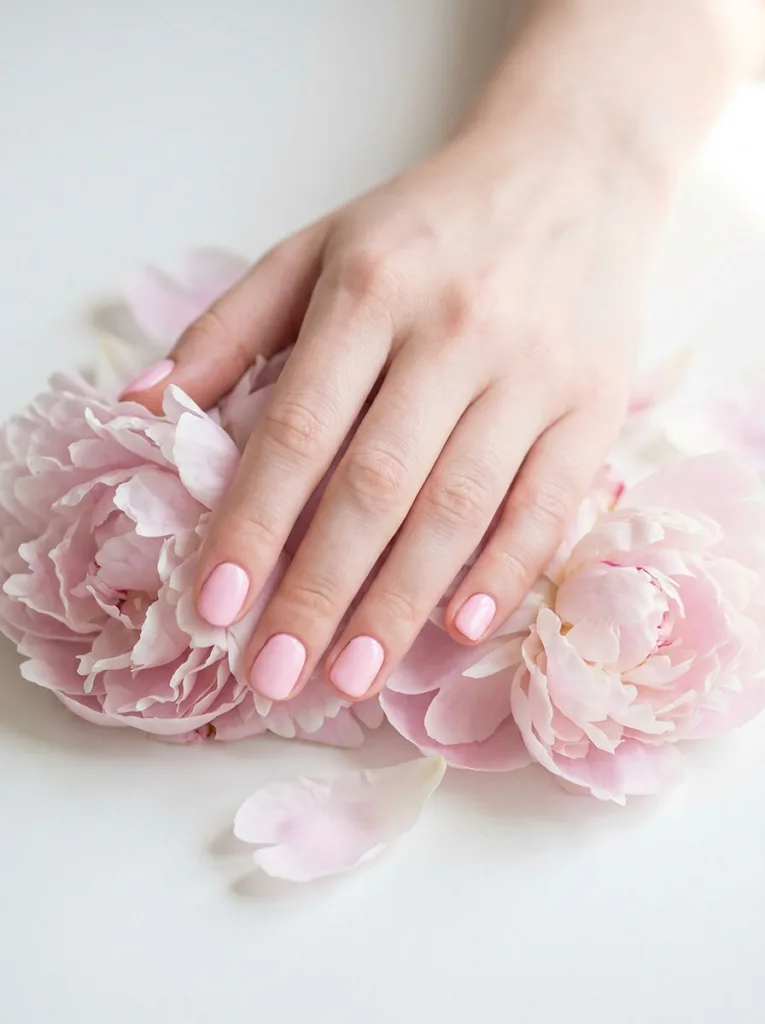
Baby pink works for every occasion without exception. Bright enough to look polished, soft enough to never feel overdressed. On short round nails it looks clean and feminine without any effort. A high-gloss topcoat finishes it. If you want one shade that does everything, this is the one.
7. Dusty Rose
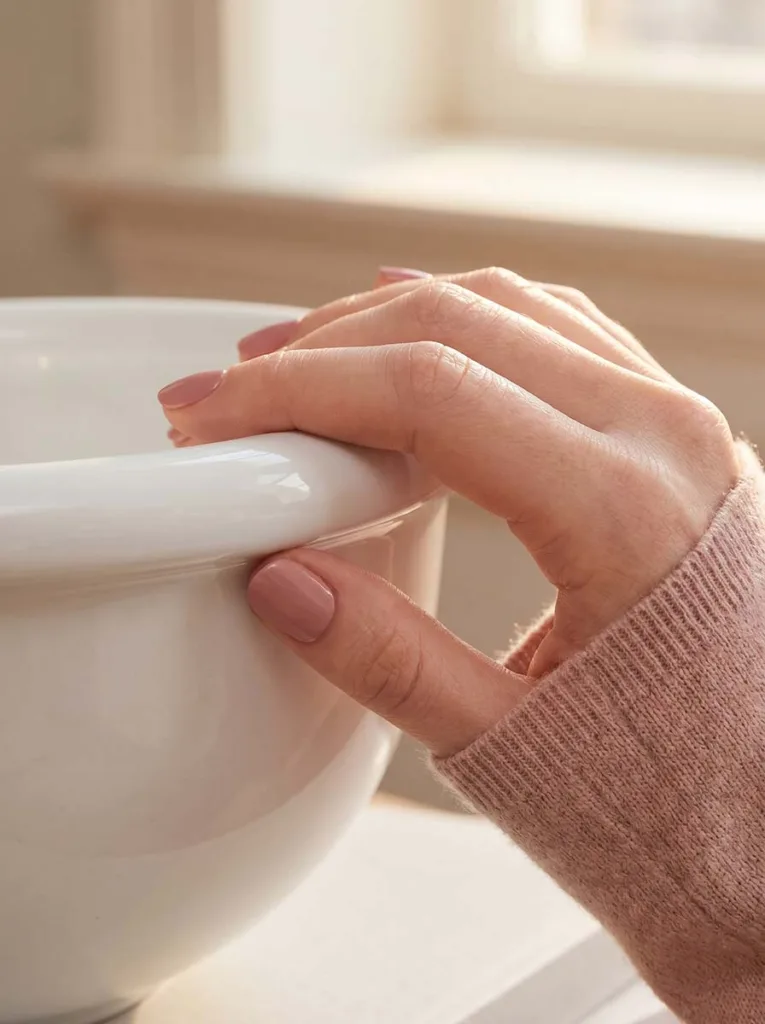
Dusty rose is baby pink with the saturation dialed down and a slight gray or mauve undertone added. It feels grown-up rather than sweet, and it is particularly flattering on medium to deep skin tones under warm lighting. Practically speaking, it does not show tip wear or chips as visibly as brighter pinks, so the manicure holds up longer between touch-ups.
8. Candy Pink with High Gloss
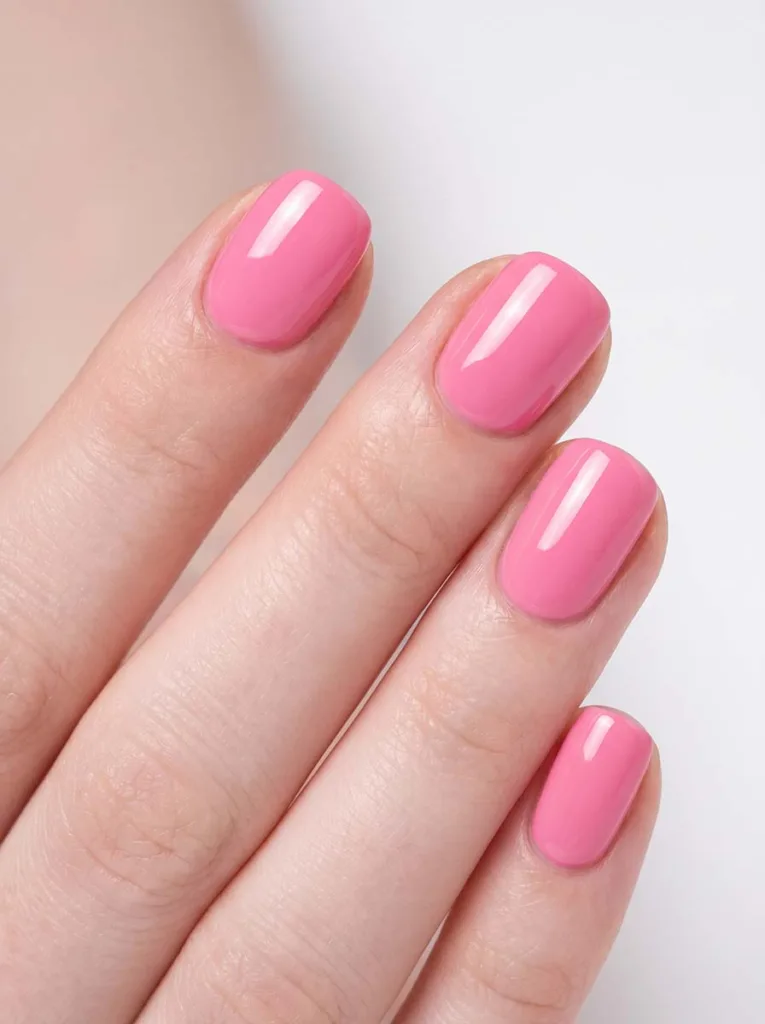
More saturated and vivid than baby pink, but the mirror-finish topcoat keeps it refined rather than loud. On a short round nail, the gloss catches light along the curve of the tip in a way that photographs very well. Apply two coats of candy pink followed by a thick topcoat to get the glass-like finish.
9. Sheer Pink with a Glitter Accent Nail
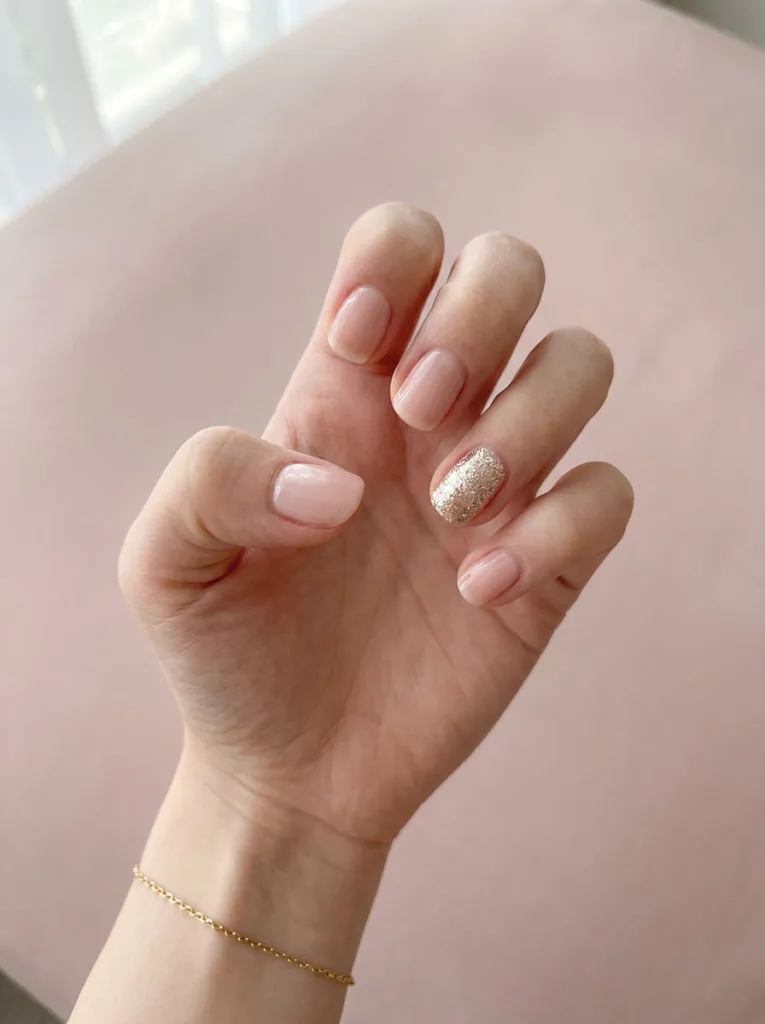
Paint nine nails in sheer pink and coat one — usually the ring finger — in fine champagne or rose gold glitter polish. That is the whole look. The contrast is subtle enough to be chic, and the sheer base ties the glitter nail to the rest of the hand so it does not look random.
10. Pink with a Nude Tip (Reverse French)
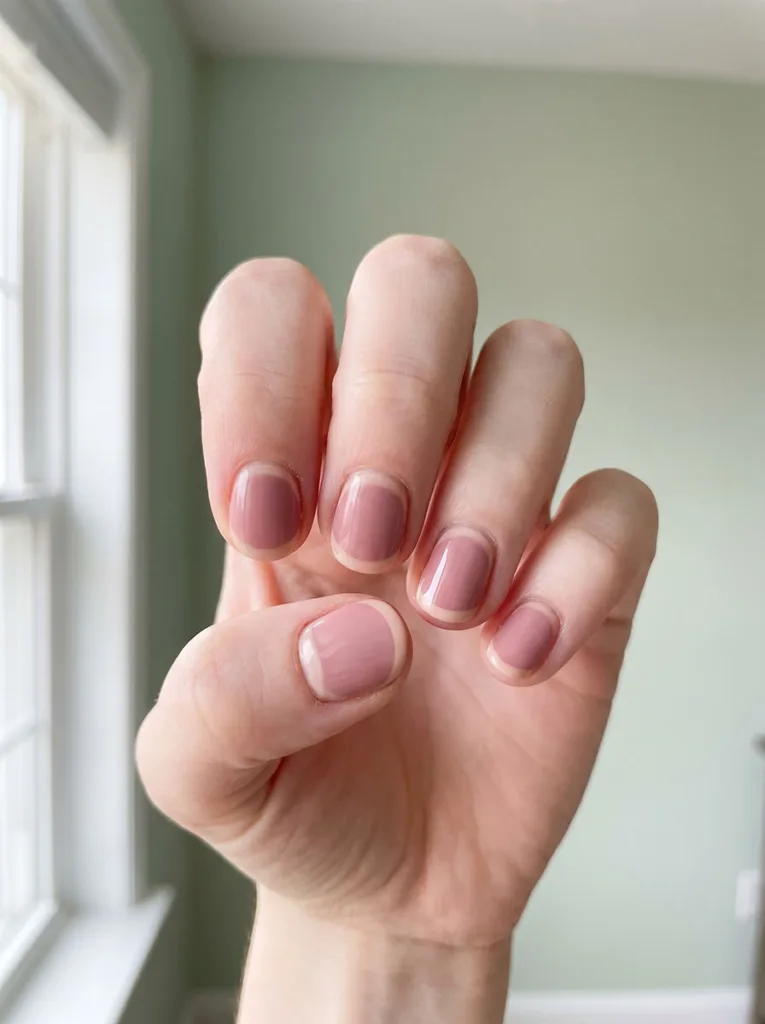
A reverse French swaps the white tip for a nude or skin-toned one on a pink base. It has the structure of a French tip but feels softer and less expected. On short round nails the nude tip follows the rounded edge cleanly, which makes the whole shape look more deliberate.
Best for: Casual outings, date nights, spring and summer manicures, everyday wear with a feminine touch.
Simple Short Round Nail Designs — Modern French Tip Variations
The French manicure looks nothing like it did five years ago. The thick stark white tip is gone. What replaced it is finer, more personal, and far more wearable on short nails.
11. Micro French Tip
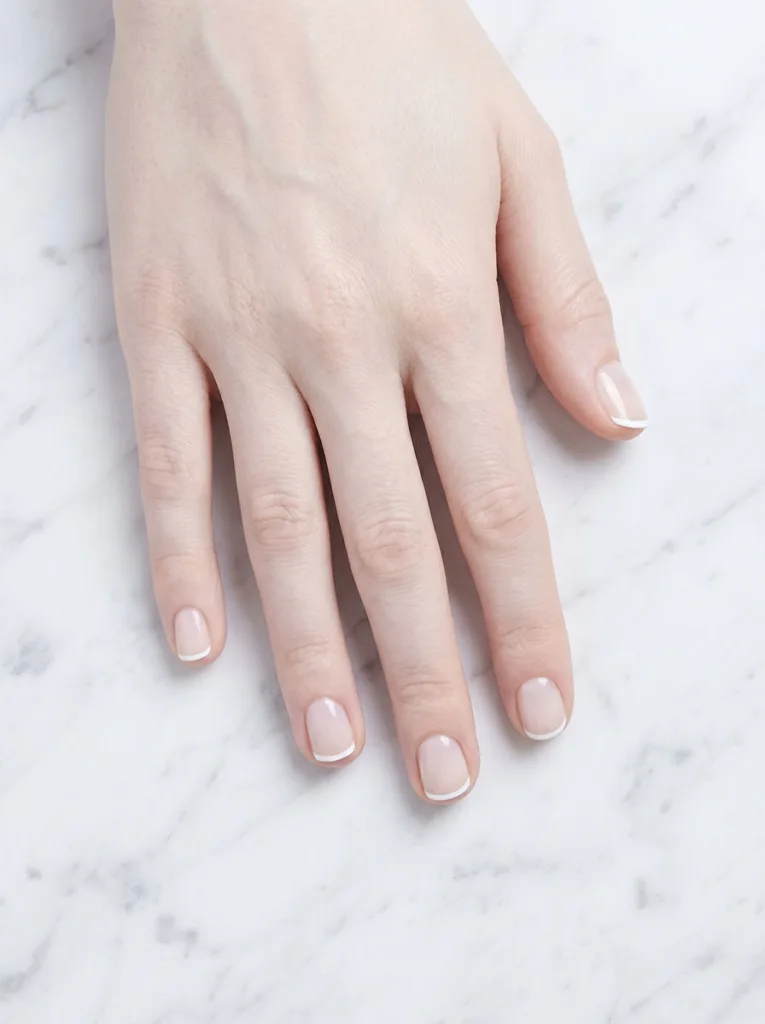
A hairline stripe of white at the very edge of the nail, barely visible from a distance. Up close it frames the tip precisely. Short round nails handle this better than most shapes because the small canvas actually benefits from a minimal tip. Use a thin nail art brush, not the standard polish brush, and wipe off excess on a paper towel before you start.
12. Pastel French Tip
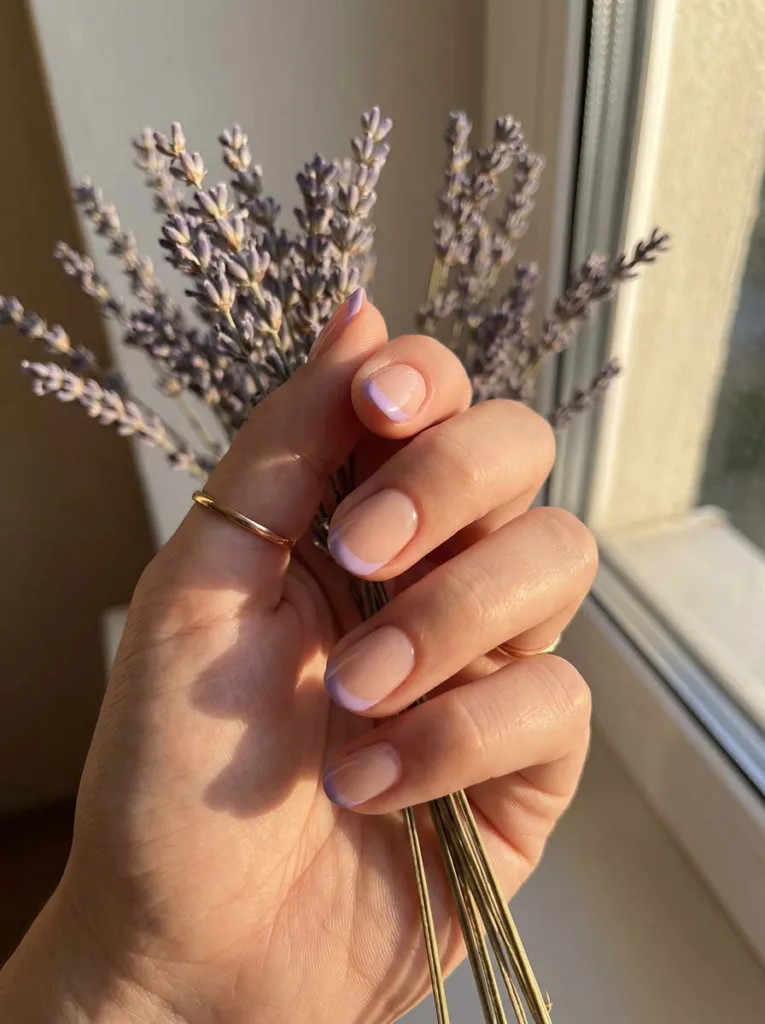
Swap the white tip for a soft pastel — lavender, mint, peach, butter yellow — and the French tip becomes seasonal without being loud. Soft coral in summer, mint or lilac in spring, muted peach in autumn. The base stays sheer or nude; only the tip changes. It is the easiest way to try color without committing to a full painted nail.
13. Colored French on a Sheer Base
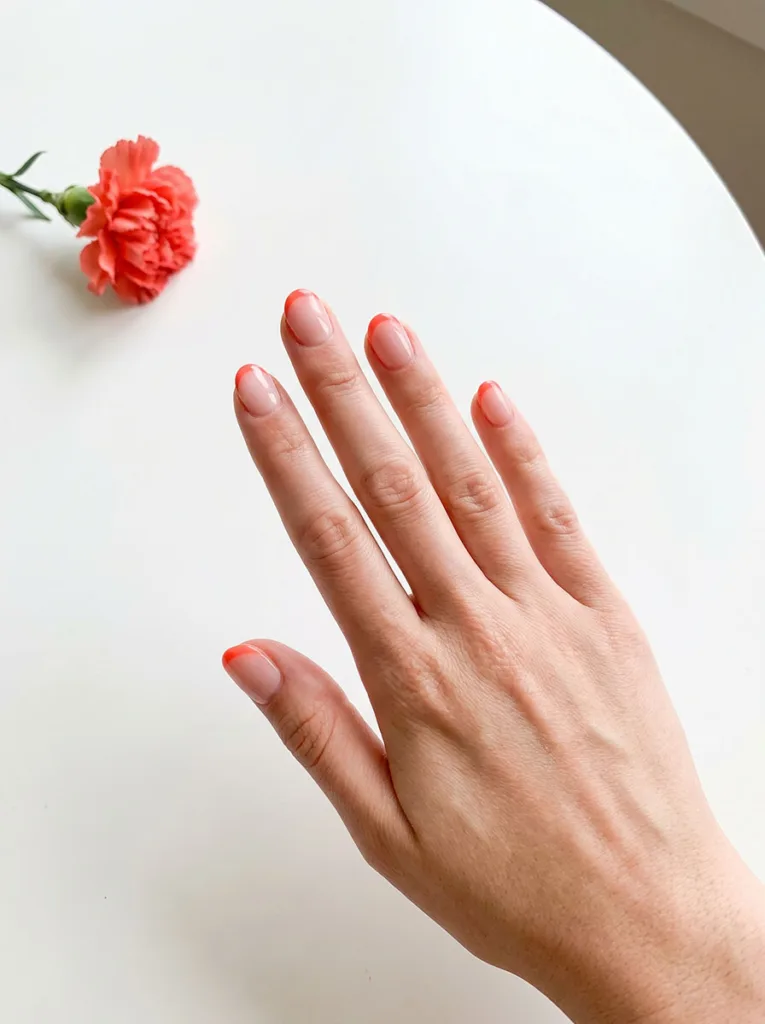
A sheer blush or milky base with a saturated tip — tangerine, coral, cherry red, cobalt blue. The contrast is bolder than a pastel version but stays contained to the nail edge, so the overall look does not tip into loud. Good choice when you want a statement without needing nail art skills. The sheer base does the balancing work.
14. Double French Tip
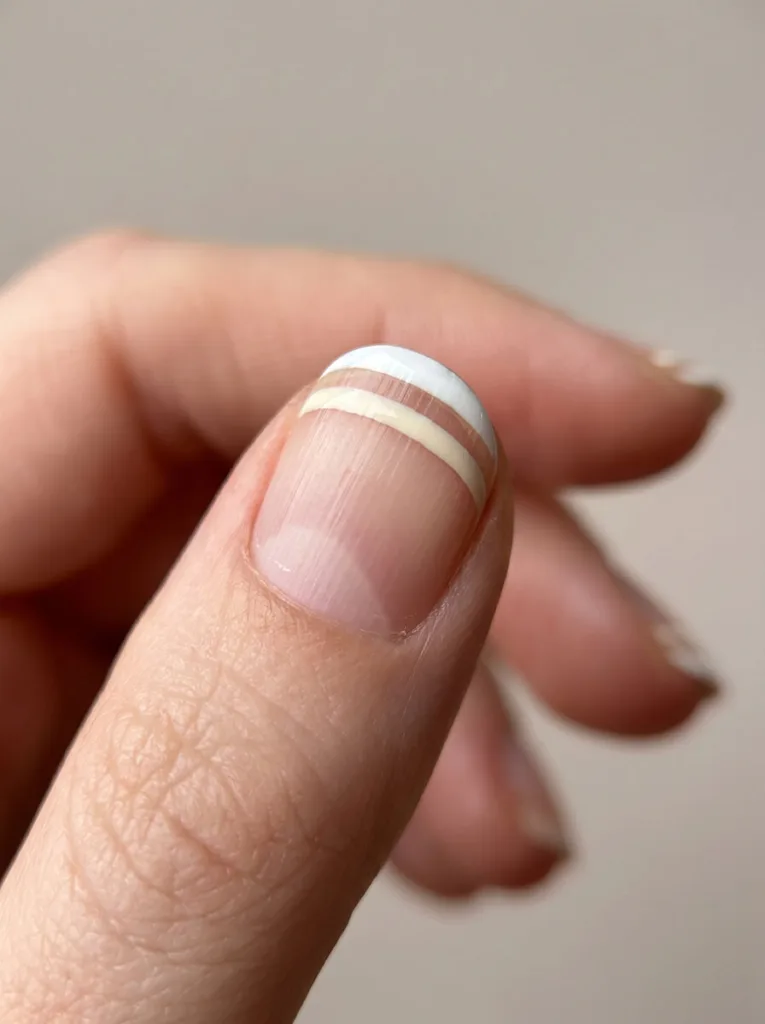
Two fine parallel lines at the nail edge instead of one. They can be the same color in different finishes — matte and glossy white — or two close shades like white and ivory. From a distance it reads as a standard French tip. Up close it is clearly more considered. Use striping tape at home to keep the lines parallel.
15. Negative Space French
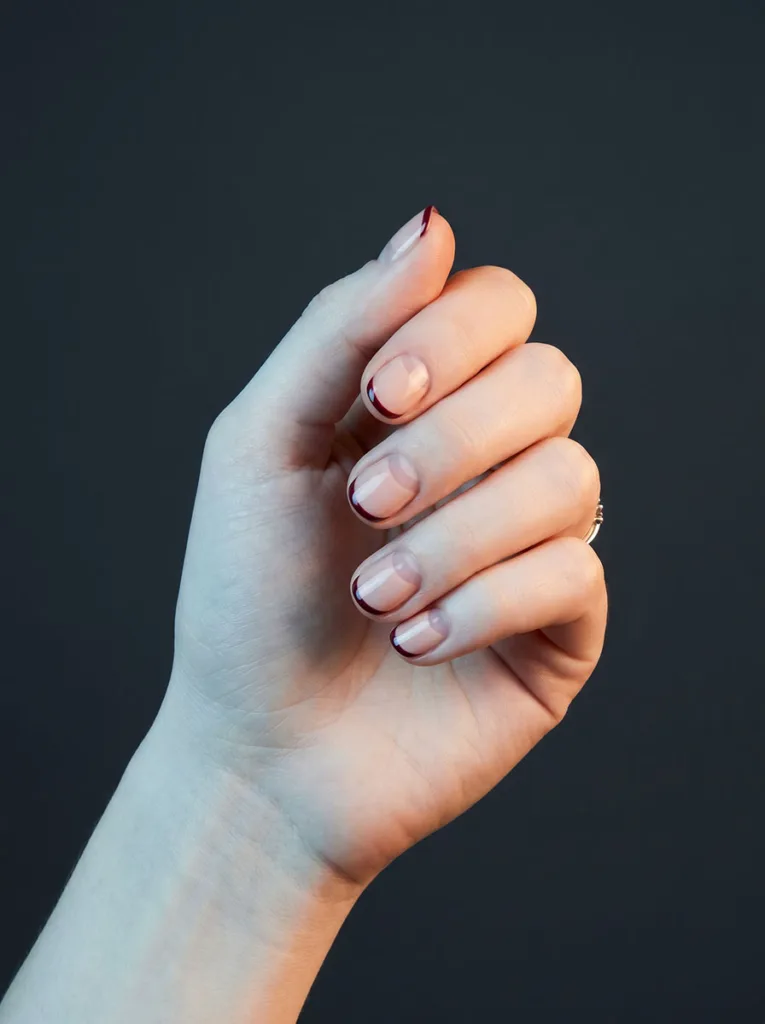
The tip stays unpainted. A thin line of colored polish frames it from below, so the bare nail becomes part of the design rather than just the background. On round nails the clean curve of the unpainted tip is genuinely striking. Try black, gold, or deep burgundy for the framing line on a nude or clear base.
Best for: Office, bridal, weddings, formal events, any occasion where you want polish with a modern edge.
Round Nail Art Ideas — Minimal Line Art
Thin line nail art is one of the top nail trends of 2026, and short round nails handle it better than most people expect. Less surface area means each line carries more weight.
16. Single Vertical Line
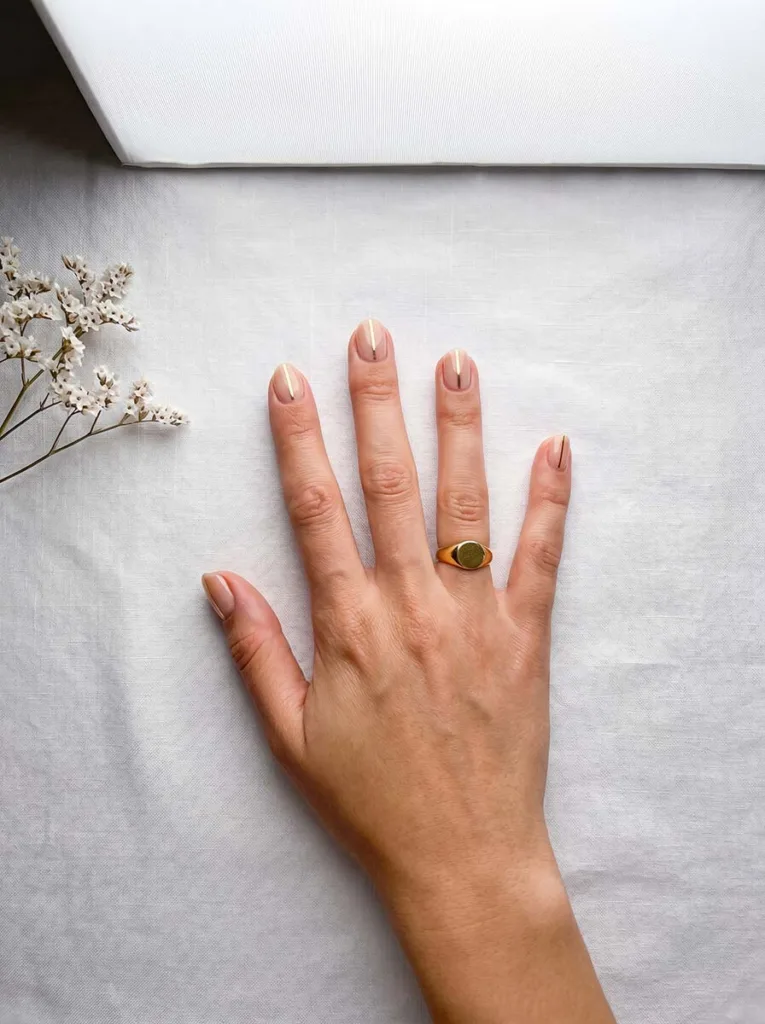
One fine line from the base to the tip of a nude nail. Simple, but it stops people. Use a nail art liner brush with black or gold polish. Off-center looks better than centered — it reads as more deliberate, less accidental. Works across all ten nails or just one accent nail.
17. Curved Arc Design
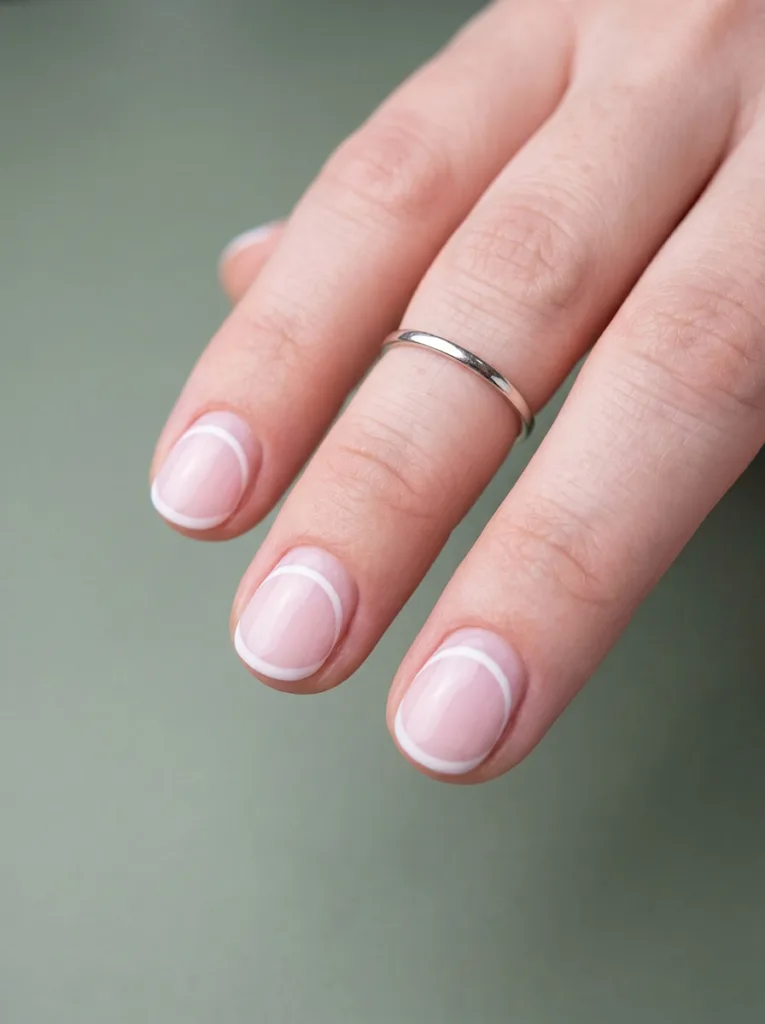
A thin curved line that follows the inner curve of the nail tip. Paint it in a contrasting color — black on nude, white on blush, gold on taupe — and follow the natural C-curve of the free edge. It looks deliberate rather than decorative. It is also very forgiving to do freehand because the curve does not need to be perfectly symmetrical to work.
18. Abstract Dot Placement
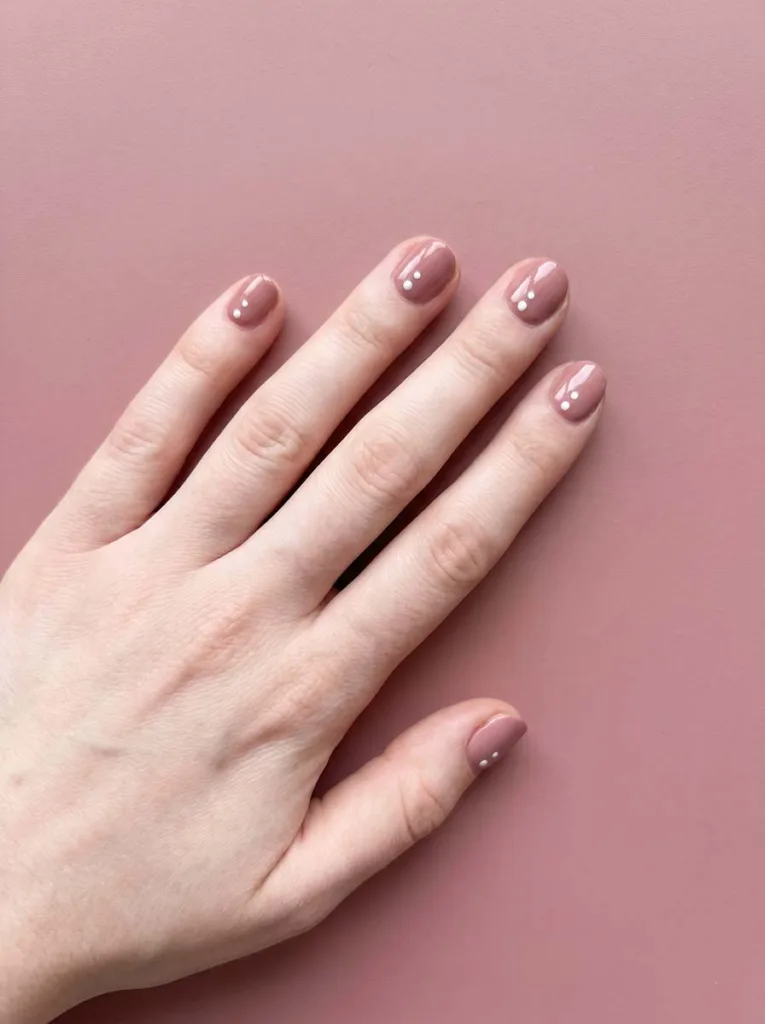
Two or three small dots in a triangle or diagonal arrangement on a light base. No brush needed — the back of a bobby pin or a dotting tool makes a clean round dot every time. Try white dots on a dusty rose base, black dots on milky white, or gold dots on sheer blush. Slightly random placement looks better than a perfectly even grid.
19. Horizontal Stripe
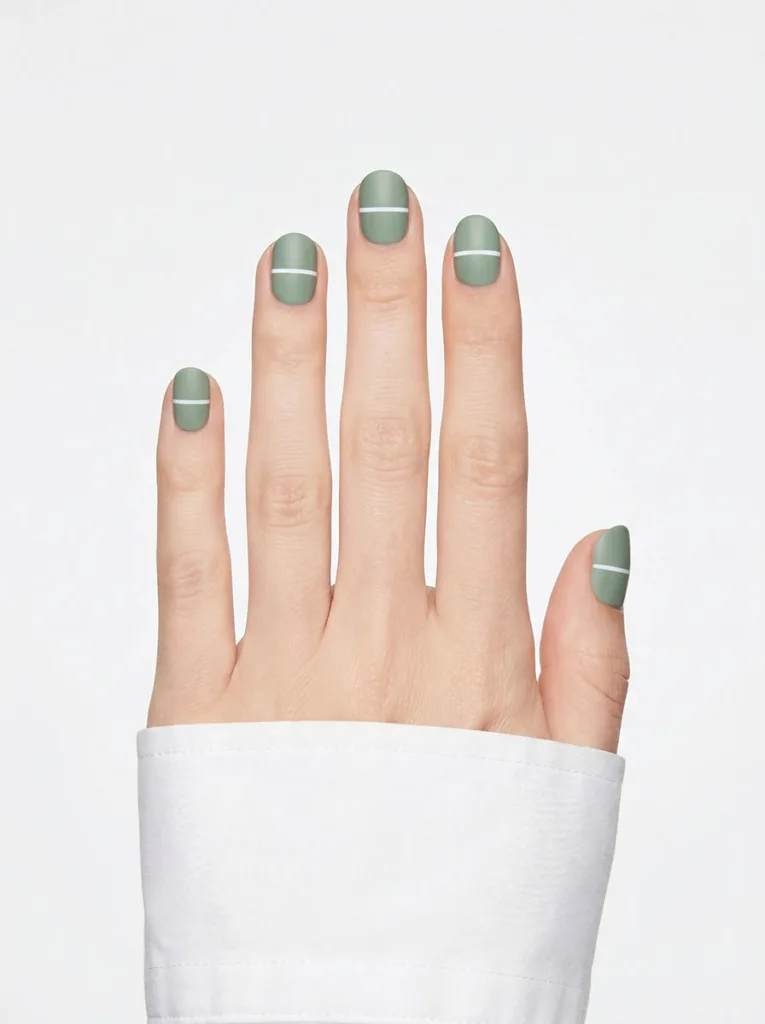
A thin horizontal stripe across the middle of the nail on a contrasting base. Use striping tape, apply the stripe color, wait 30 seconds, then peel the tape before the polish dries fully — that is the only tricky part. Gold on deep navy or black gives high contrast. White on muted sage is softer, more weekend-appropriate.
Best for: Creative professionals, art lovers, anyone who wants something visually interesting without committing to heavy nail art.
Chrome and Metallic Finishes
Chrome nails have moved into everyday wear. On a short round shape the metallic catches light along the curve of the tip in a way that looks elegant rather than costume-y.
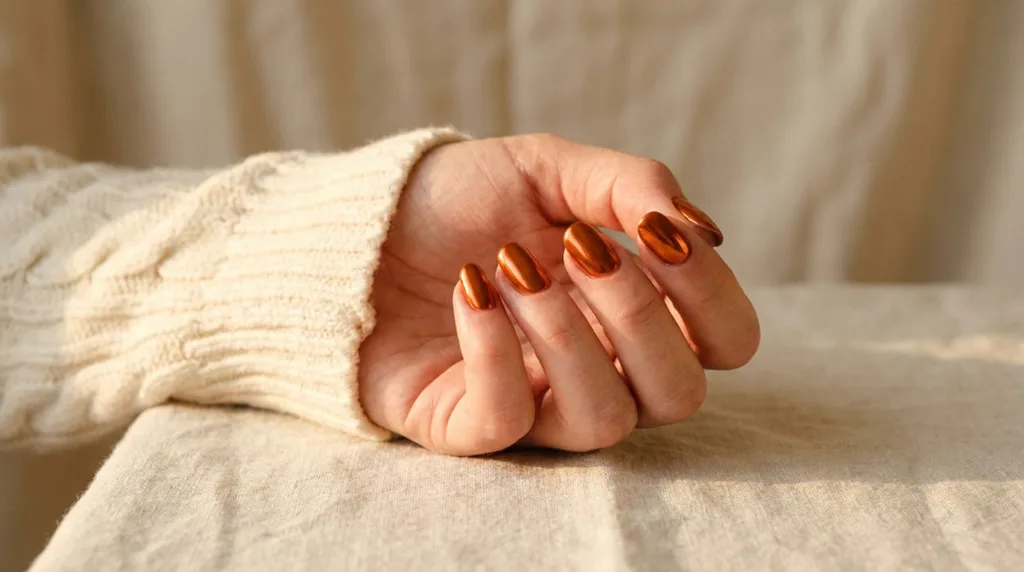
20. Soft Gold Chrome
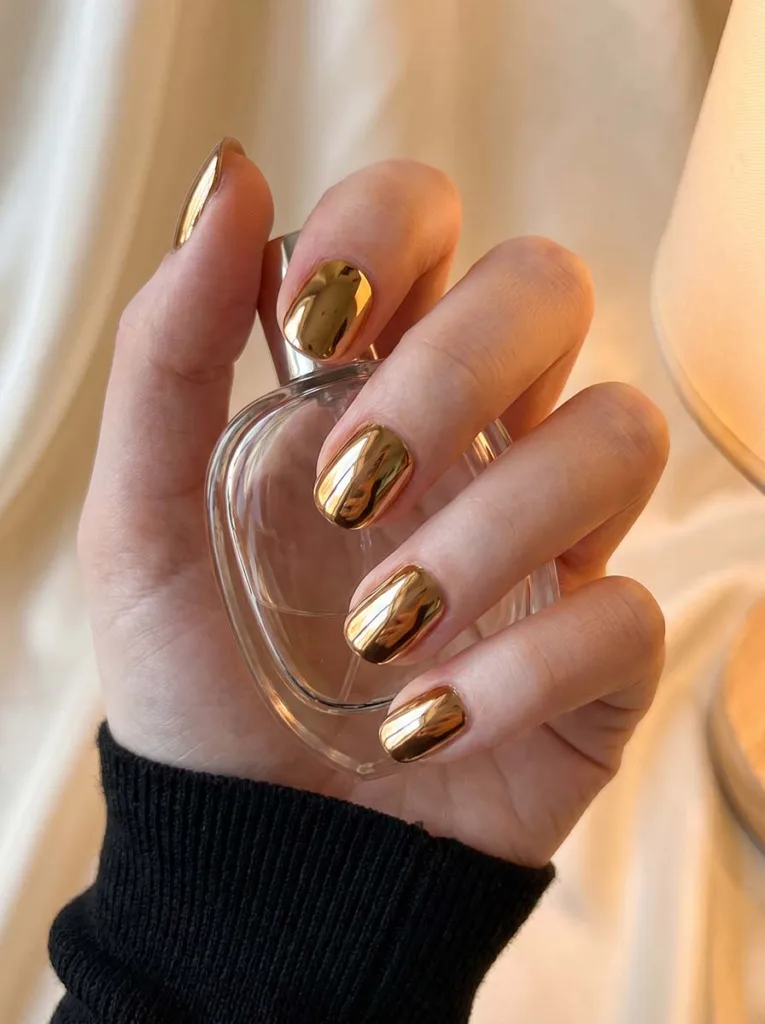
Gold chrome powder over a cured gel base creates a mirror-like finish that moves with you. The soft gold version — warmer and more muted than bright chrome — is the most wearable day-to-day. It looks especially good on warm and medium skin tones. Apply the powder with a sponge applicator, buffing in circular motions until you hit a mirror shine. Silver chrome suits cooler skin tones. Rose gold splits the difference.
Best for: Evening events, parties, festival season, anyone who wants a statement without a full nail art look.
Bonus: Jelly and Sheer Tones
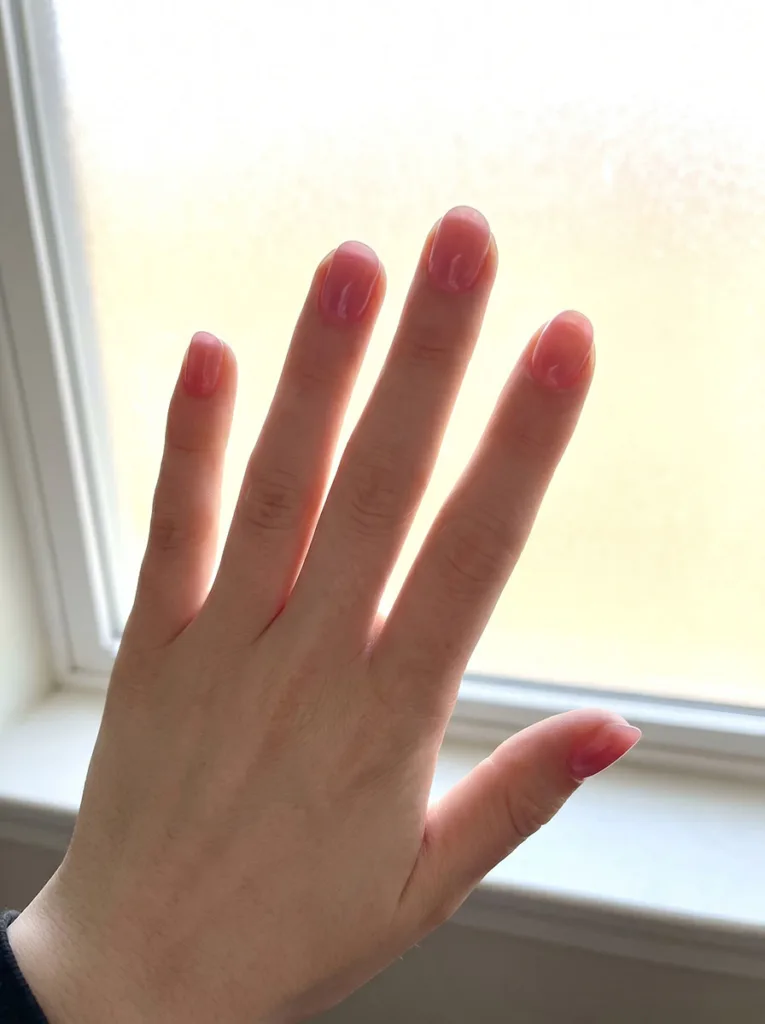
Jelly nails translucent, glass-like polish that lets the natural nail show through — are one of the biggest trends of 2026. Short round nails carry this look well because the shape stays visible through the polish and looks almost three-dimensional.
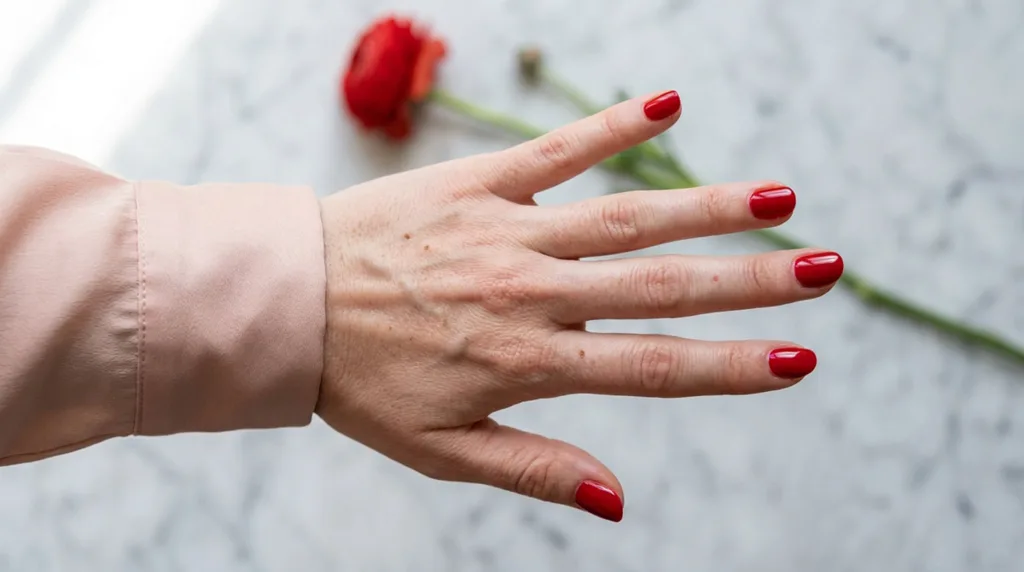
Jelly pink is the most popular option, dewy and fresh. Jelly red is bolder but still wearable — think cherry candy. Jelly coral is the summer pick. Apply over a clean, moisturized nail for the clearest result.
Which Short Round Nail Designs Suit Your Skin Tone
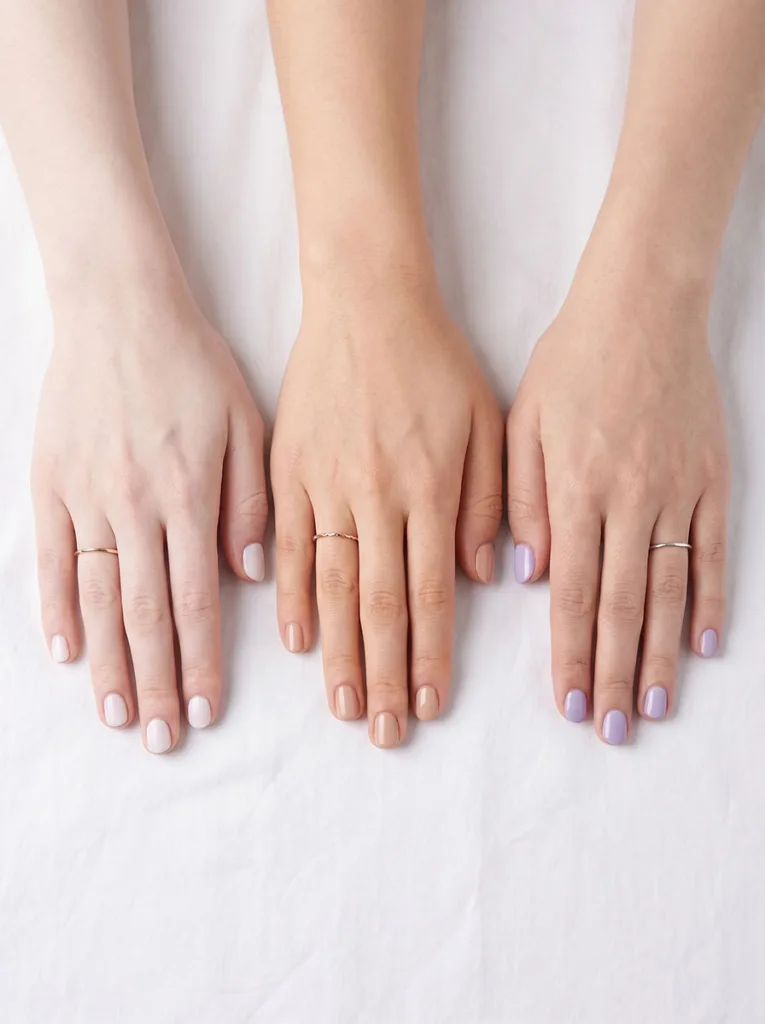
Not every shade looks the same on every hand. Picking the right color for your skin tone is the difference between a manicure that looks good and one that looks great.
Fair skin
Cool-toned and light shades work best. Milky white, sheer blush, and baby pink all enhance fair skin without washing it out. For French tips, a classic white or pastel lavender tip keeps the look clean. Avoid very warm beiges — they can read as muddy against pale skin. For chrome, silver chrome is more flattering than gold on fair tones.
Medium skin
Medium skin tones have the most flexibility. Warm beige, dusty rose, greige, and candy pink all look excellent. The pastel French tip in peach or mint reads particularly well on medium skin in natural light. Gold chrome is stunning here — the warm metallic picks up the natural warmth in the skin tone.
Deep and dark skin
Rich contrast shades stand out beautifully. Creamy taupe and greige look especially polished on deep skin because the contrast between shade and nail is subtle and sophisticated. Candy pink with gloss pops on dark skin in a way it does not on lighter tones. For line art, gold vertical lines on a dark base look striking. Soft gold chrome is the most flattering metallic for deep skin. Avoid sheer blush — at its most translucent, it can disappear entirely.
Tip: When in doubt, test the shade on your ring fingernail first and check it under natural daylight before committing to all ten nails.
How to Make Short Round Nails Look Their Best
Application and care matter more than most people realize. Short round nails wear color differently than longer nails, and a few adjustments will keep them looking sharp between touch-ups.
Polish Application
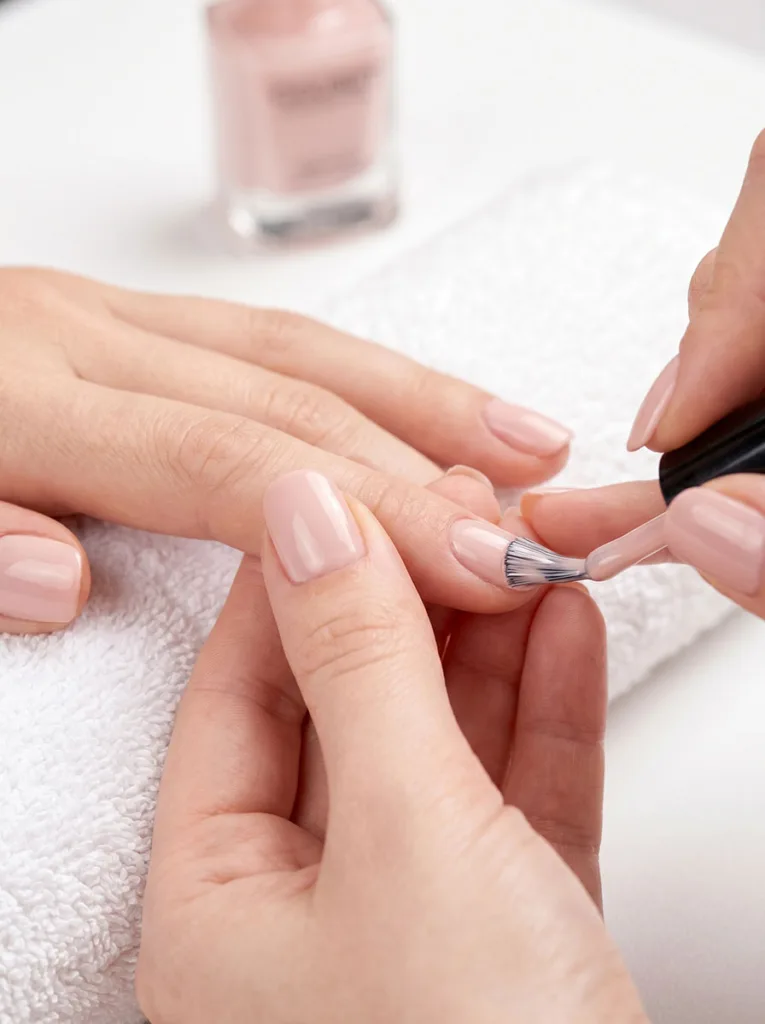
How you apply polish matters as much as which shade you pick:
- Apply a thin base coat first. It protects the nail from staining and gives the color something to grip.
- Use three strokes per nail: one down the center, then one on each side.
- Wrap the tip. Sweep the brush across the very edge of each nail to seal the tip. This single step prevents tip chipping and extends wear by several days.
- Refresh your topcoat every two days. A fresh layer of high-gloss topcoat keeps the color looking just-painted without redoing the full manicure.
Gel vs. Regular Polish
Gel polish lasts two to three weeks on short round nails with minimal chipping. It is worth it if regular polish chips within a few days of application. The downside is removal — you need to soak or file off gel, which can weaken the nail if done too frequently.
Regular polish works perfectly well if you apply a topcoat refresh every 48 hours and avoid using your nails as tools. For most people, regular polish on short round nails lasts five to seven days before noticeable tip wear appears.
Daily Nail Care
The nail underneath the polish matters too. Three habits that actually move the needle:
- Cuticle oil daily. Apply a drop of cuticle oil around each nail every night. Hydrated cuticles make the overall nail look cleaner and more polished without any extra effort.
- Stop using your nails as tools. Using them to peel stickers, open cans, or scratch surfaces is the fastest way to create chips and breaks.
- Consider a biotin supplement. If your nails break or peel frequently, studies link biotin (vitamin B7) to improved nail thickness and resilience. Results typically show after eight to twelve weeks of consistent use.
Recommended Products
You do not need much. These six items cover everything in this guide:
- Glass nail file: The Bona Fide Beauty Czech Glass Nail File is a well-regarded option — it is gentle on natural nails, washable, and lasts for years. A 240-grit file from any beauty supply store works equally well.
- Base coat: OPI Natural Nail Base Coat is a reliable everyday option that prevents staining and extends polish wear without adding thickness.
- Topcoat: Seche Vite Dry Fast Top Coat is widely used for its mirror-like gloss and fast drying time — both useful on short round nails where the curved tip is most prone to smudging.
- Cuticle oil: CND SolarOil is one of the most recommended cuticle oils by nail technicians. The pen applicator format makes daily use easy.
- Chrome powder: Born Pretty Rose Gold Chrome Powder is affordable, beginner-friendly, and works well over gel or regular polish for the metallic finishes described in design #20.
- Nail art liner brush: Modelones Nail Art Thin Liner Brush is a reliable inexpensive option for the line art designs in section 16–19.
Common Mistakes to Avoid with Round Nails
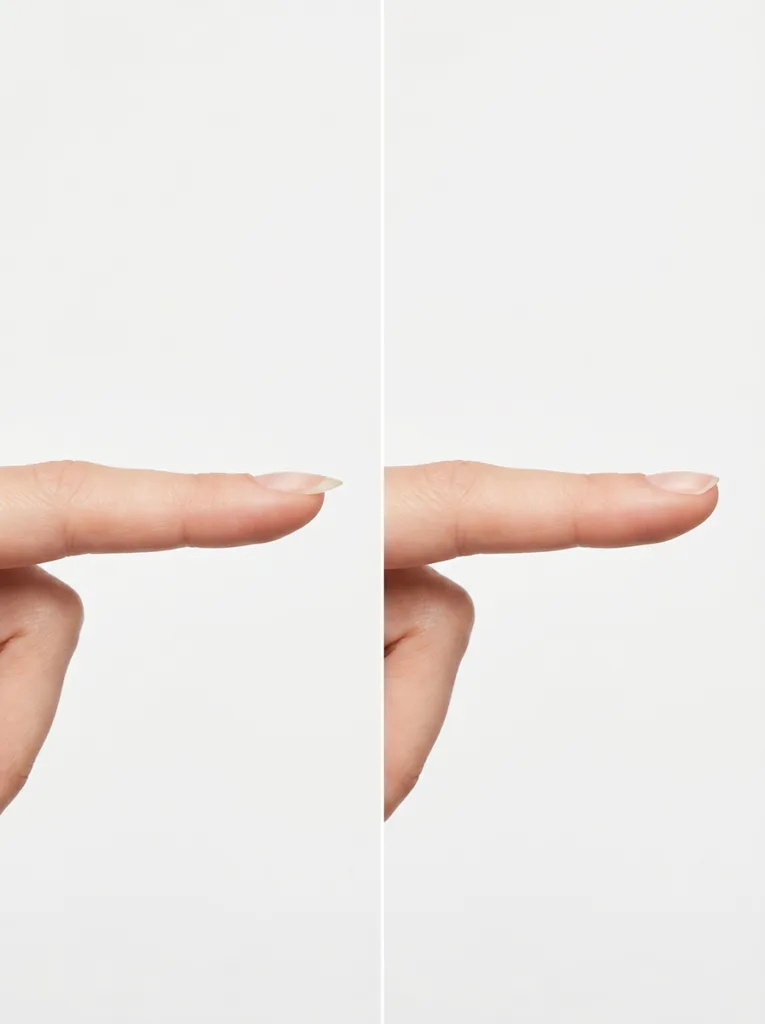
Even a simple shape can go wrong. These five mistakes come up most often.
Over-Filing The Sides
Filing too aggressively on the sidewalls weakens the nail structure and creates a shape that is too narrow — closer to oval than round. File the sides only enough to remove sharp corners. The real rounding happens at the tip, not the sides.
Filing Wet Nails
Wet nails are significantly softer and much more likely to tear or peel during filing. This is one of the most common reasons nails split at the edge after shaping. Always file on completely dry nails, ideally before a shower rather than after.
Skipping The Base Coat
A base coat is not optional — it is the difference between a manicure that lasts five days and one that lasts ten. It prevents staining from darker polishes and gives the color something to grip. One thin layer is all you need.
Ignoring Asymmetry
Uneven nails look messy even with flawless polish. After shaping, hold your hand flat at eye level and compare nails side by side before you start painting. Fixing shape takes 30 seconds. Fixing it after you have painted takes much longer.
Applying Polish in One Thick Coat
One thick coat looks lumpy, takes longer to dry, and chips faster at the edges. Two thin coats, each fully dried before the next, give a smoother result that actually lasts.
FAQ Section
1. What makes short round nails different from oval nails?
Round nails follow the natural curve of the fingertip and work well at shorter lengths. Oval nails are more elongated and require more nail length to achieve the proper shape. Round nails are more durable and easier to maintain than oval.
2. How often should I reshape short round nails?
File and reshape every 7 to 10 days for most people. If you are very active or your nails grow quickly, reshape every 5 to 7 days to keep the round silhouette clean.
3. Are short round nails good for beginners?
Yes. Short round nails are one of the easiest shapes to achieve and maintain at home. The rounded tip is forgiving to shape, less prone to breakage, and suits almost every nail art style from bare polish to minimal designs.
4. What are the best simple nail designs for short nails?
The best simple nail designs for short nails are ones that work with the small canvas rather than against it. Solid neutrals, micro-French tips, single-line art, and sheer jelly finishes all look polished without requiring skill or tools beyond a basic polish brush. Round is the ideal shape for these looks because the curved tip adds visual interest on its own.
5. What nail polish colors look best on short round nails?
Neutral tones, soft pinks, milky whites, and sheer shades all photograph and wear beautifully on short round nails. In 2026, jelly finishes and chrome powders are particularly trending for this shape.
Conclusion
Short round nails do not ask much of you. They hold their shape, they suit every design on this list, and they look polished even when you have done nothing special to them. Pick one look from above, shape your nails today, and see what a well-chosen silhouette does for your hands.
For more nail ideas, browse the nail color and nail art guides on Velvetboard.