Repair Damaged Hair at Home Without the Salon
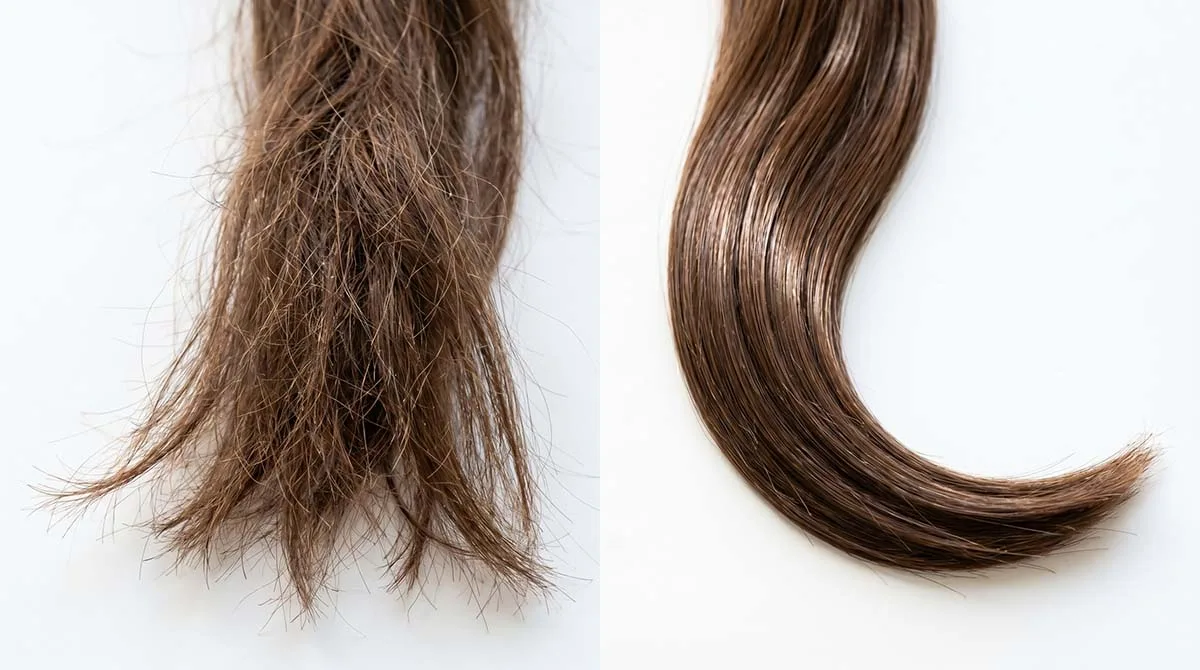
My hair looked fine from across the room. Up close, it felt like straw. Dry, brittle, and snapping off every time I picked up a brush. I wasted months on expensive products before I realized the fix was already sitting in my kitchen. If your hair feels rough, breaks easily, or looks dull no matter what you try, you are not alone. Damaged hair is one of the most common hair concerns — and most of the advice out there points you straight to a salon or an expensive treatment. You do not need either. You can repair damaged hair naturally at home with simple ingredients, the right habits, and a little patience. Here is exactly how to do it.
Signs Your Hair Is Damaged
Before you reach for a remedy, you need to know what you are dealing with. Damaged hair shows up in more than one way.
Common signs include:
- Split ends that travel up the hair shaft
- Frizz that does not respond to moisture
- Dull, flat hair with no shine
- Rough or sandpaper-like texture when you run your fingers down a strand
- Excessive breakage during brushing or styling
- Hair that tangles constantly even when clean
The 10-second strand snap test: Pull a single strand of clean, dry hair from root to tip between two fingers. A healthy strand stretches slightly and returns. If it snaps immediately with no stretch, your hair has lost elasticity — a clear sign of damage.
Does Your Hair Need Protein or Moisture?
This is the question most people skip, and it is the most important one. Giving your hair the wrong treatment makes damage worse, not better.
Do the wet stretch test: Take a wet strand and gently stretch it.
- If it stretches a little, then snaps — your hair is protein-deficient. It needs strengthening treatments like egg masks or keratin-rich products.
- If it stretches a long way and does not return — your hair is moisture-deficient. It needs deep hydration like avocado or honey masks.
- If it barely stretches and snaps — it needs both, starting with protein first.
Applying a protein mask to moisture-deficient hair makes strands stiff and brittle. Applying moisture to protein-deficient hair makes them limp and gummy. Know which one you need before you start.
What Causes Damaged Hair?
Understanding the cause helps you stop the damage from happening again while you repair it.
The most common causes are:
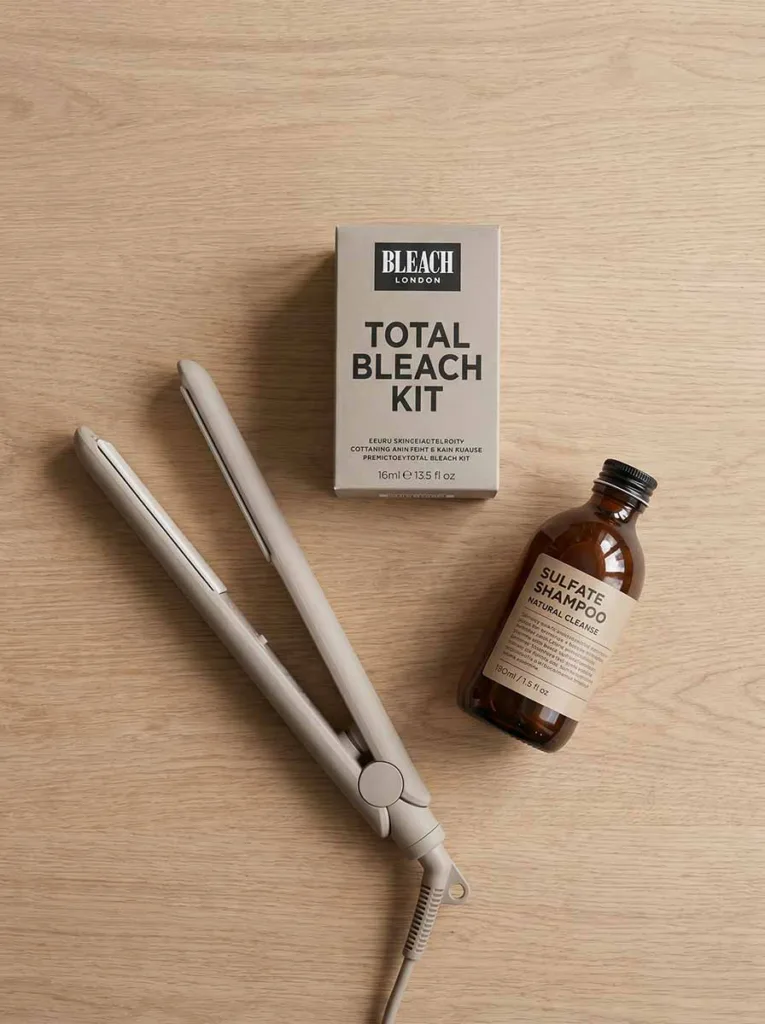
- Heat styling — flat irons, curling irons, and blow dryers above 230°C break the hydrogen bonds in your hair’s cortex, leaving the cuticle cracked and raised
- Chemical treatments — colouring, bleaching, perming, and relaxing strip the hair of its natural oils and weaken the protein structure
- Overwashing — washing daily removes the scalp’s natural sebum, leaving strands dry and vulnerable
- Harsh shampoos — sulfates like SLS and SLES strip the hair of moisture with every wash
- Environmental damage — UV exposure, pollution, hard water, and wind all degrade the cuticle over time
- Poor nutrition — low protein, biotin, and iron intake directly weakens hair from the inside out
Most people are dealing with two or three of these at once. Fixing your habits alongside using natural remedies speeds up your results significantly.
Best Natural Oils for Damaged Hair

Natural oils are the foundation of any home hair repair routine. Each oil works differently — and the right one depends on your hair type.
Coconut Oil — Best for Dry, Thick, or Curly Hair
Coconut oil contains lauric acid, a fatty acid that penetrates the hair shaft and binds directly to hair proteins. This reduces protein loss during washing and strengthens strands from the inside out.
How to use:
- Warm 1–2 tablespoons in your palms until liquid
- Apply from mid-lengths to ends — avoid the scalp if you have fine hair
- Leave on for 1–2 hours, or overnight wrapped in a silk scarf for deeper repair
- Wash out with a mild sulfate-free shampoo
Frequency: 1–2 times per week for dry or curly hair.
Who should skip it: Fine hair or low-porosity hair. Coconut oil molecules can sit on the surface of low-porosity strands and cause buildup rather than absorbing. Use jojoba oil instead.
Argan Oil — Best for Color-Treated or Frizzy Hair
Argan oil is rich in oleic acid and vitamin E. These two compounds seal the raised cuticle, lock in moisture, and smooth frizz without weighing the hair down.
How to use: Warm 3–5 drops between your palms and apply to damp hair after washing, focusing on ends. It works as a leave-in — no rinsing needed.
Frequency: Every wash day.
Jojoba Oil — Best for Fine or Oily Hair
Jojoba oil’s molecular structure closely mirrors the scalp’s natural sebum. It moisturises without creating buildup, making it the only oil that suits fine or oily hair types well.
How to use: Apply 2–3 drops to dry ends only, never the roots.
Frequency: 2–3 times per week.
Castor Oil — Best for Scalp Health and Hair Thickness
Castor oil contains a high concentration of ricinoleic acid, which stimulates blood circulation in the scalp and strengthens roots. It is thick on its own, so always mix it with a lighter carrier oil.
How to use:
- Mix 1 part castor oil with 2 parts coconut or almond oil
- Massage into the scalp in circular motions for 5 minutes
- Leave on for 30 minutes, then wash out with shampoo
Frequency: Once a week.
DIY Hair Masks for Damaged Hair
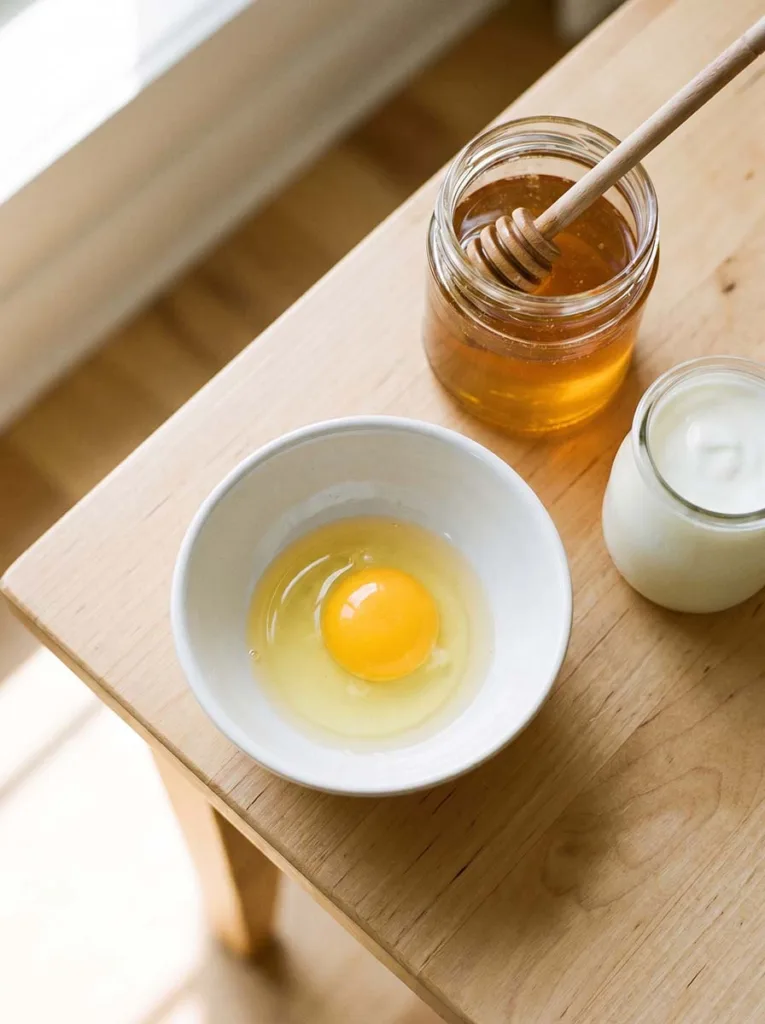
These four recipes cover every damage type. Each one uses ingredients you likely already have at home. Pick the mask that matches what your hair needs most, based on the stretch test you did earlier.
Egg + Honey Protein Mask — For Weak or Protein-Deficient Hair
Why it works: Egg proteins strengthen the hair shaft and reduce breakage. Yogurt adds lactic acid, which gently clarifies the scalp and improves absorption. Honey is a humectant — it draws moisture into the strand and holds it there.
Ingredients:
- 1 whole egg
- 2 tablespoons plain full-fat yogurt
- 1 tablespoon raw honey
Method:
- Whisk all three ingredients together until smooth
- Apply to damp hair from roots to ends
- Cover with a shower cap
- Leave on for 20–30 minutes
- Rinse with cool water only — never hot, as heat cooks the egg
- Follow with conditioner
Frequency: Once a week for actively damaged hair. Once every two weeks for maintenance.
Avocado + Olive Oil Mask — For Dry, Moisture-Deficient Hair
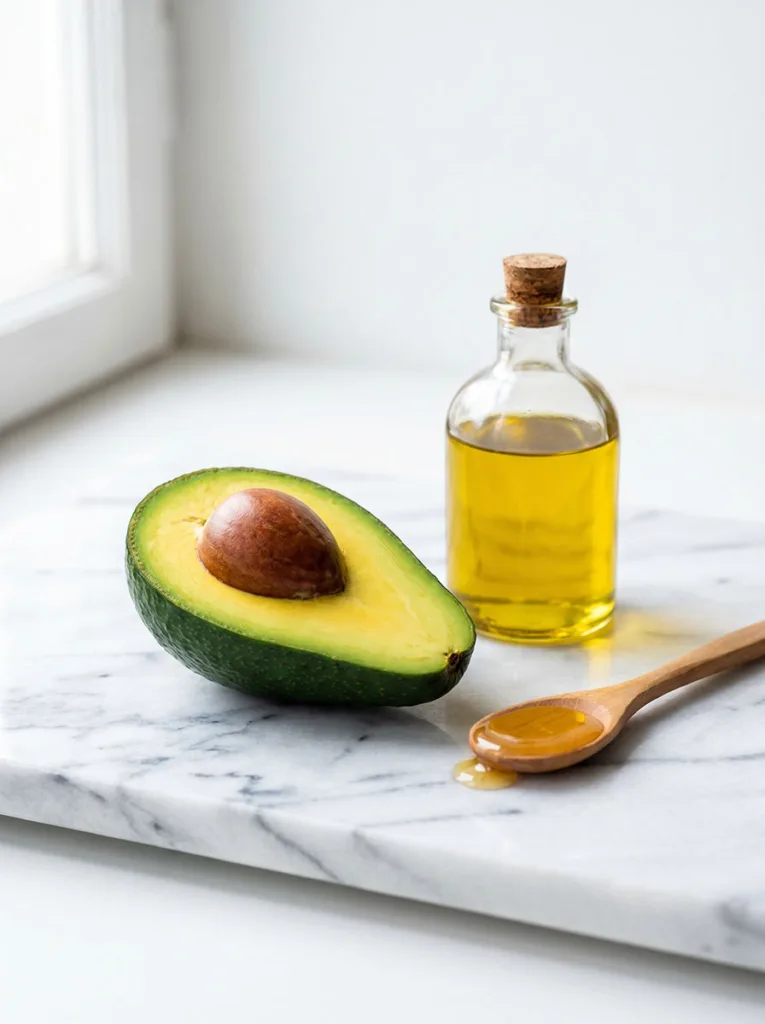
Why it works: Avocado contains oleic, palmitic, and linoleic fatty acids that penetrate deeply into dry strands. Olive oil seals the cuticle once moisture is inside. Honey adds an extra layer of hydration retention.
Ingredients:
- ½ ripe avocado
- 2 tablespoons extra virgin olive oil
- 1 tablespoon raw honey
Method:
- Mash the avocado until completely smooth — no lumps
- Mix in the olive oil and honey
- Apply to damp hair from roots to ends
- Leave on for 30 minutes
- Rinse thoroughly with lukewarm water, then shampoo once
Frequency: Once a week.
Aloe Vera + Coconut Oil Mask — For Heat-Damaged or Frizzy Hair
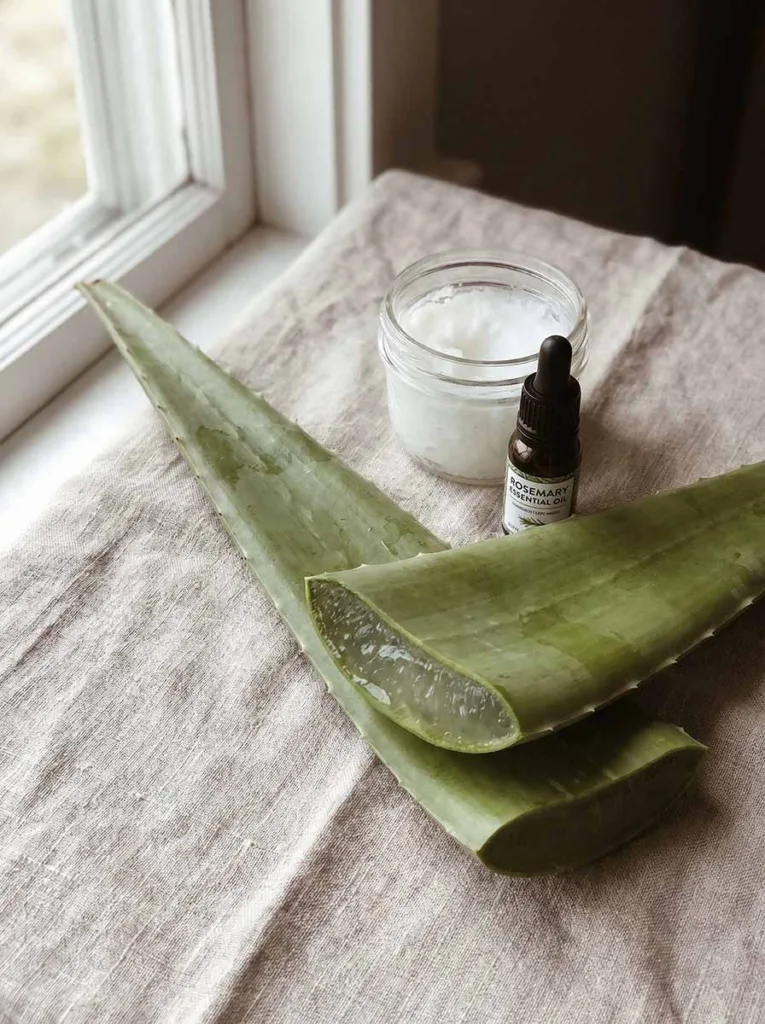
Why it works: Aloe vera contains proteolytic enzymes that repair dead scalp cells and restore shine. Its natural pH of 4.5 matches the ideal pH of healthy hair, which seals the raised cuticle and smooths frizz. Coconut oil follows to lock everything in.
Ingredients:
- 3 tablespoons fresh aloe vera gel (scraped from a leaf, or pure bottled gel)
- 1 tablespoon coconut oil
- 5 drops rosemary essential oil (optional — stimulates scalp circulation)
Method:
- Mix the aloe vera gel and coconut oil until combined
- Add rosemary oil if using
- Apply from scalp to ends
- Leave on for 30–45 minutes
- Rinse and shampoo once with a mild shampoo
Frequency: Twice a week during active repair.
Apple Cider Vinegar Rinse — For Dull or Product-Buildup Hair
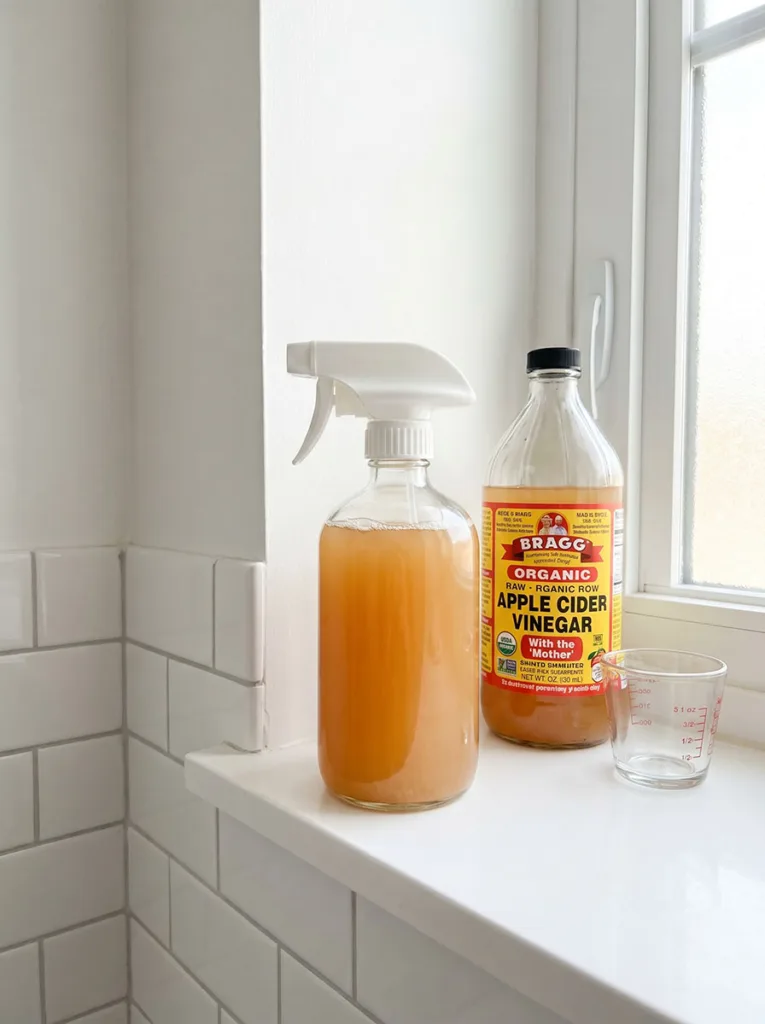
Why it works: Apple cider vinegar’s acetic acid restores the scalp’s natural pH to between 4.5 and 5.5. When the scalp pH rises above this range — which happens with hard water, product buildup, and alkaline shampoos — the hair cuticle stays open and rough. The ACV rinse closes it, removes mineral buildup, and restores shine.
Ingredients:
- 2 tablespoons raw apple cider vinegar
- 1 cup (240ml) water
Method:
- Mix in a small spray bottle or cup
- Shampoo and rinse your hair as normal first
- Pour or spray the ACV mixture evenly over your hair
- Leave on for 2–3 minutes
- Rinse thoroughly with cool water
Frequency: Once a week maximum. Overuse strips the hair further.
Daily Habits That Repair Hair Faster
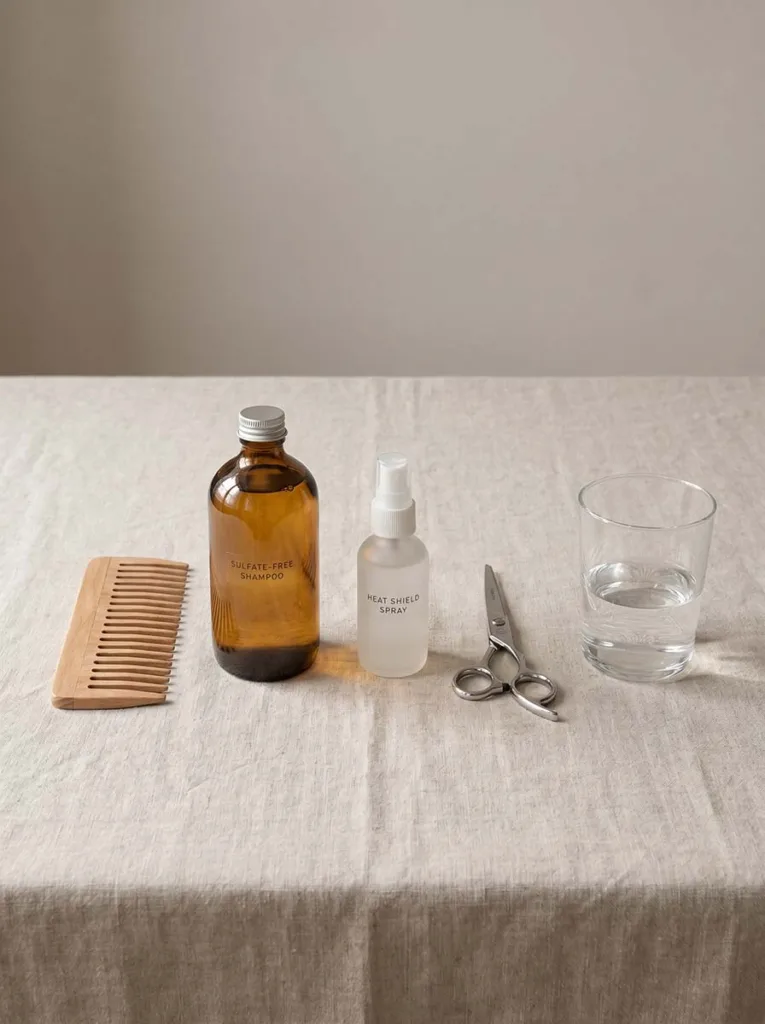
The remedies above do the heavy lifting. These daily habits stop new damage from undoing your progress.
- Wash hair 2–3 times a week — not daily. Washing too often strips the scalp of its natural sebum, the oil your hair needs to stay moisturised and protected.
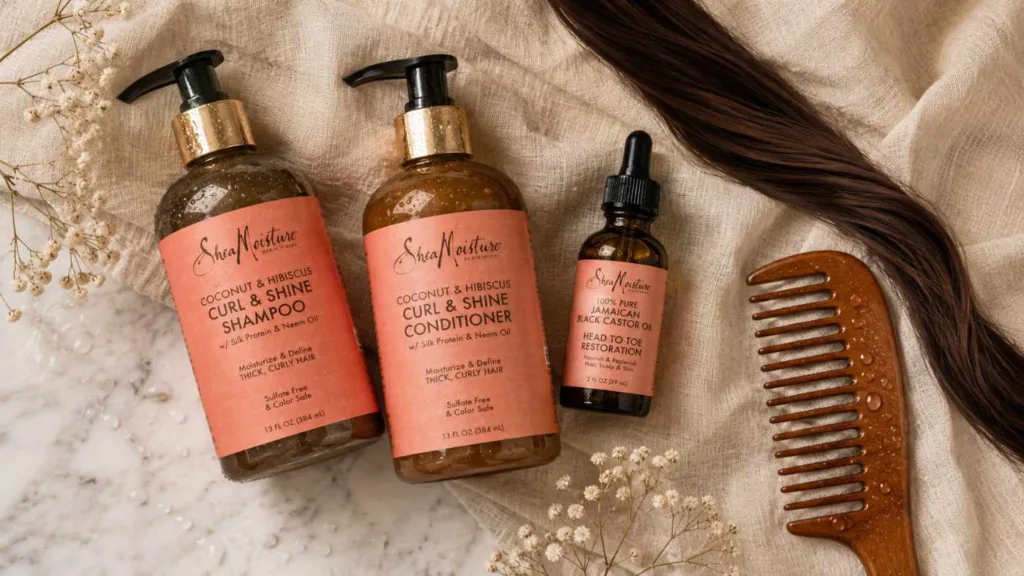
- Switch to a sulfate-free shampoo. Look for sodium lauroyl methyl isethionate or cocamidopropyl betaine on the label. Avoid sodium lauryl sulfate (SLS) and sodium laureth sulfate (SLES) — both strip moisture from the hair shaft with every wash.
- Never brush wet hair. Wet hair stretches more than dry hair and breaks far more easily. Use a wide-tooth comb instead, starting at the ends and working slowly up toward the roots.
- Keep heat tools below 230°C (450°F) — and always apply a heat protectant spray before using any tool. Even a light mist of protectant dramatically reduces cuticle damage from heat.
- Trim every 6–8 weeks. Trimming does not make hair grow faster, but it stops split ends from traveling up the shaft and turning a small problem into a big one.Finish every wash with a cool water rinse. Cool water closes the cuticle after washing, which seals in moisture and adds visible shine.
Nighttime Hair Care for Damaged Hair
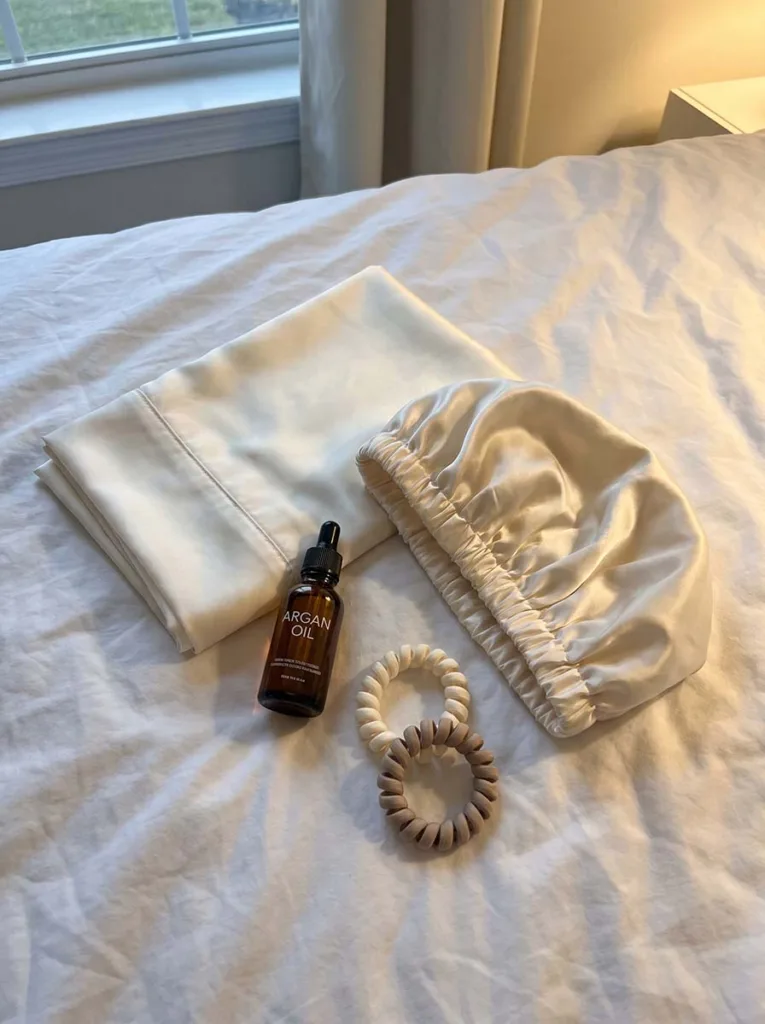
What you do before bed matters more than most people realise. Cotton pillowcases create friction against every strand as you move in your sleep. That friction roughens the cuticle, causes breakage, and undoes the moisture work you put in during the day.
- Switch to a silk or satin pillowcase. Silk and satin create almost zero friction. Your hair glides rather than catches. It is one of the simplest swaps you can make with an immediate difference.
- Apply a small amount of leave-in conditioner or 2–3 drops of argan oil to your ends before sleeping. This gives strands overnight moisture without the weight.
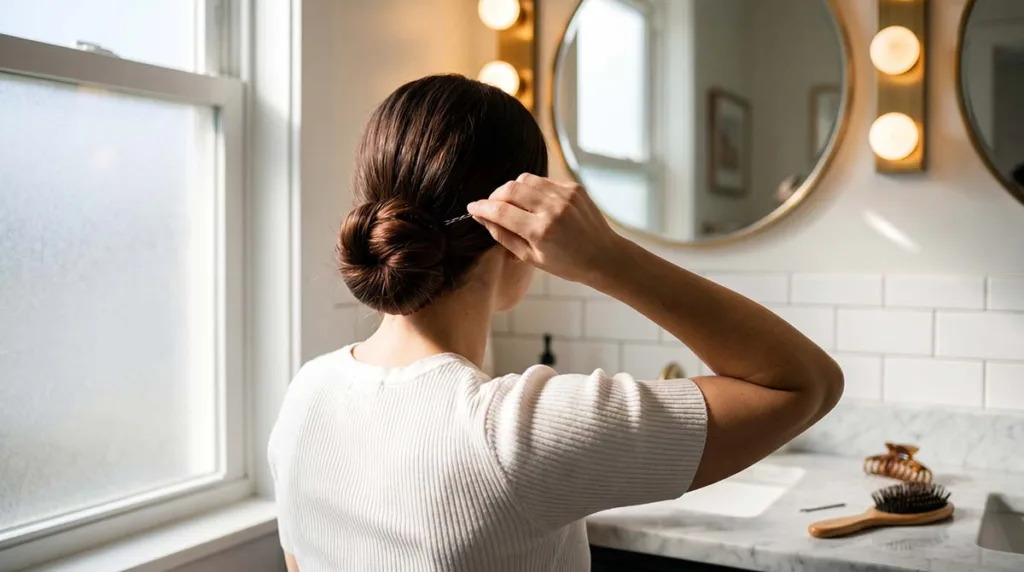
- Sleep in a protective style. A loose braid, a low soft bun, or hair wrapped in a satin bonnet keeps strands contained and reduces friction further. Avoid tight elastic bands — use spiral hair ties or soft scrunchies only.
- Never sleep with wet hair. Wet hair swells as water enters the shaft. When you press that swollen strand against a pillow under the weight of your head for eight hours, it breaks. Always dry hair to at least 70–80% before sleeping.
What to Eat for Healthier, Stronger Hair
Hair repair does not only happen from the outside. Your hair is made almost entirely of keratin protein. If your diet lacks the nutrients keratin needs to form, no mask or oil will fully compensate.
Eat more of these:
- Protein — eggs, lentils, chicken, Greek yogurt. Hair is 95% keratin protein. Low protein intake directly causes weak, brittle strands.
- Biotin (Vitamin B7) — eggs, almonds, sweet potato, sunflower seeds. Biotin deficiency is a proven cause of brittle hair and hair thinning.
- Omega-3 fatty acids — salmon, flaxseeds, walnuts, chia seeds. Omega-3 reduces scalp inflammation and keeps strands flexible and shiny.
- Iron — spinach, red meat, lentils, pumpkin seeds. Iron deficiency is one of the leading causes of hair loss and dull, weakened strands.
- Water — 8 glasses a day keeps hair strands flexible and far less prone to breakage.
You do not need supplements if you eat a varied diet with these foods regularly. What your plate contains shows up in your hair within weeks.
How Long Does It Take to Repair Damaged Hair?
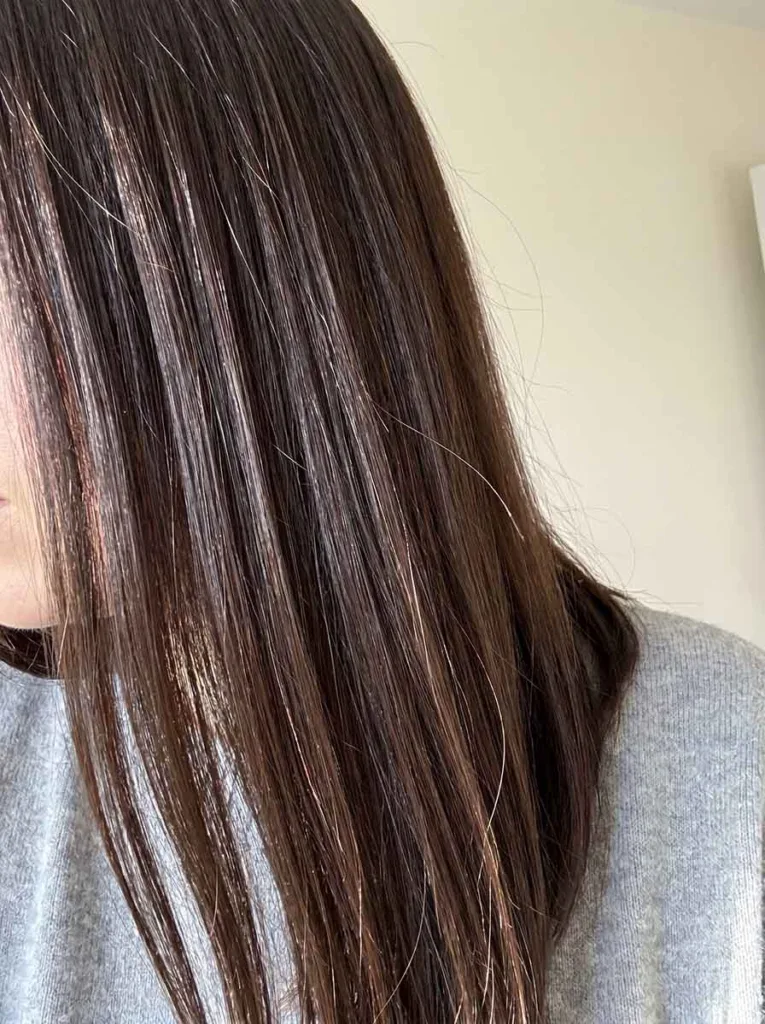
Hair repair is not instant. But it is faster than most people expect when they stay consistent.
Here is a realistic timeline:
- Week 1–2: Frizz visibly reduces with consistent oiling and masking
- Week 3–4: Texture becomes softer and strands feel smoother when wet
- Month 2: Breakage slows significantly. Hair holds moisture longer between washes.
- Month 3: Shine returns. Hair feels stronger and more elastic.
- Chemically damaged or bleached hair: Allow 4–6 months minimum. Chemical damage goes deeper into the cortex and takes longer to address.
The biggest mistake people make is switching treatments too fast. Give each remedy at least four weeks before judging whether it works. Consistency beats variety every time.
Common Mistakes That Make Damage Worse
Even with good intentions, these habits undo your repair progress:
- Brushing wet hair aggressively — wet strands are at their most fragile. Always detangle gently with a wide-tooth comb.
- Washing with hot water — hot water forces the cuticle open and strips natural oils. Use lukewarm water and finish cool.
- Over-oiling the scalp — excess oil on the scalp causes buildup, clogs follicles, and suffocates the roots. Apply oils to mid-lengths and ends, not the scalp, unless it is a targeted scalp treatment.
- Skipping conditioner — shampooing without conditioning leaves the cuticle open and rough. Condition every single wash.
- Protein overload — using protein masks when your hair needs moisture causes strands to feel stiff, dry, and snap-prone. Always check which your hair needs first.
- Changing treatments every two weeks — hair repair is slow by biology. Give each routine four weeks before deciding it is not working.
Frequently Asked Questions
1. Can you fully reverse damaged hair?
Hair is made of dead cells, so severe damage cannot be completely reversed. But consistent natural care restores softness, strength, and shine to a level most people cannot distinguish from undamaged hair. The goal is not perfection — it is healthy function.
2. How often should I use a DIY hair mask?
Once a week for actively damaged hair. Once every two weeks once your hair has recovered. More frequent masking, especially protein masks, can cause overload.
3. Is coconut oil good for all hair types?
No. Coconut oil works well for thick, dry, and curly hair types. Fine or low-porosity hair often experiences buildup because the oil sits on the surface rather than absorbing. Use jojoba or argan oil instead.
4. How often should I trim damaged hair?
Every 6–8 weeks. Trimming does not speed up growth, but it removes split ends before they split further up the shaft — which protects the length you are working to keep.
5. Which shampoo ingredients should I avoid?
Avoid sodium lauryl sulfate (SLS), sodium laureth sulfate (SLES), and parabens. These strip natural oils from the hair shaft with every wash and make recovery much harder.
Start With One Remedy This Week
Healthy hair does not come back in a weekend. But it does come back. Every mask you make, every habit you swap, every night you protect your strands adds up faster than you think.
Pick one remedy from this guide that matches your hair type. Make it this weekend. Do it again next week. By month two, your hair will feel different enough that you will not want to stop.
Save this post so you have the recipes when you need them.
For more details on repairing the damaged hair at home, please visit VelvetBoard.