Simple Hair Care Routine for Beginners That Works
Great hair is not reserved for people with expensive products or complicated routines.
It starts with the right habits. Simple, consistent, and easy to follow — even if you are starting from zero. Most beginners overthink it. They buy ten products, follow five different routines, and still see no real change. The problem is never the products. It is the missing foundation.
Healthy hair comes from understanding what your hair actually needs. Strip it back to the basics, and the results follow.

A simple haircare routine for beginners gives you exactly that foundation. This guide walks you through every step.
Start Here — Know Your Hair Type and Porosity
Before buying anything, understand your hair. This one step changes every product decision you make.

Hair Texture Types
Hair comes in four main types. Type 1 is straight. It tends to get oily at the roots quickly. Type 2 is wavy with a soft S-shape. Type 3 is curly with defined spirals that need consistent moisture. Type 4 is coily with a tight curl pattern and the highest risk of dryness and breakage.
Your texture determines which products and techniques actually belong in your routine.
What Is Hair Porosity and Why It Matters
Porosity is how well your hair cuticle absorbs and holds moisture.
Low porosity hair resists moisture. Apply lightweight, water-based products to damp hair for better absorption. Medium porosity hair absorbs and retains moisture well. Most products work fine. High-porosity hair absorbs moisture fast but loses it just as quickly. It needs richer products containing ceramides and shea butter to seal the cuticle.
Test yours right now. Drop a clean hair strand in a glass of water. If it floats, you have low porosity. If it sinks quickly, you have high porosity.
That single insight makes your entire routine more effective.
Your 3-Product Beginner Starter Kit
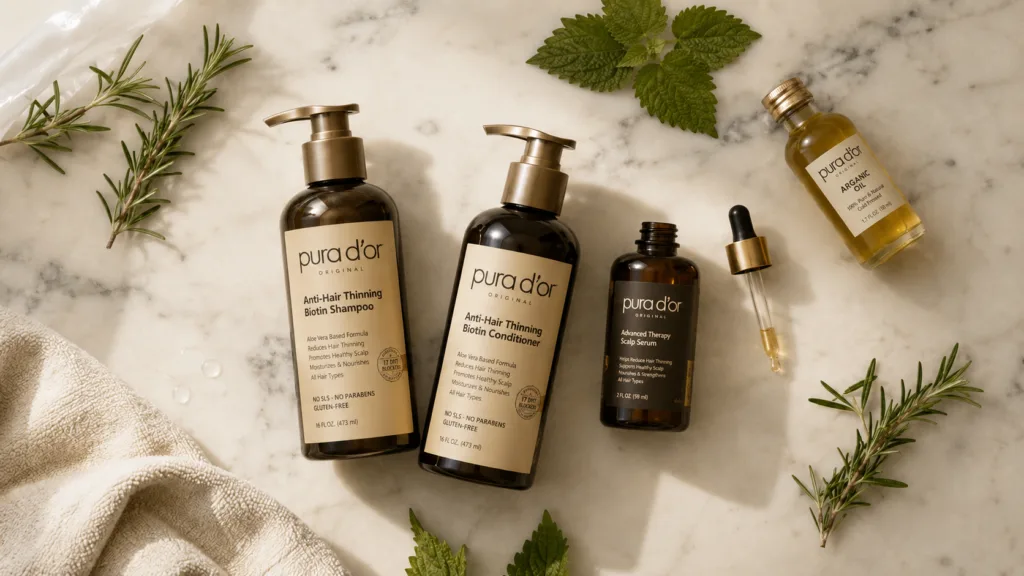
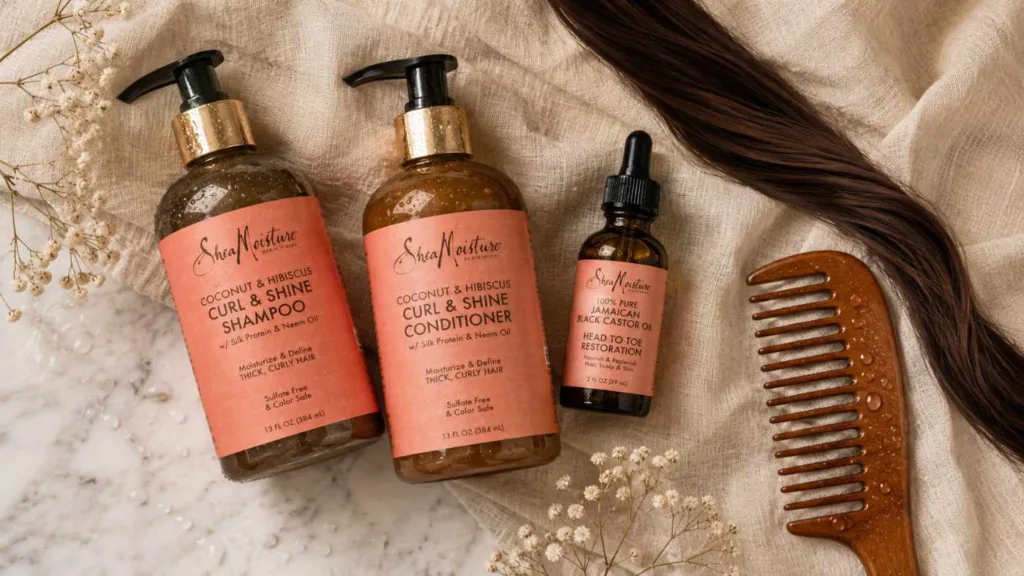
You do not need a shelf full of products. You need three solid ones.
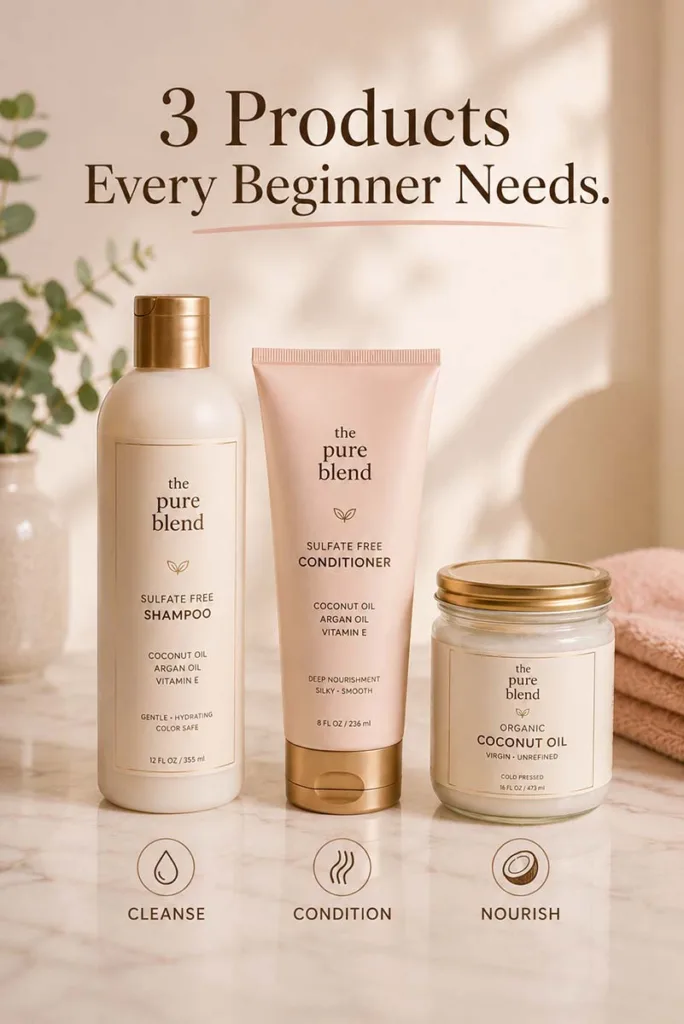
Sulfate-Free Shampoo
Harsh sulphates strip your scalp of its natural oil, called sebum, leaving hair dry and brittle. A gentle, moisturising formula cleanses without causing damage. Look for glycerin or panthenol on the ingredient label. Both signal a hydrating formula.
Hydrating Conditioner
Conditioner is non-negotiable. It seals the hair cuticle after washing and significantly reduces breakage. Look for panthenol, hydrolysed protein, or argan oil in the ingredients. Avoid heavy silicones if you have low-porosity hair. They coat the hair shaft and block moisture from getting in.
A Lightweight Hair Oil
Coconut oil works well for straight and wavy hair types. Argan oil suits all hair types and absorbs quickly without greasiness. Jojoba oil is the best option for an oily scalp because it closely mimics natural sebum.
A solid routine built on these three products costs under $30. Start there and build from a strong foundation.
The Simple Hair Care Routine — Step by Step
This is the section that actually transforms your hair. Each step has a clear reason behind it.
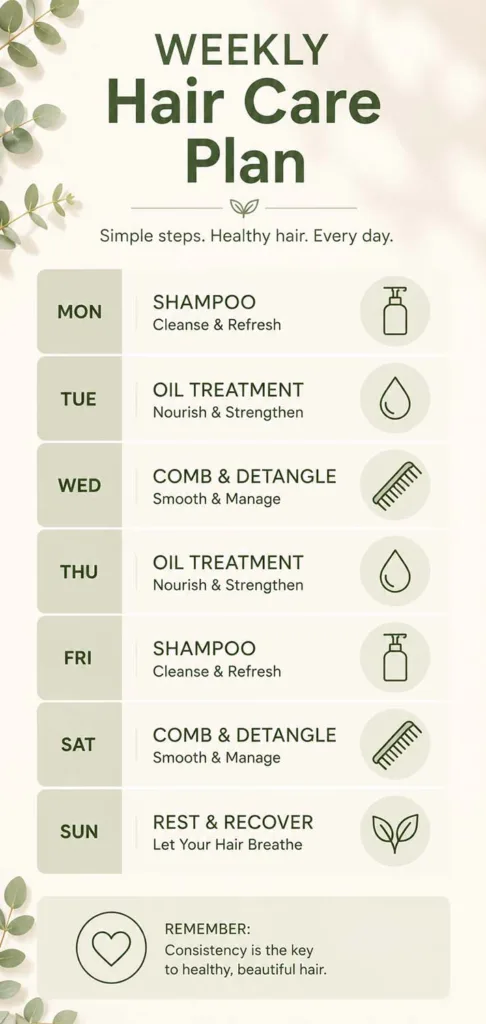
Step 1: Cleanse Gently (2–3 Times Per Week)
Wash your hair 2 to 3 times per week. Washing daily strips your scalp of sebum, the natural oil that keeps hair moisturised and strong from the root.
Use cool or lukewarm water. Hot water forces the hair cuticle open and dries out the shaft over time. Massage your scalp with your fingertips for 5 minutes during every wash. This stimulates blood circulation to the hair follicles, loosens product buildup, and encourages healthy hair growth. Use your fingertips, never your nails.
Step 2: Condition Every Wash (Focus on the Lengths)
Apply conditioner from mid-shaft to ends only. The scalp produces its own oil. Adding conditioner there creates buildup and weighs hair down. Leave the product on for 3 to 5 minutes. That sitting time seals the cuticle, adds slip for easy detangling, and reduces breakage significantly during combing.
Step 3: Oil Treatment (1–2 Times Per Week)
Apply oil 1 to 2 hours before shampooing. This pre-wash treatment protects the hair shaft and reduces protein loss during washing. It is one of the most effective steps in any beginner routine.
Best oils by hair type: coconut oil for straight and wavy hair, argan oil for all hair types, castor oil for scalp nourishment and hair growth stimulation, and jojoba oil for those with an oily scalp. Use a moderate amount. Overdoing oil causes buildup and dullness.
Step 4: Dry Gently, Air-Dry When Possible
Wet hair is 3 times more vulnerable to breakage than dry hair. Never rub it with a regular terry cloth towel. Instead, use a microfibre towel or a soft cotton T-shirt to gently squeeze excess water out from root to tip. Air dry at least 80 per cent before applying any heat tool to your hair.
Step 5: Heat Protectant Before Every Tool
Apply heat protectant spray to damp hair before picking up a flat iron or blow dryer. Keep heat tools at 300 to 350 degrees Fahrenheit maximum. Anything higher causes direct damage to the hair cuticle. Limit heat styling to 2 to 3 times per week. Frequent heat weakens the hair shaft progressively and leads to visible breakage over time.
The Nighttime Hair Care Routine Beginners Ignore
What you do before bed matters as much as your daytime routine.
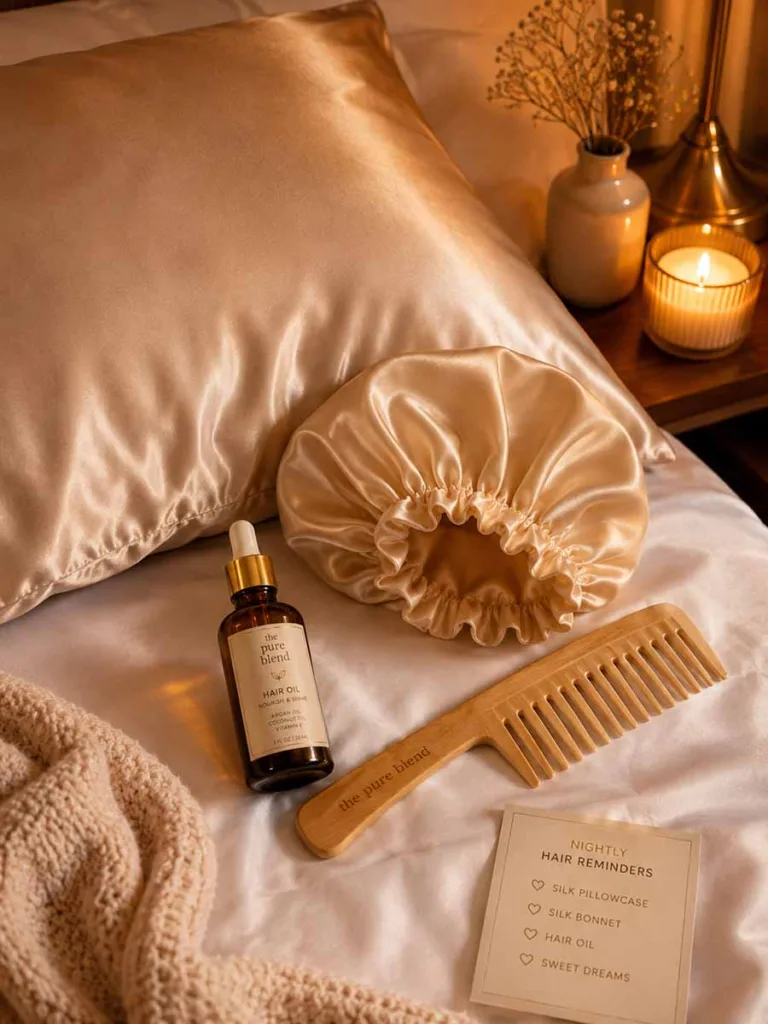
Most beginners sleep on a regular cotton pillowcase. Cotton creates friction against the hair shaft all night. That friction builds up into frizz, tangles, and slow, steady breakage. Switching to a satin or silk pillowcase is one of the simplest and most effective upgrades you can make.
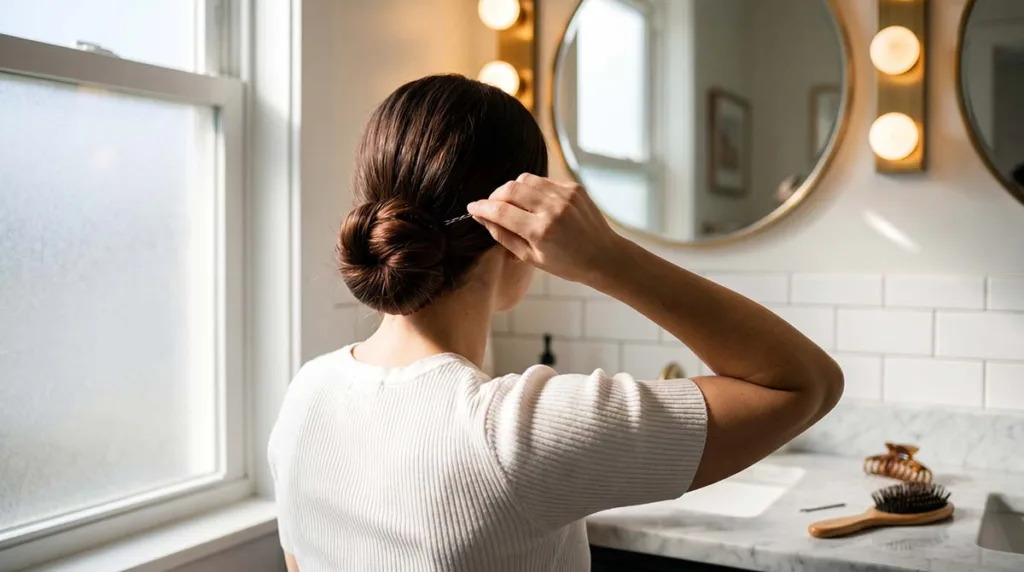
Sleep with your hair in a loose braid or gathered gently with a silk scrunchie. Tight hairstyles stress the hairline and cause breakage over time. A loose braid protects the length of your hair while you sleep without any tension at the root.
Once a week, apply a small amount of lightweight oil to your ends before bed. This overnight oil treatment works especially well for high-porosity hair that loses moisture quickly through the night.
A silk bonnet is another strong option. It keeps your hair in place, maintains moisture, and eliminates friction entirely.
Small nighttime habits build strong, healthy hair over weeks without any extra effort.
Deep Conditioning — The One Step Beginners Skip
A regular conditioner works on the surface of the hair cuticle. A deep conditioner goes further. It penetrates the hair cortex to repair damage and restore moisture from within.
Use a deep conditioning treatment once per week if you have dry or high-porosity hair. Every two weeks works well for normal hair with medium porosity.
Look for products containing shea butter, hydrolysed keratin, or ceramides. These ingredients restore moisture balance, strengthen the hair shaft, and improve hair elasticity over time.
No budget for a store-bought mask? Mix mashed avocado with a teaspoon of honey and a few drops of argan oil. Apply it to your lengths and ends, cover with a shower cap, and leave it on for 20 to 30 minutes before rinsing thoroughly.
Deep conditioning once a week is the difference between hair that barely survives and hair that genuinely thrives.
What You Eat Directly Affects Your Hair
Hair care does not start in the shower. It starts on your plate.
Your hair is built from keratin, a structural protein. Low protein intake means weaker strands and slower growth from the hair follicle. Eat eggs, lentils, and chicken consistently. Protein is the raw material your hair needs to grow.
Biotin, found in egg yolks and nuts, supports hair follicle function directly. Iron from leafy greens and lentils carries oxygen to the scalp. Without enough iron, hair growth slows. Zinc from pumpkin seeds and chickpeas supports hair tissue repair. Omega-3 fatty acids from salmon and walnuts add natural shine and reduce scalp dryness from the inside out.
Dehydration does visible damage too. Dry, brittle hair is often the first sign that water intake is too low.
Think of nutrition as your internal hair care routine. No shampoo or conditioner can fix a diet that is actively working against your hair health.
The Right Tools Make a Real Difference
The tools you use either protect your hair or quietly damage it every single day.
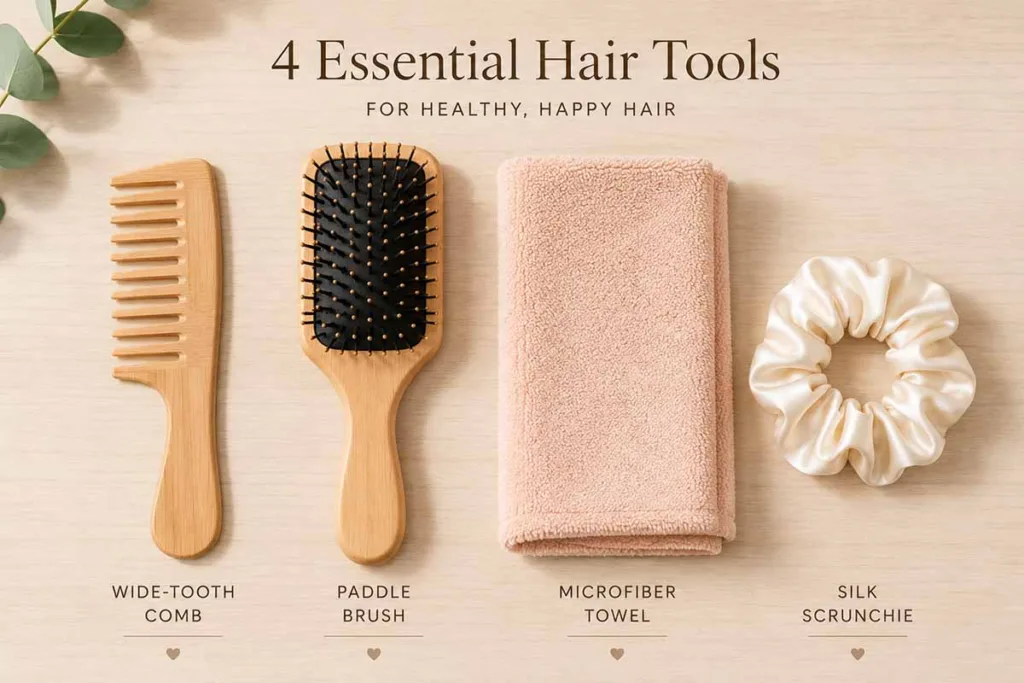
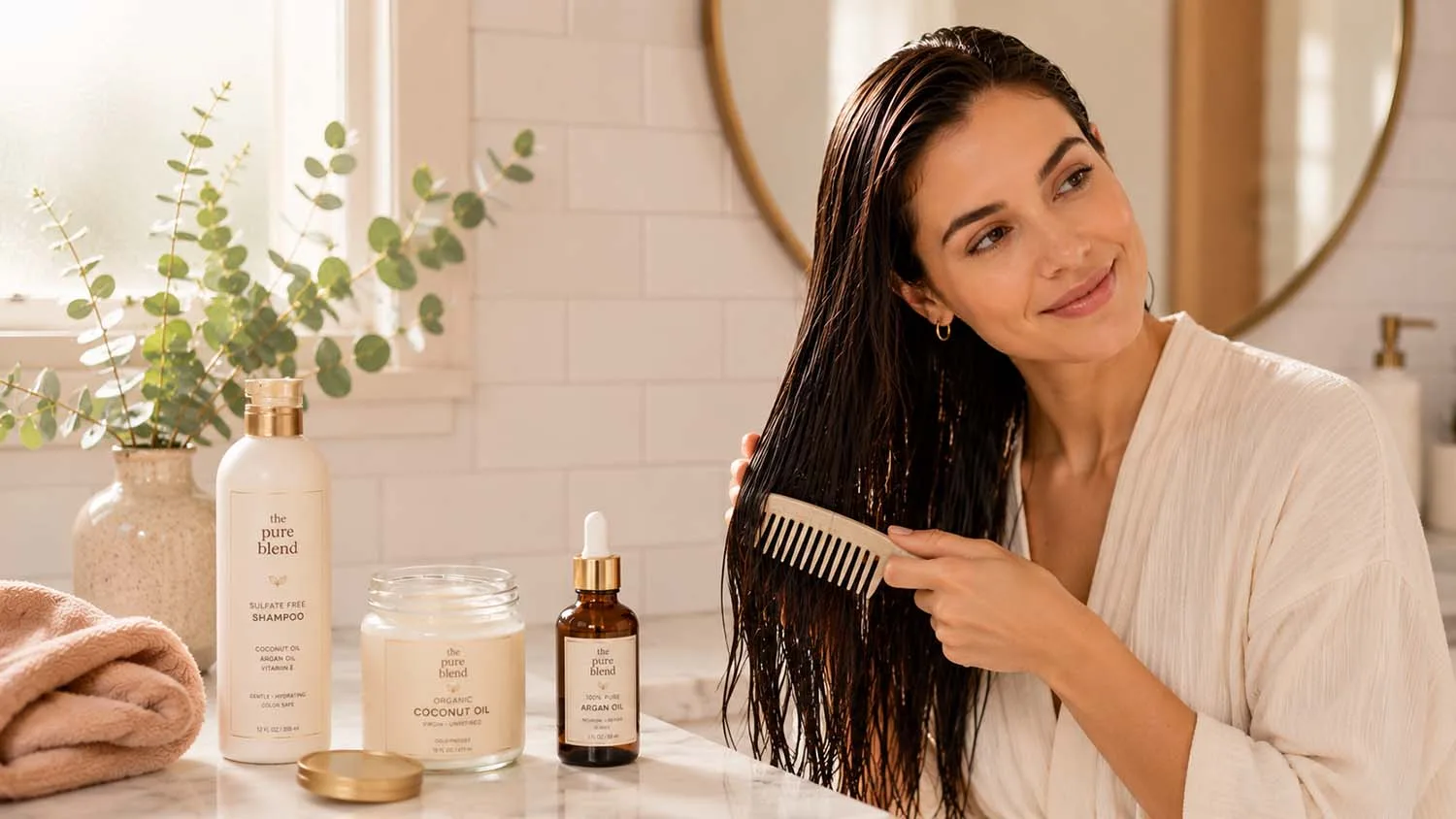
A wide-tooth comb is the only tool you should use on wet hair. Start from the ends and work upward gradually. This method prevents unnecessary breakage at the most vulnerable points.
A paddle brush works best on dry hair. It distributes scalp oils along the hair shaft, adding natural shine without product.
Replace your regular towel with a microfibre towel. It absorbs water faster and creates far less friction than terry cloth.
Swap elastic hair ties for silk scrunchies. Regular elastics snag the hair shaft and create consistent breakage at the hairline over time.
Four simple tool changes. Noticeable reduction in breakage within weeks.
Common Beginner Mistakes (And How to Fix Them)
These six mistakes damage hair silently. Most beginners make at least three of them.
Washing hair daily. Fix: Wash 2 to 3 times per week. Daily washing strips scalp sebum and dries out the hair shaft over time.
Skipping conditioner. Fix: Condition after every single wash. Even a 3-minute application prevents significant cuticle damage and breakage.
Rough towel drying. Fix: Switch to a microfibre towel and gently squeeze water out. Rubbing creates frizz and snaps weakened strands.
Applying oil only to the roots. Fix: Focus oil on mid-lengths and ends. The scalp already produces its own sebum. Roots rarely need extra oil.
Ignoring scalp health. Fix: Massage your scalp for 5 minutes during every wash. A healthy scalp is the starting point of healthy hair growth.
Using too many products at once. Fix: Introduce one product at a time. Product build-up clogs follicles, causes dullness, and makes it impossible to know what is actually working.
How Long Before You See Real Results?
Consistency creates results. Here is a realistic week-by-week timeline.
Weeks 1 to 2: Your scalp adjusts to the new washing frequency. It may temporarily feel oilier or drier than usual. This is normal. Stay consistent.
Weeks 3 to 4: Hair texture begins to shift. Frizz is reduced. Softness improves. Detangling becomes noticeably easier.
Weeks 5 to 6: Visible reduction in breakage and split ends. Strands begin to feel stronger from mid-shaft to tip.
Weeks 8 to 12: Measurable shine improvement and noticeably healthier hair overall, especially when diet and hydration are consistent alongside the routine.
Hair does not transform in a week. But 8 to 12 weeks of the right steps, done consistently, change everything.
Frequently Asked Questions
How many times should a beginner wash their hair per week?
Most beginners should wash 2 to 3 times per week. Daily washing strips the scalp of its natural oils and leads to dryness and breakage. Hair type matters. An oily scalp handles 3 washes well. Dry or coily hair does better with 1 to 2 washes per week.
What is the best oil for beginners?
Coconut oil is the most accessible option and works well for straight and wavy hair. Argan oil is lightweight and suits all hair types. Jojoba oil is the best pick for an oily scalp because it mirrors the scalp’s natural sebum closely.
Do beginners need a deep conditioner?
Yes. Particularly for dry or high-porosity hair. Use it once per week for best results. Normal hair benefits from a treatment every two weeks.
Can I follow a hair care routine on a budget?
Absolutely. Three core products cover everything a beginner needs. A good shampoo, conditioner, and one lightweight oil together cost under $30. A DIY deep conditioner with avocado, honey, and argan oil costs even less.
How do I know if my routine is working?
Look for less breakage, improved shine, and softer texture by Weeks 3 to 4. These are the earliest and most reliable signs your routine is taking effect.
Conclusion
Building a simple hair care routine for beginners does not require a ten-step system or expensive products. It requires the right steps done consistently.
Cleanse gently. Moisturise after every wash. Protect your hair from heat and friction. Feed your body the nutrients your hair needs to grow from within.
Start with one new habit this week. Add the next one the week after. Healthy, strong hair is not a luxury. It is a result.
For more details on a simple hair care routine for beginners, please visit VelvetBoard.