5 Approved Korean Skincare Tips for Glass Skin
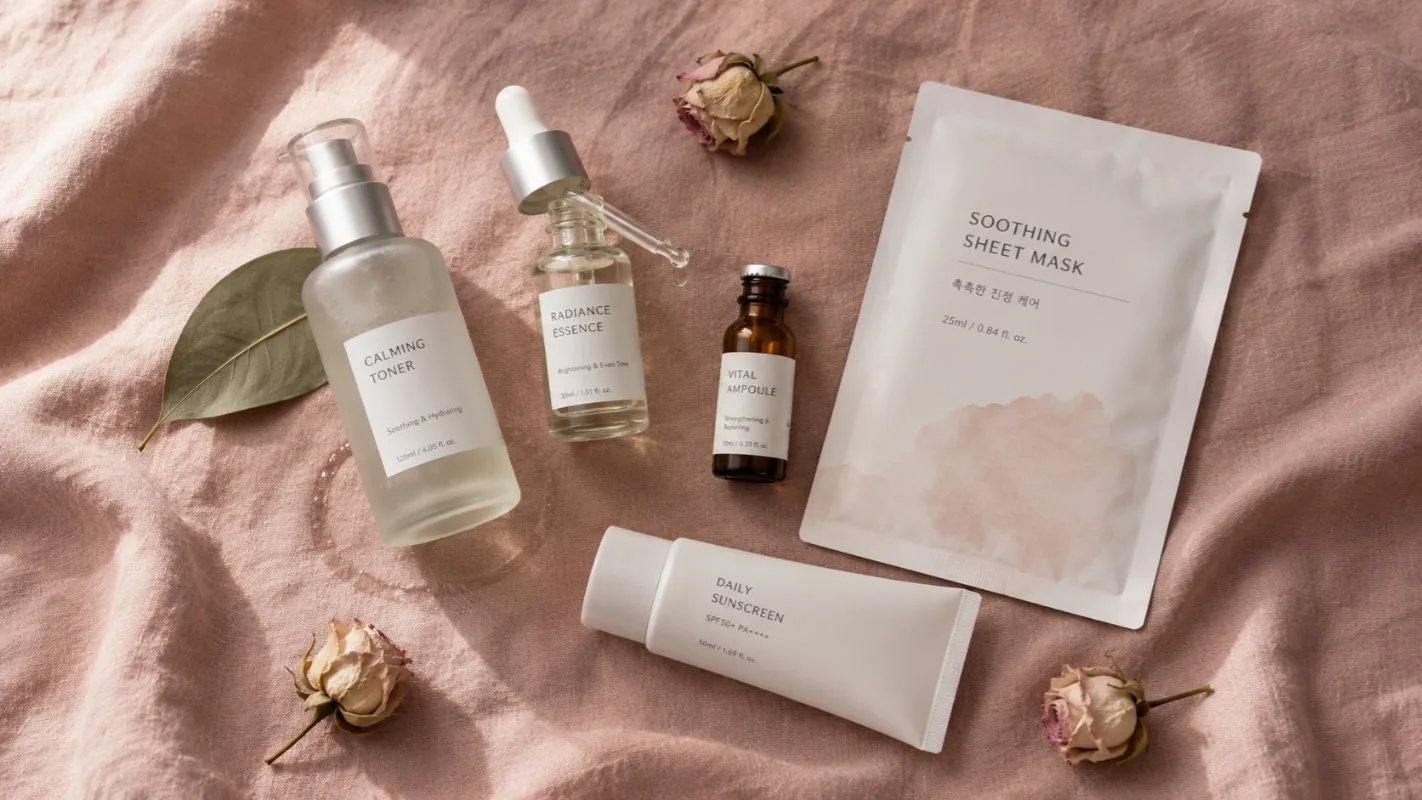
Why does your skin still look dull no matter how many products you buy? If your shelf is full and nothing is working, you’re probably using the right products in the wrong order.
Korean skincare is built on one idea: prevent problems before they start rather than treat them after they show up. When your skin barrier is strong and your products go on in the right sequence, dullness and dryness stop being your default state.
These 5 approved Korean skincare tips are the foundation behind every glass skin result you’ve seen online, backed by decades of dermatological research and a culture that values consistency over complicated routines. Start here.
5 Tips at a Glance
- Double cleanse every evening
- Layer hydration with toner and essence
- Use targeted serums with the right ingredients
- Apply a sheet mask once or twice a week
- Never skip sunscreen
What Makes Korean Skincare Different
Western routines tend to react. You break out; you treat it. Skin looks dull; you exfoliate harder. Korean skincare takes If the skin is opposite, build the skin barrier strong enough that breakouts and dullness become less frequent to begin with.
Layering is the other piece. Korean skincare applies products from thinnest to thickest in a fixed sequence so each formula absorbs fully before the next one goes on. A serum pressed into a thick moisturizer just sits on top, wasting every active ingredient inside it.
The third factor is time. Most people who stick to a proper Korean routine see improvements in skin texture, hydration, and brightness within 4 to 6 weeks. The routine works because it’s consistent, not because it’s complicated.
Tip 1: Double Cleanse Every Evening
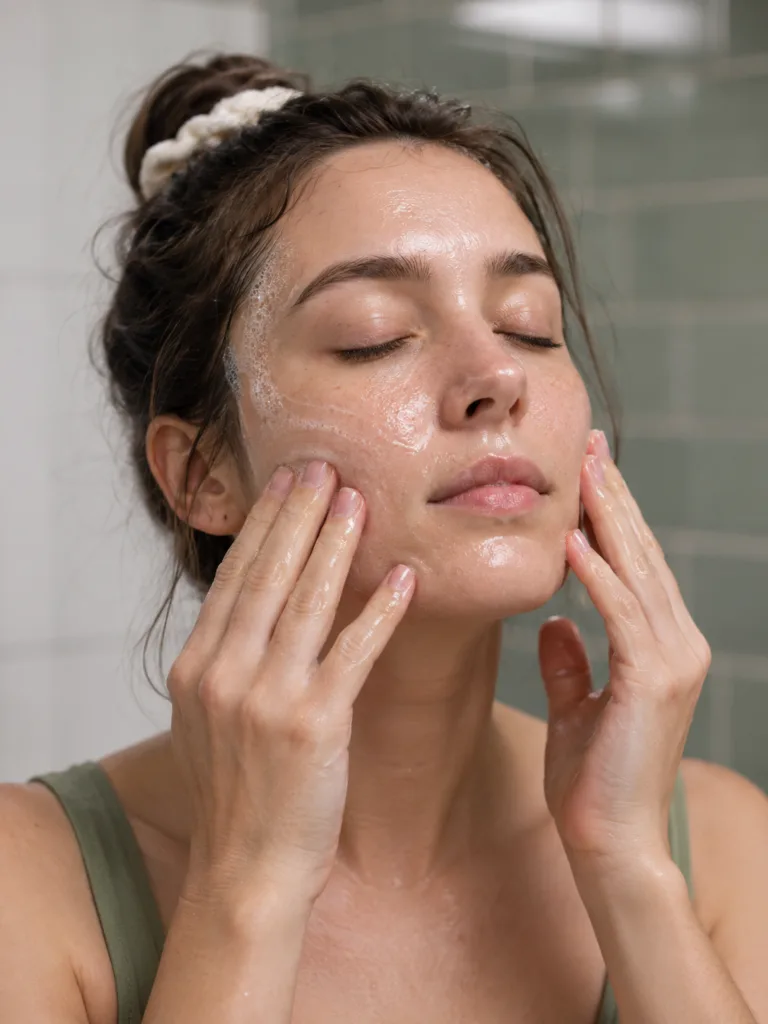
Double cleansing is the single most important habit you can borrow from Korean skincare. It involves two cleansers, used back-to-back, to remove every trace of what your skin has accumulated through the day.
The first cleanser is oil-based. Oil cleansers and balm cleansers break down makeup, sunscreen, excess sebum, and pollution particles. Water alone cannot remove these because they are oil-soluble. Skipping this step means your second cleanser is fighting through a barrier it cannot penetrate.
How to Double Cleanse Correctly
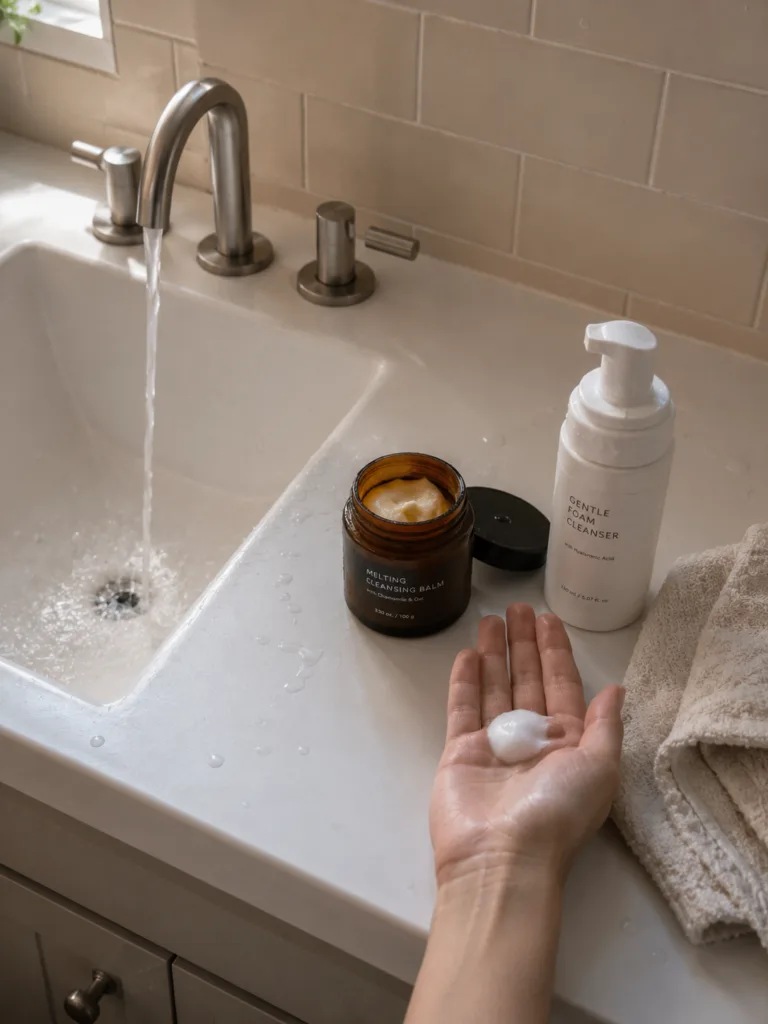
- Apply your oil cleanser to dry skin. Massage for 60 seconds in gentle circular motions.
- Add a few drops of water to emulsify—the cleanser will turn milky white.
- Rinse with lukewarm water.
- Apply your water-based foam or gel cleanser to damp skin.
- Massage for another 30 seconds and rinse.
Your skin should feel clean but not tight. Tightness after cleansing means the skin barrier got stripped. Switch to a gentler formula.
Note: Double cleansing is an evening-only step. In the morning, a single gentle cleanse is all your skin needs.
Which oil cleanser to choose by skin type:
| Skin Type | Best Formula |
| Oily | Lightweight gel oil cleanser |
| Dry or sensitive | Balm or cream oil cleanser |
| Combination | Milky emulsifying oil cleanser |
| Acne-prone | Non-comedogenic cleansing oil |
Tip 2: Layer Hydration with Toner and Essence
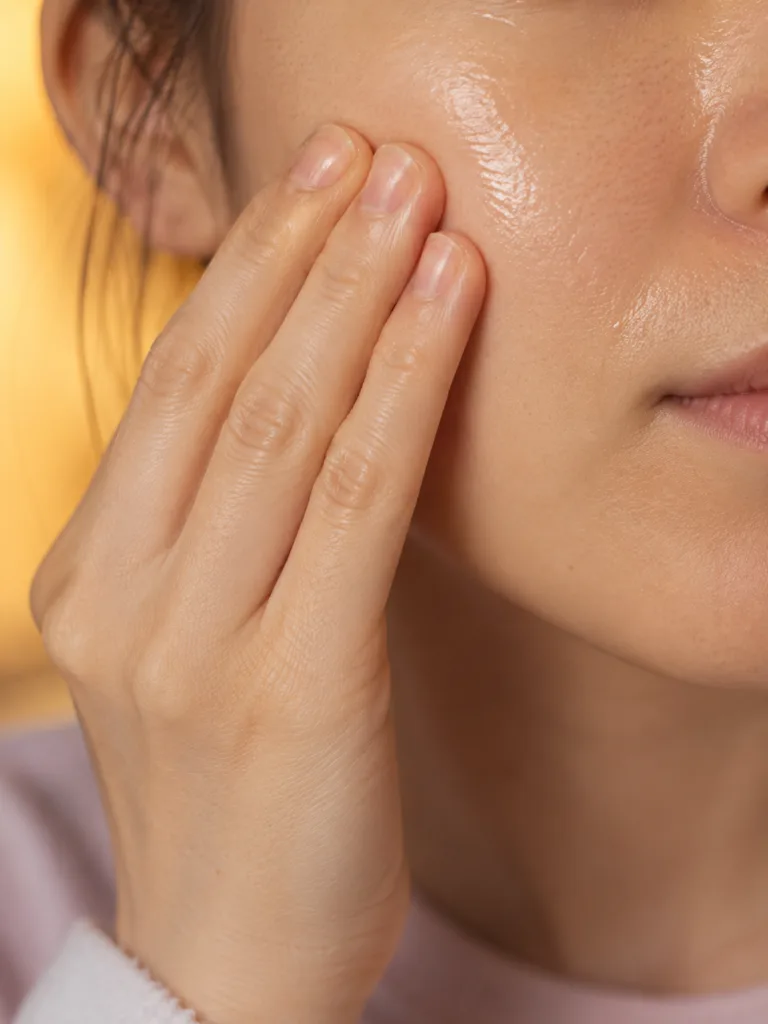
After cleansing, Korean skincare builds hydration in layers. Most beginners skip straight to moisturizer, which is where results slip through the cracks.
A Korean toner works differently from a Western astringent. Rather than stripping the skin, it delivers the first layer of hydration right after cleansing and primes the skin to absorb what comes next.
Toner vs. Essence: What Is the Difference
| Toner | Essence | |
| Texture | Water-thin | Slightly thicker |
| Key ingredients | Hyaluronic acid, glycerin, fermented rice water | Snail mucin, bifida ferment lysate, fermented actives |
| Main job | The first hydration layer, preps skin | Speeds cell turnover, deep moisture |
| How to apply | Press and pat with hands | Press and pat with hands |
Toners flood the skin with moisture. Apply with your hands, pressing and patting rather than wiping with a cotton pad. Wiping wastes product.
Essences sit between a toner and a serum and are the most distinctly Korean step in the routine. The fermented actives inside them speed up cell turnover and deliver a layer of hydration that leaves skin looking plump.
Apply toner first, wait 20 to 30 seconds, then apply essence. That sequence is what creates the dewy skin finish Korean skincare is known for.
Tip 3: Use Targeted Serums with the Right Ingredients
Korean skincare serums are built around specific, dermatologist-approved actives. Pick one serum that targets your biggest skin concern rather than stacking five products with overlapping ingredients.
Best Korean Skincare Ingredients to Know
| Ingredient | Best For | What It Does |
| Niacinamide (5%) | Dullness, large pores | Brightens, minimizes pores, boosts ceramide production |
| Snail mucin | All skin types | Repairs, hydrates, firms with glycoproteins and copper peptides |
| Centella asiatica | Sensitive, irritated skin | Calms redness and strengthens skin barrier |
| PDRN | Fine lines, elasticity | Accelerates cell regeneration (leading K-beauty ingredient in 2026) |
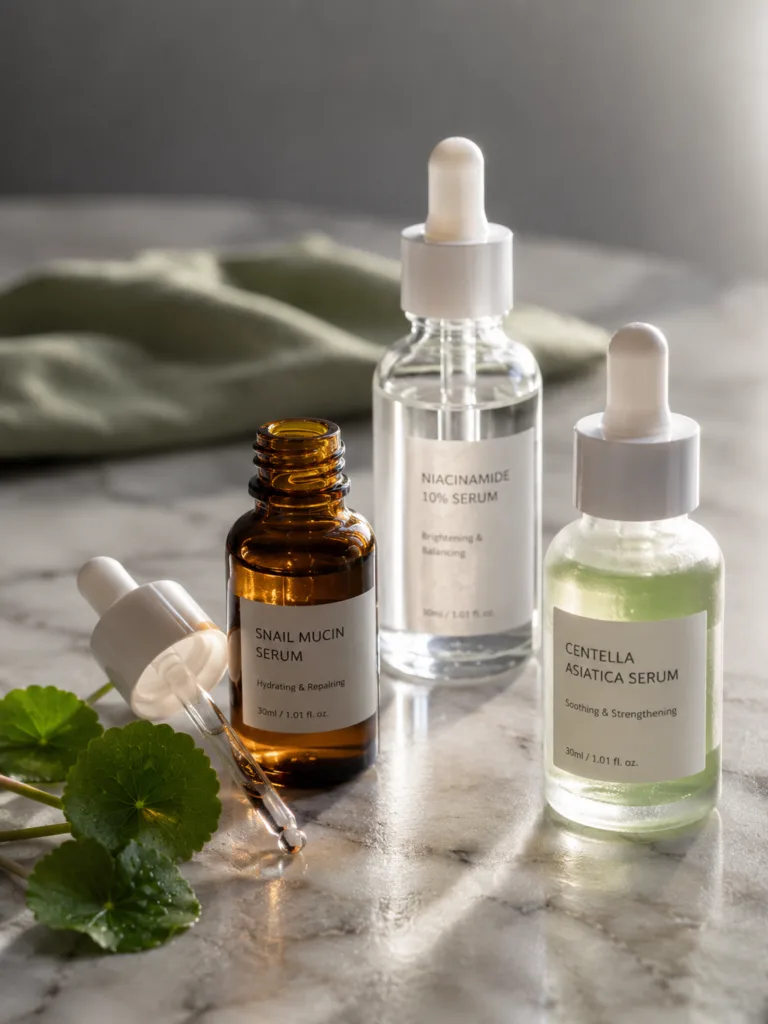
Niacinamide is the workhorse of K-beauty. At 5% concentration, it brightens dark spots, minimizes pores, and builds ceramide production for a stronger skin barrier. Clinical research shows visible improvement in as few as 4 weeks.
Snail mucin surprises most people who try it. Snail secretion filtrate packs glycoproteins, hyaluronic acid, and copper peptides into one formula, repairing and hydrating in a single step. It works on every skin type, including sensitive and acne-prone.
Centella asiatica (cica) is a medicinal herb Korean dermatologists have relied on for decades. It calms redness, speeds wound healing, and reinforces the skin barrier. Easily irritated skin responds well to a cica serum or cica cream.
PDRN, polynucleotide derived from salmon DNA, is drawing serious attention in Korean dermatology in 2026. It accelerates cell regeneration and is showing up in more K-beauty serums for fine lines and skin elasticity.
How to apply: Use 2 to 3 drops after essence. Press (do not rub) into the skin and allow 60 seconds to absorb before adding moisturizer.
Tip 4: Use a Sheet Mask Once or Twice a Week
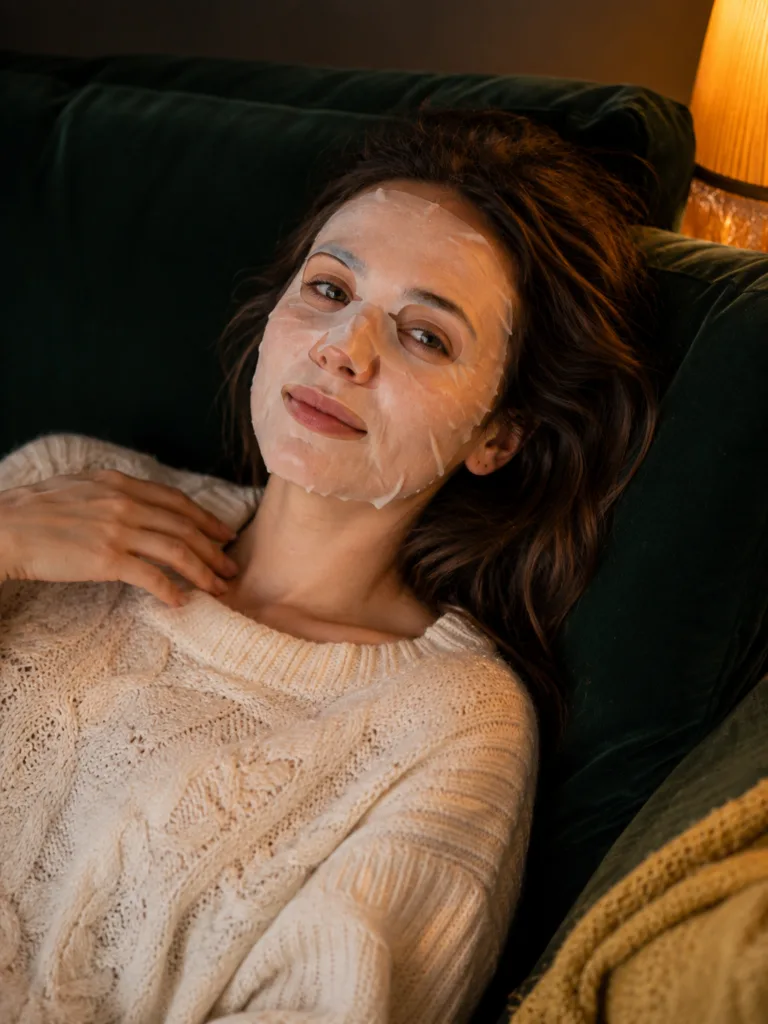
In Korean skincare, sheet masks are a weekly treatment, not an occasional splurge. The sheet creates an occlusive seal that drives the serum deeper into the skin than open-air application.
Leave a Korean sheet mask on for 15 to 20 minutes. Once it starts to dry, it begins pulling moisture back out rather than depositing it. After removing it, skip rinsing. Pat the remaining serum into your skin and follow with moisturizer.
Choose your sheet mask by skin concern:
| Skin Concern | Look For |
| Dry or dehydrated | Hyaluronic acid, ceramides |
| Dull or uneven tone | Vitamin C, niacinamide, glutathione |
| Sensitive or red | Centella asiatica, green tea extract |
| Oily or acne-prone | Tea tree, salicylic acid, mugwort |
Once a week is enough for most skin types. Twice a week works well for dry or dehydrated skin, especially in winter.
Tip 5: Sunscreen Is Not Optional
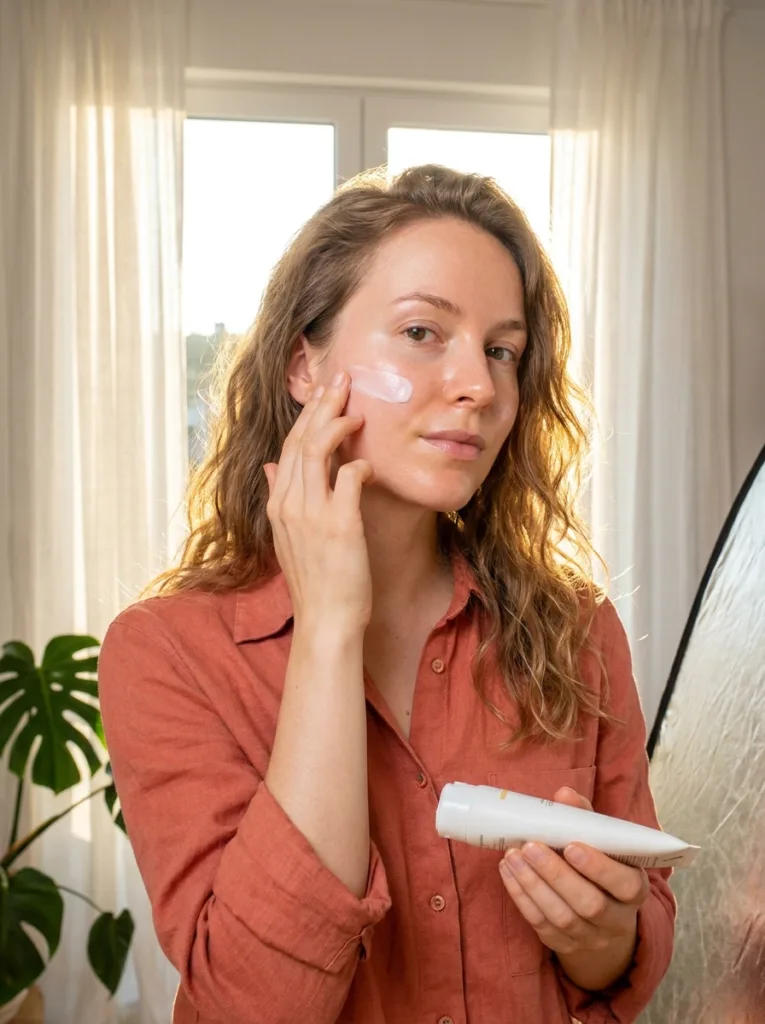
Korean dermatologists agree on one thing above everything else: SPF, every single day. Rain or sun, indoors or out, UV rays pass through windows and cause collagen breakdown, hyperpigmentation, and cellular damage over time.
Korean sunscreens made daily SPF feel possible for most people. They’re lightweight, wear under makeup without residue, and many double as a moisturizing finish. That’s a big part of why sunscreen became a non-negotiable daily habit in Korean skincare rather than a beach-day afterthought.
How to apply sunscreen correctly:
- Apply as the final step of your morning routine, after moisturizer.
- Use about ¼ teaspoon for the face — most people apply far too little.
- Choose SPF 50+ for daily use (SPF 30 is the minimum).
- Reapply every 2 hours if you are outdoors.
Korean dermatologists recommend SPF 50+ daily, particularly for anyone managing dark spots, melasma, or early signs of aging.
Your Full Korean Skincare Routine: Morning vs. Evening
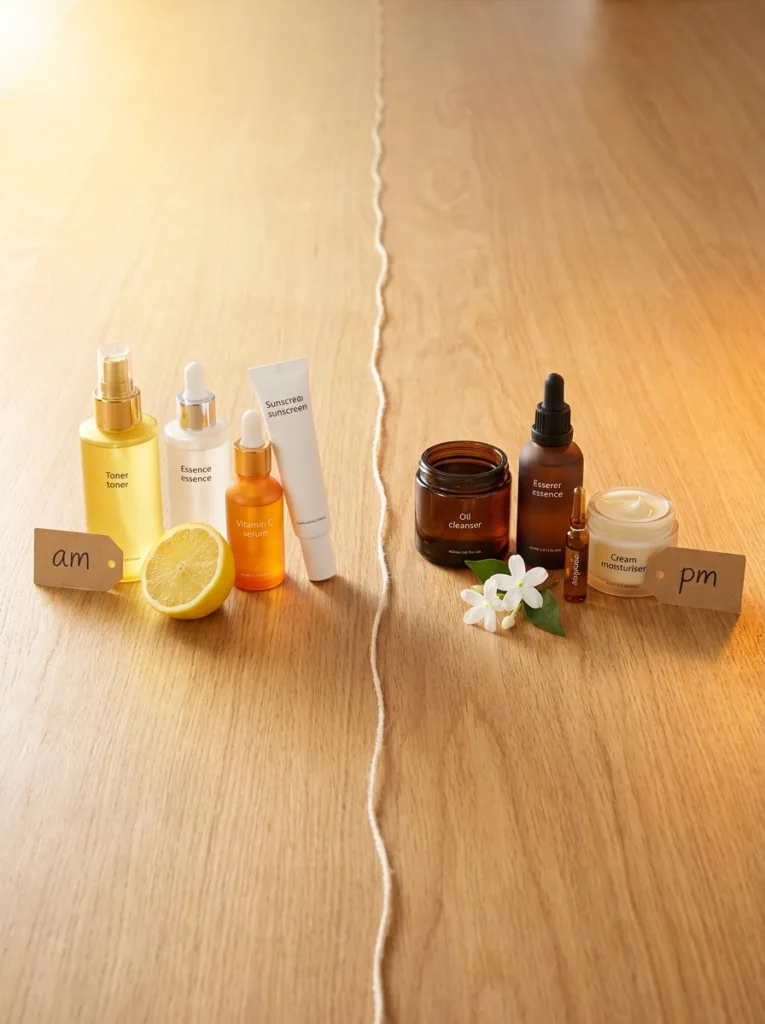
Here is how all five tips come together into a glass skin routine. These Korean skincare steps run in two phases: protection in the morning and repair at night.
| Step | Morning Routine | Evening Routine |
| 1. Cleanse | Gentle water-based cleanser only | Oil cleanser first, then foam/gel cleanser |
| 2. Toner | Pat on hydrating toner | Pat on hydrating toner |
| 3. Essence | Apply and press in | Apply and press in |
| 4. Serum | Brightening or antioxidant serum (e.g., niacinamide, vitamin C) | Repair serum (e.g. snail mucin, PDRN, cica) |
| 5. Eye cream | Lightweight eye cream | Nourishing eye cream |
| 6. Moisturizer | Light gel or fluid moisturizer | Richer cream or sleeping mask |
| 7. SPF | SPF 50+ — non-negotiable | Skip—SPF is daytime only |
| Bonus | — | Sheet mask 1–2× per week (before moisturizer) |
Key rule: In the morning, antioxidants and SPF protect your skin from UV and pollution. At night, richer actives do repair work while your skin regenerates.
Common Korean Skincare Mistakes to Avoid
The right products only get you so far. These habits trip up most people when they first start following K-beauty tips.
- Introducing too many products at once. Adding five new products at the same time makes it impossible to know what is working. Introduce one product at a time, wait two weeks, then add the next.
- Applying products in the wrong order. Always go thinnest to thickest: Cleanser → Toner → Essence → Serum → Eye Cream → Moisturizer → SPF (morning only)
- Skipping the patch test. Even gentle K-beauty formulas can trigger reactions. Dab a small amount behind the ear or on the inner arm and wait 24 hours before putting it on your face.
- Over-exfoliating. Korean routines rarely use physical scrubs. Stick to chemical exfoliants like AHA and BHA, no more than 2 to 3 times per week.
- Expecting fast results. The skin cell cycle runs on a 28-day schedule. Most K-beauty routines take 4 to 8 weeks before you notice real change.
FAQ
What is the basic Korean skincare routine for beginners?
A beginner Korean skincare routine has four steps: double cleanse, tone, moisturize, and apply SPF in the morning. Start there before adding essence, serums, or sheet masks.
Is Korean skincare good for oily skin?
Yes. K-beauty offers many lightweight, water-based formulas suited for oily skin. Look for oil-free essences, niacinamide serums to control sebum, and gel moisturizers rather than cream.
How long does it take to see results from Korean skincare?
Most people notice improvements in skin hydration and texture within 2 to 4 weeks. Visible changes in pigmentation or fine lines typically take 6 to 8 weeks of consistent use.
What is glass skin?
Glass skin is a complexion clear and hydrated enough to reflect light. You get there through layered hydration, consistent double cleansing, and daily SPF.
Conclusion
None of these 5 approved Korean skincare tips require an expensive overhaul. Double cleanse tonight. Add a toner this week. One product at a time. K-beauty produces results because it stacks small, consistent habits rather than chasing dramatic ones. Pick the tip your current routine is missing and start there.
For more skincare tips, please visit VelvetBoard.