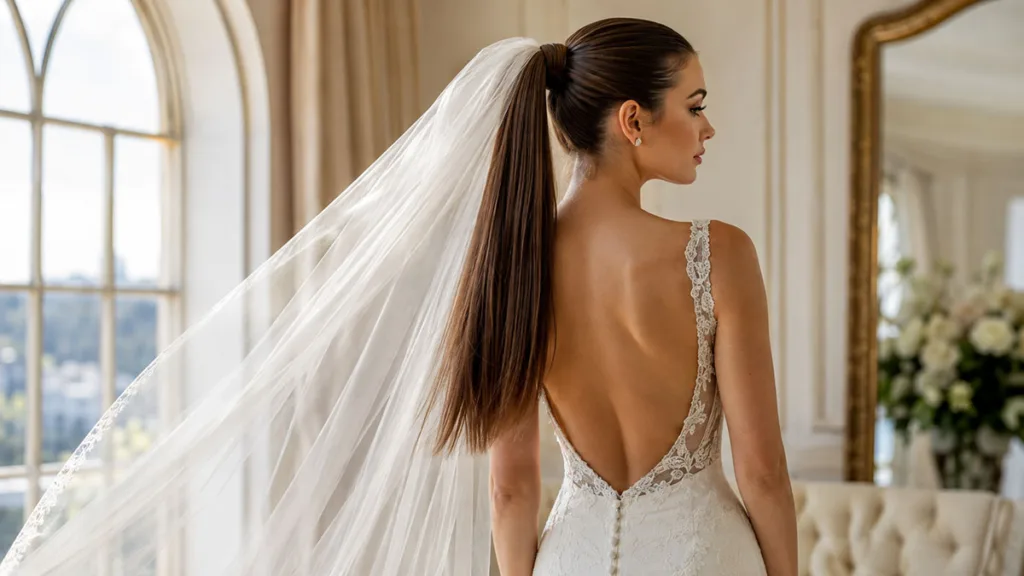
21 Best Cornrow Hairstyles For A Neat, Lasting Look

Want cornrow hairstyles that fit your routine, without guessing about braid weight or upkeep? These 21 options help you compare patterns and finishes before choosing a salon reference. A high ponytail, tucked bun, and loose curls each bring different practical questions. The photo is your starting point; the consultation helps you work out the details.
You might love fine stitch sections but have limited time for installation and removal. Or you might prefer long braids while wanting less weight around your hairline. Those preferences deserve a conversation before the first row begins. A detailed pattern should never require accepting a painful install.
Compare each style’s shape, finishing options, and suggested request for your braider. You will also find preparation questions, cleansing guidance, and removal steps. Save the reference that suits how you want to wear and care for your hair.
Choosing Comfortable Cornrow Hairstyles
Cornrows use an underhand technique to braid close to the scalp. Compare box braids for more movement.
The American Academy of Dermatology warns about tight hairstyles and advises changing painful styles immediately. Tell your braider during installation; do not wait for pain to settle.
Ask for an individual time estimate and itemized quote, including extensions, accessories, and removal.
Before Your Cornrow Appointment
A clear booking request helps your braider assess the work before you arrive. Confirm the salon’s preparation policy alongside your chosen photograph.
Separate Technique, Pattern, And Finish
Feed-in describes how extension hair joins a braid; stitch describes the visible sectioning beside it. All-back, curved, and zigzag describe the paths across your head. A bun or ponytail describes the finish. You can combine these features, so show the photograph instead of relying on one style name.
Confirm Preparation And Supplies
Ask whether washing, detangling, and drying are included or required before arrival. Confirm whether the braider supplies extension hair and which type they recommend. Avoid buying several packs before checking the required length, shade, and quantity. Tell the salon about previous reactions to extension hair or styling products.
Share any concerns about fragile edges, recent breakage, or scalp symptoms before booking. Ask whether your chosen pattern needs modification or postponement. You do not need to straighten your hair unless the braider explains their preparation requirements and you agree.
Ask For A Complete Estimate
Send the desired row size, finished length, pattern, and accessories with your reference. Ask whether the quote includes preparation, extensions, curl finishing, and removal. Confirm the appointment duration, deposit terms, and any extra charges before paying. These details make a salon estimate more useful than a national average.
1. Classic All Back Cornrows

Straight rows run from the hairline toward the nape with parallel parts between them. This simple pattern makes the row size easy to discuss at a consultation. Choose loose ends or a low gathering, depending on your preferred finish. A wig base may need a flatter arrangement than the pictured style.
Best for: Straight rows.
Ask your stylist for: All-back rows; agreed width.
2. Feed In Cornrows

Your braider adds small amounts of extension hair along each row, creating a gradual increase in thickness. The pictured hairline shows that tapered effect. Feed-in describes the technique rather than a guaranteed comfort level. Discuss extension weight and leave fragile edges out of the braid if your braider recommends it.
Best for: Gradual starts.
Ask your stylist for: Gradual feed-in; light extensions.
3. Stitch Cornrows

Stitch cornrows show repeated horizontal sections beside each braid, producing a precise, segmented appearance. Ask to see close-up examples of the braider’s work before booking. This detail depends on careful sectioning and can increase appointment time. Decide how much styling product you want before the braider begins creating the sections.
Best for: Defined sections.
Ask your stylist for: Even stitch sections.
4. Ghana Weaving Cornrows

Ghana weaving often uses added hair to build raised rows that become fuller along the scalp. The pictured style emphasizes substantial braids and visible parting. Discuss the thickness and finished length together, since both affect extension weight. A reference photograph helps clarify the result when salons use different style names.
Best for: Raised rows.
Ask your stylist for: Ghana weaving; agreed thickness.
5. Ghana Weaving Shuku Bun

Rows travel upward and meet in a bun near the crown, leaving the nape exposed. The pictured version uses many curved rows rather than a few thick ones. Ask where the bun will sit and how the ends will be secured. The gathering should feel comfortable when you move your head.
Best for: Crown updos.
Ask your stylist for: Upward rows; crown bun.
6. Four Cornrows

Four substantial rows create a broad, simple pattern, with two rows on either side of a center part. Confirm the total count before booking and show the reference from above when possible. Extension length changes the finished weight. Fewer rows may shorten installation, although hair density and preparation also affect timing.
Best for: Broad sections.
Ask your stylist for: Four rows; center part.
7. Six Cornrows

Six rows offer a narrower pattern than four rows when the same amount of hair is sectioned. Ask for three rows on each side if symmetry matters to you. The front photograph shows three rows on each side, so all six braids are countable at a glance. Agree on the final count and width before braiding.
Best for: Even spacing.
Ask your stylist for: Six evenly spaced rows.
8. Two Cornrows With A Center Part
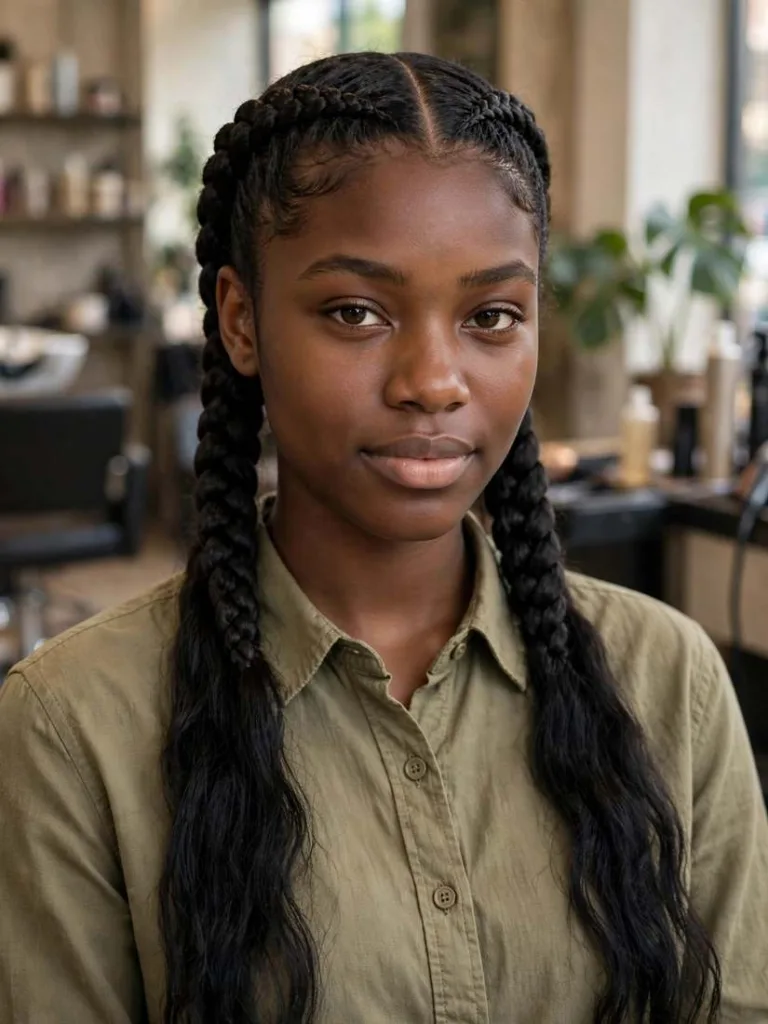
One braid on each side follows a center part, creating a simple paired silhouette. The pictured ends include loose hair below the braids. Specify whether you want that finish or fully braided lengths. Two rows still require comfortable tension, particularly where the braider gathers hair near the temples and front hairline.
Best for: Paired braids.
Ask your stylist for: Two rows; chosen end finish.
9. Jumbo Cornrows

Jumbo cornrows use broad sections and thick braids for a pronounced outline. Added hair can increase their weight, so large size alone does not establish comfort. Choose the length alongside the row width during consultation. Ask how the braider will secure the ends and how you can clean the exposed scalp.
Best for: Large-scale rows.
Ask your stylist for: Jumbo rows; manageable weight.
10. Small Fine Cornrows

Fine cornrows place many narrow braids close together, creating a more detailed surface pattern. Installation and removal may take longer than a comparable larger-row style. Ask for both estimates before booking. Narrow rows do not guarantee longer wear, and visible neatness should never outweigh scalp comfort or signs of breakage.
Best for: Fine detail.
Ask your stylist for: Fine rows; gentle tension.
11. Zigzag Cornrows

The pictured braids run straight back in parallel rows, separated by zigzag part lines. The sharp angles sit in the parts, not in the braids themselves. Show the exact version you want and ask the braider to map it first. The corners should come from sectioning rather than extra pulling on hair.
Best for: Angular patterns.
Ask your stylist for: Zigzag part lines.
12. Curved Cornrows

Curved rows sweep around the head and gather low, creating a flowing side profile. The pictured arrangement finishes near the nape rather than clearly behind one ear. Discuss that gathering point with your braider. Curves change the visual direction of the style without requiring a particular face shape or tighter tension.
Best for: Curved lines.
Ask your stylist for: Curved rows; low gathering.
13. Side Part Cornrows

An off-center part gives the rows an asymmetric starting point and shifts attention toward one side. Choose its position using your reference and usual hair preference. The narrower side can use smaller sections without tighter braiding. Confirm the part in a mirror before installation, since moving it afterward requires reworking rows.
Best for: Asymmetric parts.
Ask your stylist for: Side part; agreed position.
14. Cornrow Ponytail

Rows travel toward a high gathering point, with braided lengths falling down the back. A wrapped base can conceal the fastening. The scalp section stays lifted, but a long tail may still touch your neck. Choose a lighter length if needed and check that the base does not pull when moving.
Best for: High gatherings.
Ask your stylist for: High ponytail; comfortable base.
15. Cornrow Low Bun

Rows lead toward a bun at the nape, with the ends folded and secured. This finish can suit an outfit with an open neckline or a formal collar. Consider how the bun rests against clothing and headrests. Ask the braider to place fastenings where they feel secure without pressing into skin.
Best for: Tucked ends.
Ask your stylist for: Low bun; flat fastening.
16. Half Cornrows With Loose Curls

Cornrows organize the front section while loose curls add volume at the back. Specify where the braided section should stop and whether the curls use natural hair or extensions. Maintenance depends on that choice. Follow the fiber’s care instructions, since water, heat, and styling products affect different extension materials in different ways.
Best for: Mixed textures.
Ask your stylist for: Front rows; loose back curls.
17. Cornrows With Beads

Beads decorate the free-hanging braid ends and can change the length and weight of the finished style. Choose lightweight pieces with smooth openings and secure fastenings. Discuss removal before installation so washing stays practical. Our braids with beads guide offers more ideas for placement, sizing, and accessory combinations.
Best for: Decorated ends.
Ask your stylist for: Lightweight end beads.
18. Cornrows With Gold Cuffs
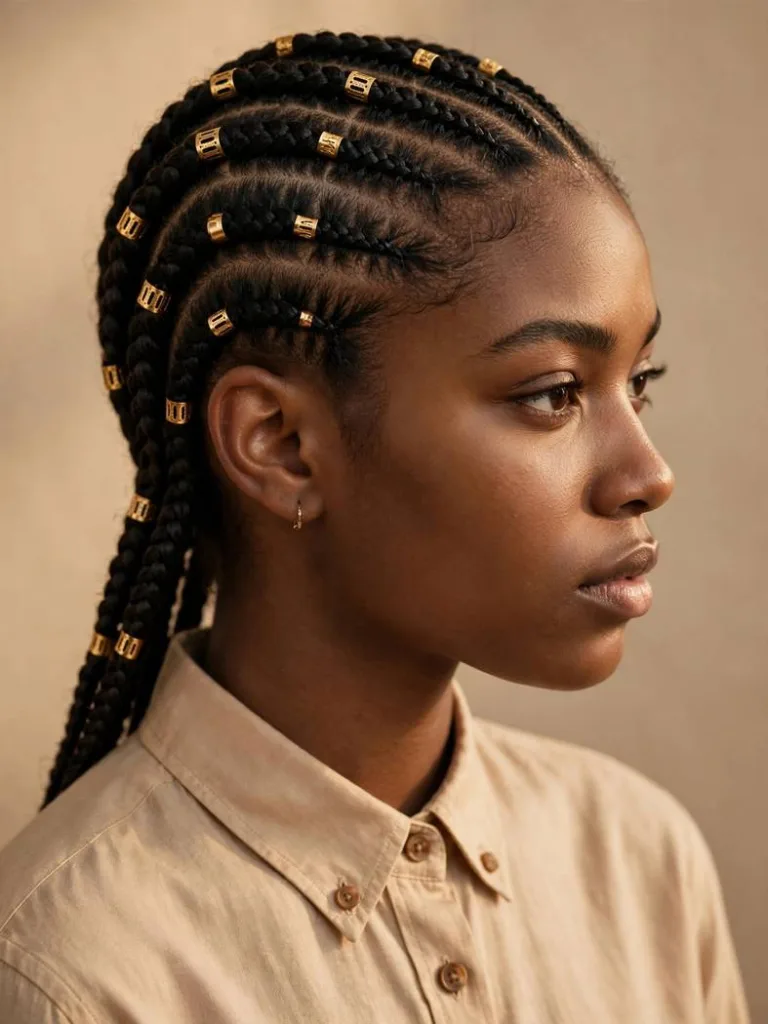
Gold cuffs attach along the braids instead of collecting at the ends. The photograph uses several scattered across the visible rows, rather than a fixed count per side. Agree on the placement after braiding. Choose smooth pieces that fit without pinching hair, and remove accessories that snag clothing or bedding.
Best for: Removable accents.
Ask your stylist for: Scattered gold cuffs.
19. Cornrows With Curly Ends

The braids continue beyond the scalp before opening into loose curled ends. This differs from leaving the entire back section unbraided. Decide where the curls should begin and whether their length uses natural or added hair. Ask for care directions suited to that material, including whether it tolerates water and heat.
Best for: Curled finishes.
Ask your stylist for: Braided lengths; curly tips.
20. Freestyle Pattern Cornrows

Freestyle designs combine curved paths, angular sections, or varied widths in one arrangement. The pictured pattern uses intersecting visual directions rather than simple parallel rows. Bring views showing the parts you like. Agree on a plan and price before braiding, since intricate sectioning can change the time required for the appointment.
Best for: Custom patterns.
Ask your stylist for: Mapped freestyle design.
21. Flat Cornrows As A Wig Base
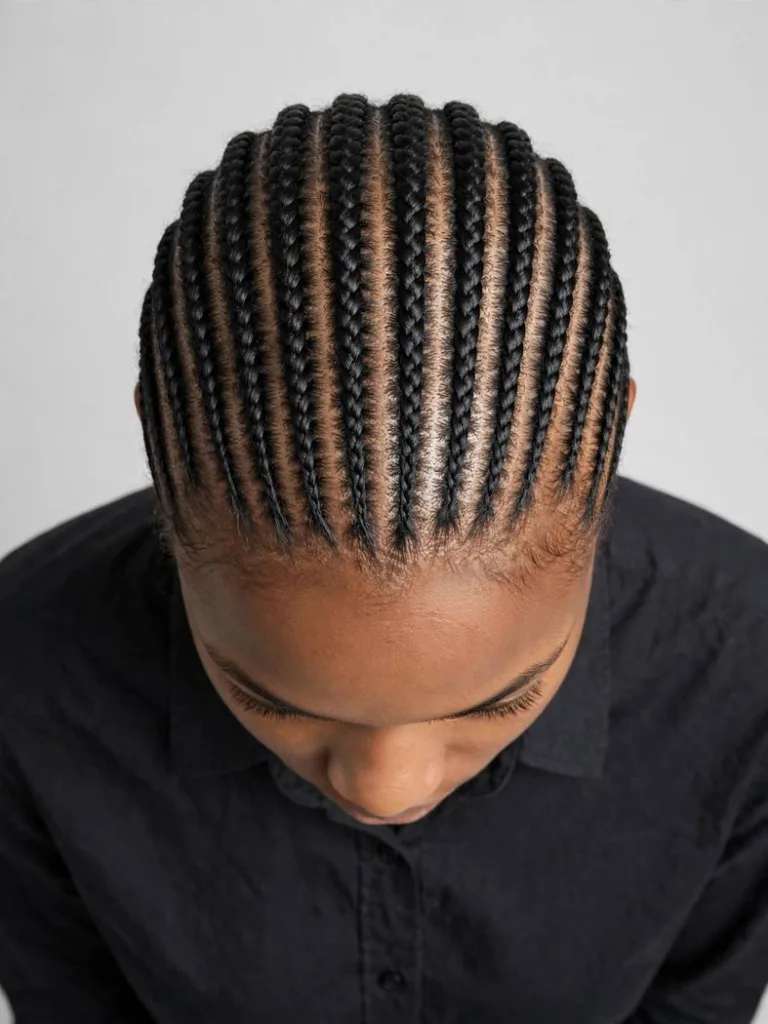
A wig base uses a low profile that suits the cap and intended wig placement. The pictured base contains more than ten narrow rows; another head may need fewer. Discuss how the ends will be tucked without creating pressure points. Keep scalp access and drying needs in mind when choosing the arrangement.
Best for: Wig foundations.
Ask your stylist for: Flat base fitted to cap.
Care And Removal
Your scalp and any added hair need compatible care between appointments. Follow product labels and extension instructions, adjusting the routine when discomfort or buildup appears.
Clean The Scalp Without Pulling
Choose washing frequency around your scalp, activity, and product use. Work gently along the exposed parts with your fingertips, avoiding nails or hard scrubbing. Let water reach the scalp and rinse away cleanser thoroughly. Dilute shampoo only when its instructions allow it.
Press out excess water with a towel instead of twisting the braids. Let the roots and braided lengths dry before covering them with a bonnet or wig. Follow extension instructions when choosing heat settings. If thorough cleaning becomes difficult, discuss earlier removal with your braider.
Choose Products For The Actual Hair
Scalp oil is optional and does not replace washing. Apply products sparingly so you can notice buildup or irritation. Stop products that sting or cause discomfort. Loose natural curls, human-hair extensions, and synthetic fibers may require different cleansing and detangling methods.
Follow the supplier’s directions before wetting, heating, or applying conditioner to extension curls. Remove detachable cuffs that catch during cleansing. Ask your braider how fixed beads are secured before attempting removal. Keep a loose satin or silk covering comfortable around the hairline.
Recognize When To Change The Style
The AAD identifies pain, scalp stinging, crusting, and visibly lifted scalp sections as reasons to change a hairstyle immediately. Do not tighten the front rows to disguise regrowth when the hairline feels stressed. Broken hairs, a receding hairline, or thinning patches warrant dermatological advice.
In The List’s cornrow guide, stylist Shannon Currie suggests two to four weeks, depending on care. Use that as a planning estimate rather than a deadline to endure discomfort. Scalp comfort and hair condition take priority over neatness.
Plan A Patient Take-Down
Remove accessories first, following the fastening method your braider used. Unravel each braid from the end toward the scalp in small sections. Keep released hair separate so it does not tangle with unfinished braids. Book professional removal if you cannot reach or unravel the pattern without pulling.
Avoid cutting extensions unless you can clearly identify where your natural hair ends. After unbraiding, detangle gently in manageable sections using a suitable product and your usual method. Cleanse and condition according to your hair’s needs. Check your scalp before deciding on another braided style.
FAQs
Discuss timing and suitability at consultation. Individual needs vary.
How Long Do Cornrow Hairstyles Last?
Wear varies with hair, pattern, and care. Plan removal with your braider and change a painful style immediately.
How Much Do Cornrows Cost?
Ask your salon for a quote covering labor, hair, and accessories. Complexity, location, and length affect the total.
Should Cornrows Hurt During Installation?
Pain indicates excessive tension, according to the AAD. Tell your braider immediately so the style can be loosened or changed.
Can I Wash My Hair In Cornrows?
Yes, choose products suited to your scalp and any extensions. Rinse thoroughly and dry the rows before covering them.
How Many Rows Should I Choose?
Choose the visual scale with your braider, considering density and extension weight. No single row count guarantees comfort.
How Long Must My Hair Be?
Required length depends on texture, condition, pattern, and the braider’s technique. Request a consultation before booking short or fragile hair.
Final Thoughts
Photographs of your chosen cornrow hairstyles help your braider understand the pattern when salons use different style names. Consider how that pattern fits your hair, preferred length, and care time. A simpler version may be easier to clean and manage between your salon appointments. Before booking, send one chosen photograph with your preferred finish to request a consultation covering comfort, cost, and removal.