Lip Care Routine: Gentle Steps For Soft Lips That Last
Do your lips still feel tight and flaky after you apply balm? A simple lip care routine starts with avoiding irritating products, moisturizing regularly, and protecting your lips outdoors. Scrubbing away flakes or adding several treatments can make an already sore surface harder to care for.
You can keep the routine simple with a tolerated lip moisturizer and an SPF lip balm for outdoor use. White petroleum jelly is one option when lips feel very dry. A separate serum and overnight mask are not required. Your lips may need consistent care over several weeks rather than one intensive evening.
The five steps below cover gentle cleansing, reducing friction, moisturizing, sun protection, and bedtime care. They also explain which symptoms deserve medical attention instead of another product.
Why Lips Become Dry And Flaky
Lips have no oil glands and lose water faster than the surrounding facial skin. Cold weather, dry indoor air, and sun exposure can worsen chapping. Repeated licking adds irritation even though it briefly wets the surface.
Flaking does not automatically mean you need to remove dead skin. It can accompany irritation or an impaired barrier. Persistent soreness deserves attention rather than stronger exfoliation.
Moisture Loss And Irritation Can Overlap
A balm may help reduce water loss, but an irritating formula can keep symptoms going. Pay attention to how your lips feel after application. Burning or stinging is a reason to stop that product.
Dryness Has More Than One Cause
Weather is only one possible contributor. Products touching the lips can also cause irritation or allergy. Recurring cracks at the mouth corners may need assessment, especially when a basic routine does not help.
Step 1: Remove Residue And Lipstick Gently
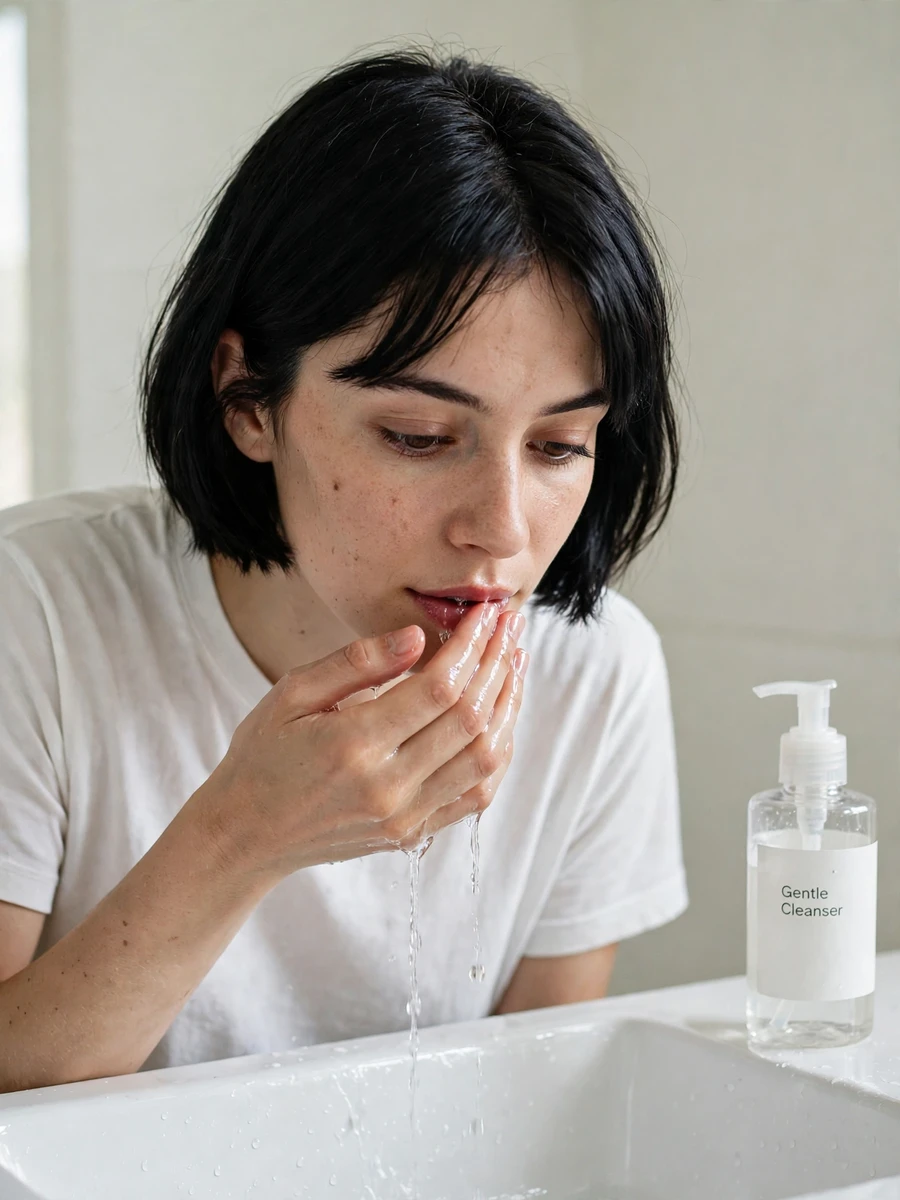
Remove food residue or makeup when needed, especially before bed. You do not need a separate lip cleanser or an extra washing session whenever you apply balm. Avoid using exfoliating face washes or acne treatments on your lips.
Use lukewarm water for a gentle rinse. Pat away excess water with a soft towel, without rubbing until the surface feels tight.
Choose A Suitable Makeup Remover
For lipstick that resists water, choose a remover labeled as suitable for the lip area. Follow its directions for application and rinsing. Press lightly with a soft pad to loosen color instead of repeatedly scrubbing it away.
Keep Cleansing Brief
Clean hands and light pressure are enough for this step. Persistent color is not a reason to scrape the lip surface. If a lipstick repeatedly leaves your lips sore, reduce its use or try a better-tolerated formula.
Step 2: Leave Flakes Alone And Reduce Friction
Skip lip scrubs while your lips are dry, cracked, or sore. Do not peel attached skin with your fingers or bite it away. A smooth surface is not worth creating another tender patch.
In Ohio State’s dermatologist-authored lip-care guidance, scrubs are discouraged because they can worsen irritation. Exfoliation is not a required step in this routine.
Blot Instead Of Rubbing
A soft cloth can blot water after cleansing. It should not become a tool for polishing flakes off. Leave the skin in place and apply a tolerated moisturizer rather than repeatedly checking whether the flakes will lift.
Notice Licking And Picking Habits
If you catch yourself licking dry lips, reach for your tolerated balm instead. Keeping it nearby can make that choice easier. Avoid holding pens or paperclips between your lips, particularly when the skin is already irritated.

Step 3: Apply A Tolerated Lip Moisturizer
Choose one lip moisturizer or ointment that feels comfortable. A separate hydrating serum followed by another sealing product is not necessary. Facial products may contain ingredients unsuitable for sore lips, even if they work elsewhere.
Apply your chosen product after gentle cleansing and whenever your lips feel dry. Light dampness after rinsing is fine; visible droplets and repeated wetting are unnecessary.
Keep The Application Simple
Use the product as directed over the lip surface. You do not need timed pauses between several layers. Avoid adding oils, masks, and active treatments together, since identifying the source of discomfort becomes harder.
Choose An Ointment For Very Dry Lips
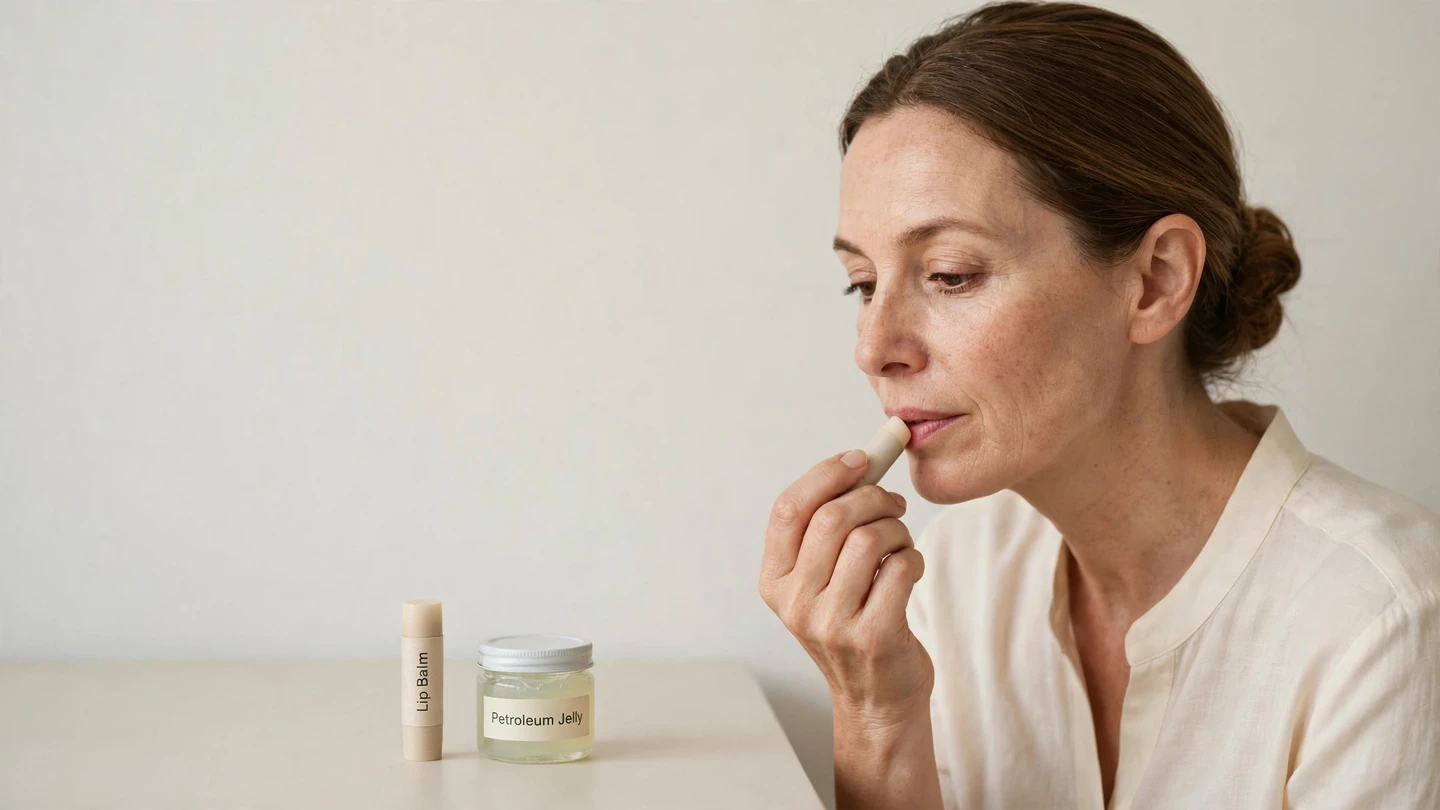
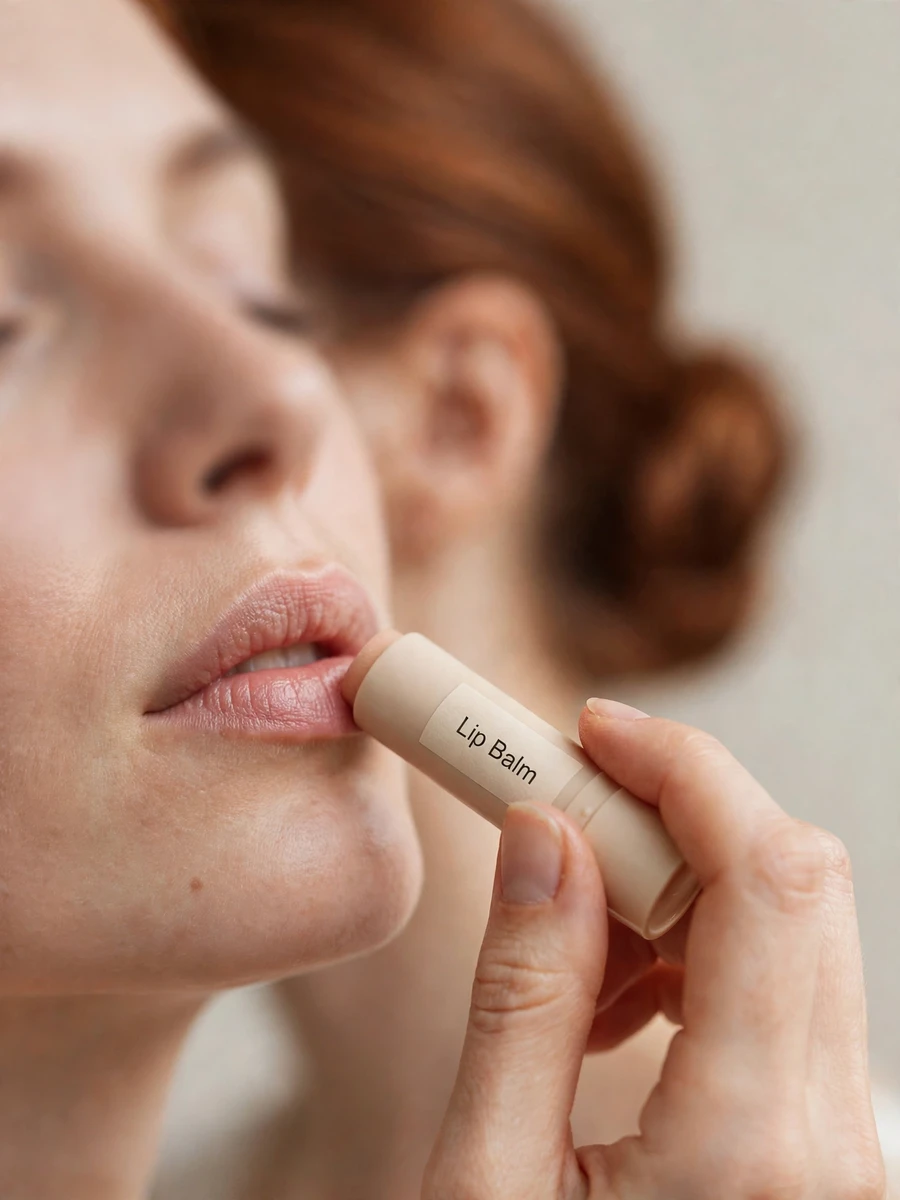
White petroleum jelly is one option for very dry or cracked lips. An ointment helps reduce water loss. A comfortable balm can also fit your routine, but stop any formula that causes burning, itching, or persistent discomfort.
Step 4: Use SPF Lip Balm Before Going Outdoors
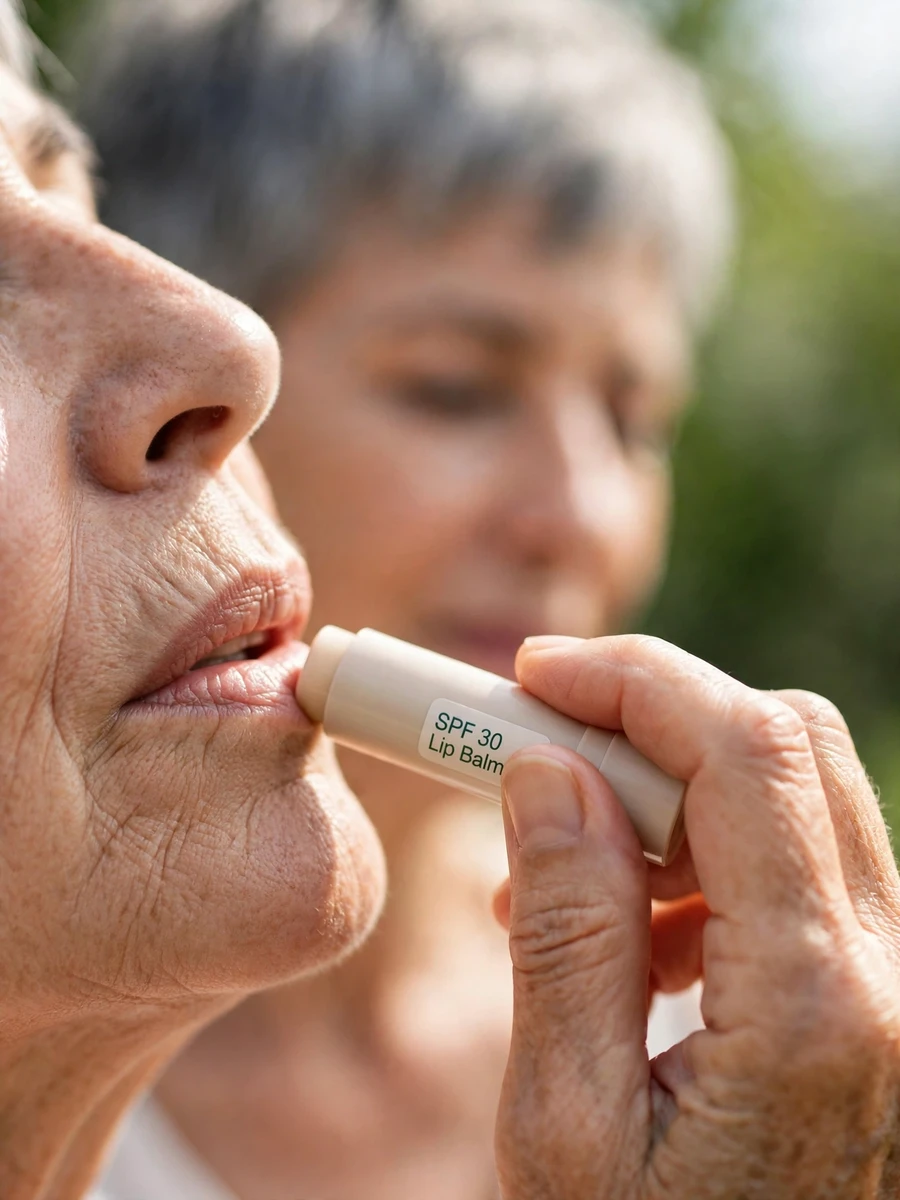
Use a non-irritating lip balm with SPF 30 or higher before outdoor exposure, including in winter. Check the label for application instructions. A plain moisturizer without SPF does not provide the same sun protection.
Zinc oxide or titanium dioxide are options the AAD recommends for chapped lips. Choose a formula you tolerate. A familiar scent or cooling sensation does not establish protection.
Reapply During Outdoor Time
Reapply at least every two hours while outdoors. Follow the label after swimming or sweating, and refresh after eating or drinking as needed. Keep the SPF product available during outings rather than relying on the morning application.
Keep Daytime Protection Consistent
Use SPF lip balm for outdoor touch-ups. Plain balm can moisturize during indoor time, but it does not replace sunscreen when you head outside. Check whether your bag contains the SPF formula before leaving for a walk.
Step 5: Moisturize Before Bed
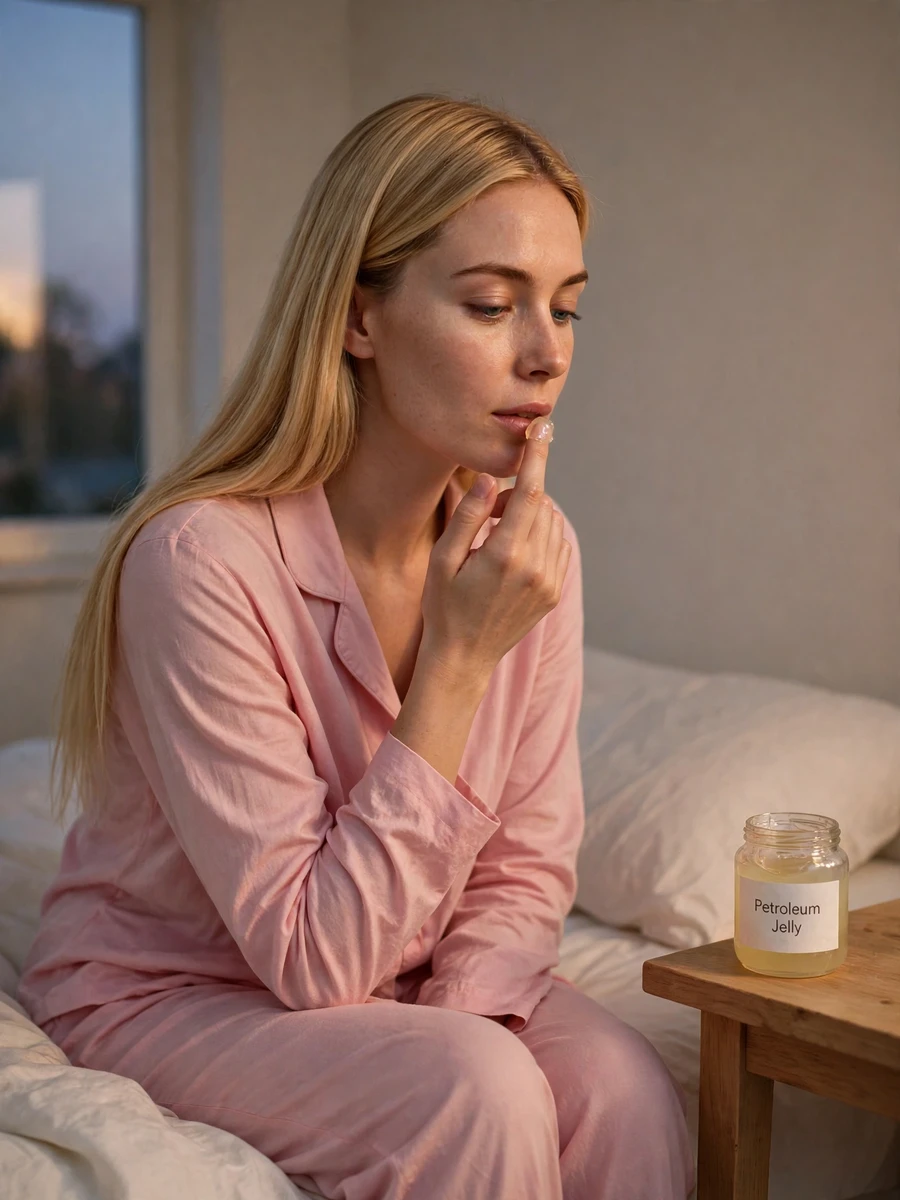
Apply your tolerated balm or ointment before bed. A thicker ointment can be useful for very dry lips, without requiring a separate overnight mask. This is a convenient time for application, not a guarantee of overnight repair.
Your lips may still feel dry in the morning. Continue gentle care rather than wiping away flakes or adding stronger products after one night.
Use A Comfortable Ointment Layer
With clean hands, apply enough ointment to cover the lips without rubbing. Follow product directions and avoid sharing lip products. Keep the container closed between uses so the next application starts with a clean, usable product.
Consider A Humidifier In Dry Rooms
A bedroom humidifier may help when indoor air is dry, especially if you breathe through your mouth at night. Follow its placement and cleaning instructions. Avoid directing mist onto bedding or allowing moisture to collect on nearby surfaces.
Choose Ingredients Without Overcomplicating The Routine
The AAD guidance for dry, chapped lips lists helpful ingredients and potential irritants. Use that information to compare products rather than buy a treatment for each ingredient.
A formula can contain a useful moisturizer and still include something you do not tolerate. Price or a natural label cannot guarantee comfort.
Helpful Ingredients To Recognize
Examples include petrolatum, ceramides, dimethicone, mineral oil, and shea butter. You do not need all of them in one tube. Choose a suitable lip product and judge your response instead of counting ingredients.
Ingredients To Avoid While Lips Are Chapped
The AAD advises avoiding fragrance, menthol, camphor, and irritating flavorings during chapping. Its list also includes lanolin and salicylic acid. Check the full guidance when comparing labels, and avoid ingredients you already know cause a reaction.
Make The Routine Fit Your Day
Organize lip care around existing habits rather than a rigid five-product sequence. Morning outdoor protection and bedtime moisturizing provide useful reminders. Reapply during the day according to dryness and the SPF product directions.
Our basic skincare routine guide covers the rest of facial care. Lip care can stay simple without matching every face-care step.
A Practical Daily Example
Before a morning walk, apply SPF lip balm. After lunch, refresh the SPF if you will be outdoors again. At bedtime, remove lipstick gently and apply your tolerated ointment. There is no exfoliation slot to complete.
Keep New Products Separate
Introduce one new lip product at a time so changes are easier to trace. Our home skincare product-testing guide explains the limits of small-area testing. A clear test does not guarantee that your lips will tolerate a formula.
When Chapped Lips Need Medical Advice
If gentle care does not improve chapping within two to three weeks, see a dermatologist. Do not keep adding treatments to cover persistent symptoms. An assessment can help identify causes beyond ordinary weather-related dryness.
Seek advice sooner for significant pain, worsening swelling, or a sore that does not heal. Sudden lip or tongue swelling with breathing difficulty requires emergency help.
Track Symptoms And Products
Note when the problem began and whether it affects the whole lip or a particular area. Save product names and ingredient lists. Include lipstick, toothpaste, and other items that repeatedly touch the affected skin.
Avoid Diagnosing From Appearance Alone
Dryness and cracking can have several causes. A photo or response to one balm cannot establish a diagnosis. A clinician may review your exposures and decide whether treatment or allergy investigation is appropriate.
Frequently Asked Questions
Dry lips can raise questions about products and timing. These answers explain the basic routine without adding more treatments.
What Is The Best Lip Care Routine Order?
Remove residue or lipstick gently when needed, then apply a tolerated moisturizer. Use SPF 30 or higher outdoors and moisturize before bed. Exfoliation is not required.
How Often Should I Apply Lip Balm?
Apply a tolerated moisturizer several times daily and before bed, according to dryness. Reapply SPF lip balm at least every two hours outdoors and follow its label after water exposure.
Which Ingredients Can Help Chapped Lips?
Petrolatum, ceramides, and dimethicone are examples of useful ingredients. Choose a tolerated lip formula; one helpful ingredient does not guarantee that the whole product will suit you.
Why Does My Lip Balm Tingle?
Burning or tingling on chapped lips can indicate irritation. Stop that product rather than treating discomfort as a sign it works. Seek advice for persistent symptoms.
Can I Exfoliate Cracked Lips With A Scrub?
Avoid scrubbing cracked or sore lips. Leave flakes alone and focus on gentle moisturizing. Persistent peeling deserves assessment rather than more exfoliation.
Do Lips Need Sunscreen In Winter?
Yes. Apply SPF 30 or higher before outdoor exposure, including winter outings. Reapply during outdoor time according to the product directions.
Choose One Small Change Tonight
A comfortable routine should be easy to repeat without checking off extra products. The most useful change may be removing a balm that stings or remembering sunscreen before a walk. Your response matters more than a promise on the packaging, and ongoing soreness deserves professional advice.
Check the lip product you use most often tonight, including its directions and whether it feels comfortable on application.