Aloe Vera for Skin: Soothe and Hydrate Skin Safely
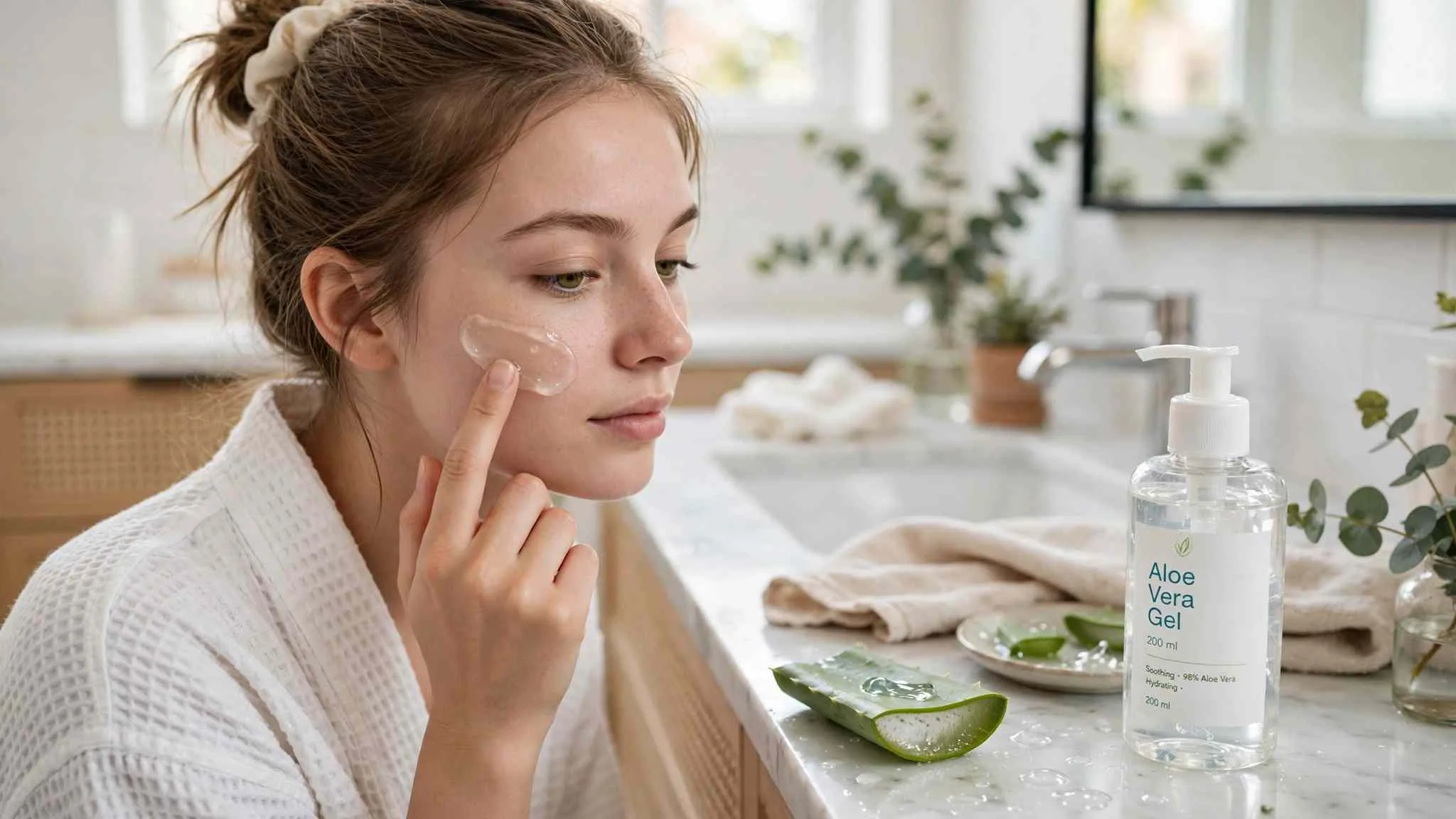
Using aloe vera for skin care can cool and hydrate your face without a heavy cream feel. The clear gel feels light on contact. It suits hot days and flushed cheeks well. Yet the leaf hides one sharp catch. Yellow sap under the skin can sting. This guide separates safe gel use from hype.
Most posts treat fresh gel and bottled gel as twins. They differ in strength, shelf life, and risk. Fresh gel has no preservative system. Bottled gel follows a set formula instead. Prep steps decide which result you get. Drain, rinse, and patch test every time.
Here is the direct answer on aloe vera for skin. Use clear inner gel on clean skin as a thin layer. Wear it as a mask for 10 to 20 minutes. Or seal a thin layer under moisturizer at night. Stop at once if skin burns, itches, or shows a rash.
What Aloe Vera Does For Skin
The gel inside an aloe vera leaf holds mostly water. Polysaccharides in the gel help keep that water on the skin. The layer feels cool as it dries. Skin often feels calmer and less tight afterward. Those effects explain the lasting appeal of aloe vera for skin care.
It Cools And Adds Light Water
Aloe vera gel works as a light humectant layer. It adds water without oil or grease. Oily and combination skin often tolerates it well. Dry skin may need cream sealed over it. Gel alone can feel tight as it dries. Pairing it with moisturizer prevents that tight finish.
It Soothes Mild Sunburn Discomfort
Cool gel can ease heat on mild sunburn. The American Academy of Dermatology lists aloe moisturizers among home sunburn soothers. Our summary of its skin care basics guidance matches that modest role. Aloe calms surface discomfort for many readers. It cannot undo sun damage under the surface. Blisters, swelling, or fever need medical care, not gel.
It Sits Beside Acne Care, Not Above It
Gel can calm redness around breakouts for some readers. It adds water without a heavy oil film. That light feel suits acne-prone skin in humid months. Aloe does not clear pores on its own. Keep proven acne steps in place first. Our clogged pores guide explains pore care in depth.
Fresh Leaf Versus Bottled Gel
Choosing a form shapes your whole aloe vera for your skin routine. Fresh aloe vera gel comes straight from a cut leaf. Bottled gel comes processed, preserved, and labelled. Each form has clear trade-offs worth weighing. Neither form wins on every point.
Fresh Gel Is Strong But Unsteady
A fresh leaf gives gel at full natural strength. Strength varies by leaf, season, and plant age. No preservative guards the gel after cutting. Bacteria can grow in stored fresh gel. Use fresh gel soon after you scoop it. Clean hands and tools matter every time.
Bottled Gel Is Steady And Stored Well
Makers process bottled gel to a set standard. Most makers filter out the yellow aloe latex. Preservatives keep the gel safe for months. Labels list strength and added ingredients clearly. Readers using aloe vera for face care should check labels closely. Look for added fragrance and drying alcohol. Both extras can irritate sensitive facial skin.
The Yellow Latex Sets Them Apart
Yellow sap sits between rind and clear gel. That sap holds aloin, a known skin irritant. It can trigger redness, itching, or burning. Fresh prep must drain it away first. Bottled gel usually has it filtered out. This single step drives most fresh-leaf reactions.
How To Prepare Fresh Aloe Vera Gel
Safe prep turns a raw leaf into usable fresh aloe vera gel. Four steps protect your face from sap and germs. Work slowly with clean tools throughout. Never rush the drain step below.
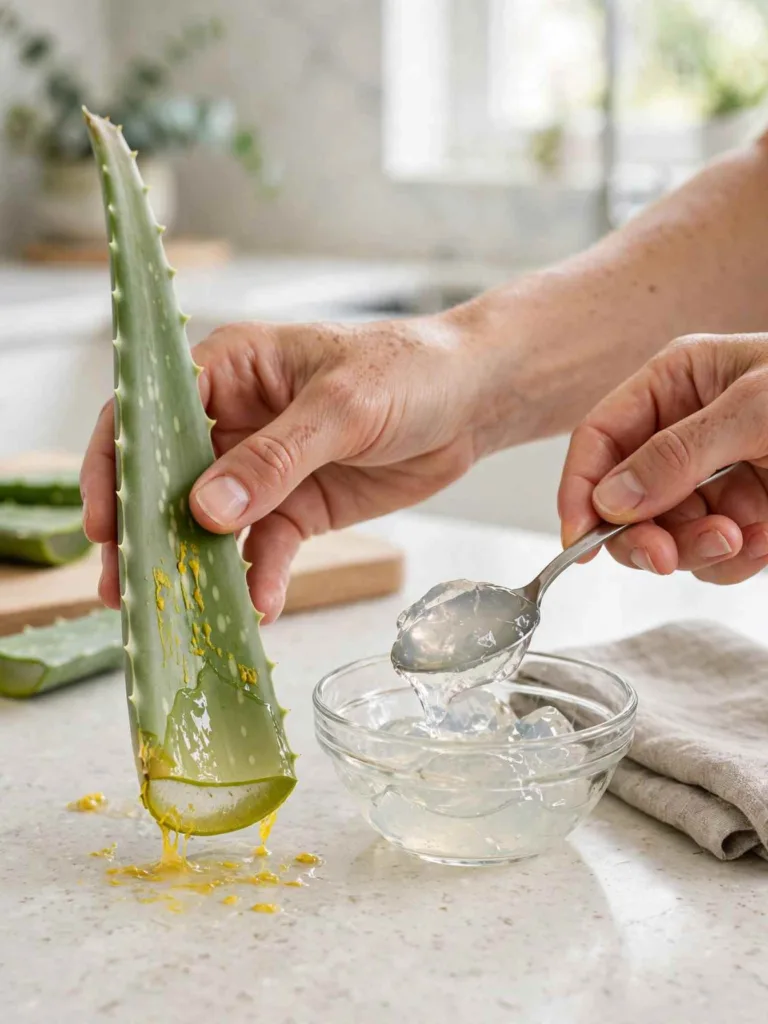
Step One: Pick And Wash A Plump Leaf
Choose a thick outer leaf near the base. Cut it close to the stem cleanly. Wash the leaf under cool running water. Set it on a clean board afterward. Dirt on the rind can reach the gel. A clean start keeps the gel clean.
Step Two: Drain The Yellow Sap Fully
Stand the cut leaf upright in a glass. Leave it for 10 to 15 minutes. Yellow sap will drip from the cut end. Throw that sap away without touching your face. Rinse the leaf once more after draining. Never apply yellow sap to your face.
Step Three: Scoop Only The Clear Gel
Trim the spiky edges off the leaf. Slice the top rind away with care. Scoop the clear gel out with a clean spoon. Leave green rind and yellow traces behind. Blend the gel smooth if lumps remain. Use it the same day for best results.
Step Four: Patch Test Before Face Use
Dab a small amount on your inner arm. Wait 24 hours before any face use. Watch for redness, itching, bumps, or burning. A clear test lowers risk for most readers. It cannot promise a reaction-free face application. Test each new leaf batch separately too.
How To Use Aloe Vera For Skin Each Day
Daily use of aloe vera for skin care stays simple. Clean skin takes gel better than dirty skin. Our guide on how to wash your face properly covers wash steps in depth. Thin layers beat thick, sticky coats here. Three uses cover most reader needs well.
As A Thin Layer Under Moisturizer
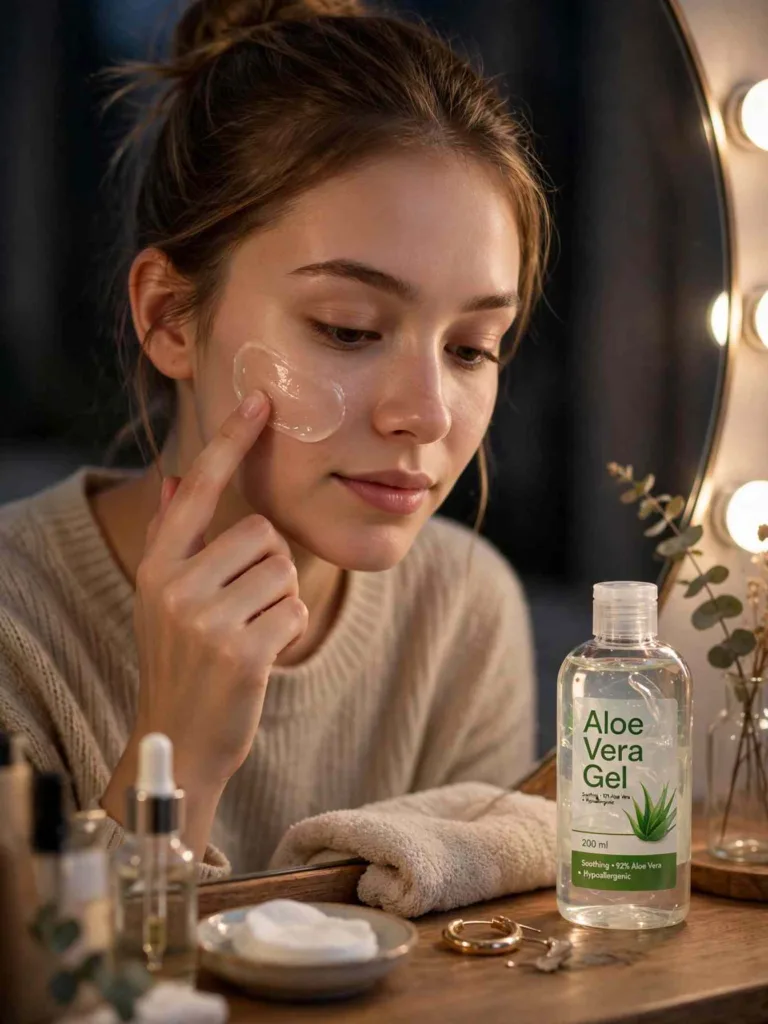
Spread a pea-sized amount over clean, damp skin. Let the gel settle for one minute. Add moisturizer over it to seal the water. This order suits morning and night routines. Using aloe vera for face care this way feels light. Skin prone to grease often prefers this order.
As An Aloe Vera Face Mask
A thicker coat works as an aloe vera face mask. Spread gel evenly and set a timer. Wear it for 10 to 20 minutes only. Rinse with lukewarm water and pat dry. Add moisturizer while skin stays damp. Our DIY face mask guide pairs aloe with other gentle staples.
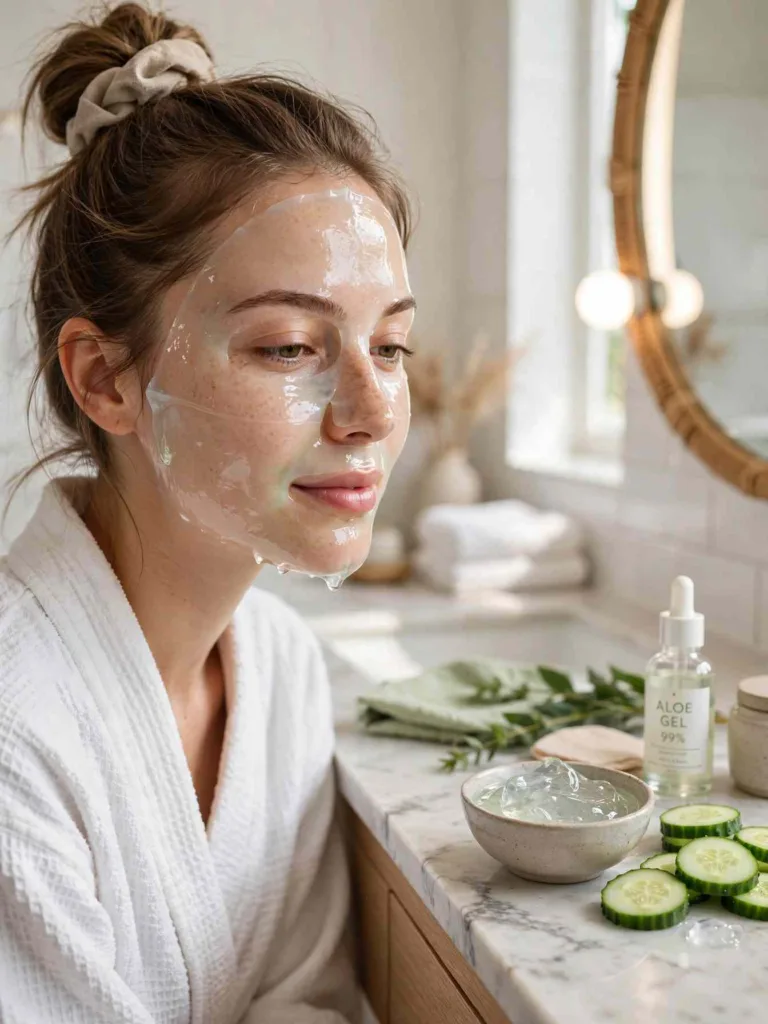
Aloe Vera Overnight On Face: Start Short
Leaving aloe vera overnight on face skin suits some readers. Start with a one-hour evening wear first. Move to overnight use after two calm trials. Use a very thin layer under moisturizer. Thick coats can dry tight and flake. Wash it off in the morning if skin feels tight.
Limits Every Reader Should Know
Honest limits keep aloe vera for skin care safe. The National Center for Complementary and Integrative Health gives a modest verdict. Its NCCIH aloe vera safety summary notes topical gel is generally well tolerated. It also records occasional burning, itching, and rash. Evidence for most other claims stays limited.
Aloe Is Not Sunscreen Or A Cure
Gel offers no proven sun protection at all. Wear broad-spectrum SPF 30 outdoors every day. Aloe cannot clear acne as a sole treatment. It cannot erase dark spots or wrinkles alone. Treat it as a soothing support step. Core routine steps still do the heavy work.
Skip Broken Skin And Severe Burns
Keep gel off cuts, open sores, and infections. Severe burns need prompt medical care instead. Blistered sunburn also needs care beyond gel. Stop use if a rash spreads or swells. Seek care if breathing feels hard after use. Allergy to aloe is uncommon but real.
Oral Aloe Is A Different Topic
This guide covers gel on skin only. Drinking aloe juice or latex carries other risks. Oral latex can cause cramps and diarrhea. It can also interact with some medicines. Never swap a skin gel for a drink. Ask a clinician before any oral use.
Mistakes That Cause Most Reactions
Most reactions trace back to five fixable habits. Each habit below skips a safety step. Each fix takes under a minute. Safe aloe vera for skin habits prevents most of them. Read this list before your first leaf.
Skipping The Drain And Patch Test
Undrained sap is the top reaction cause. A skipped patch test is the second cause. Both steps feel slow on busy days. Both steps protect weeks of skin comfort. Build them into prep as fixed rules. Rules beat memory on tired evenings.
Storing Fresh Gel For Many Days
Fresh gel carries no preservative protection. Fridge storage slows spoilage but cannot stop it. Discard fresh gel after one week at most. Throw it out sooner if the smell changes. Off-color or a sour smell means discard it. Make small batches to waste less gel.
Layering Gel Over Dirty Skin
Gel seals whatever sits on skin already. Dirt and sunscreen can sit trapped under it. Wash with a gentle cleanser before applying gel. Pat skin damp rather than bone dry. Clean skin also absorbs gel more evenly. Even layers dry without sticky patches.
FAQs
Can I Use Aloe Vera For Face Care Every Day?
Yes, most readers can use a thin gel layer daily. Start once daily and watch for dryness or itching. Add moisturizer over the gel each time. Stop if redness or a rash appears.
Is Fresh Aloe Vera Gel Better Than Bottled Gel?
Fresh gel can feel stronger, but strength varies by leaf. Bottled gel is filtered, preserved, and more consistent. Both can soothe skin when used with care. Choice depends on time, storage, and skin sensitivity.
Can I Leave Aloe Vera Overnight On Face Skin?
Many readers can, after short evening trials, go well. Use a thin layer sealed under moisturizer. Wash it off if skin feels tight by morning. Skip overnight use on broken or rash-prone skin.
Does Aloe Vera For Skin Help With Acne?
Aloe can calm redness around breakouts for some readers. It does not clear pores or stop new breakouts alone. Keep it beside proven acne care, not in place of it. See a dermatologist for severe acne.
Why Does Fresh Gel Sometimes Sting My Skin?
Yellow aloin sap is the common cause of stinging. Poorly drained leaves leave sap mixed into clear gel. Germs in stored gel can also irritate skin. Drain fully, patch test, and use gel fresh.
Can Aloe Vera Replace My Moisturizer?
Gel alone often dries tight on dry skin types. It adds water but seals in very little. Most readers still need moisturizer over the gel. Oily skin in humid weather may manage gel alone.
How Long Can I Store Fresh Aloe Vera Gel?
Store fresh gel in a clean, sealed fridge container. Use it within one week and check it daily. Discard it if there is any sour smell or color change. Never store fresh gel at room temperature overnight.
Final Thoughts
Aloe vera for skin care works best as a calm, light step. Prep fresh leaves with care every time. Drain the yellow sap before scooping any gel. Patch test before a full face use. Keep a thin layer under moisturizer at night. Skip broken skin and severe burns entirely. That single test protects your whole routine. Start tonight with one small patch test first.