Hair Products For Frizzy Hair: 14 Best Picks To Try Now
Tired of watching smooth hair turn into a frizzy mess the moment you step outside? That question drives more Pinterest searches than almost any other hair complaint. Frizz comes down to one thing: lost moisture. And that has a fix.
The right hair products for frizzy hair stop that reaction before it starts. Most hairstylists agree that frizz control begins with hydration, not more styling tools. Harsh ingredients, the wrong product order, and skipped steps all make frizz worse over time. That holds true no matter how many products sit on your shelf.
This guide breaks down why frizz happens and the exact routine order that stops it. Then it names 14 real picks worth adding to your shelf today.
Quick answer: The fastest fix for frizzy hair is a leave-in conditioner layered under a lightweight anti-frizz serum, applied to damp hair before any heat styling.
What Causes Frizzy Hair?
The causes of frizzy hair start inside the hair shaft, not on the surface. Every strand has a cuticle, the outer layer made of tiny overlapping scales. When hair is dry or damaged, that cuticle lifts instead of lying flat.
Lifted cuticles let moisture from the air rush in. That swelling breaks the hydrogen bonds that hold your hair’s shape, and the result is frizz. High humidity makes this worse, especially for porous hair that already struggles to hold moisture.
Heat tools, chemical color, and rough towel drying all damage the cuticle further. Over-washing strips natural oils too. Once you see the cycle, the fix is simple: replace moisture faster than you’re losing it.
A quick porosity test tells you where you stand. Drop a clean strand of hair into a glass of water. Hair that sinks fast is highly porous and absorbs humidity easily, which usually means more frizz on damp days.

How To Build A Frizz-Fighting Hair Care Routine
A routine works better than a single product. An anti-frizz hair routine means layering the right steps in the right order, from the shower to the pillow.
Wash Day Basics
Washing sets the tone for how your hair behaves the rest of the week. Follow these steps in order for the best result:
- Start with a sulfate-free shampoo that cleans without stripping oil.
- Follow with a hydrating conditioner, focusing on mid-lengths and ends.
- Rinse with lukewarm water, never hot, since heat opens the cuticle further.
- Once a week, swap your conditioner for a deep hair mask and leave it on for five to ten minutes so the ingredients penetrate the shaft instead of just coating it.
- Scrub your scalp gently every two weeks to clear buildup that leaves new growth rougher in texture.
Leave-In And Styling Order
Product order matters as much as the products themselves. Apply everything from thinnest to thickest:
- Leave-in conditioner on damp hair
- Smoothing serum next
- Styling cream last, only if you need extra hold
- A blast of cool air to finish blow-drying, which seals the cuticle shut and locks in shine
Skipping this order causes buildup and greasy roots, even with high-quality products.
Nighttime Protection
Frizz prevention does not stop when you go to bed. A few small swaps overnight make a real difference:
- Swap cotton pillowcases for silk or satin ones to cut friction.
- Loosely braid long hair, or wrap it, to keep moisture from escaping overnight.
Choosing Frizz Products By Hair Type
Frizz behaves differently depending on your natural texture. A product that smooths straight hair can leave curly hair flat and lifeless, so matching the formula to the strand matters.
Straight And Wavy Hair

Straight and wavy strands frizz mostly from flyaways near the roots and static. Lightweight serums and smoothing creams work best here, because heavier butters weigh this hair type down fast. A quick pass of a heat protectant spray before blow-drying keeps flyaways under control.
Curly Hair
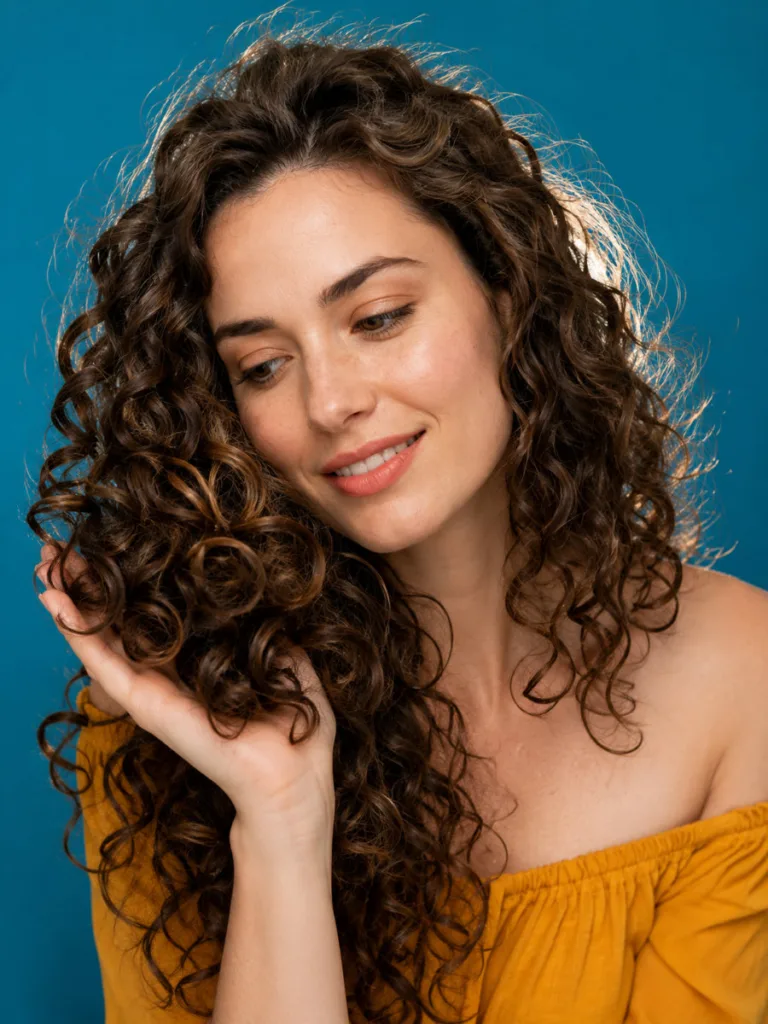
Curly hair needs more moisture to begin with, so richer leave-in conditioners and curl creams perform better. Diffusing on low heat protects the curl pattern while still drying hair fully, which cuts frizz caused by half-dried strands.
Coily Hair

Coily hair has the tightest curl pattern and often the driest strands, since natural oils struggle to travel down the shaft. Heavier butters, overnight oils, and the LOC method (liquid, oil, cream) hold moisture longer than lighter formulas. Detangling with fingers or a wide-tooth comb, always on wet hair with conditioner in, also cuts breakage that leads to frizz.
14 Hair Products For Frizzy Hair That Actually Work
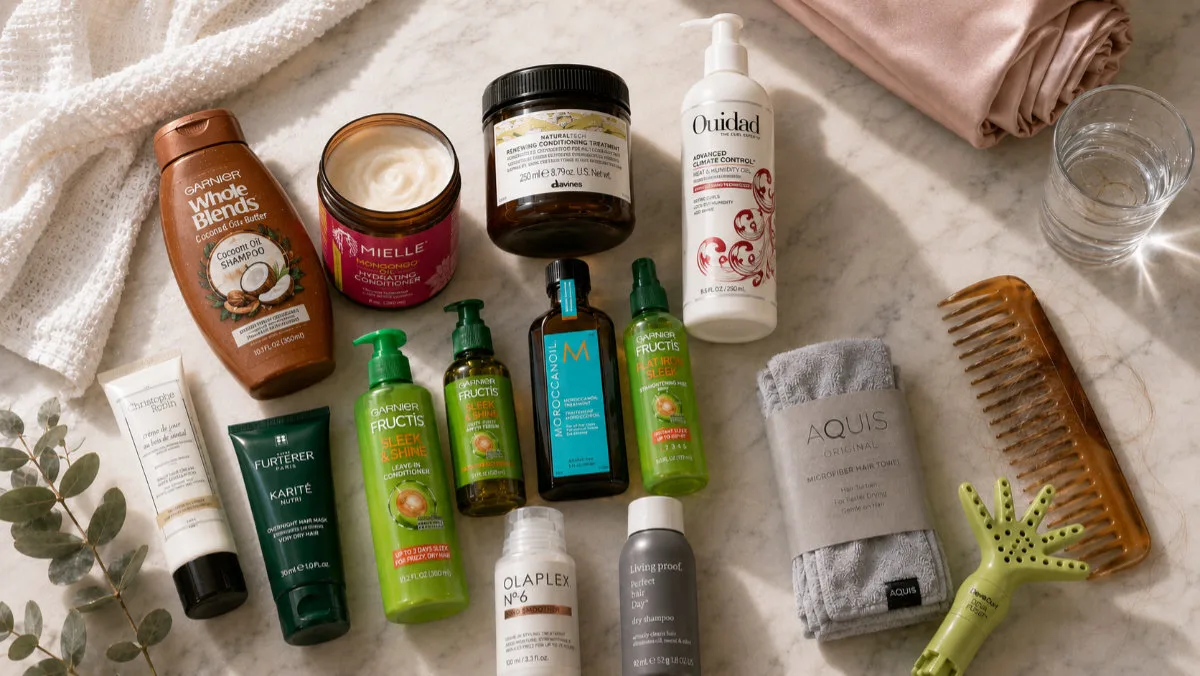
These are the best products for frizzy hair across every step of a routine. They cover wash day through the final touch-up. Each one targets a different cause of frizz, so you can build a routine instead of guessing.
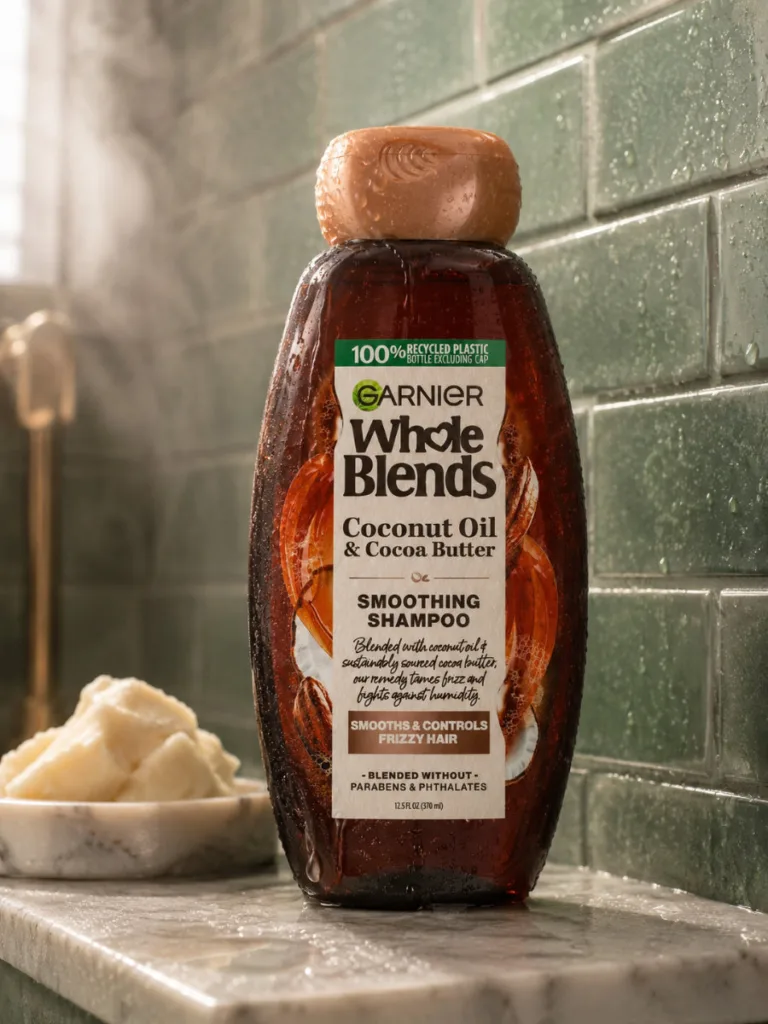
1. Garnier Whole Blends Smoothing Shampoo with Coconut Oil and Cocoa Butter (Shampoo)
Sulfates are the first thing to cut if frizz keeps coming back, and this shampoo leaves them out entirely. Coconut oil and cocoa butter add deep moisture with every wash. Glycerin pulls in extra hydration on dry days.
Because it skips harsh detergents, the formula also works well on color-treated hair without fading dye faster. It costs less than most salon brands but delivers close to the same results. Use it two to three times a week with a matching conditioner for the best frizz control.
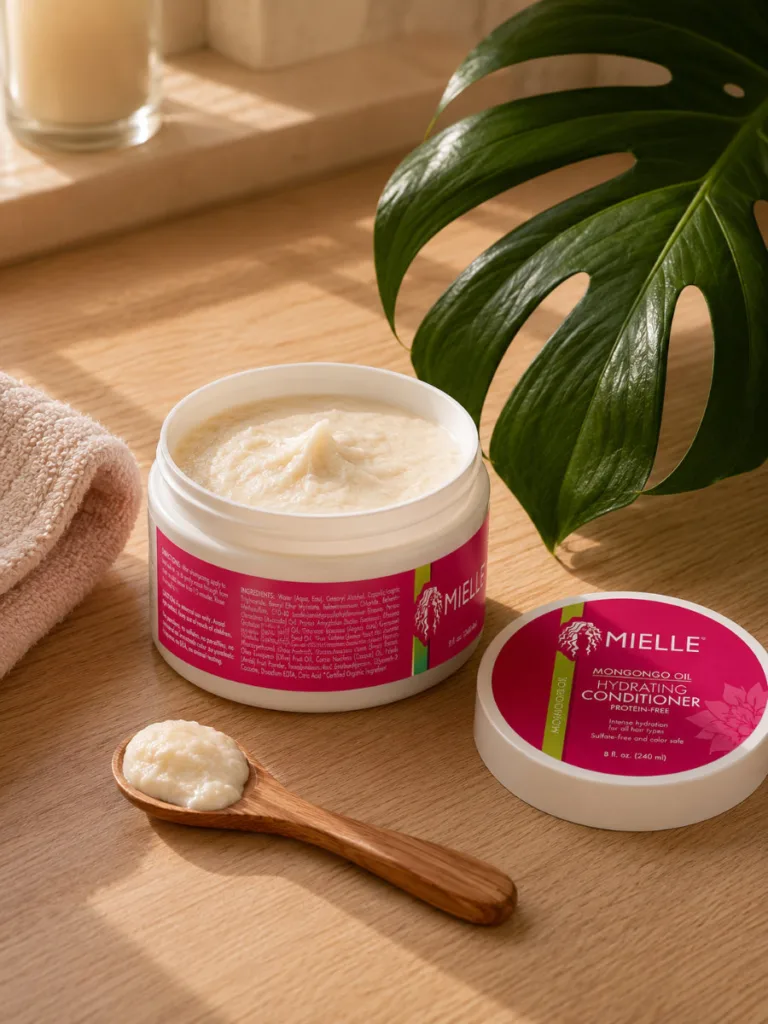
2. Mielle Organics Mongongo Oil Hydrating Conditioner (Conditioner)
Mongongo oil, sourced from southern Africa, is the star ingredient here, and it works fast on dry strands. It smooths the cuticle and adds slip, so detangling takes half the effort on wash day. Coarse and curly hair benefit most, because the formula coats each strand without weighing down finer textures.
Apply it generously from mid-length to ends, then rinse after three to five minutes. Skipping this step after shampoo is one of the fastest ways to trigger frizz. Shampoo alone just leaves the cuticle rough and open.
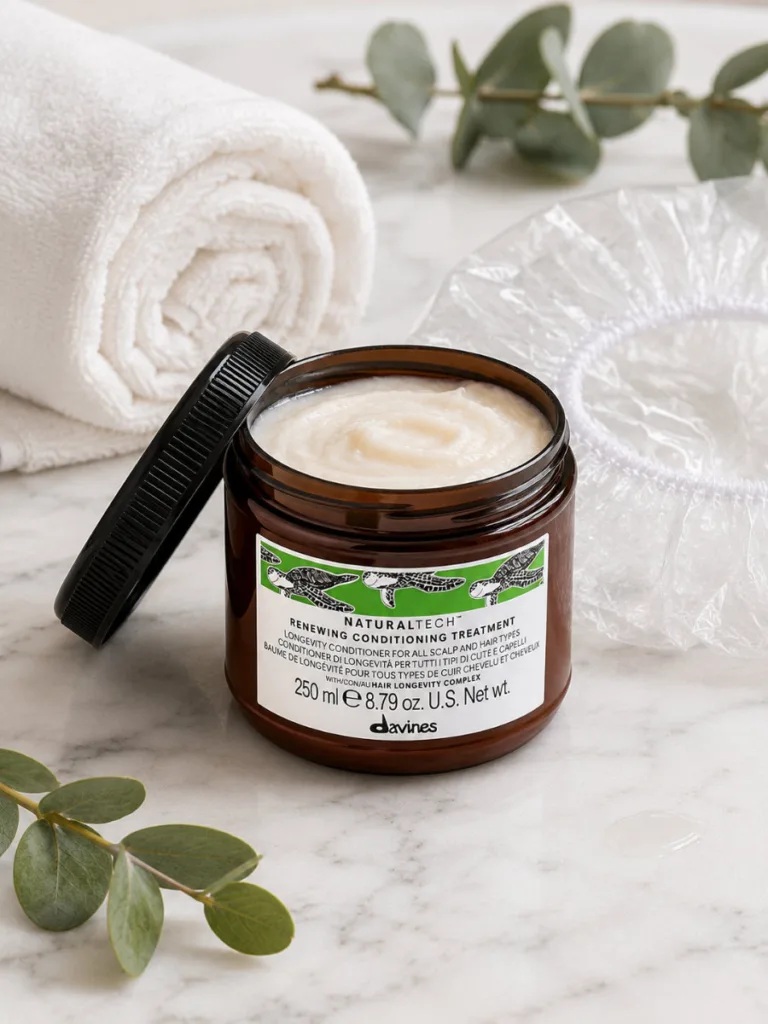
3. Davines Naturaltech Renewing Conditioning Treatment (Hair Mask)
Davines built this mask around natural-origin oils that repair strands weakened by heat or color damage. Because the formula targets both the cuticle and the cortex, regular use restores softness and shine fast. Use it once a week after shampooing.
Leave it on for ten minutes under a shower cap so it can fully absorb. The warmth from your scalp helps it sink in faster. Skipping a weekly mask is where a lot of frizz-prone routines fall short. Surface conditioners alone can’t fix damage underneath.
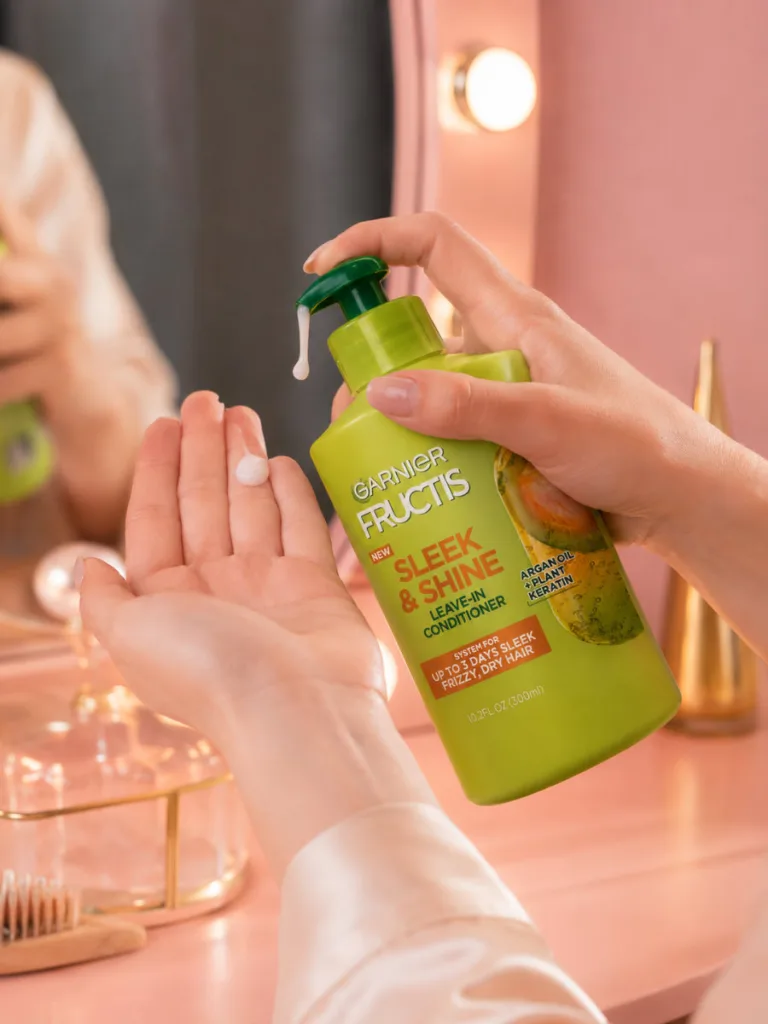
4. Garnier Fructis Sleek & Shine Intensely Smooth Leave-In Conditioner (Leave-In)
Fine, frizz-prone hair usually can’t handle a heavy leave-in, but this one stays light enough for daily use. Argan oil and vegan keratin smooth each strand from root to tip without weighing hair down. It absorbs quickly and skips the residue that heavier formulas leave behind.
Apply a small amount to damp hair right after towel drying, focusing on the mid-lengths and ends. Skip this step and hair starts losing moisture the moment it leaves the shower. A few extra seconds here save hours of frizz control later in the day.
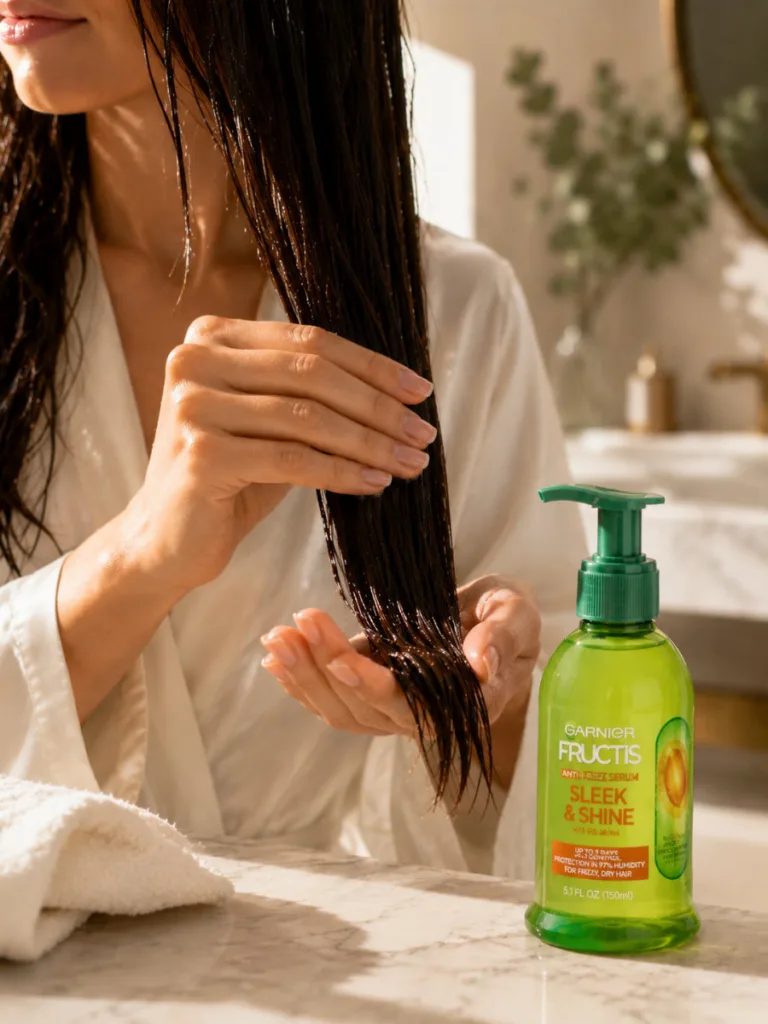
5. Garnier Fructis Sleek & Shine Anti-Frizz Serum (Serum)
This serum smooths the cuticle on contact, so shine shows up within seconds of applying it. Argan oil and vegan keratin coat each strand and seal out the excess humidity that causes swelling. A dime-sized amount on damp hair before heat styling is all it takes.
More is not better here. Extra serum just leaves hair greasy instead of sleek. Go light, and reapply if humidity picks up in the afternoon. Use it right after your leave-in conditioner, not before.
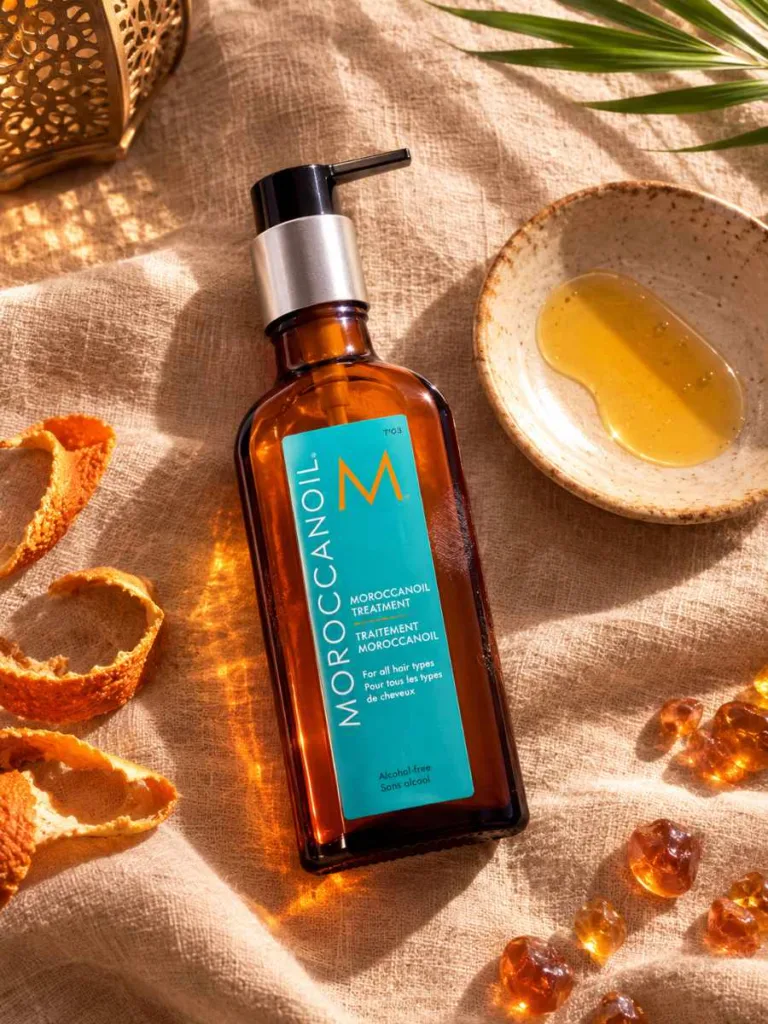
6. Moroccanoil Treatment Original (Hair Oil)
A few drops of this argan oil formula smooth dry ends and tame flyaways. You won’t get the greasy look you’d expect. It absorbs fast. Use it on towel-dried hair before styling, or as a quick touch-up later in the day.
Vitamin E in the mix also helps protect strands from sun and pollution. Applying it near the roots is where people go wrong, since oil weighs down fine hair fast there. Stick to the ends and mid-lengths instead.
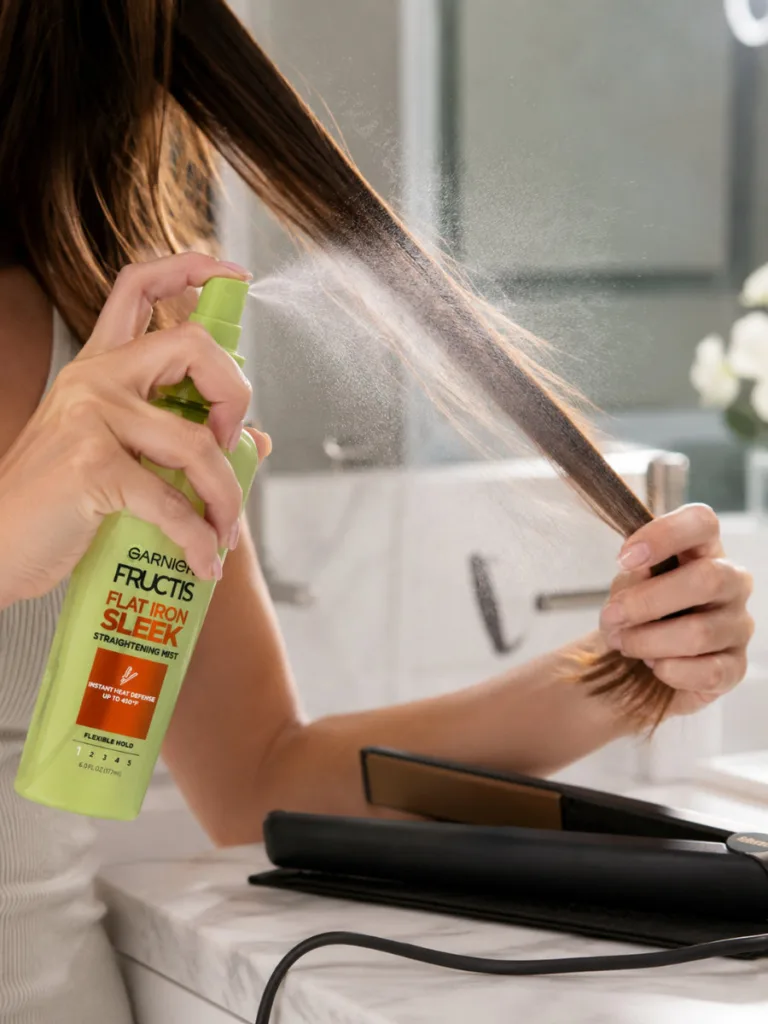
7. Garnier Fructis Flat Iron Sleek Straightening Mist (Heat Protectant)
Flat irons and blow dryers do real damage. This spray creates a barrier that cuts down on the moisture loss they cause. Skip this step before heat styling. That’s one of the most common causes of frizz and split ends.
Spray it evenly on damp or dry hair before using any tool above 300 degrees. It’s a lightweight mist, so it won’t weigh hair down or leave a sticky residue behind. Reapply midday if you touch up your style later.
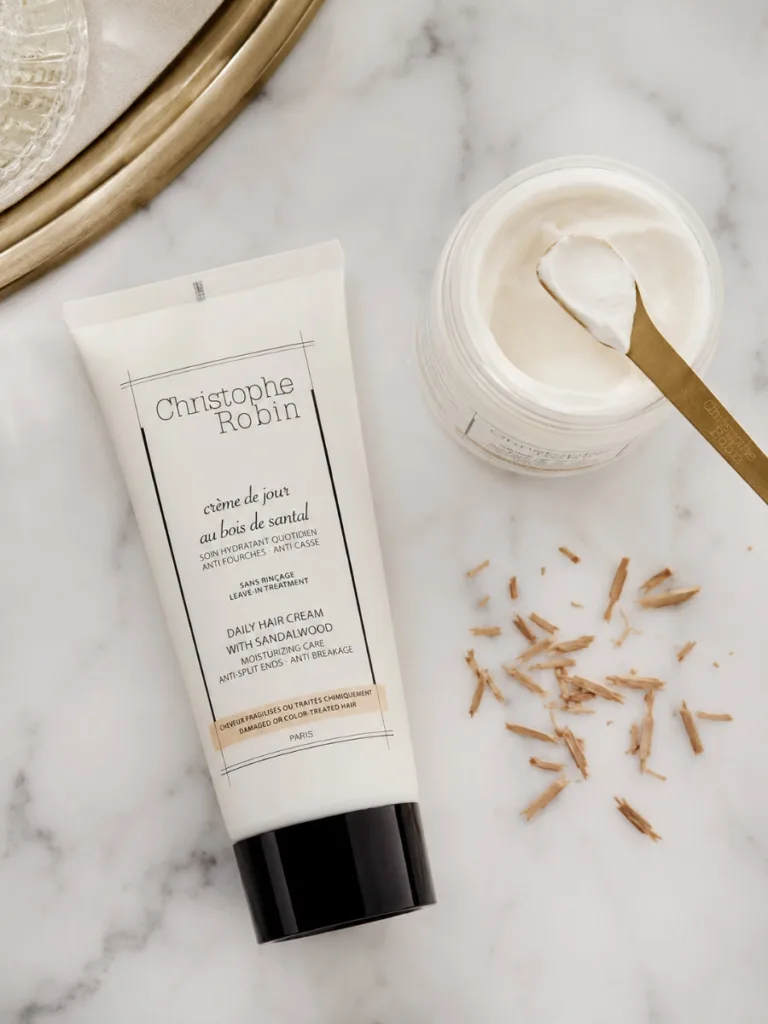
8. Christophe Robin Hydratant Santal Styling Cream (Styling Cream)
Thick or coarse hair needs more control than a gel can give without the stiffness. This cream fills that gap. Sandalwood and shea butter soften strands while taming frizz for hours. Warm a small amount between your palms first for even coverage from root to tip.
It works on both wet and dry hair, so it’s flexible for quick touch-ups anytime. Start with a dime-sized amount, since too much leaves hair looking greasy fast. Layer it under a lightweight serum if you want extra shine.
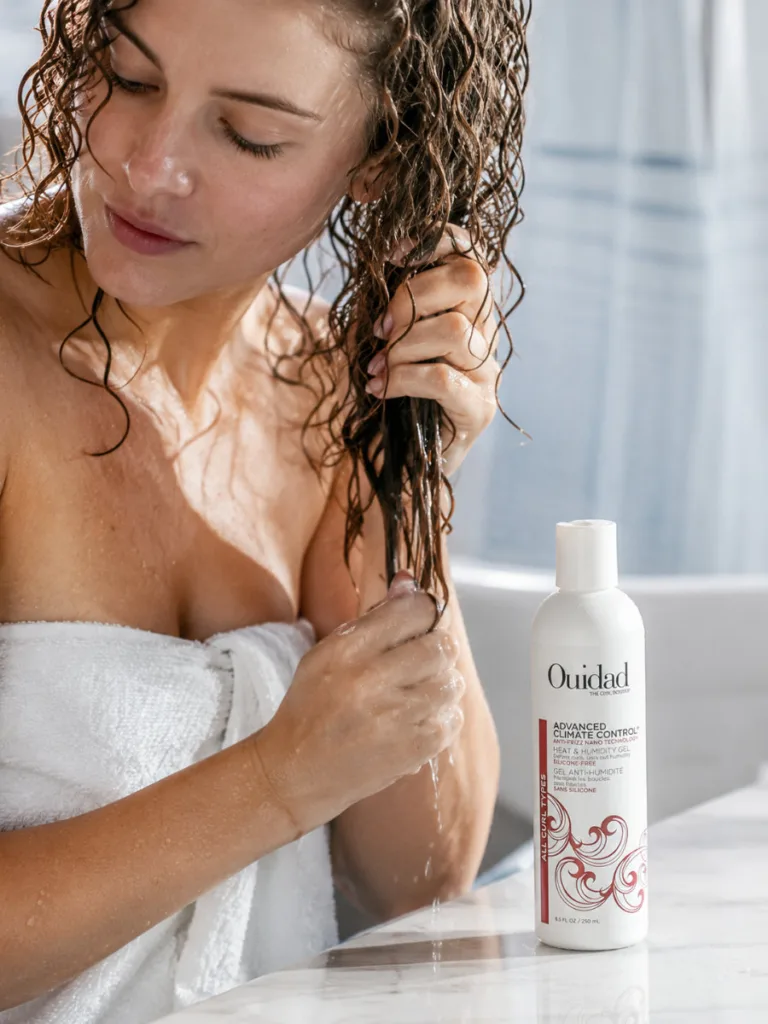
9. Ouidad Climate Control Heat and Humidity Gel (Curl Cream)
Curly and coily textures depend on steady moisture for real definition. This cream fights the humidity that usually wrecks it. Scrunch it into soaking wet hair right after the shower for the most defined curls.
Wait too long and this backfires. Curl cream applied to dry hair struggles to reshape the strand, so timing matters as much as the product. Diffuse or air dry afterward without touching your hair while it sets. Touch curls before they’re fully dry and you trade definition for frizz.
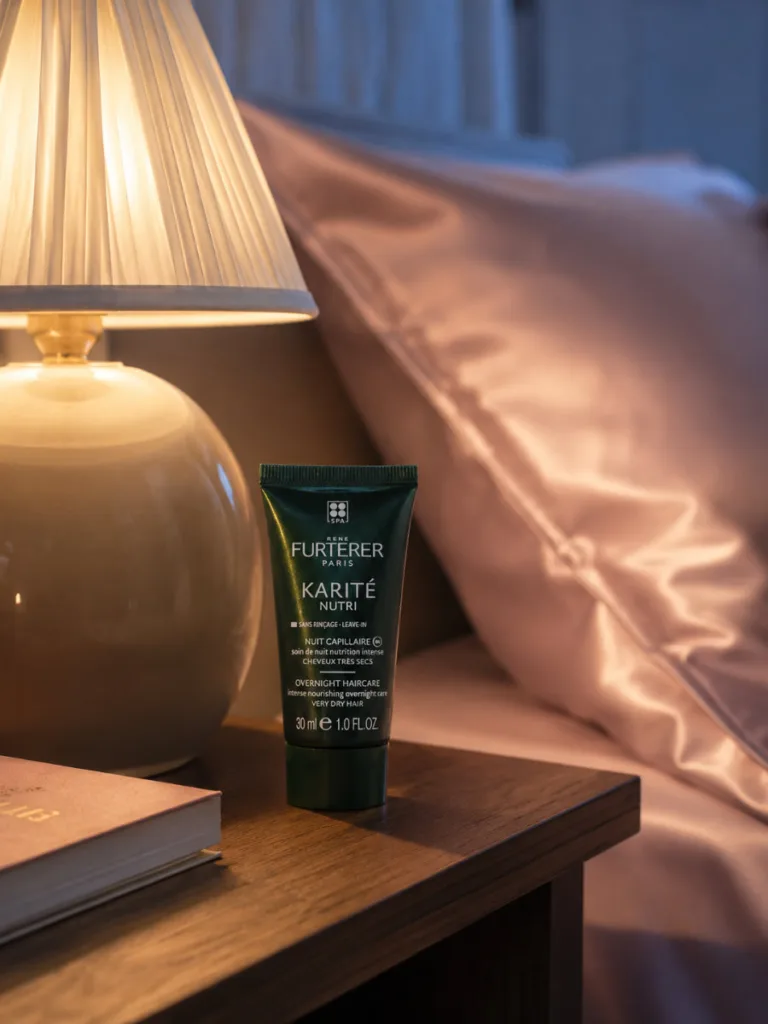
10. Rene Furterer Karité Intense Overnight Nourishing Treatment (Overnight Treatment)
Shea butter, called karité in French, is the core of this treatment. It works while you sleep to restore moisture lost during the day. Apply it before bed on damp or dry hair, focusing on the driest sections first.
Rinse it out in the morning, or leave a small amount in if very dry hair needs extra softness. Fine hair does better with a lighter version, since heavier formulas can look weighed down by morning. Pair it with a silk pillowcase, which stops moisture from transferring onto cotton fibers overnight.
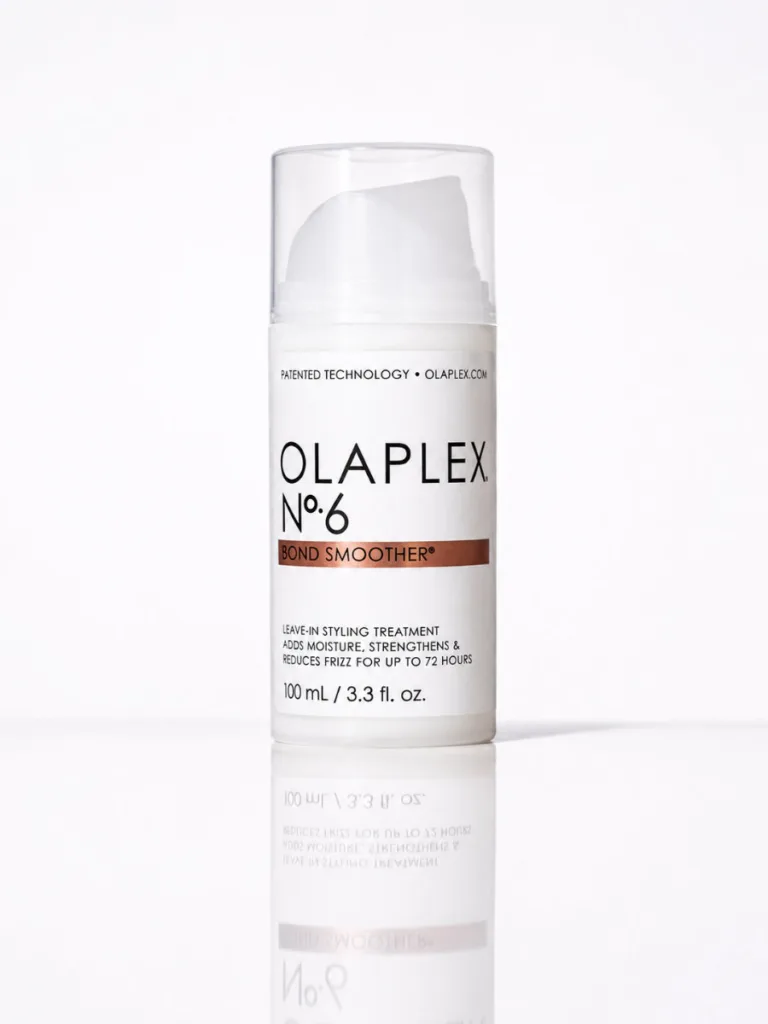
11. OLAPLEX No. 6 Bond Smoother (Bond Builder)
Most conditioners just coat the strand. OLAPLEX No. 6 rebuilds the bonds inside it instead, the ones damaged by heat, color, or chemical services.
Apply a small amount to damp or dry hair as your last styling step. Broken strands catch moisture unevenly and swell into frizz, so repairing them cuts frizz at the source. Use it once or twice a week alongside your regular conditioner. Color-treated or heavily damaged hair sees the biggest difference.
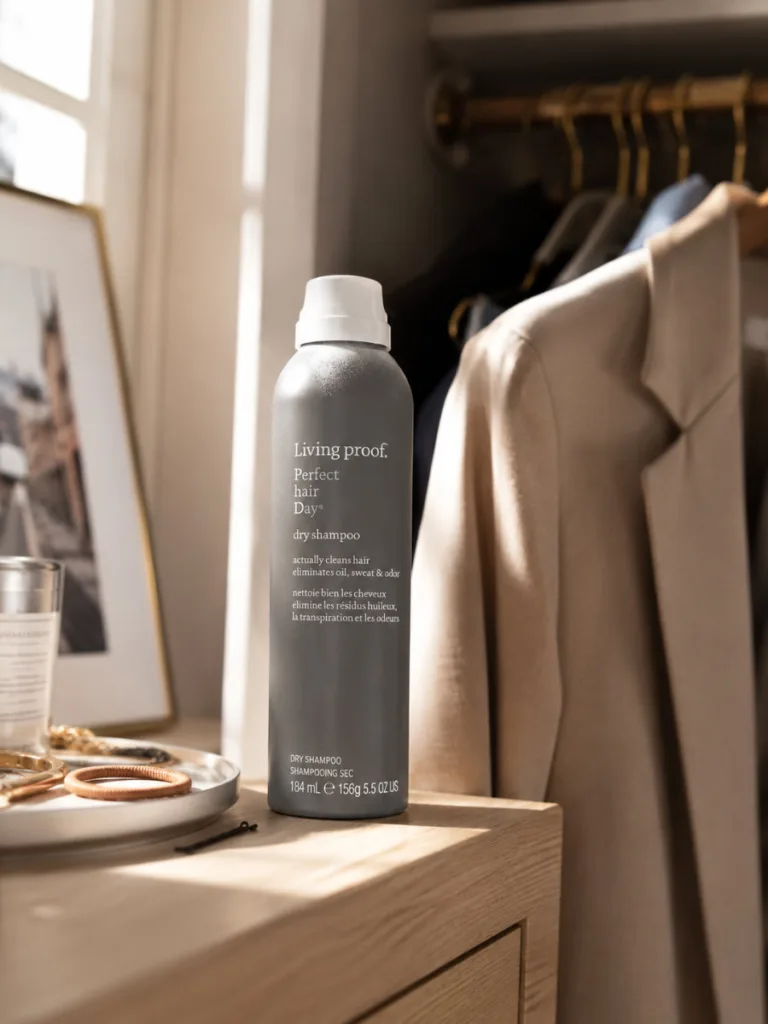
12. Living Proof Perfect Hair Day Dry Shampoo (Dry Shampoo)
Older dry shampoos leave a chalky white residue. This one absorbs oil at the roots without it. That means you can stretch time between washes and still fight moisture in the air. Spray it directly onto roots from about six inches away, then work it in with your fingers.
Skip the lengths. Oil only builds up at the roots, so that’s the only place dry shampoo does anything. On damp, muggy days, it also works as a humidity buffer that heads off frizz before it starts. It leaves just enough texture to make second-day hair easier to style.
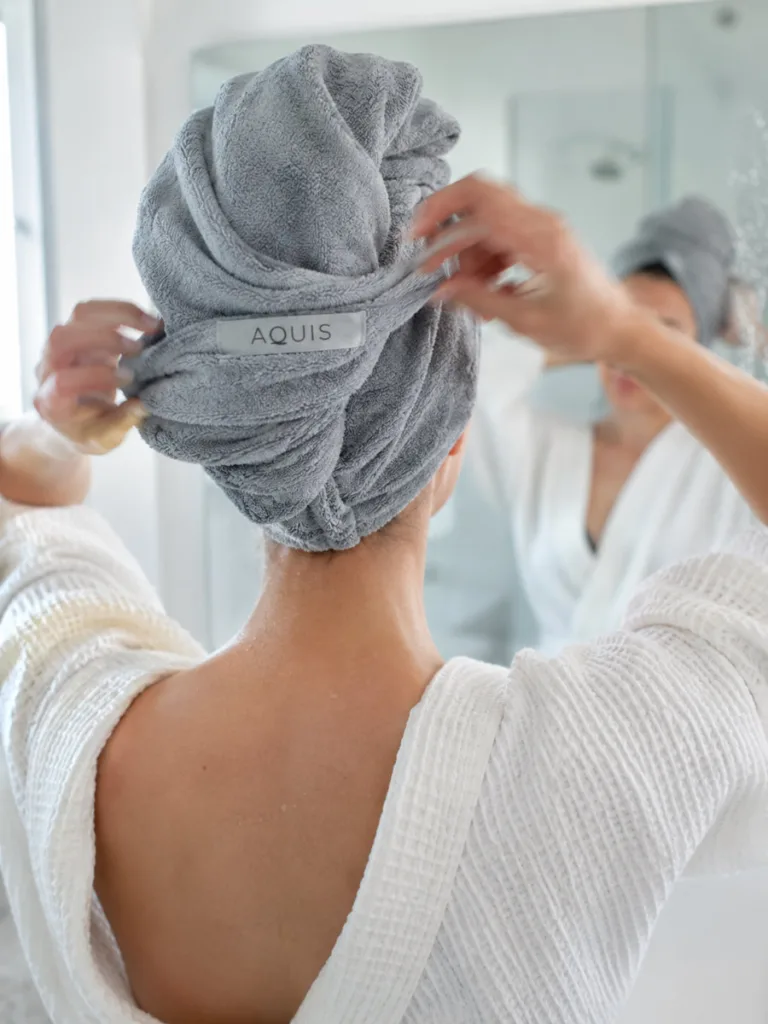
13. Aquis Original Microfiber Hair Towel (Hair Tool)
Regular cotton towels rough up the cuticle every time you dry your hair. That alone causes a lot of frizz people never trace back to the towel. This microfiber version absorbs water fast without the friction, so squeeze gently instead of rubbing when blotting wet hair.
Wrap it loosely around your head for five to ten minutes to pull out extra moisture before styling. Hair that starts out less saturated also blow-dries faster, which cuts your styling time down too. Rough drying is one of the most overlooked causes of frizz.
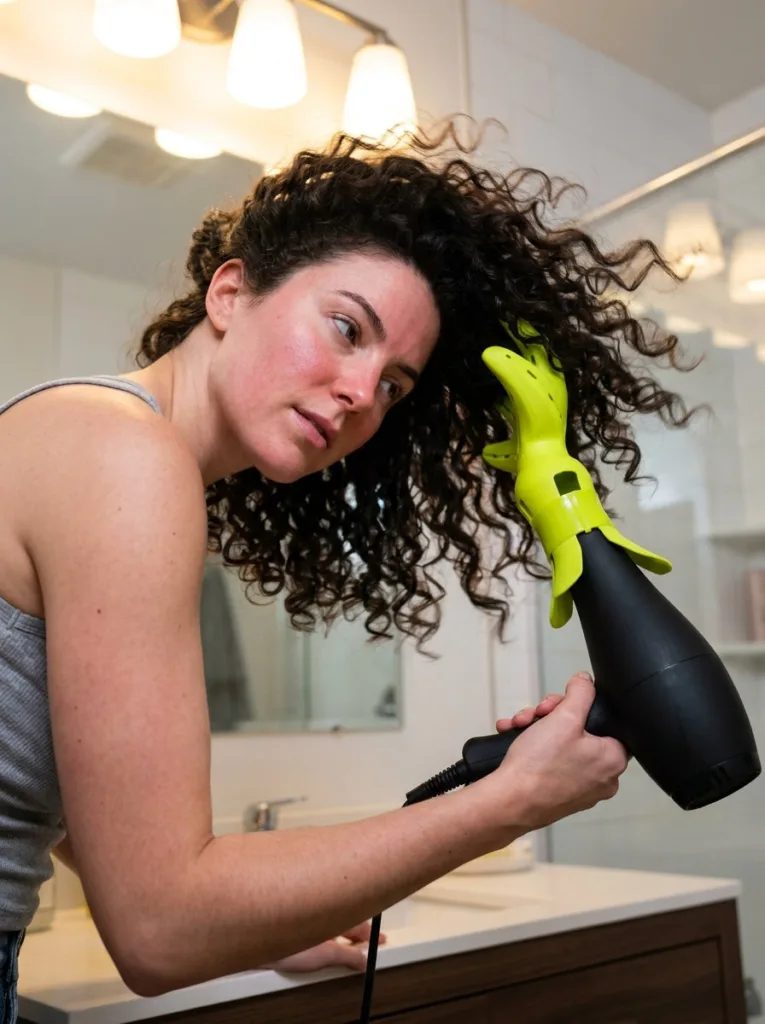
14. DevaCurl DevaFuser Attachment (Hair Tool)
A regular dryer nozzle blasts curls apart. This diffuser’s wide bowl cradles them instead, letting air flow through small openings around the edge. Keep the dryer on low heat and low speed for the smoothest, most defined finish.
Scrunch hair gently into the bowl section by section instead of moving it around too fast. Rushing this part with high heat or high speed is exactly how definition turns into frizz. Let curls dry completely before you touch them, since that’s what makes them set.
Not every product fits every hair type. Fine hair needs lighter formulas, while coarse or curly hair can handle richer creams and oils without looking weighed down.
Ingredients To Look For (And Avoid)
Reading the label matters as much as picking the right product category. Certain ingredients reduce frizz. Others quietly make it worse.
Look for:
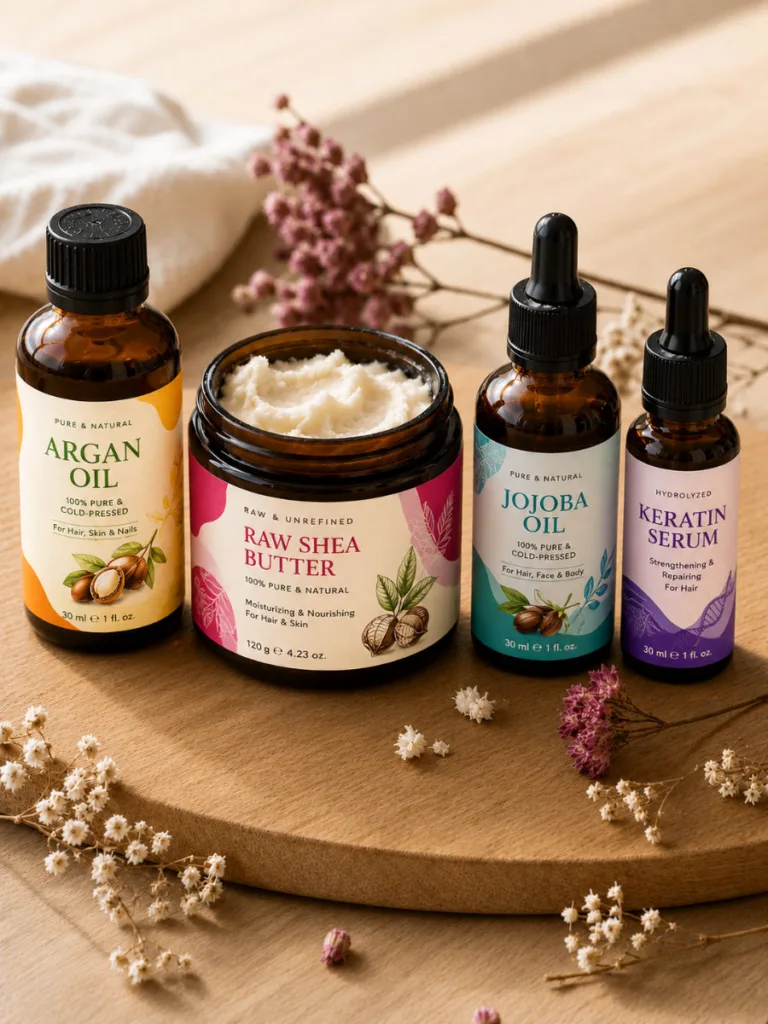
- Argan oil and jojoba oil, which coat and smooth the cuticle
- Shea butter and glycerin, which pull moisture into the strand
- Hydrolyzed keratin, which rebuilds damaged areas of the shaft
- Panthenol, a form of vitamin B5 that helps strands hold water longer between washes
Avoid:
- Sulfates, which strip natural oils fast
- Drying, alcohol-based sprays, especially in styling creams and hairsprays
- Non-soluble silicones, which build up over time and block moisture from getting in
Check the first five ingredients on any label since that is where the highest concentrations sit. Ingredient order matters more than marketing claims on the front of the bottle.
Budget-Friendly Vs Premium Frizz Products
Price does not always predict performance. Many drugstore brands share the same core ingredients as luxury lines, just with different packaging and marketing budgets.
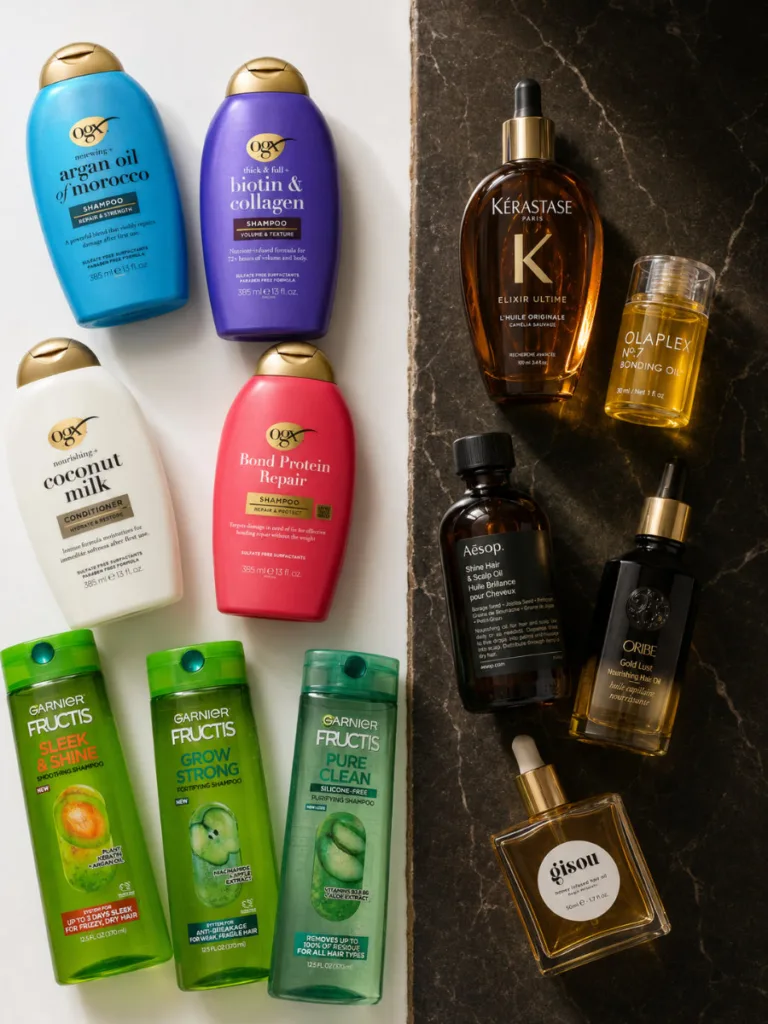
Garnier, L’Oreal, and OGX all make argan oil and keratin formulas under $15. They perform close to salon brands costing three times as much. Premium brands tend to pull ahead on texture and scent more than raw effectiveness.
Save the splurge for one item you use daily, like a leave-in conditioner or serum. Buy budget versions of products you use less often, like a weekly hair mask. This split keeps a full routine affordable without cutting corners on the products that matter most.
Common Mistakes That Make Frizz Worse
Even a great product routine fails if daily habits work against it. A few small changes fix most frizz problems fast.
- Washing too often. Daily shampooing strips oils your scalp needs. Stretch washes to two or three times a week instead.
- Rough towel drying. Rubbing hair with a towel roughs up the cuticle. Blot gently instead.
- Skipping heat protectant. It takes ten seconds and prevents months of damage.
- Ignoring humidity levels. On humid days, switch to a stronger anti-frizz serum instead of your usual lightweight one.
- Hard water buildup. Minerals from tap water coat strands and block moisture. A monthly clarifying shampoo resets your hair.
- Switching products too often. Give a new routine at least four weeks before judging results, since hair needs time to respond to consistent hydration.
- Using harsh formulas on color-treated hair. Bleach and dye already leave the cuticle more open than usual, so gentler products matter more here.
Frequently Asked Questions
What are the best products for frizzy hair?
A leave-in conditioner paired with a lightweight anti-frizz serum works for most hair types. Together, they hydrate strands and seal the cuticle against humidity.
Can frizzy hair be fixed permanently?
Frizz caused by dryness or damage improves a lot with the right routine, but genetics and curl pattern still play a role. Consistent care and the right products keep it under control long-term.
What ingredients should I avoid for frizzy hair?
Skip products high in sulfates and drying alcohols. Both strip moisture from the cuticle and make frizz worse over time.
How often should I use a hair mask for frizz?
Once a week is enough for most hair types. Over-treating hair with masks can weigh it down without adding extra benefit.
Does hair oil make frizz worse?
Only if you use too much or apply it to roots. A few drops on dry ends controls frizz without leaving hair greasy.
Why is my hair frizzy even after using anti-frizz products?
Product buildup or the wrong application order often causes this. Apply thinnest products first and clarify your hair once a month to reset.
Conclusion
Frizz comes from dry, damaged cuticles, not bad luck. A consistent routine fixes it, one habit at a time. Start tonight: swap your cotton pillowcase for silk, and apply your leave-in conditioner before any heat tool touches your hair.
For mor hair care tips and products, please visit VevetBoard.