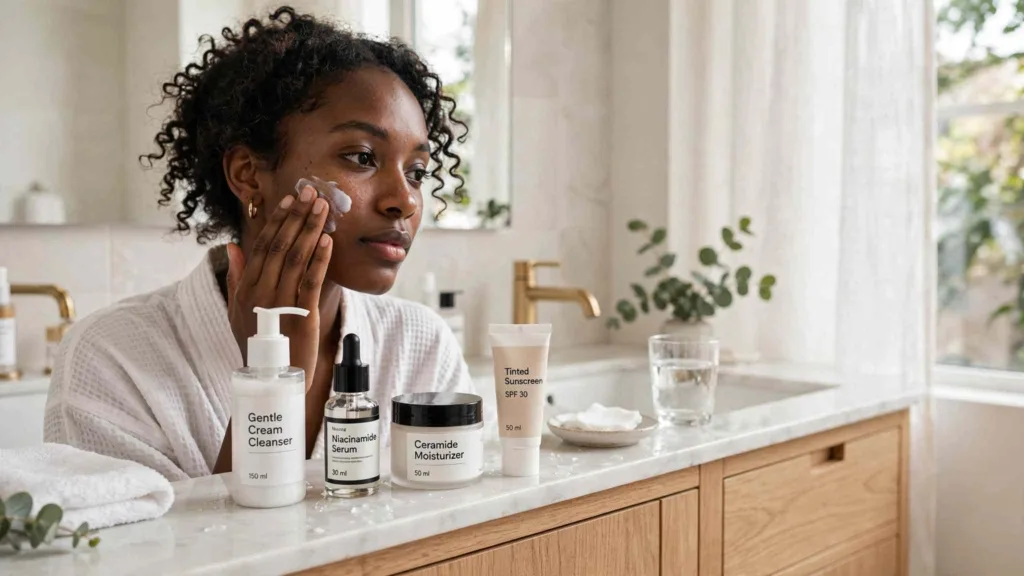
Skin Barrier Repair: Gentle Steps That Restore Comfort

Why does your usual moisturizer suddenly sting when your skin barrier repair routine is supposed to help? When even familiar products feel uncomfortable, adding another serum can make the next step confusing. Dryness, irritation, and product reactions can look similar, so a new cream is not always the answer. Start by noticing what changed and keeping your care gentle.
Your outer skin layer helps hold moisture in and keeps outside irritants from entering as easily. When that protection is disrupted, skin may feel tight, flaky, itchy, or sore. These symptoms can also accompany eczema, rosacea, or contact dermatitis. A routine can support comfort, but it cannot diagnose the cause of a rash.
Below, you will find practical cleansing, moisturizing, and sun protection steps, plus ingredients worth considering without buying everything. You will also learn what to pause, how to assess progress, and when to get help.
Skin Barrier Repair Starts With Understanding The Signs
Changes in comfort are useful clues, but no symptom count confirms barrier damage. Pay attention to where symptoms appear, when they started, and whether a product makes them worse.
Tightness And Stinging After Washing
A tight face after cleansing can mean your washing routine is too drying for your current skin. Stinging may come from irritation, tiny cracks, or a reaction to something you applied. Neither sensation tells you the exact cause on its own. Avoid repeatedly testing painful skin with products to see whether it still burns.
Flaking, Itching, And Changes In Color
Dry patches can sit beside an oily forehead, so oiliness does not rule out dryness. Inflammation may look pink, red, purple, darker, or less obvious depending on skin tone. Texture, warmth, swelling, and discomfort matter too. New bumps are not automatically damaged-barrier breakouts; acne and other conditions need different care.
Dryness That Returns After Moisturizing
A cream disappearing quickly is not a home test for water loss or barrier function. Its texture, the amount applied, and your environment can change how it feels. If dryness keeps returning, consider whether your moisturizer is comfortable and sufficiently rich. Persistent discomfort deserves assessment rather than progressively heavier layers of unfamiliar products.
What Can Make Skin More Reactive
A recent routine change can help identify a possible trigger, although familiar products can cause reactions too. Review these three areas before adding something new.
Overlapping Treatments And Frequent Exfoliation
Retinoids, exfoliating acids, and some vitamin C formulas can irritate skin, especially when introduced together or used too often. That does not mean every active ingredient strips the same lipids or damages everyone’s skin. Write down recent additions, stronger formulas, and changes in frequency. Keep prescribed treatment decisions separate from optional cosmetic experiments.
Hot Water, Scrubbing, And Repeated Cleansing
Long, hot washes and friction can worsen dryness and discomfort. A cleanser does not have to foam to be harsh, and foam alone does not make one unsuitable. Judge the finished formula by how your skin tolerates it. Our guide to washing your face gently covers practical technique without relying on a squeaky-clean finish.
Weather, Sun, And Indoor Conditions
Cold weather, wind, and dry indoor air can make already dry skin feel less comfortable. Sunburn adds another source of inflammation. Adjust protection to your surroundings rather than assuming the same routine works in every season. Avoid direct heater airflow on your face, and use a soft scarf without rubbing tender areas.
A Simple Morning Skin Barrier Repair Routine
Keep the morning routine manageable: gentle cleansing as needed, a comfortable moisturizer, and sun protection. Start with products you already tolerate instead of replacing the entire shelf at once.
Step 1: Rinse Or Cleanse Gently
Some people prefer a lukewarm rinse in the morning; others need a gentle cleanser for overnight residue or oil. Use fingertips and follow the cleanser’s directions, without a cleansing brush or abrasive cloth. There is no universal number of seconds that makes a wash gentle. Rinse thoroughly, then pat instead of rubbing with a towel.

Step 2: Moisturize Slightly Damp Skin
Apply a fragrance-free moisturizer after washing while skin is still slightly damp, if that feels comfortable. Your face does not need to be dripping wet. Spread enough to cover dry areas without dragging; a pea-sized amount is not a universal face dose. Reapply when dry, and choose a texture you can comfortably use again.
Ceramides are one option, but a well-tolerated cream without a barrier-repair label may still suit you. If your current lotion leaves you uncomfortable, a cream or ointment may be worth discussing with a pharmacist or dermatologist. Persistent burning is a reason to stop that product and seek advice, rather than push through.

Step 3: Add Sun Protection
Choose broad-spectrum, water-resistant SPF 30 or higher and apply according to its directions. Cover exposed areas generously; a two-finger guide is approximate because products and finger sizes differ. Reapply at least every two hours outdoors and after swimming, sweating, or towel drying as directed. Shade, a broad-brimmed hat, and protective clothing also matter.
If sunscreen stings, a fragrance-free formula with zinc oxide or titanium dioxide may be easier to tolerate. Mineral filters do not guarantee that every formula will suit you. Do not keep applying something that burns. Use shade and protective clothing while getting advice about a sunscreen your skin can tolerate.

Evening Skin Barrier Repair Without Extra Steps
At night, remove sunscreen and makeup with as little friction as practical. You can often reuse your morning moisturizer rather than buying a separate night cream.
Remove The Day Without Overwashing
Use a cleanser that removes what you actually wore, following its instructions. Water-resistant makeup may need a suitable remover before cleansing, but double cleansing is not compulsory for everyone. Avoid repeated washing to chase a perfectly bare feeling. If removal requires prolonged rubbing, simplify the makeup or choose a gentler removal method.
Adjust Moisture Where You Need It
Your cheeks may need a richer layer than an oily forehead. A small amount of plain petrolatum can help reduce moisture loss on dry patches if tolerated. It is optional, not a required full-face seal. Avoid layering it over irritating treatments to force them to work longer, and ask about care for weeping or infected-looking areas.
Leave Out Unnecessary Friction
Set aside scrubs, cleansing brushes, peel pads, and masks that leave skin tight or sore. Pat moisturizer on gently instead of massaging tender patches repeatedly. Keep washcloths and towels soft and clean. A longer evening ritual does not provide better skin barrier repair if every extra step adds irritation.
Choosing Ingredients Without Building A New Routine
The whole formula and your tolerance matter more than collecting every ingredient below. You can keep your ingredient choices simple. The American Academy of Dermatology’s dry-skin guidance offers a useful starting point for gentle care.
Ceramides And Other Moisturizing Lipids
Ceramides, cholesterol, and fatty acids are components of the skin’s natural lipid system. Moisturizers may include them in different combinations, alongside other moisturizing ingredients. You do not need to find all three on every label. Check the ingredient list rather than assuming that a barrier cream label guarantees a particular combination.

Water-Binding Ingredients And Protective Textures
Glycerin is a common water-binding ingredient, and panthenol appears in many moisturizing formulas. They can already be part of a complete cream, so separate serums are unnecessary. Creams and ointments offer different finishes; the best choice is one that addresses dryness comfortably. More layers can make it harder to identify which product is causing trouble.
Optional Ingredients Are Still Optional
Colloidal oatmeal or niacinamide may be included in products marketed for sensitive or dry skin. Neither is compulsory, and a percentage on the label does not guarantee comfort. Avoid adding a concentrated serum just to complete an ingredient checklist. Known allergies and your reaction to the finished product take priority over an appealing ingredient claim.
What To Pause And What To Discuss
For skin barrier repair, remove optional steps that sting or aggravate dryness instead of adding products to compensate. If a medicine is involved, contact its prescriber for an individualized plan.
Exfoliants And Irritating Cosmetic Treatments
Pause nonessential exfoliating acids, grainy scrubs, peels, or strong cosmetic treatments while skin is sore or inflamed. Do not scrub off flakes or treat burning as evidence that something is working. These products have different mechanisms, so calling them all surface-thinning is misleading. Persistent scaling may need a diagnosis rather than more exfoliation.
Prescriptions And Ongoing Skin Conditions
Ask your prescriber what to do if a retinoid or another prescribed treatment causes irritation. The right change may involve application technique, frequency, strength, or an alternative. Do not replace an eczema, acne, or rosacea treatment plan with a generic recovery calendar. Tell the clinician about every product you use, including over-the-counter treatments.
Fragrance And Misleading Label Shortcuts
Choose fragrance-free products where possible; unscented products can contain ingredients that mask a smell. Essential oils are not automatically gentler because they are natural. Alcohol ingredients also differ: fatty alcohols such as cetyl alcohol serve different roles from ethanol. A short ingredient list is not proof that a formula cannot irritate or cause allergy.
Track Progress Without A Fixed Recovery Deadline
Skin barrier repair does not follow a reliable day-five or week-four schedule for everyone. The cause, severity, ongoing exposures, and underlying skin conditions all affect what happens next.
Notice Comfort During Ordinary Care
Useful changes include less tightness after washing, less itching, and fewer episodes of stinging during usual care. Record what you used and where symptoms appeared, rather than testing your face with acids. Photographs in similar lighting can help you explain changes at an appointment. They cannot confirm that the barrier has fully recovered.
Do Not Explain Away Worsening Symptoms
Increasing flakes, spreading redness, pain, or new swelling are reasons to reassess. They are not necessary stages of recovery or signs that a product is purging the skin. Seek help sooner when symptoms are substantial. You do not need to complete a two-week waiting period before asking about ongoing burning.
Keep The Routine Practical
Make a short note of your cleanser, moisturizer, sunscreen, and any prescribed directions. Include dates for new products and whether symptoms occur immediately or later. Our sensitive-skin routine guide can help organize the basics. Keep the record simple enough that you will actually use it.
Test New Products And Reconsider Actives Carefully
Wait until skin is comfortable before experimenting with optional treatments, and seek advice after a significant reaction. There is no universal restart ladder that suits every active or every skin condition.
Try A Small Area Before Wider Use
The AAD’s home product-testing instructions recommend a small area on the inner arm or elbow twice daily for seven to ten days. Use the normal amount and follow directions for wash-off products. Stop and wash it off if a reaction develops. Do not deliberately retest something that caused a severe reaction.
This home check does not guarantee that your face will tolerate a product. It also cannot diagnose a contact allergy; medical patch testing is a separate procedure. Ask for professional guidance if you have repeated reactions or cannot identify a tolerable basic routine. Testing several new products together makes the result harder to interpret.
Reintroduce Only What Has A Purpose
Once appropriate, consider one optional product at a time using its label or your clinician’s directions. Strength and frequency should match that specific product and your circumstances. Neither azelaic acid first nor twice-weekly use is a universal rule. A few comfortable days do not prove that delayed reactions cannot occur.
Keep the rest of your routine familiar while assessing a change. If irritation returns, stop the optional newcomer and seek advice when symptoms persist or are significant. Prescribed treatments need their own agreed plan. You can also decide not to restart a cosmetic product that repeatedly causes discomfort.
When Skin Needs Medical Attention
Home skin barrier repair is supportive care, not treatment for every rash. Get an assessment for persistent, recurrent, or severe symptoms, especially when simple products remain uncomfortable.
Get Prompt Help For Concerning Changes
Seek prompt care for significant swelling, blistering, painful cracks, bleeding, or suspected infection. Spreading redness with fever, increasing warmth, pus, or worsening pain needs urgent assessment. Sudden swelling of the lips, tongue, or throat, or difficulty breathing or swallowing, is an emergency. Call your local emergency number rather than waiting for a skincare appointment.
FAQs
These answers address common routine decisions without using symptoms as a self-diagnosis test. Persistent or worsening problems need individualized advice.
What Are Common Signs Of A Disrupted Skin Barrier?
Tightness, dryness, flaking, itching, and stinging can accompany barrier disruption. These symptoms also occur with other conditions, so neither a checklist nor a photograph confirms the cause.
What Is A Simple Skin Barrier Repair Routine?
Use gentle cleansing as needed, a tolerated moisturizer, and suitable sun protection. Leave out irritating optional treatments and ask your prescriber about problems with medicines.
How Long Does Skin Barrier Repair Take?
There is no dependable recovery deadline for everyone. Improvement depends on the cause and severity, and persistent or worsening symptoms should be assessed rather than watched until a fixed date.
Can I Wear Makeup While My Skin Is Irritated?
If makeup is comfortable and removes easily, you may tolerate it. Avoid applying it over raw or weeping areas, and stop products that cause burning or a worsening rash.
Do I Need Petrolatum Over My Whole Face?
No; it is an optional way to reduce moisture loss on dry areas if tolerated. It does not replace an appropriate moisturizer or treatment for an underlying condition.
Should I Exfoliate Flaky Skin?
Avoid exfoliating sore, inflamed, or irritated skin. Persistent flaking can have several causes, so get advice rather than repeatedly trying to remove it.
Final Thoughts
A useful skin barrier repair plan starts with comfortable basics and a careful look at what changed. Gentle cleansing, a tolerated moisturizer, and sun protection can support dry or irritated skin without an expanding product list. Progress varies, and persistent symptoms deserve advice rather than another deadline or a stronger treatment. Tonight, write down your current products and symptoms so your next routine decision rests on a clear record.