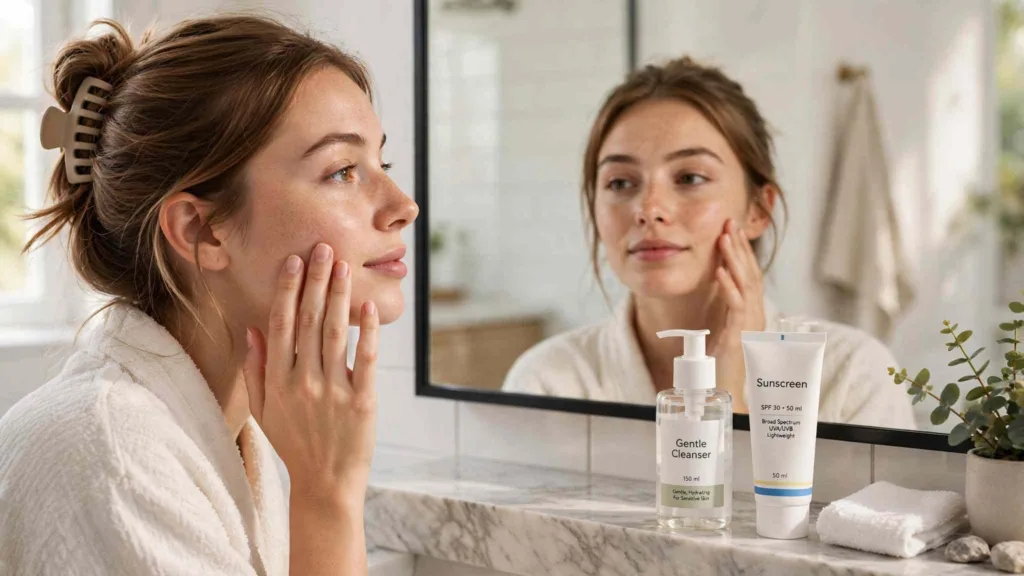
Clean Girl Skincare Routine: Simple Steps That Work

Does your skincare shelf keep growing while your face still feels tight or irritated? Adding another serum can make the next step harder to choose. A clean girl skincare routine offers a simpler starting point: cleansing, moisturizing, and sun protection, adjusted to your skin.
The name describes an aesthetic, not a medical standard or a measure of cleanliness. Visible pores, acne, uneven tone, and natural shine belong on real faces. You do not need a filtered finish to benefit from everyday care. Comfort and a routine you can manage are more useful goals.
Start with products you already tolerate before buying replacements. The morning and evening steps below explain what each product does and where flexibility matters. You’ll also find guidance for introducing an optional treatment without replacing prescribed care. Three basics can organize the routine, but they are not a rule about product count.
What A Clean Girl Skincare Routine Means
For this routine, the focus is straightforward daily care rather than a particular brand or finish. A gentle cleanser removes material from the skin. Moisturizer helps with dryness, while sunscreen protects against ultraviolet exposure.
Those jobs can involve different numbers of products. A moisturizing sunscreen may combine two morning steps. A prescribed acne treatment may add another evening step without making the routine unnecessarily complicated.
Minimal care can support people with skin conditions, but it is not a substitute for treatment. Keep prescribed products unless your clinician advises a change. An aesthetic trend should not decide whether you continue medication.
Our skincare routine guide explains the broader basics. The useful question here is which steps serve your needs, rather than how few bottles you can own.
Simplify Without Starting Over
Make a short list of what you use and why. Separate everyday basics, prescribed treatments, and optional extras. This makes duplication easier to spot without assuming every additional product causes problems.
If you own several exfoliants or serums with similar purposes, avoid introducing them together. Keep products you already tolerate while reviewing the extras. Replacing the whole routine at once makes changes harder to interpret.
Price alone cannot establish whether a product suits you. Compare its purpose, directions, texture, and your experience using it. A less expensive formula can be suitable, but affordability does not guarantee tolerance either.
Do not judge progress only by shine in a photograph. Lighting, makeup, and surface oil affect appearance. Burning, persistent tightness, or worsening dryness deserve attention even when skin looks glossy.
Your Morning Clean Girl Skincare Routine
Morning care prepares your skin for the day and includes sun protection. These steps are a framework rather than a requirement to wash or layer products identically every morning. Product directions take priority over a fixed waiting schedule.
Step 1: Cleanse As Needed
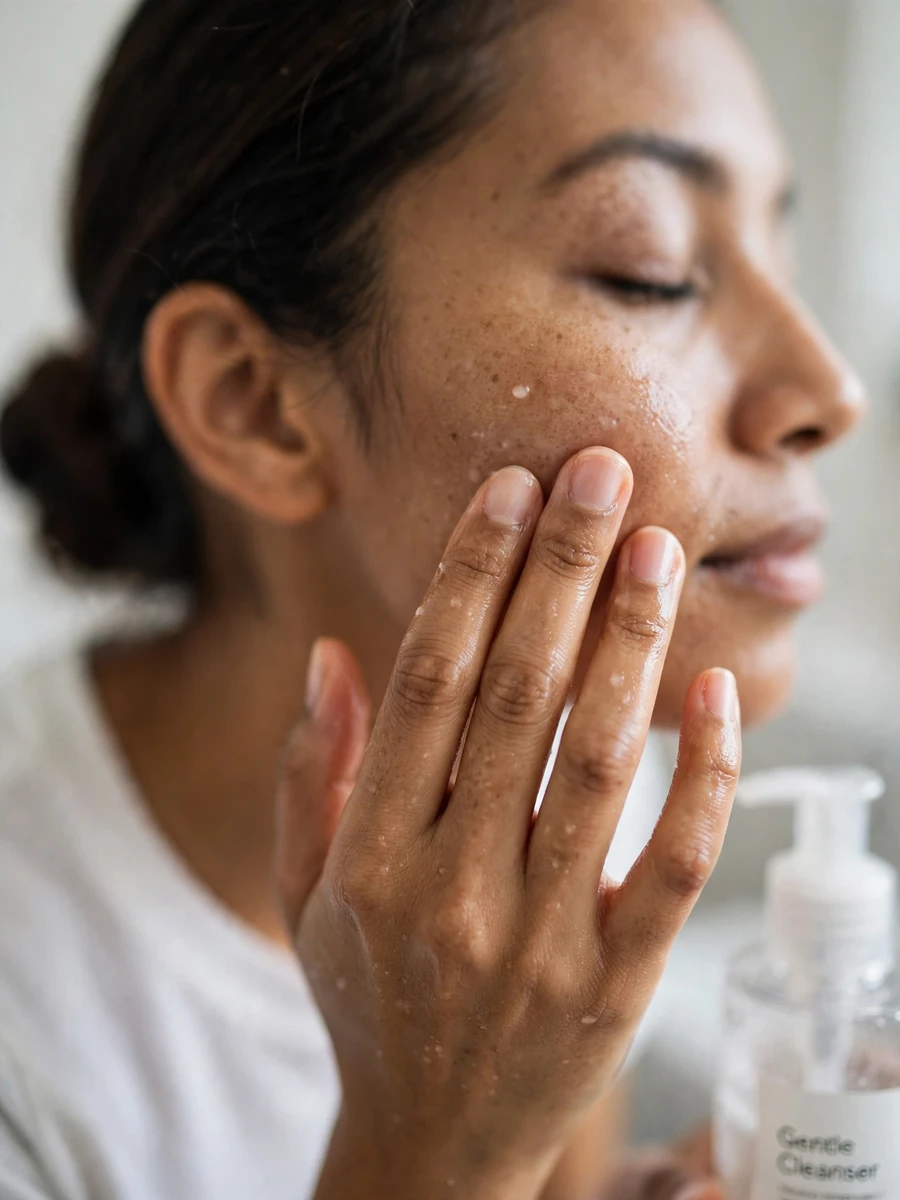
Use a gentle cleanser and lukewarm water if morning cleansing suits your skin. Massage with fingertips, rinse, and pat dry. Avoid rough washcloths or repeated scrubbing.
Some people with dry or sensitive skin prefer cleansing mainly in the evening. Consider overnight products, sweating, and how your skin feels when choosing your morning approach. Follow any specific cleansing advice from your clinician.
Tightness after washing is a reason to review the cleanser, water temperature, and washing frequency. It does not prove one ingredient is responsible. A foaming texture alone cannot tell you whether a cleanser will be harsh.
Step 2: Moisturize According To Need
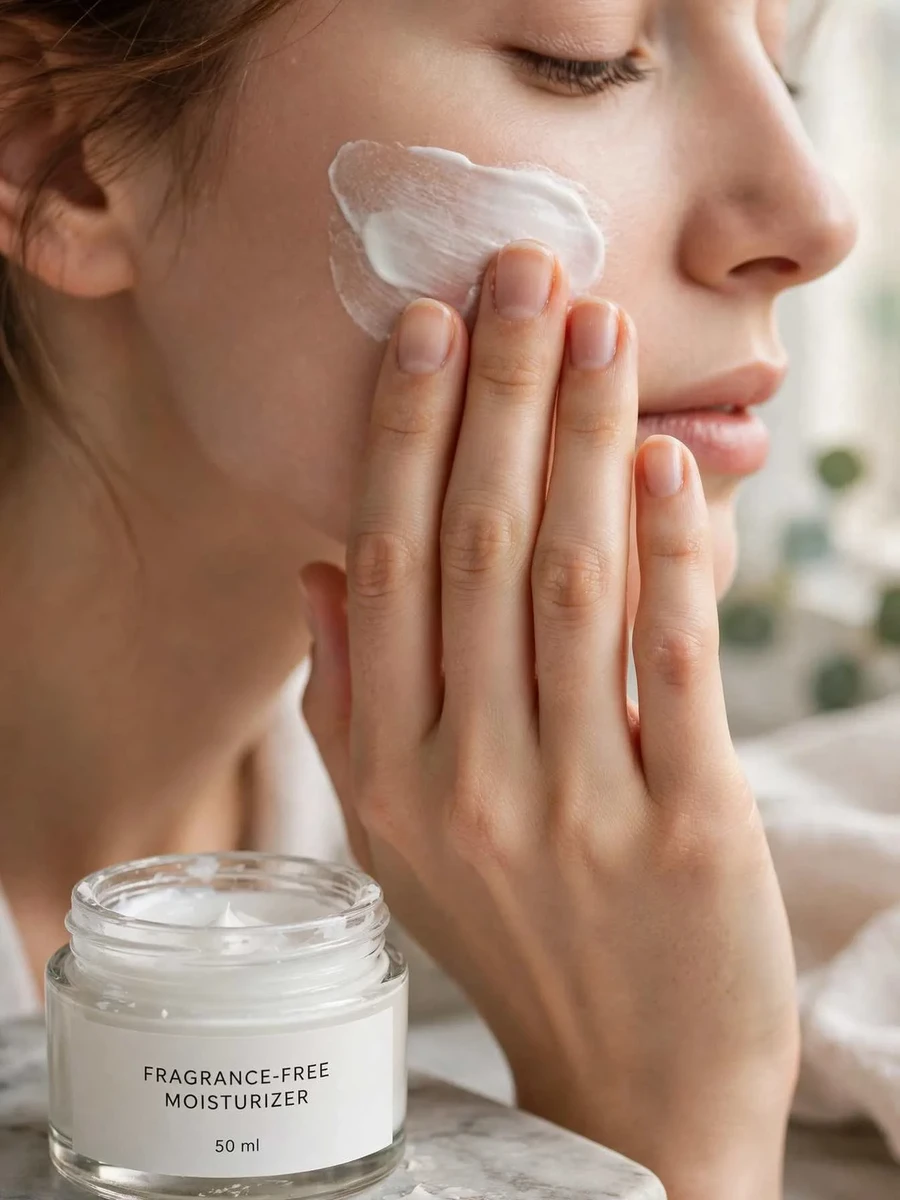
Choose a texture that feels comfortable rather than one that promises a particular glow. A lotion may suit some people; a cream may suit others. Fragrance-free products can be helpful for sensitive skin, but reactions remain possible.
Ceramides are one useful moisturizing ingredient, not a requirement for every formula. Apply according to the product directions. You do not need a thick visible layer to demonstrate that you have completed the step.
Midday shine does not automatically mean your moisturizer is too rich. Natural oil production, sunscreen, makeup, and weather can affect the finish. Review comfort and the whole routine before replacing one product.
Step 3: Apply Sunscreen
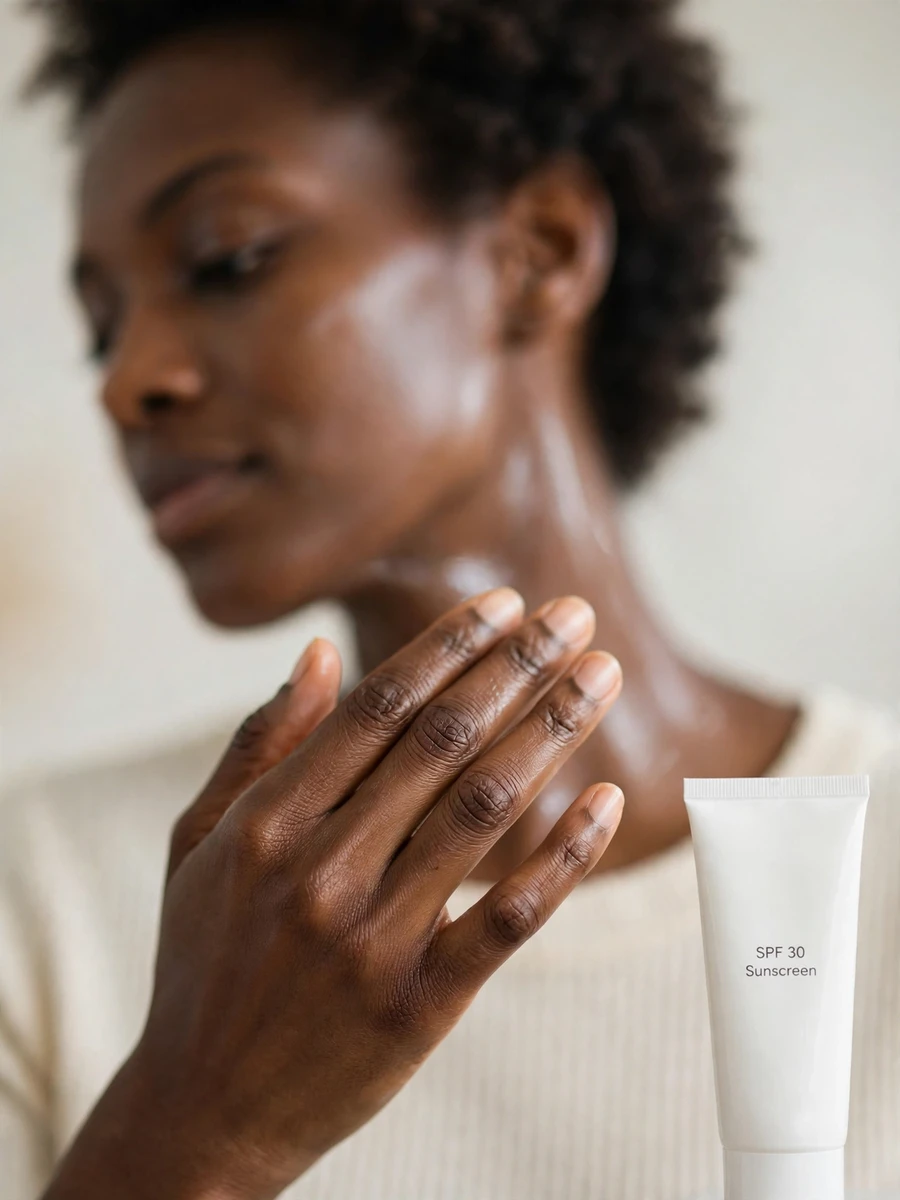
Choose broad-spectrum SPF 30 or higher, with water resistance for outdoor activity. Cover exposed areas such as the face, ears, and neck. Apply generously according to the label rather than copying a small illustrative dab.
An SPF moisturizer can serve this purpose when it meets suitable protection standards and you apply enough. The AAD’s sunscreen and moisturizer guidance accepts a moisturizer with broad-spectrum SPF 30 or higher.
Foundation with SPF should not be assumed to provide adequate coverage from a light makeup application. Apply makeup after sunscreen as directed. Avoid mixing sunscreen into another product to combine steps.
Reapply approximately every two hours outdoors, and follow the water-resistance label after swimming or sweating. Shade, clothing, and a hat also contribute to protection. Sunscreen is not a reason to stay outside longer.
Your Evening Clean Girl Skincare Routine
Evening care removes makeup, sunscreen, and accumulated surface material. Moisturizing follows, with an optional treatment only when it serves a specific need. You do not need sunscreen as an ordinary bedtime step.
Step 1: Remove Makeup And Cleanse
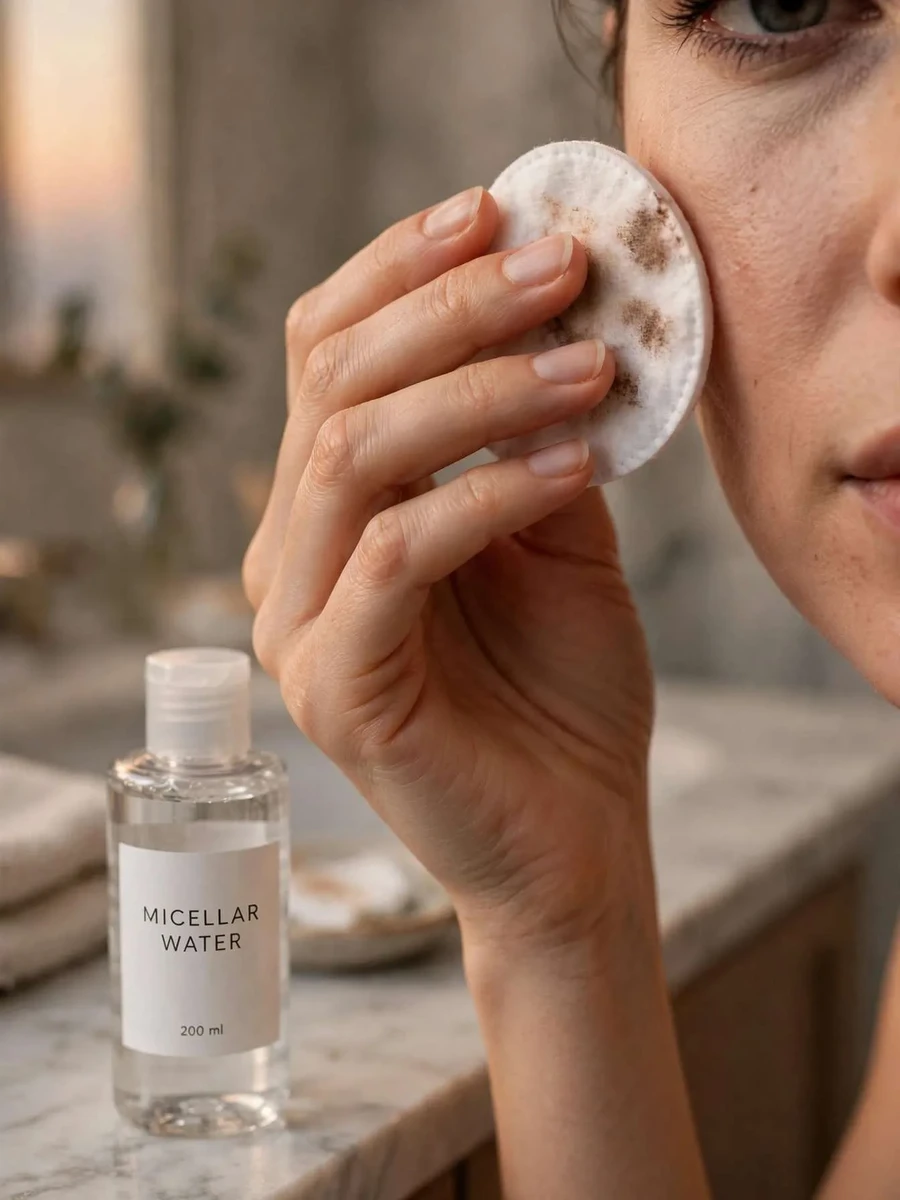
Choose a cleanser that removes what you wore without repeated rubbing. If one product handles your makeup and sunscreen comfortably, a second cleanser is not automatically necessary. Check the product’s removal directions.
For resistant makeup, a suitable remover, cleansing balm, or micellar water may help before washing. None is guaranteed irritation-free. Keep pad pressure light and rinse where the label instructs.
Double cleansing is an option based on removal needs and tolerance, rather than a requirement for oily skin. Avoid adding a second wash if the first leaves your skin clean and comfortable. Persistent residue may call for a different product.
Step 2: Consider One Optional Treatment

A treatment should address a concern rather than fill an empty place in the routine. You can skip this step if your basics meet your needs. Persistent acne or a suspected skin condition may need professional guidance.
Read the treatment’s directions for amount, frequency, application order, and whether skin should be dry. Different ingredients do not share one universal starting schedule. Keep prescription instructions separate from general cosmetic advice.
Introduce one new product at a time. This helps you notice changes, but it cannot identify every cause of a reaction. Avoid beginning a new exfoliant and another active treatment on the same day.
Step 3: Moisturize
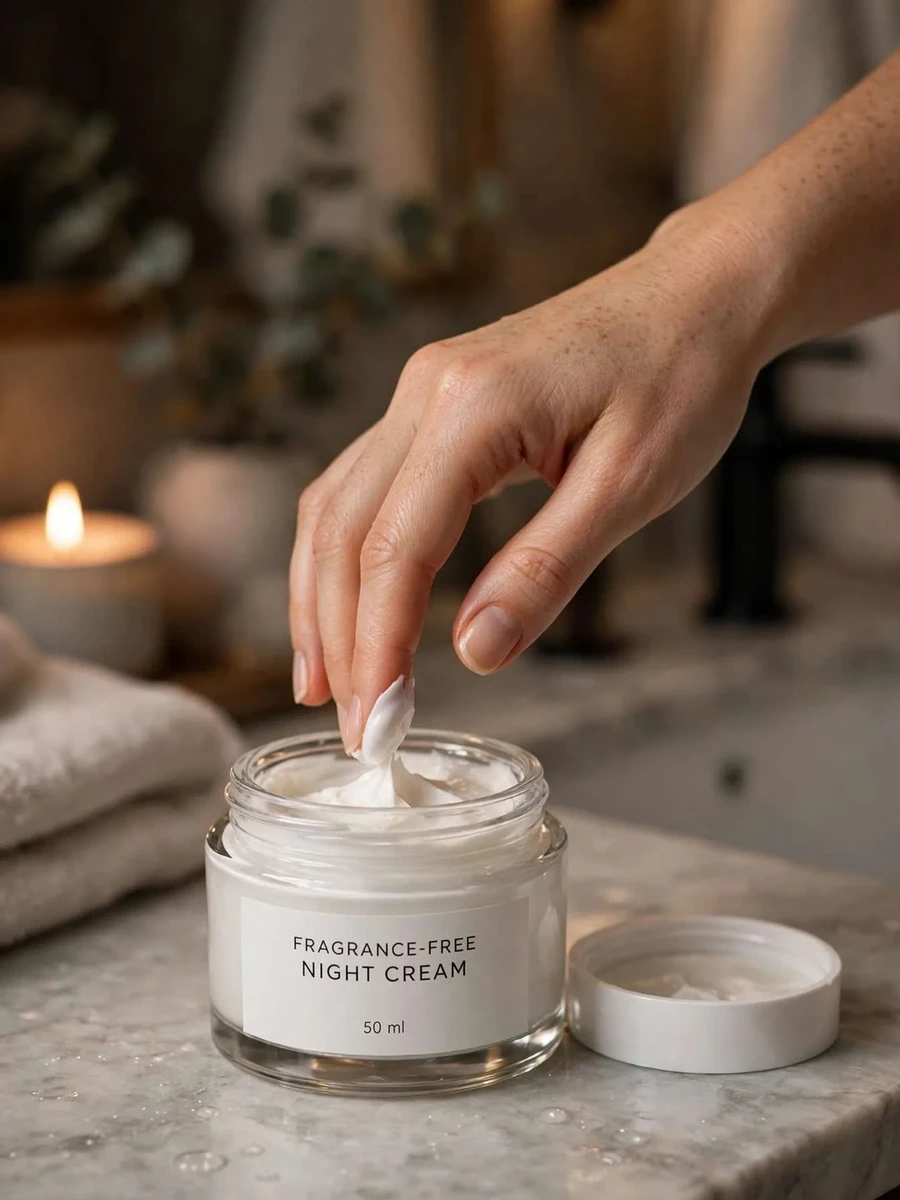
Use a moisturizer you tolerate, following any treatment-specific layering instructions. You may use the same moisturizer morning and evening. A separate night cream is optional.
Dry areas may need more attention than oily areas. A richer texture can be useful without requiring an all-over heavy layer. Stop treating a shiny finish as proof that your skin barrier has recovered.
Testing A New Product At Home
A short spot check cannot guarantee that a product will suit your whole face. It also cannot diagnose an allergy. Medical patch testing is a different procedure.
The AAD’s home product-testing guidance recommends a small test area twice daily for seven to ten days. Use an inner-arm area and follow normal contact time for rinse-off products.
For treatments with restricted application schedules, follow their directions or ask your clinician before testing. Do not apply a strong product more often merely to complete a generic test. A reaction-free test does not rule out later irritation.
Wash off a new cosmetic product if a reaction develops, and discontinue it. Seek advice for significant or persistent symptoms. For prescribed products, ask the prescriber how to handle expected effects or irritation.
Adjust Texture And Frequency To Your Skin
Skin-type labels offer a starting point, not a complete product prescription. Seasonal changes and existing treatments also matter. Make one adjustment at a time so you can assess it.
| Skin Concern | Possible Adjustment | What To Watch |
|---|---|---|
| Oily feel | Try a lighter moisturizer texture. | Shine alone is not a diagnosis. |
| Dryness | Consider a cream and review washing frequency. | Persistent tightness or flaking needs reassessment. |
| Sensitivity | Choose familiar, fragrance-free products where tolerated. | Fragrance-free does not mean reaction-proof. |
| Combination areas | Use different amounts on dry and oily zones. | Avoid treating every area identically by habit. |
Do not add weekly facials, massage tools, or exfoliation to achieve a compulsory reset. These are separate choices, not missing basics. A simple routine does not need scheduled intensification to count as effective.
Five Habits That Make A Routine Harder
The aim is to make changes easier to understand and the routine easier to follow. These habits can complicate that process. They do not explain every breakout or reaction.
Adding Several Products Together
Multiple changes make it harder to connect a symptom with a product. Keep a brief record of what you start and when. That record can also help during a clinical consultation.
Cleansing For A Squeaky Finish
Repeated washing to remove every trace of oil may leave skin uncomfortable. Use gentle contact and reassess the method if tightness persists. More foam or longer rubbing does not prove better cleansing.
Forgetting Outdoor Reapplication
A morning application is not an all-day guarantee. Carry sunscreen when spending time outdoors and follow its label. Remember exposed ears and neck when reapplying.
Chasing An Even, Poreless Glow
Aesthetic photographs are not a skin-health test. Natural texture can remain visible with appropriate care. Avoid adding actives simply because your face does not match an edited reference.
Stopping Prescribed Care To Reduce Steps
A smaller product count is not more important than managing a condition. Discuss changes to medication with your prescriber. Keep optional cosmetic steps flexible around that plan.
FAQs
A minimal routine should respond to your skin rather than force a particular finish. These answers cover common decisions about products and expectations.
Can Sensitive Skin Follow This Routine?
The basic structure may be useful, but individual formulas still matter. Choose tolerated products and introduce changes cautiously rather than assuming a short routine prevents reactions.
Do I Need A Toner?
No, toner is optional. Choose any extra product for a clear purpose and tolerance, rather than assuming oily skin requires it.
Can I Wear Full-Coverage Makeup?
Yes. Makeup coverage is a preference, not a measure of skin health. Apply it after sunscreen as directed and remove it gently.
How Long Until I See Results?
Timing depends on the concern and products involved. Do not wait through significant irritation to complete an arbitrary trial period, and follow treatment-specific review advice.
Can My SPF Moisturizer Replace Separate Sunscreen?
It can if it offers suitable protection and you apply it correctly. Look for broad-spectrum SPF 30 or higher, appropriate water resistance, and follow outdoor reapplication directions.
Do I Need Three Separate Products?
No. The essentials describe functions, and a combination product may cover more than one. Prescribed treatment may also require extra steps.
Keep The Routine Useful
A simple routine gives cleansing, moisture, and sun protection a clear place without setting a universal bottle limit. Your skin can have texture, shine, or ongoing treatment needs while you follow those basics. The useful changes are ones that improve comfort or meet a specific need.
Write down your current morning and evening products with one purpose beside each before buying another skincare item.