DIY Face Masks: Gentle Recipes That Soothe Skin Safely
Gentle DIY face masks can soothe and soften skin, and this guide keeps every recipe inside safe limits. Pantry masks spread fast online each week. Some blends help skin feel calm. Others burn, stain, or trigger dark marks. Sorting one group from the other matters.
Most recipe posts skip the safety filter entirely. They list lemon, soda, and vinegar beside mild staples. This guide splits the pantry into two clear lists. Gentle staples get full recipes with amounts. Risky staples get named and ruled out.
Here is the direct answer on DIY face masks. Build them from oatmeal, honey, plain yogurt, cucumber, or aloe vera. Patch test each blend a day ahead. Wear it for 10 to 15 minutes, then rinse. Keep lemon, soda, and toothpaste off your face.
Why DIY Face Masks Need a Safety Filter
Skin guards itself with a thin acid mantle. Healthy skin sits near pH 4.5 to 5.5. That mild acidity helps the skin barrier hold water. It also keeps surface microbes in balance. Strong acids or alkalis disturb that balance fast.
pH Explains Most DIY Mask Damage
Lemon juice sits near pH 2, far below the skin range. Baking soda sits near pH 9, far above it. Either one can strip or sting the barrier. Redness, peeling, and tightness often follow. Darker skin tones may keep marks for months. A 2026 report in The National gathered dermatologist warnings in reporting on DIY skincare harm this month.
Natural Says Nothing About Strength
A pantry item can be edible and harsh. “Edible” means the stomach handles it well. Facial skin is thinner and more reactive. Concentration also stays uncontrolled in home blends. Formulated products buffer acids to set levels. Kitchen mixing offers no such control. Gentleness, not origin, decides mask safety.
Gentle Ingredients for DIY Face Masks
Five staples earn a place in DIY face masks for most readers. Each one feels mild on short contact. Each one rinses clean with water. None replaces a formulated treatment product. Start with one staple per blend.
Oatmeal Calms and Softens
Finely ground oatmeal forms a soft, soothing paste. Colloidal oatmeal appears in many calm-skin products. Home-ground oats give a similar cushioning feel. Oats suit dry, itchy, or wind-worn skin. Grind them fine to avoid scratchy grains. A smooth paste spreads without dragging.
Honey Holds Water on Skin
Honey is a humectant, so it draws in water. It gives masks a smooth, sticky glide. Thin layers rinse off without scrubbing. Honey suits dry and dull skin well. Use plain honey with no added flavors. Warm the jar briefly for easier mixing.
Plain Yogurt Cools and Smooths
Plain yogurt brings lactic acid in a mild food form. It can leave skin feeling smoother after rinsing. The cool, thick texture spreads evenly. Choose unsweetened yogurt with no fruit pieces. Flavored yogurt adds sugar and fragrance. Both extras raise irritation risk on faces.
Cucumber and Aloe Vera Cool Skin
Cucumber is mostly water and feels cooling on contact. Grated cucumber adds slip to thick pastes. Aloe vera gel adds a light, calm layer. Both suit warm, flushed, or tired skin. Use fresh cucumber the same day. Store-bought aloe gel keeps mixing easier.
Five Gentle Face Mask Recipes
These face mask recipes use the gentle staples only. Each recipe makes one fresh mask. Amounts fill a small bowl with some spare. Wear each mask for 10 to 15 minutes. Rinse before the mask dries hard.

Oatmeal and Honey Soothing Mask
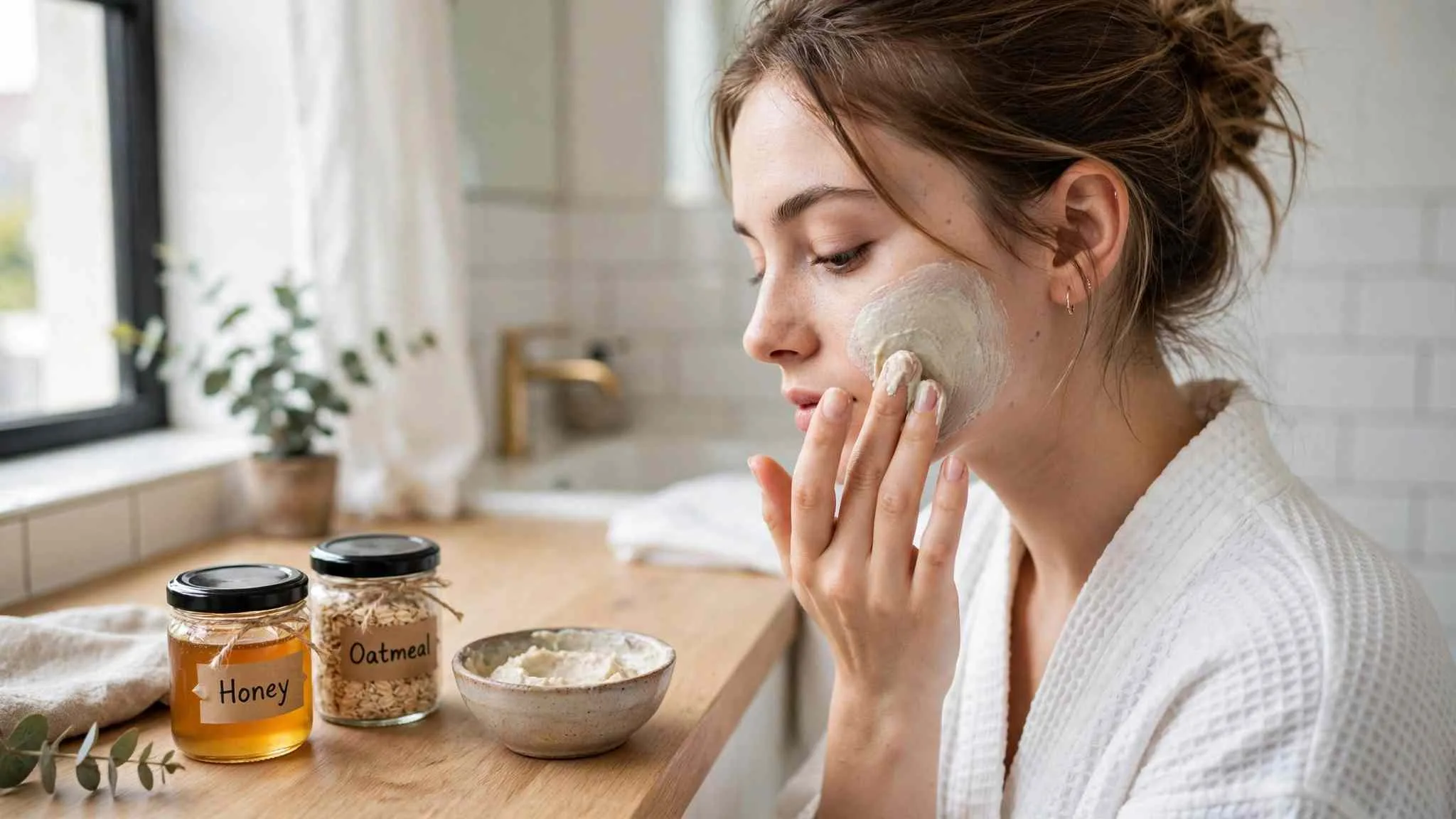
Mix two tablespoons ground oatmeal with one tablespoon honey. Add warm water until the paste spreads easily. This easy DIY face mask suits dry, reactive days. It leaves skin soft rather than polished. Keep it off broken or cracked patches. Rinse with lukewarm water and pat dry.
Yogurt and Honey Mask for Dull Skin
Mix two tablespoons plain yogurt with one teaspoon honey. Spread a thin layer over clean skin. The lactic acid may smooth rough surface texture. Skin often looks fresher after rinsing. This blend suits normal and combination skin. Avoid it on days when skin stings already.
Cucumber and Aloe Cooling Mask
Blend three tablespoons grated cucumber with two tablespoons aloe vera gel. Chill the mix for ten minutes before use. This cooling homemade face mask suits flushed, warm skin. It drips more than thicker pastes do. Lie back during the wear time. Rinse with cool water afterward.

Avocado and Honey Mask for Dry Skin
Mash half a ripe avocado with one tablespoon honey. The fruit oils coat dry patches well. This rich blend suits tight, flaky cheeks. Keep the layer thin around the nose. Oils can feel heavy on oily zones. Rinse well, then add moisturizer.
Kaolin and Yogurt Mask for Oily Skin
Mix one tablespoon kaolin clay with two tablespoons plain yogurt. Kaolin is the mildest common cosmetic clay. It can absorb surface oil during wear. This blend suits shiny foreheads and noses. Rinse as the mask starts to lighten. Never let clay masks crack fully.
Ingredients to Never Put on Your Face
Some pantry staples fail every safety check for faces. No dilution trick makes them reliable. This list matters as much as any recipe. Check viral homemade face masks against it first.
Lemon, Vinegar, and Baking Soda
Lemon juice can trigger phytophotodermatitis under sunlight. That reaction can leave lasting dark patches. Apple cider vinegar can burn skin when undiluted. Baking soda disrupts the acid mantle with high pH. All three appear in viral recipes often. Popularity does not soften their chemistry.
Toothpaste, Garlic, and Rubbing Alcohol
Toothpaste targets teeth, not facial skin. Its flavor oils and detergents often burn faces. Raw garlic can cause contact burns within hours. Rubbing alcohol strips barrier oils and raises dryness. Spot use carries the same risks. Small areas burn as fast as large ones.
Undiluted Essential Oils
Essential oils are concentrated plant extracts. Undiluted drops can irritate or sensitize skin. Tea tree and lavender oils cause reactions in some readers. Food-grade staples give safer home options. Skip scented oils in DIY face masks entirely. Fragrance adds risk and no mask benefits.
How to Apply DIY Face Masks Safely
The method decides whether DIY face masks stay gentle. The same recipe can soothe or sting. Four habits keep the odds in your favor. Follow them in order every time.
Patch Test a Day Ahead
Dab a little blend on your inner arm. Wait 24 hours before any face use. Watch for redness, itching, or bumps. A clear test lowers risk, not removes it. Test each new recipe separately. Ingredients interact in new blends.

Mix Fresh and Use Once
Home blends carry no preservative system. Bacteria can grow in stored mixtures fast. Mix each mask right before use. Throw away any leftover blend afterward. Use clean hands, bowls, and spoons. Our how to wash your face properly guide covers clean skin prep too.
Cleanse First, Then Apply Thinly
Wash with a gentle cleanser before masking. Pat skin until it feels damp, not wet. Spread the mask in a thin layer. Keep it clear of eyes and lips. Set a timer for 10 to 15 minutes. Longer wear raises irritation risk.
Rinse, Moisturize, and Watch
Rinse with lukewarm water and soft fingertips. Skip scrubs and rough cloths during removal. Pat dry and apply moisturizer right away. Mild warmth for minutes can be normal. Stop and rinse at once if burning starts. Note any reaction before repeating a recipe.
What DIY Face Masks Cannot Do
A kitchen mask is a short-contact comfort step. It can soften, cool, or calm skin briefly. It cannot treat medical skin conditions. Homemade face masks lack tested doses and preservatives. Expect a pleasant ritual, not a cure.
Persistent acne, melasma, or deep wrinkles need formulated care. Those concerns respond to measured active ingredients. Pantry blends cannot match that control. Our skincare mistakes guide flags habits that stall progress. A steady base routine matters more than masks. The American Academy of Dermatology covers that base in its skin care basics guide for all ages.
When to Skip DIY and Seek Care
Some skin should skip home masks entirely. Broken, cracked, or weeping skin needs care first. Fresh sunburn also needs rest, not masks. Eczema flares react to many mild staples.
Book a dermatologist visit for spreading redness. Book one for blistering, swelling, or lasting marks. Bring a list of everything you applied. Note when each symptom started. Photos from the first day help too. Early care often shortens recovery time.
FAQs
How Often Can I Use DIY Face Masks?
Once or twice weekly suits most readers. Daily masking raises irritation risk without added gain. Rotate recipes instead of repeating one blend. Give skin rest days between masks. Drop the frequency if redness appears. Your skin barrier sets the schedule.
Which DIY Face Mask Suits Sensitive Skin?
The oatmeal and honey mask is the mildest option here. Colloidal oatmeal and honey both feel cushioning on skin. Patch test it a full day ahead. Wear it for ten minutes only. Rinse at the first lasting sting.
Can I Store Leftover Face Mask Mixture?
No. Home blends have no preservative system for storage. Bacteria can grow in a stored mix overnight. Mix a fresh batch for every use. Make smaller amounts to cut waste. Discard leftovers in the bin, not the fridge.
Why Did a Pantry Mask Burn My Skin?
Strong pH is the most common cause. Lemon sits near pH 2, baking soda near pH 9. Both can damage the acid mantle quickly. Rinse the blend off with cool water. See a dermatologist if blistering or marks appear.
Are DIY Face Masks Safe During Pregnancy?
Gentle food staples are low risk for most readers. Oatmeal, honey, and yogurt masks fit that group. Still, skin often reacts more during pregnancy. Patch test every blend a day ahead. Ask your doctor about any lasting reaction.
Can DIY Face Masks Replace Store Products?
No. Home masks lack tested doses and preservatives. They work as an occasional comfort step only. Cleanser, moisturizer, and broad-spectrum SPF 30 form the daily base. Our skincare routine guide maps that base in full. Masks sit on top, never underneath.
Final Thoughts
You now hold a safe plan for DIY face masks at home. Pick one gentle recipe from the five above. Patch test it tomorrow on your inner arm. Mix it fresh, wear it briefly, and rinse gently. Keep lemon, soda, and toothpaste off your face permanently. Write down how your skin felt afterward. That note guides your next mask choice.