Pregnancy Safe Skincare: What To Use And What To Avoid

Wondering which products need to leave your shelf now that you are pregnant? Pregnancy safe skincare starts with reviewing ingredients, not replacing everything you own. A familiar cleanser may still fit, while an acne treatment or brightening cream needs a closer look. The useful question is what each product contains and how you use it.
Many everyday products can remain part of a simple routine, but an ingredient checklist cannot guarantee safety for every formula. Concentration, application area, other ingredients, and prescribed treatments all matter. Skin tolerance can change during pregnancy too, so yesterday’s comfortable serum may feel irritating today.
This guide explains the main ingredients to avoid or discuss, realistic alternatives, and a gentle morning-to-night routine. You will also find a shelf-review method and advice for an accidental exposure. Bring unresolved product questions to your obstetrician, dermatologist, or pharmacist rather than guessing from front-label claims.
Pregnancy Safe Skincare Starts With A Product Review
A pregnancy safe skincare review separates everyday products from medicines that need specific decisions. The American Academy of Dermatology’s pregnancy skincare guidance recommends reviewing ingredients and telling your clinicians about your treatments.
Low Absorption Is Context, Not A Guarantee
The skin limits how much of many topical treatments reaches the bloodstream. Absorption can increase with damaged skin, frequent application, or use over a large area. That helps explain why applying a product and taking a medicine by mouth are different exposures. It does not mean every substance applied to skin is suitable during pregnancy.
Review Medicines Before Cosmetic Extras
Tell your care team if you are pregnant, planning pregnancy, or using a treatment prescribed before pregnancy. Include acne and hair-loss medicines, spot treatments, peels, and products used beyond your face. A short face-only checklist can miss relevant exposure. Keep the original packaging or a clear photograph of the complete ingredient list.
Ingredients To Avoid Or Discuss Promptly
Retinoids and hydroquinone deserve particular attention, but they are not the only products that may need a change. Specific medication warnings take priority over a general rule to wait for a routine appointment.
Retinoids: Check Both Cosmetic And Prescription Labels
Avoid topical retinoids during pregnancy, including retinol, retinal, tretinoin, adapalene, and tazarotene. Retinyl esters can also appear in cosmetic ingredient lists, so ask about unfamiliar vitamin A derivatives. Stop using a topical retinoid and contact the prescriber or pregnancy-care team for advice. This recommendation does not mean you should stop prescribed prenatal vitamins or remove vitamin A foods from your diet.
Oral isotretinoin is a separate, serious pregnancy risk. If you become pregnant while taking it, stop taking it and contact your prescriber immediately. Do not interpret general advice about checking before changing medicines as a reason to continue isotretinoin during pregnancy. Other prescribed treatments need their own medication-specific instructions.
Hydroquinone: Avoid During Pregnancy
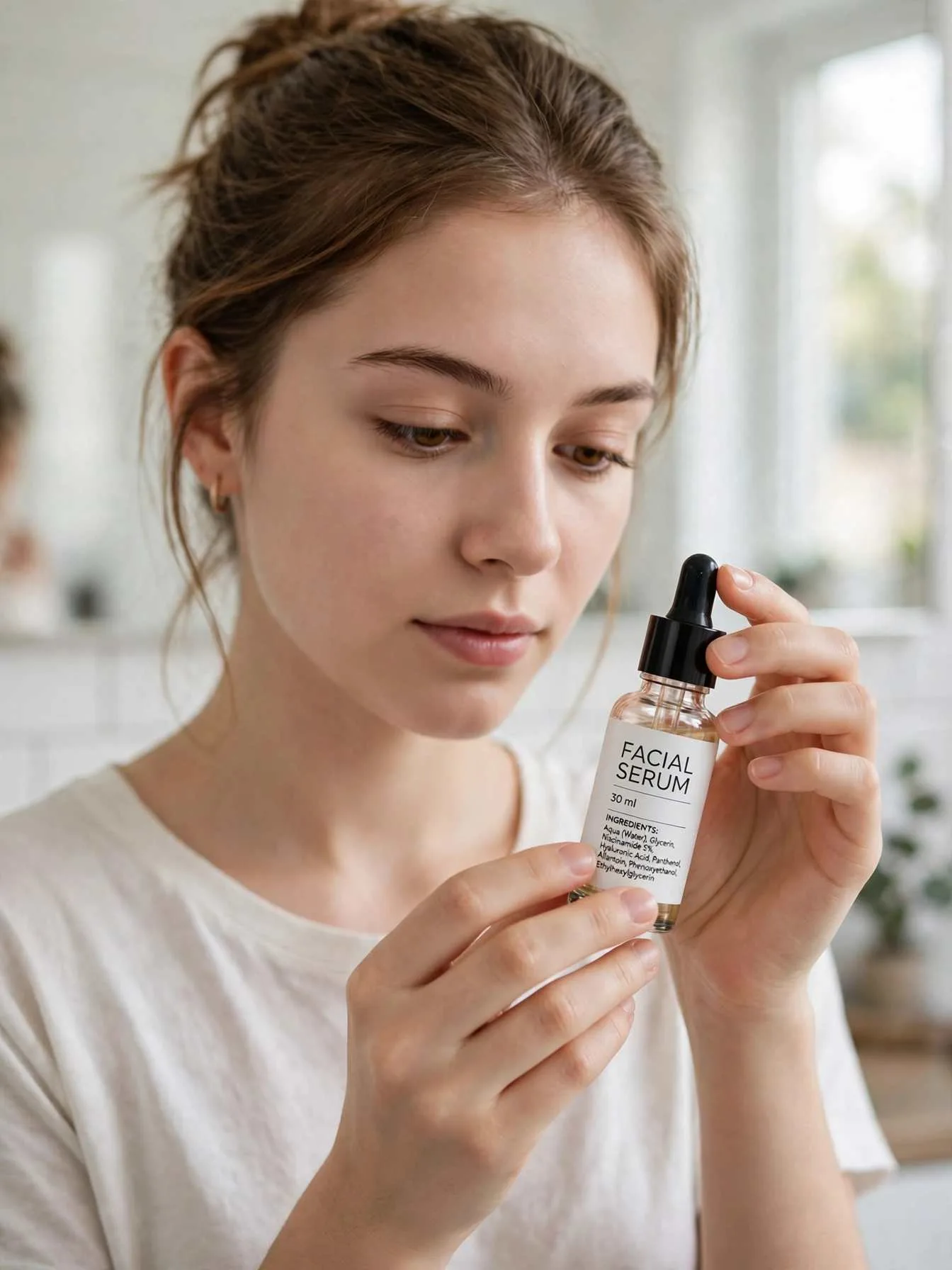
Hydroquinone is a skin-lightening ingredient with relatively substantial absorption and limited pregnancy safety evidence. Avoid it during pregnancy rather than treating occasional use as an approved compromise. If you have already used it, record the product and exposure details for your clinician. Uncertainty about a product does not automatically establish that an exposure has harmed a pregnancy.
Other Prescription Treatments Need Individual Review
Spironolactone, some oral antibiotics, finasteride, and other dermatology medicines can require pregnancy-specific changes. Contact the prescribing clinician promptly rather than substituting an over-the-counter product yourself. Timing and treatment purpose matter, so a generic instruction to stop every prescription is also inappropriate. Do not postpone an urgent medication warning until your next routine visit.
Strong Acids And Peels Are Not Everyday Exfoliation
The AAD’s greater-than-2% caution refers specifically to salicylic acid, not every exfoliating acid. A glycolic or lactic acid product cannot be classified using that salicylic-acid threshold. Strength, formula, treatment area, and frequency all affect the decision. Discuss strong peels and intensive treatments before proceeding, and avoid experimenting with them at home during pregnancy.
Pregnancy Safe Skincare: Gentle Daily Basics
Pregnancy safe skincare does not require a serum for every possible concern. Begin with tolerated basics, then consider a treatment only when there is a clear reason to use it.
Gentle Cleansing And Comfortable Moisturizing
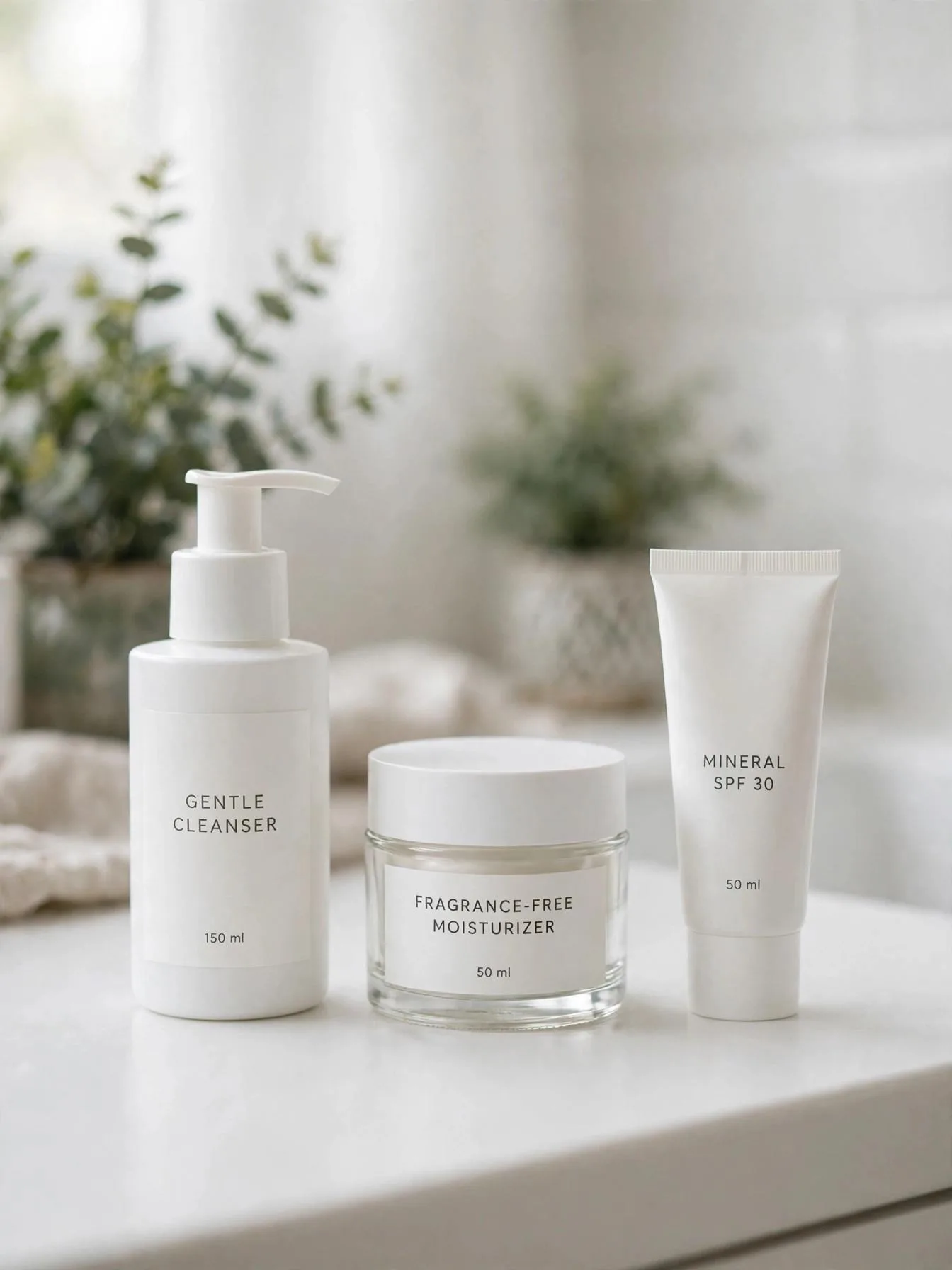
Use a mild cleanser and a moisturizer that suits your skin, with fragrance-free options if you are easily irritated. Glycerin, hyaluronic acid, and ceramides are common moisturizing ingredients; you do not need separate products for all three. Choose by comfort and the complete formula rather than a pregnancy-themed label. Our sensitive-skin routine guide can help you simplify the steps.
Selected Acne Treatments May Be Options
ACOG identifies topical benzoyl peroxide, azelaic acid, salicylic acid, and glycolic acid as options that may be used if needed. MotherToBaby explains this guidance and the importance of checking combination ingredients. Discuss the actual product and intended use, especially for repeated or extensive application. An ingredient appearing on this list does not clear every strength or combination.
Sunscreen And Physical Sun Protection
Choose broad-spectrum, water-resistant SPF 30 or higher, alongside shade and protective clothing. Zinc oxide or titanium dioxide formulas are a useful option when skin is sensitive. This preference should not become a claim that every non-mineral sunscreen is proven unsafe. If your current sunscreen is uncomfortable or you are unsure about it, ask for an appropriate alternative rather than abandoning sun protection.
A Pregnancy Safe Skincare Shelf Audit
Treat this review as a way to organize products for pregnancy safe skincare decisions, not a test that proves safety. Include body products and occasional treatments as well as the bottles beside your sink.
Step 1: Make a list of product names, full ingredients, strengths where shown, application areas, and how often you use them. Photograph back labels and the active-ingredient panel when there is one.
Step 2: Identify retinoids and hydroquinone, then check prescription products and their pregnancy warnings. Contact the appropriate clinician promptly about medicines that may need changing.
Step 3: Flag strong peels, unfamiliar ingredients, combination treatments, and anything applied frequently over large areas. Do not apply one percentage cutoff to every acid.
Step 4: Keep a short list of familiar basics you tolerate, plus questions for your care team. A product left on the shelf after this review has not received a medical safety certification.

For pregnancy safe skincare, check beyond names such as daily moisturizer or night cream to the full formula. Check the ingredient information on the back or the manufacturer’s current product information. If labels are missing, find the exact version rather than relying on a similar-looking bottle. Formulas can differ between products and markets.
Morning And Evening Pregnancy Safe Skincare
A repeatable pregnancy safe skincare routine helps you notice irritation and avoid accidental overlap. Use your agreed treatment directions rather than adding every ingredient discussed in this guide.
Morning: Cleanse, Moisturize, Protect
Cleanse gently as needed, rinse with lukewarm water, and pat dry. Apply a comfortable moisturizer, then sunscreen according to its label. If you use a treatment approved for your circumstances, follow its placement instructions. Makeup is optional and does not replace sunscreen unless you apply a suitable sunscreen product in the required amount.
Reapply sunscreen at least every two hours outdoors and after swimming, sweating, or towel drying as directed. The water-resistance label is not permission to leave it on unchanged all day. Keep a hat and shade in the plan, particularly when pigment changes are a concern. Use enough to cover exposed skin generously, following the product directions.
Evening: Remove Products Without Scrubbing
Remove sunscreen and makeup with a gentle method that avoids prolonged rubbing. Moisturize afterward and use only the treatments included in your pregnancy plan. A separate night cream is optional; a comfortable daytime moisturizer may do the same job. Skip extra exfoliation if skin feels dry, sore, or unusually reactive.
Choose Alternatives By The Concern
An alternative may help with one concern without reproducing every effect of the paused product. Keep expectations realistic and introduce optional products individually so you can identify a reaction.
For Breakouts And Post-Acne Marks
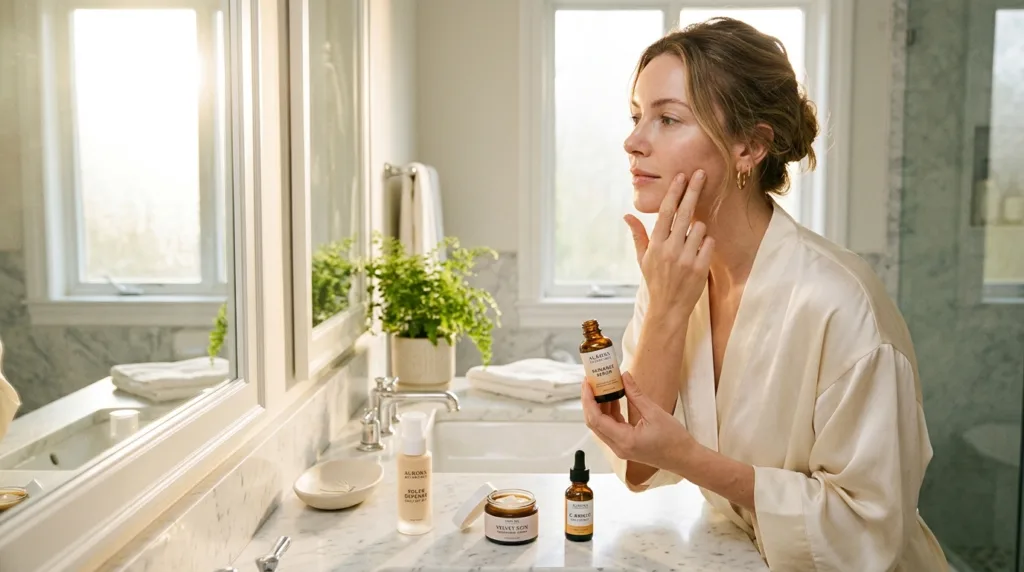
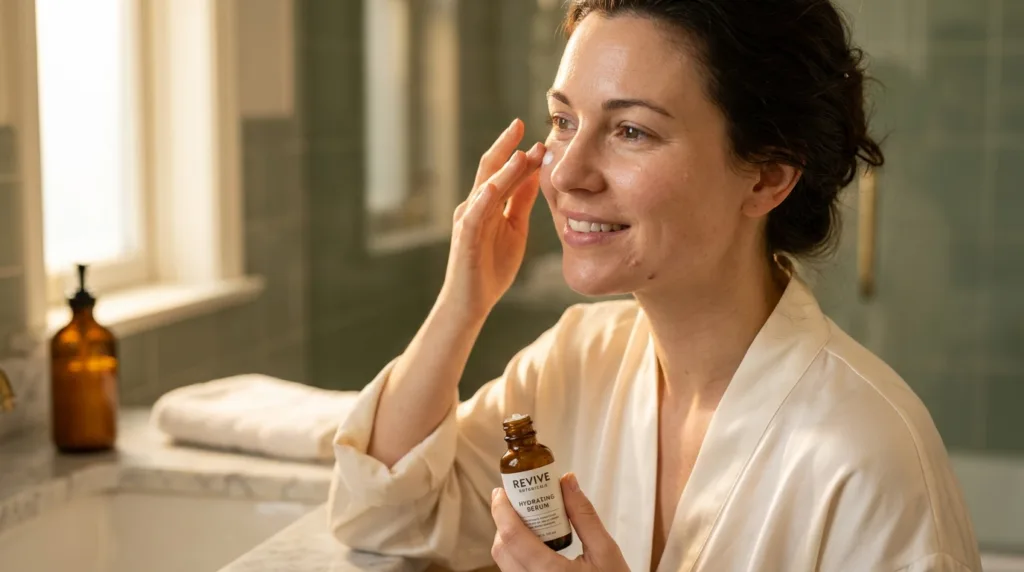
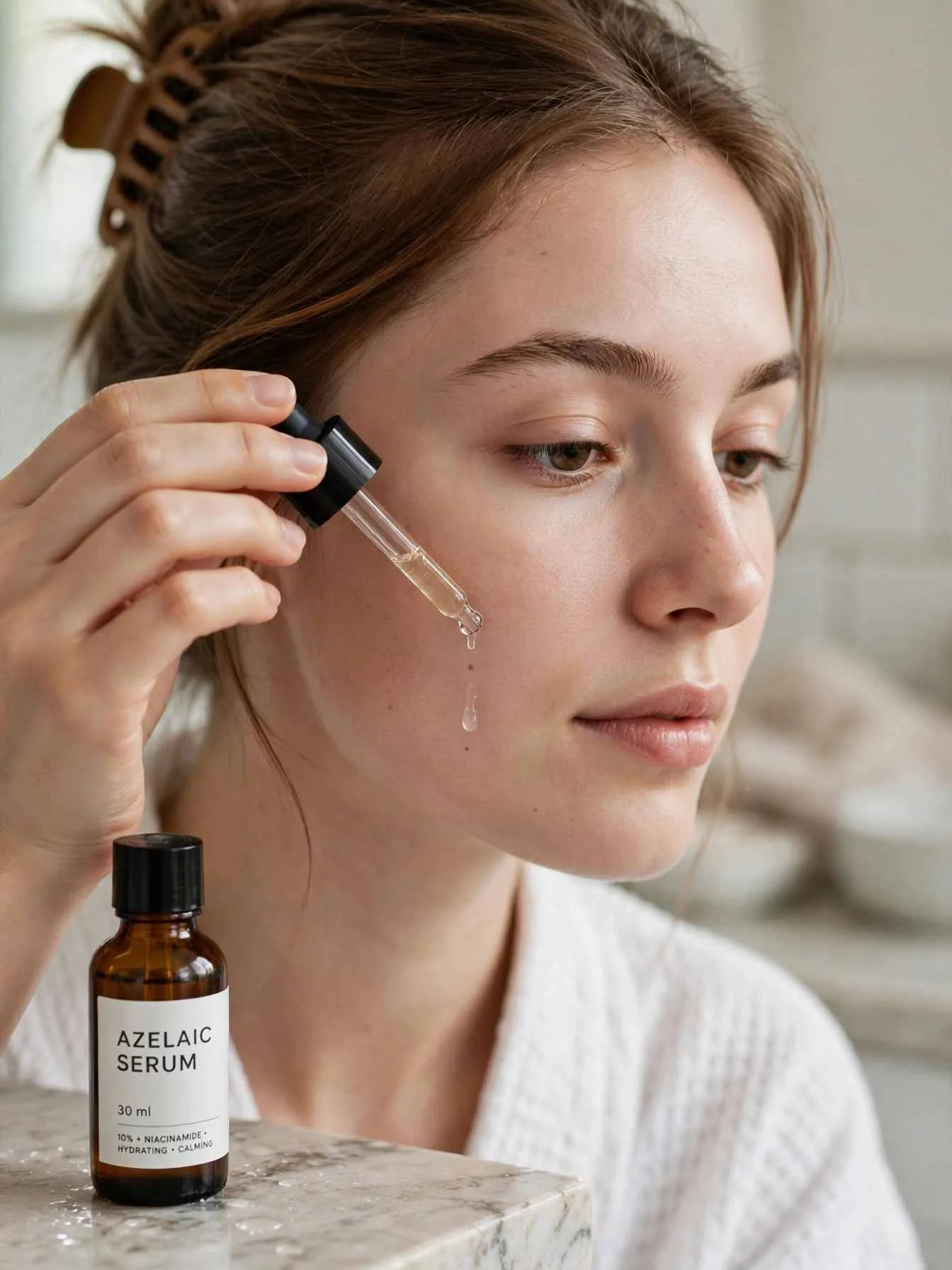
Azelaic acid may be worth discussing for acne and associated marks. It is not a one-to-one replacement for all retinoid benefits, and an azelaic-labelled serum may contain other active ingredients. Check the complete formula and follow agreed directions. The illustration shows serum application, not a tested product recommendation or dosing guide.
For Uneven Tone And Roughness
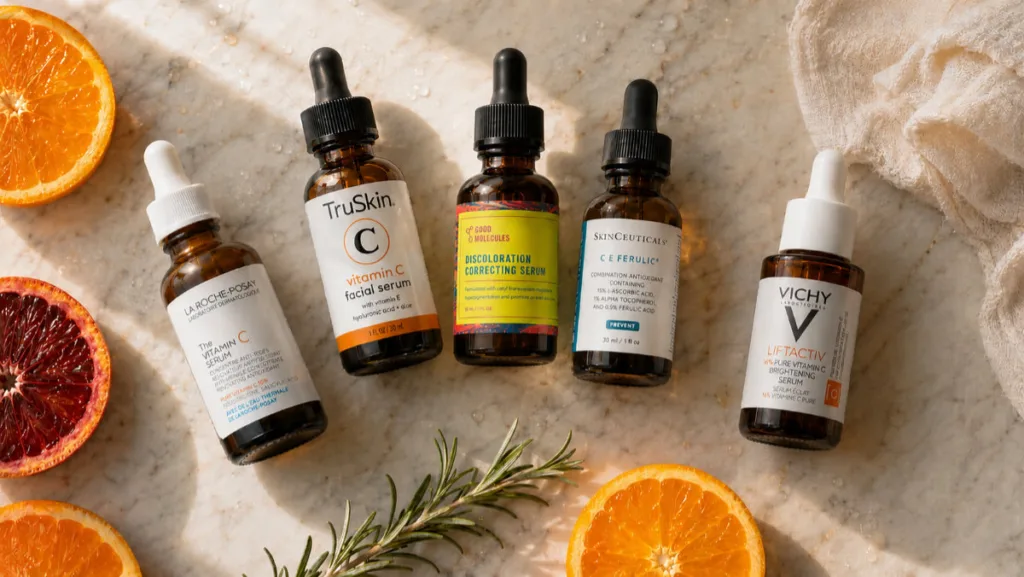
A tolerated vitamin C or niacinamide formula may offer supportive cosmetic care, while sunscreen remains central to pigment management. Do not promise hydroquinone-level fading from these alternatives. If exfoliation has a clear purpose, discuss a suitable product rather than prescribing a universal weekly acid schedule. More frequent use is not automatically more helpful.
Pregnancy Acne: Keep Treatment Targeted
Hormonal changes can contribute to breakouts, but every new bump is not necessarily acne. Pregnancy safe skincare should leave room for assessment when symptoms are painful, persistent, or difficult to identify.
Support The Skin Around The Treatment
Gentle cleansing and moisturizing can help keep an acne routine tolerable. Avoid picking, abrasive scrubs, and multiple new treatments introduced together. If an agreed active irritates your skin, contact the clinician or pharmacist about how to proceed. Moisturizer supports comfort; it does not replace treatment for acne that needs medical care.
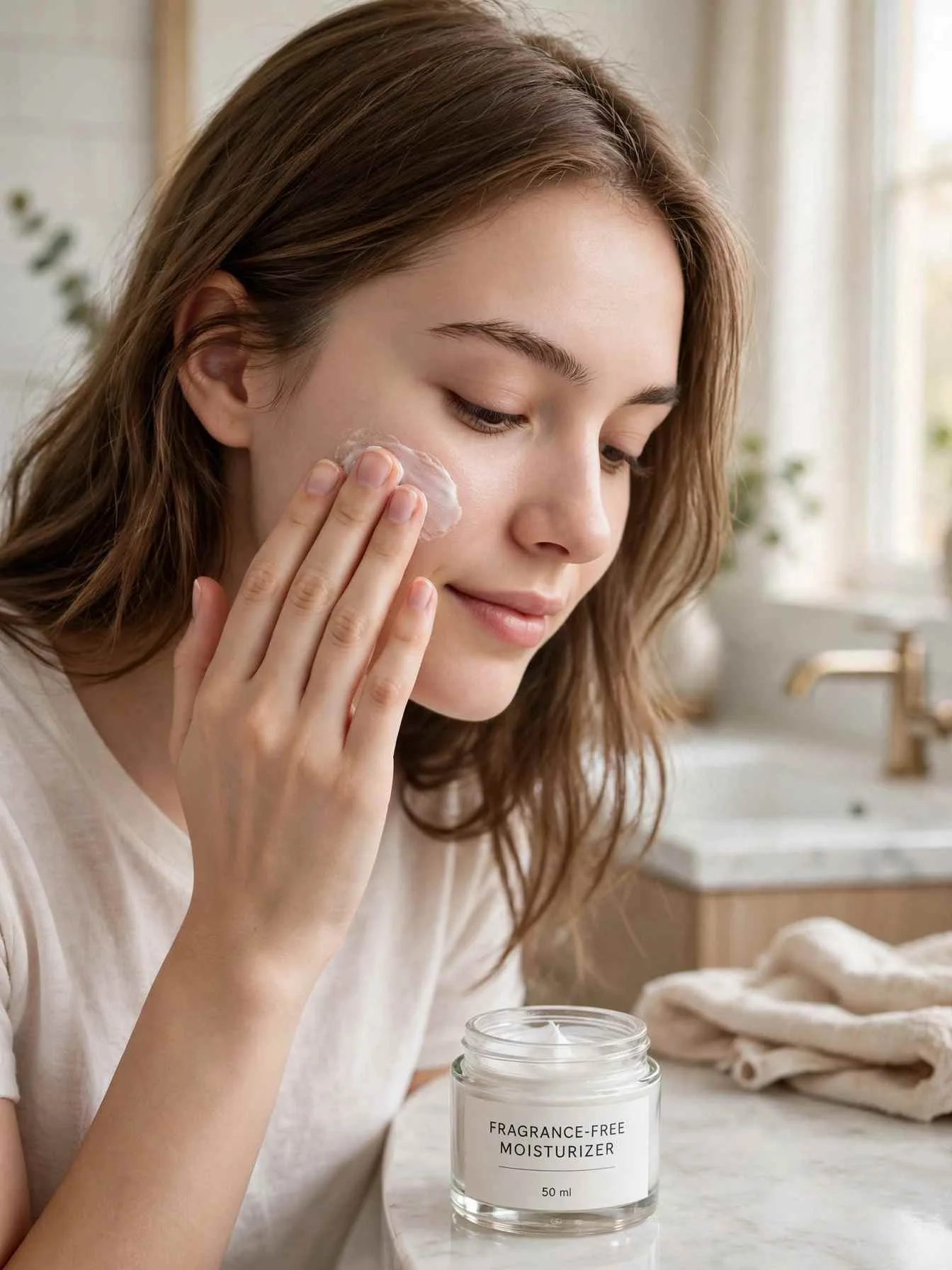
A fragrance-free moisturizer does not treat breakouts itself; it keeps the barrier calm while the active you picked does the work.
Get Help Before Scarring Develops
Painful deep spots, developing scars, or acne that is affecting daily life are reasons to ask for care. You do not need to exhaust every shelf product first. Take your current products and treatment history to the appointment. Do not restart an old prescription simply because it previously cleared your skin.
Melasma: Protect Against Sunlight And Manage Expectations
Pregnancy-related pigment changes involve hormones as well as light exposure. Sun protection can help limit worsening, but no routine guarantees that melasma will disappear or prevents every new patch.
For melasma, consider a tinted sunscreen containing iron oxides alongside broad-spectrum SPF protection. Iron oxides help address visible light, which can worsen pigmentation. Choose a shade and texture you will use consistently, with a wide-brimmed hat and shade. The sun-protection habits in our skincare guide for dark skin are also relevant when marks are a concern.

Some pregnancy-related pigmentation fades after delivery, while other patches persist. Ask about treatment options without assuming that delivery automatically makes every product appropriate, particularly if breastfeeding. New or changing marks should not all be labelled melasma from a photograph. A clinician can help distinguish pigment changes from another skin problem.
New Products, Natural Claims, And Skin Testing
Natural, clean, and pregnancy-safe marketing claims cannot substitute for reviewing ingredients and use. Skin testing answers a different question: whether a product appears to irritate your skin.
Use A Small-Area Test With Clear Limits
For a new skincare product, AAD guidance describes applying the normal amount to a small inner-arm or elbow area twice daily for seven to ten days. Follow wash-off directions for cleansers and similar products. Stop and wash it off if a reaction develops. Do not deliberately retest something that caused a significant reaction.
A home test cannot establish pregnancy safety, diagnose allergy, or guarantee that facial skin will tolerate the product. It does not make a retinoid or another unsuitable ingredient acceptable. If your skin is already inflamed or reactions keep recurring, get advice before testing more products. A clinician may recommend a different assessment.
Limited Evidence Calls For Specific Questions
Bakuchiol is marketed as a retinol alternative, but that description is not proof of pregnancy safety. Peptide products contain different ingredients and combinations, so a blanket verdict about every peptide formula is also too broad. Ask about the exact product and whether you need it. Essential oils and botanical fragrance can irritate skin; natural origin does not remove that possibility.
If You Used A Product Before Realizing You Were Pregnant
An exposure needs a product-specific assessment rather than reassurance or alarm based on one ingredient name. The route, amount, timing, and duration help your care team judge the situation.
Keep the packaging and record when you used it, how often, where you applied it, and whether the skin was broken. Contact your pregnancy-care team or prescriber, following urgent instructions for medicines such as isotretinoin. An accidental topical exposure should not automatically be treated as equivalent to taking a retinoid by mouth. Avoid trying to offset it with detox products or extra exfoliation.
Seek pregnancy-care advice for severe or persistent itching, especially on the palms or soles or without an obvious rash. Do not assume every pregnancy skin symptom needs a different moisturizer. Rapid swelling or breathing difficulty requires emergency care. These situations belong outside a cosmetic shelf audit.
Pregnancy Safe Skincare FAQs
These answers summarize common decisions without replacing medication-specific advice. Use the complete product details when a question needs your clinician’s input.
Can I Keep My Current Skincare Routine?
You may be able to keep familiar basics after reviewing their ingredients. Check medicines, retinoids, hydroquinone, strong treatments, and combination products rather than assuming that everything else is cleared.
Is Vitamin C Serum An Option During Pregnancy?
Vitamin C appears in dermatology guidance for pregnancy skincare, but the finished formula still matters. Choose a tolerated product and check other active ingredients instead of assuming every vitamin C serum is interchangeable.
Can I Use Salicylic Acid While Pregnant?
Topical salicylic acid may be an option when needed, with attention to the actual product and use. Higher strengths, peels, large treatment areas, and frequent application need specific advice; the 2% caution is not a rule for every acid.
What Sunscreen Should I Choose?
Choose broad-spectrum, water-resistant SPF 30 or higher and follow its directions. Mineral filters may suit sensitive skin, while a tinted formula with iron oxides can be useful for melasma.
How Can I Manage Acne During Pregnancy?
Discuss a suitable topical treatment, such as azelaic acid or limited benzoyl peroxide, and keep the rest of the routine gentle. Painful, scarring, or persistent acne deserves assessment rather than a stronger combination of products.
Should I Stop Prescription Skincare Immediately?
Follow the medicine’s pregnancy instructions and contact your prescriber promptly. Isotretinoin requires immediate stopping if pregnancy occurs; other medicines need their own plan, so neither stop-everything nor continue-everything advice is appropriate.
Does A Patch Test Prove Pregnancy Safety?
No; a home product test checks for signs of skin irritation and has limits even for that purpose. It cannot establish fetal safety or make an ingredient recommended for avoidance suitable.
Will Melasma Disappear After Delivery?
Some patches fade, but others persist and may need assessment. Continue sun protection and discuss treatment choices separately if you are breastfeeding.
Final Thoughts
A useful pregnancy safe skincare routine keeps comfortable basics, reviews medicines promptly, and treats ingredient questions individually. Gentle cleansing, moisturizing, and consistent sun protection provide a practical foundation without promising that one checklist clears every product. Alternatives can support specific concerns, while changing symptoms or accidental exposures deserve advice based on the actual details. Start by photographing your product labels and making one clear list of questions for your care team.