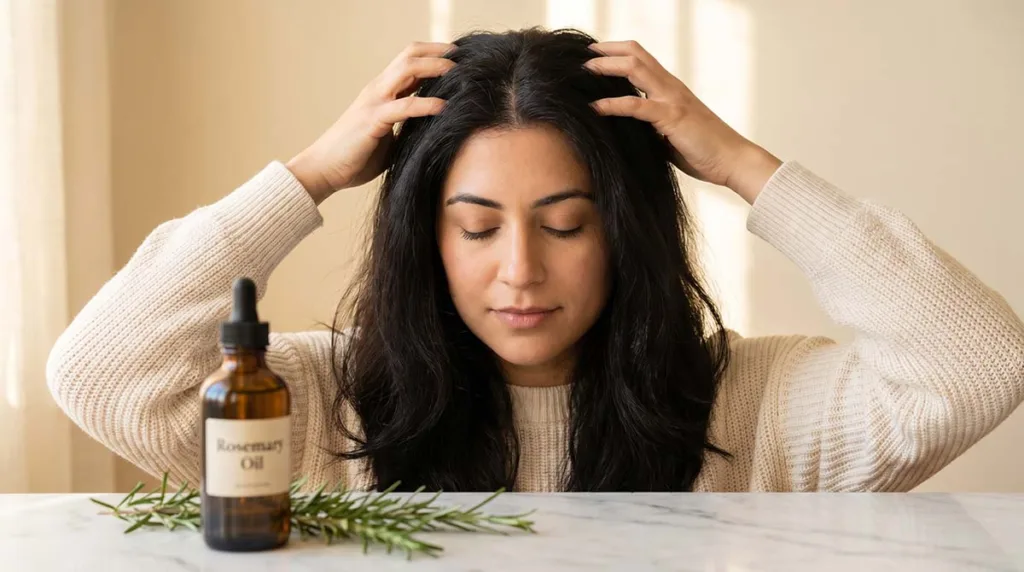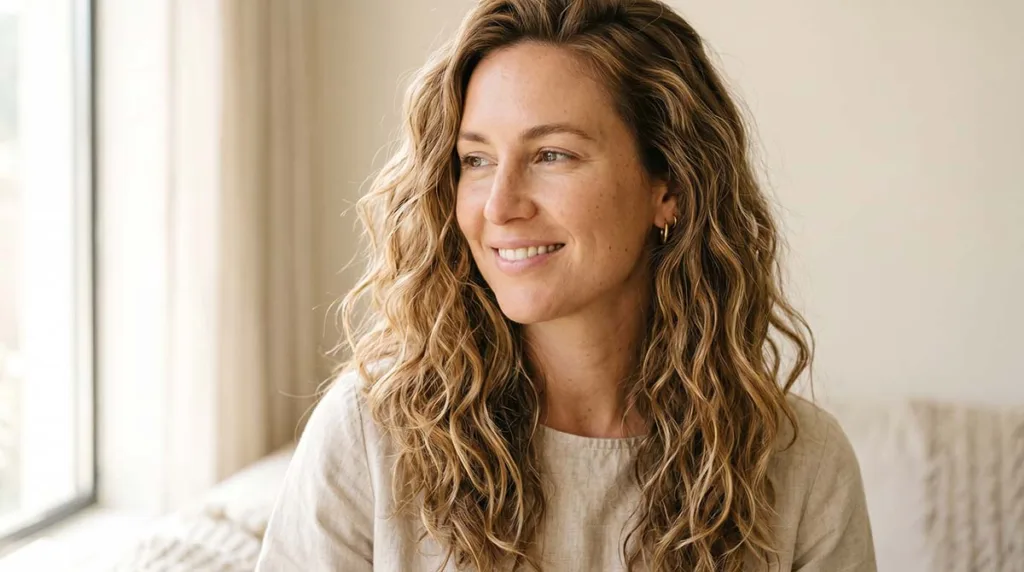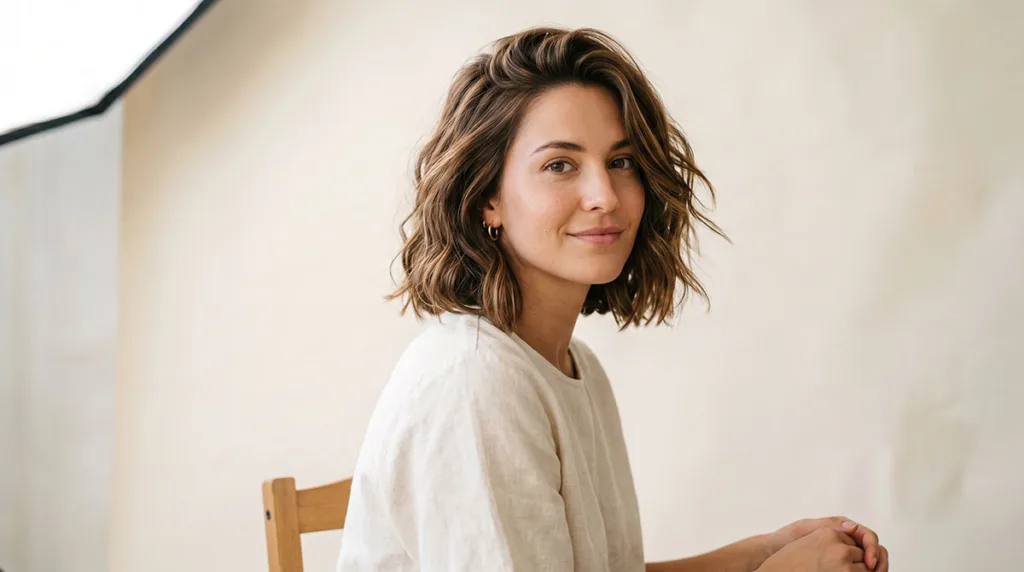
18 Hairstyles for Long Hair That Will Turn Heads Fast

Stuck wearing the same low ponytail every single day? Long hair should feel like an advantage, not a routine you’re too tired to change. When the same bun shows up in every photo, it stops feeling like a style. It starts feeling like a habit you fell into by accident.
This guide breaks that cycle with 18 easy hairstyles for long hair. They’re sorted by the moment you need them: rushed mornings, hair type, the office, and big events. Nothing here needs a salon appointment. Each look uses tools you already own, from bobby pins to a simple elastic.
You’ll also find guidance for straight, wavy, or curly hair, since the same technique rarely works the same way twice. And you’ll pick up the habits that quietly wear long strands down over time. Your next favorite style should stay healthy, not just pretty.
Quick Long Hair Styles When You’re Short on Time
Mornings rarely leave room for a full styling routine. These four looks take five minutes or less. They still look pulled together, even on a wet-hair, half-eaten-breakfast kind of morning.
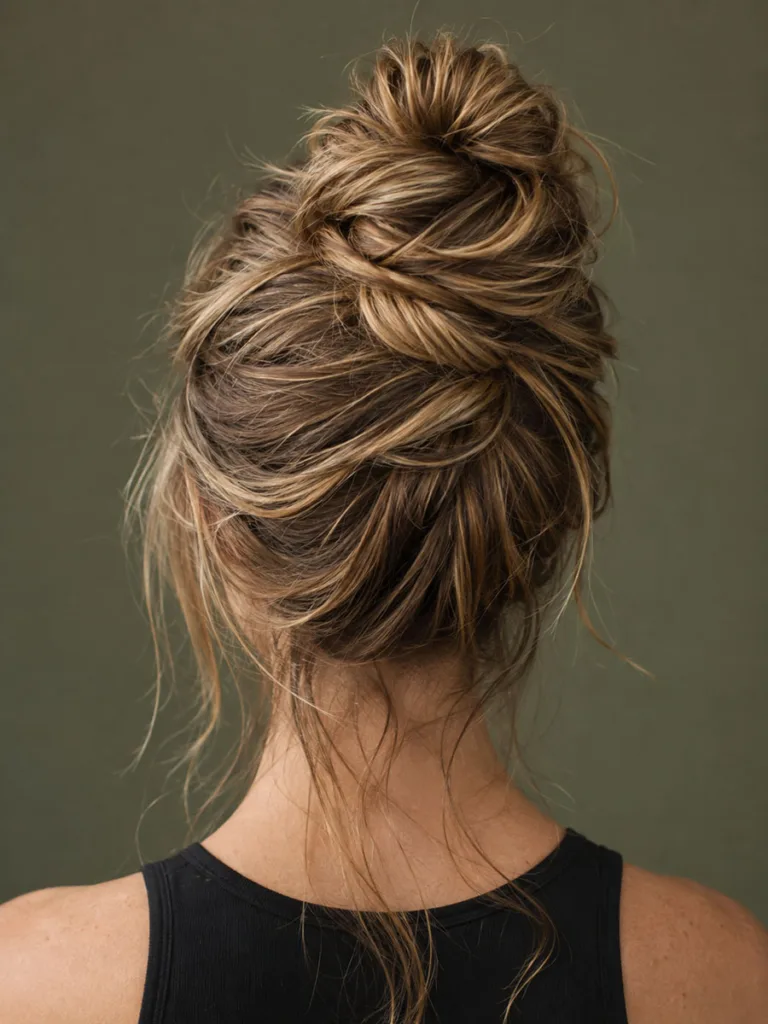
1. Messy Bun
Best for: second-day hair, zero effort
The messy bun is the easiest style on this list. It turns second-day hair into an asset instead of a problem. You don’t need freshly washed hair to pull it off. A little texture helps. It should look undone, and that’s the whole point. That’s why so many people reach for this one on rushed mornings.
- Step 1. Gather your hair into a loose ponytail at the crown.
- Step 2. Twist the ponytail and wrap it around its base.
- Step 3. Pin loosely and pull a few pieces free around your face.
2. Half-Up Claw Clip
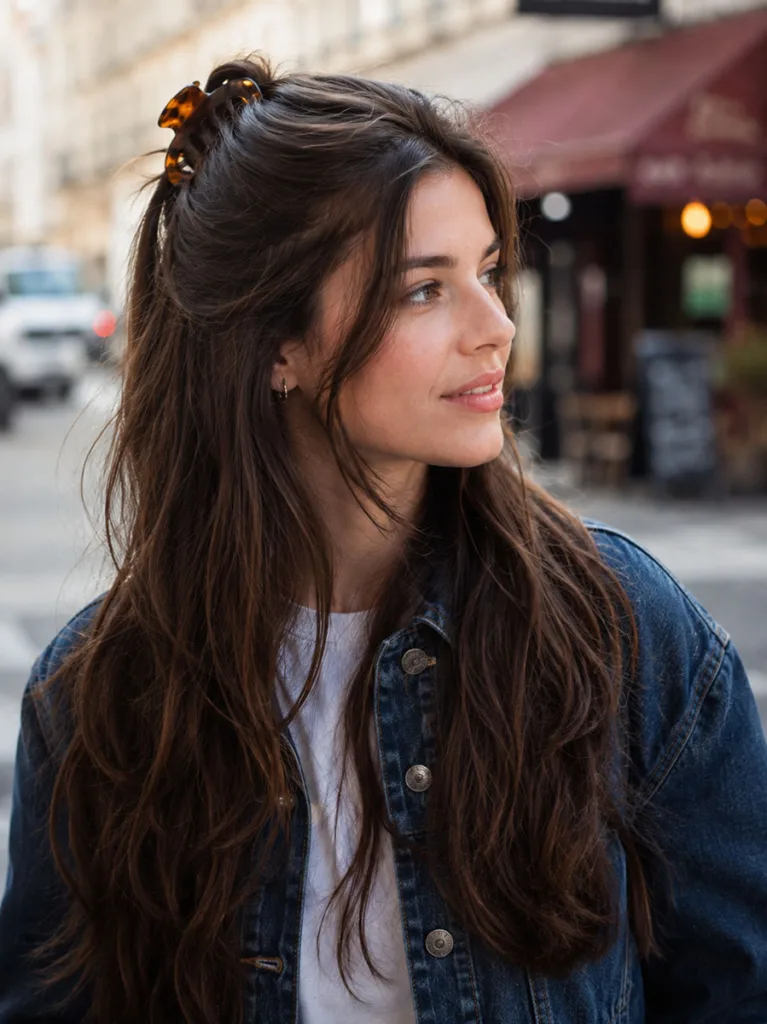
Best for: one-minute mornings, thick hair
Claw clips got popular for a real reason. They save time, and they hide the roots you didn’t wash today. Thick hair holds especially well here, since there’s more hair for the clip to grip onto. This might be the fastest style on the entire list, and it survives a full workday without a single touch-up.
- Step 1. Gather the top section of your hair.
- Step 2. Twist it once and clip it flat against your scalp.
- Step 3. Leave the rest of your hair loose underneath, no brushing needed.
3. Low Ponytail
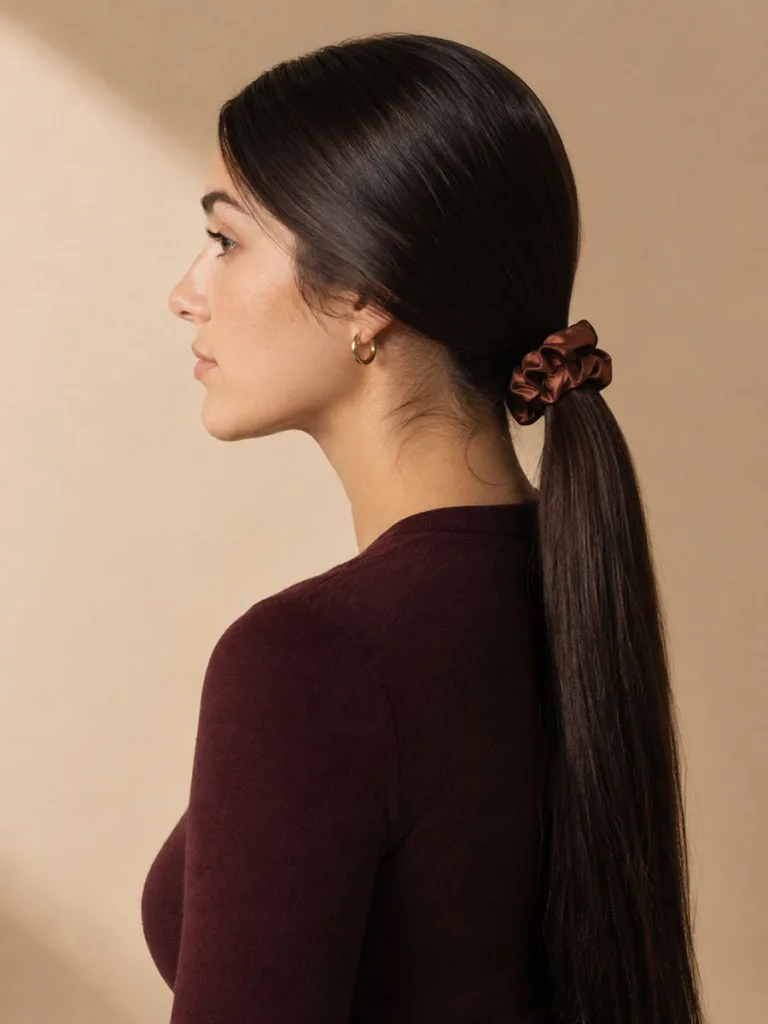
Best for: hiding oily roots fast
A low ponytail beats a high one on second-day hair, and here’s why that works. Oil collects at your crown first, always. A low pony sits below that oil line, so it hides what a high pony would show off instantly. Regular hair ties grip too hard right where they sit, and that friction adds up over weeks of daily wear.
- Step 1. Smooth flyaways with a dab of leave-in conditioner.
- Step 2. Gather hair low at the nape, below your natural oil line.
- Step 3. Secure with a silk or satin scrunchie instead of a thin elastic.
4. Sleek Low Bun
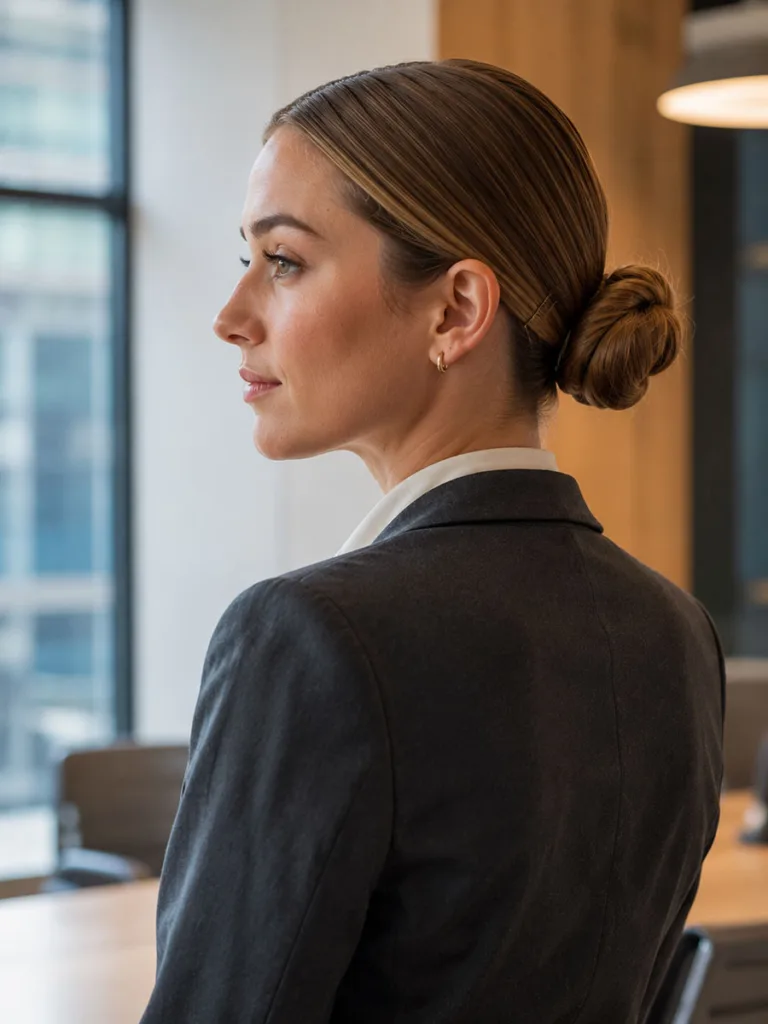
Best for: polished looks, no mirror needed
Not every polished look takes twenty minutes, and the sleek low bun proves that point. It reads finished even if you skipped the mirror on your way out. This one works just as well for a job interview as it does for an ordinary Tuesday. A little smoothing gel keeps flyaways in check on humid days, especially along your hairline where they show up first.
- Step 1. Comb hair straight back and choose a part.
- Step 2. Gather everything into a low ponytail at the nape of your neck.
- Step 3. Twist into a tight knot and pin the edges down so nothing pokes out.
Long Hair Styles Based on Your Hair Type
Straight, wavy, and curly hair behave differently under the same technique. Matching your style to your hair texture saves you from fighting your own strands every morning. It also keeps your finished look holding shape for longer.
5. Center-Part Ponytail
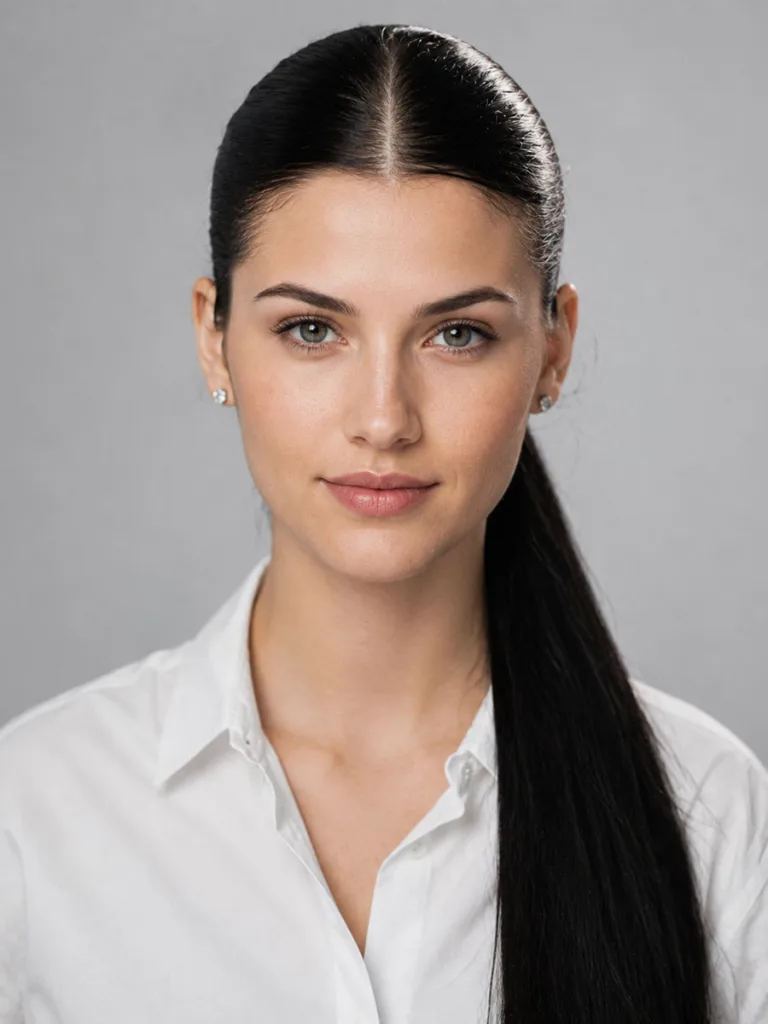
Best for: straight hair that falls flat
Straight hair holds a ponytail beautifully, but it can also go flat by noon. A center-part ponytail fixes that problem fast. Straight strands also take a braid cleanly, since there’s no frizz fighting the pattern underneath. It’s a small trick, but it makes a real difference on straight, long hair.
- Step 1. Spray a texturizing product at your roots.
- Step 2. Part your hair down the center and pull it back into a ponytail.
- Step 3. If it flattens by midday, backcomb the crown lightly before smoothing back.
6. Beachy Waves
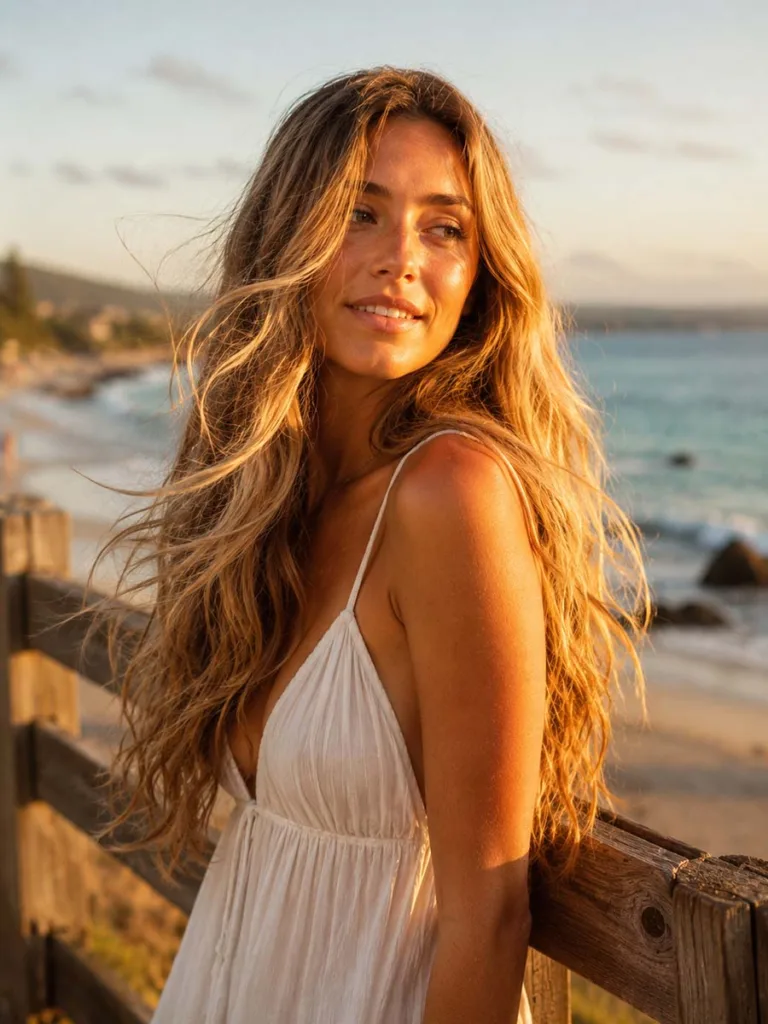
Best for: wavy hair, heatless styling
Wavy hair already wants to do half the work for you, so let it. Beachy waves lean into your natural bend instead of fighting it with a flat iron. You’ll need almost no heat. Once your hair dries, resist the urge to brush it out completely. A brush breaks up the wave pattern and turns soft texture into frizz within minutes.
- Step 1. Spray a sea salt texturizer through damp hair.
- Step 2. Scrunch gently and let it air dry on its own.
- Step 3. Finish with a quick shake of your fingers, no brush.
7. Pineapple Updo
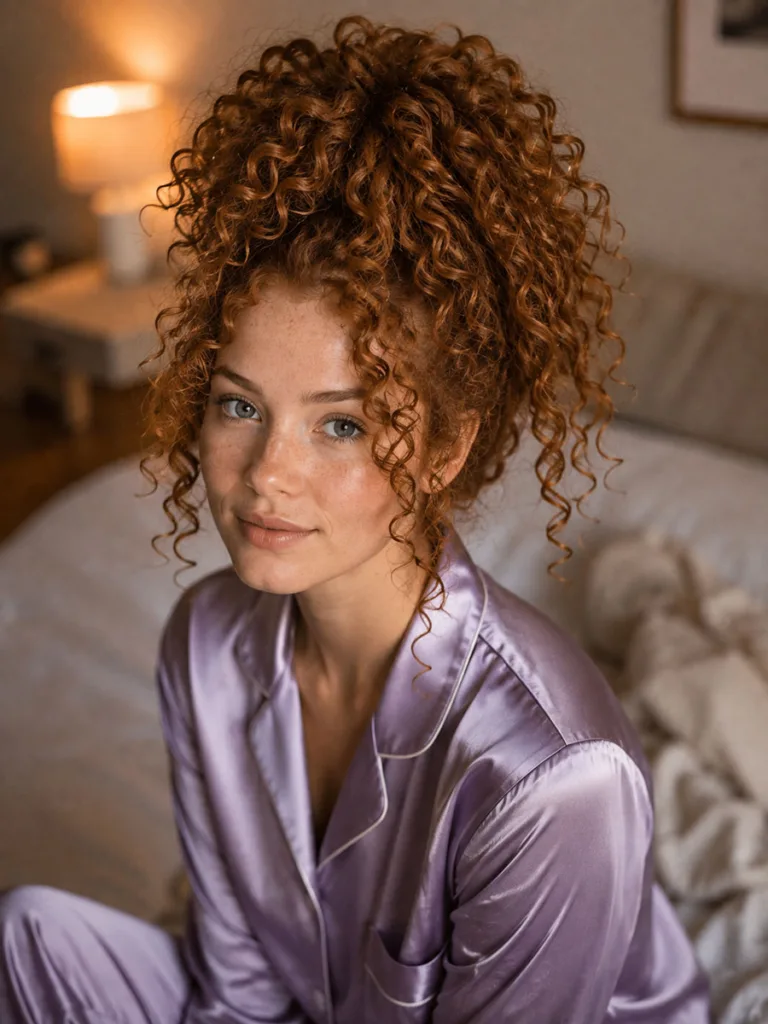
Best for: curly hair, overnight protection
Curly hair needs two things at once: shape and protection from breakage. The pineapple updo gives you both without much effort. It preserves your curl pattern overnight and works just as well as a daytime look on its own. Curly strands lose moisture faster than straight or wavy hair. That extra layer of care matters more here than it does for other textures.
- Step 1. Apply curl cream to damp hair before styling.
- Step 2. Gather curls loosely at the very top of your crown, like a fountain.
- Step 3. Secure with a silk-lined scrunchie, kept loose to avoid tension.
Elegant Long Hair Looks for Work and Everyday Wear
Office days call for something that survives meetings, a commute, and everything else in between. These three options stay neat from morning to evening, and none of them require more than a few pins.
8. Braided Low Bun
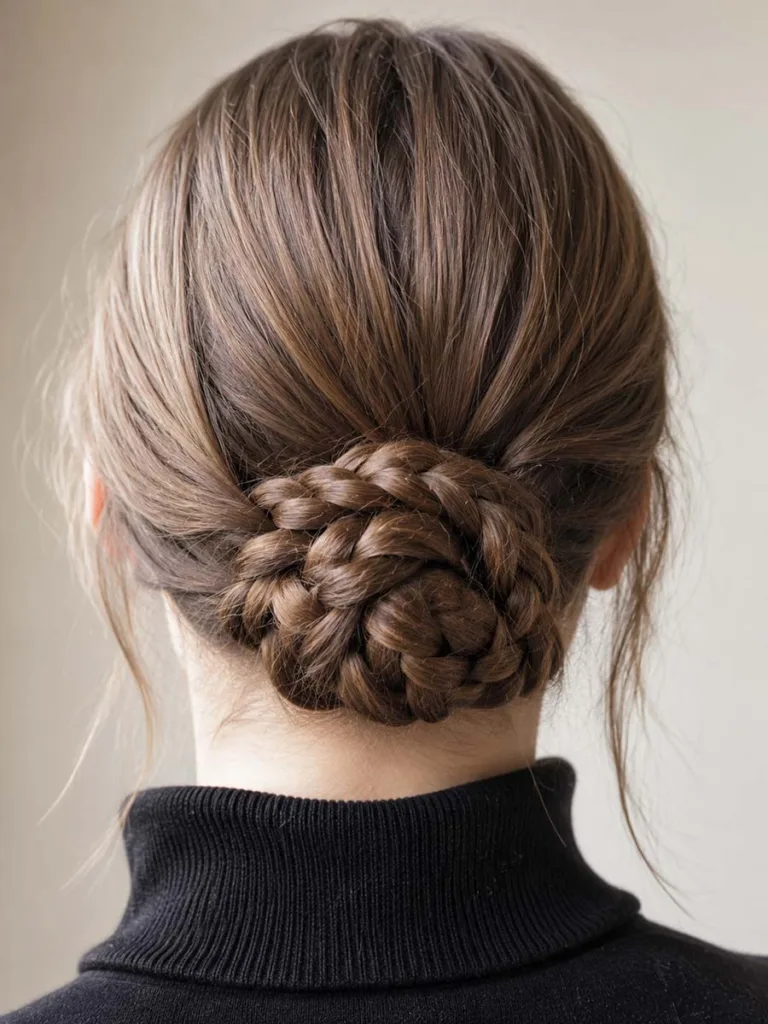
Best for: all-day office wear
A braided low bun does exactly what a busy workday demands of it. The braid adds texture, so it resists loosening in a way a plain bun never quite manages. Even hours later, it still looks like you meant it to look this way. Nothing about it reads as an accident. That’s the point of choosing a braided base in the first place.
- Step 1. Braid a simple three-strand braid.
- Step 2. Wrap the braid into a knot at the nape of your neck.
- Step 3. Pin in place and tuck any loose ends underneath.
9. Twisted Half-Up

Best for: hair-down days at work
Sometimes you want your hair down, but not all the way down. That’s exactly where the twisted half-up comes in handy. It keeps hair out of your face through long workdays without committing to a full updo. Drop the pins after work, and you’re left with soft waves ready for whatever comes next on your calendar.
- Step 1. Take two sections of hair near your temples.
- Step 2. Twist each one back gently toward the crown.
- Step 3. Pin them together, leaving the rest of your hair loose underneath.
10. Braided Ponytail

Best for: video calls, camera-ready looks
A plain ponytail is fine. A braided ponytail looks a little more finished, and it barely takes any longer to create. This one holds up well on camera, which makes it a solid pick for days packed with video calls. It looks deliberate without asking much of your morning routine.
- Step 1. Brush hair smooth and gather it at your preferred height.
- Step 2. French braid just the top two inches.
- Step 3. Secure with a low elastic and let the rest hang loose.
Formal Hairstyles for Long Hair for Weddings and Special Events
Special occasions call for more structure and more staying power than everyday looks need. These four styles are built to photograph well and hold through hours of dancing.
11. French Twist
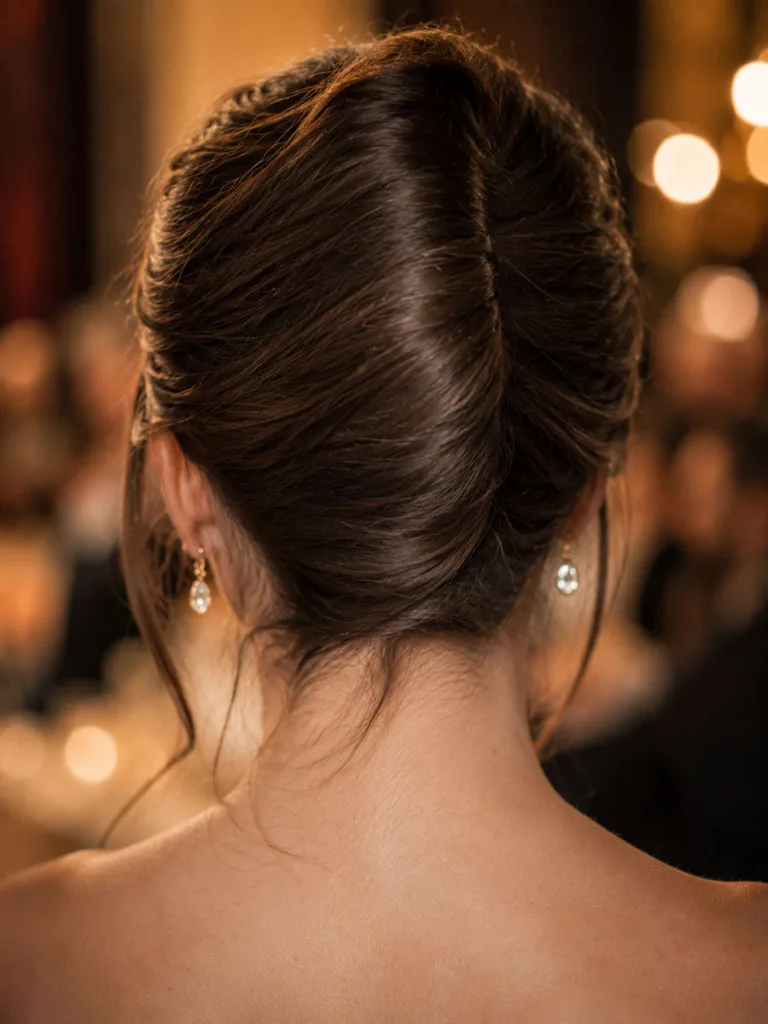
Best for: weddings, galas, formal dinners
Few updos read as timeless as the French twist does. It wraps your hair into a vertical roll at the back of your head. It suits weddings, galas, and formal dinners equally well. This style tends to loosen first at the top of the roll. A strong-hold hairspray before you leave the house makes a real difference later in the evening.
- Step 1. Gather your hair and hold it flat at the back of your head.
- Step 2. Twist upward into a vertical roll and fold the ends inside.
- Step 3. Pin along the seam to hold everything together.
12. Braided Updo
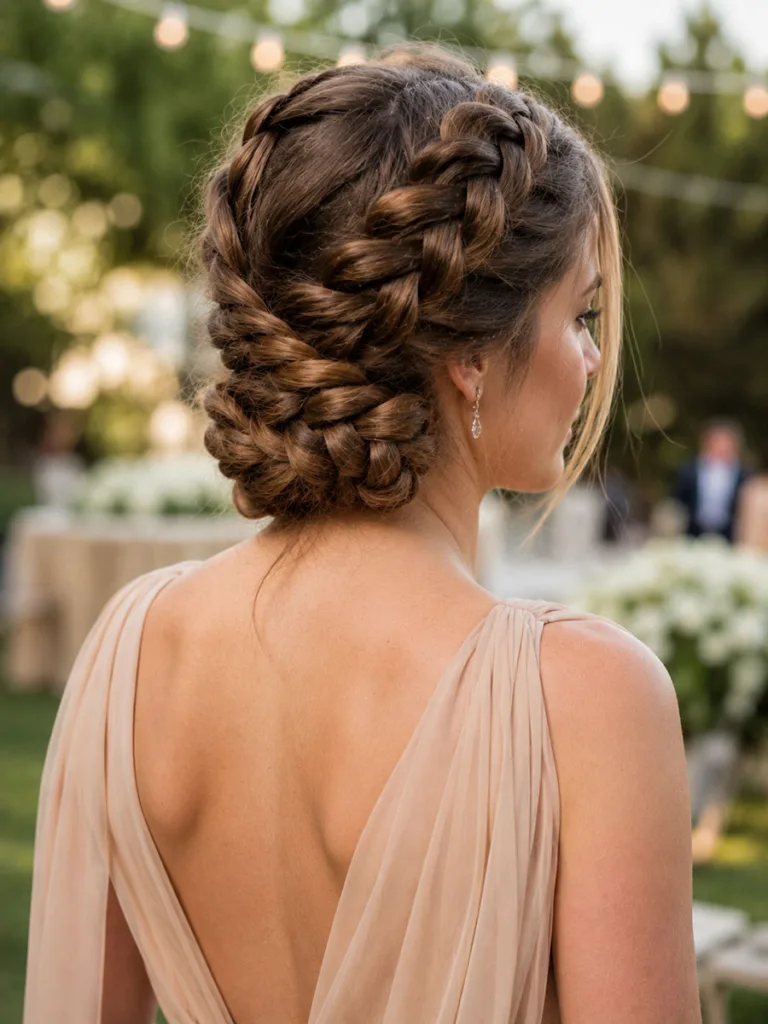
Best for: outdoor ceremonies, windy weather
Two thick Dutch braids, wrapped into a low bun, give you a braided updo with texture and no volumizing product. Outdoor ceremonies especially favor this style, since braids hold up against wind far better than loose curls ever manage to. It also travels well from ceremony to reception without a single touch-up.
- Step 1. Braid each side close to your scalp in a thick Dutch braid.
- Step 2. Cross both braids into a bun at the nape of your neck.
- Step 3. Pull a few small sections loose at your crown for a softer finish.
13. Voluminous Chignon
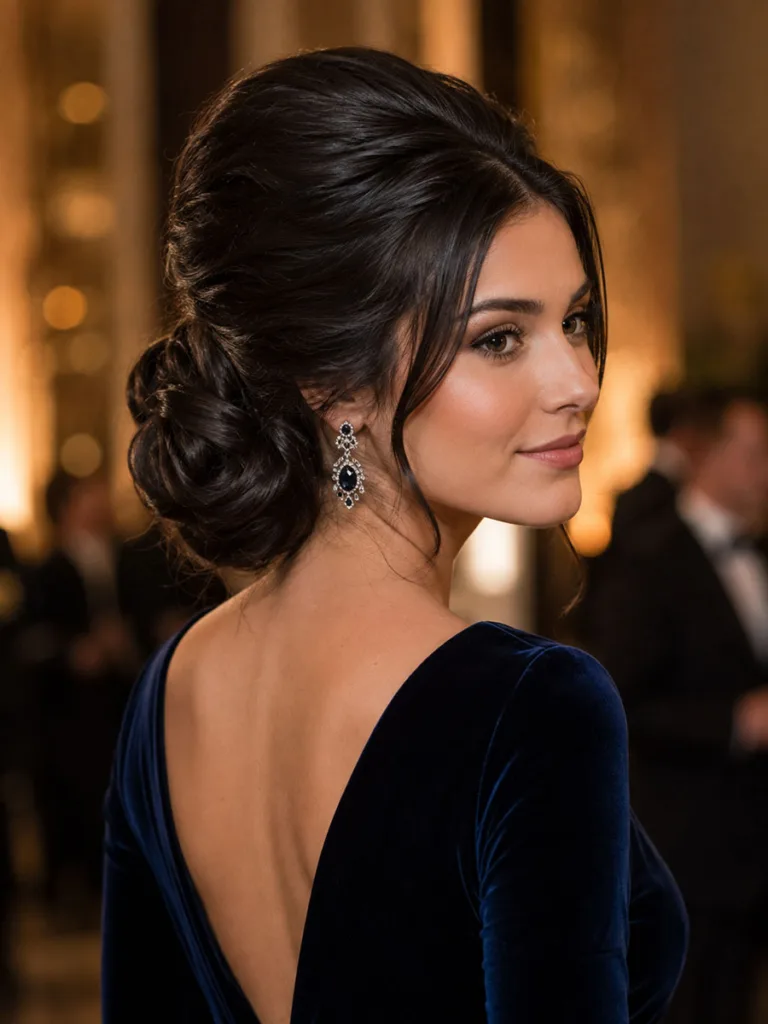
Best for: thick hair, black-tie events
Thicker hair types often need a little help holding shape through a long evening. The voluminous chignon delivers exactly that. That backcombing step is what gives the whole look its lift and its staying power hours later. It photographs well from nearly every angle, which is why so many stylists reach for it before black-tie events.
- Step 1. Backcomb gently at your roots for lift.
- Step 2. Twist your hair into a low, rounded knot at the base of your neck.
- Step 3. Pin securely and smooth any loose ends around the knot.
14. Fishtail Braid
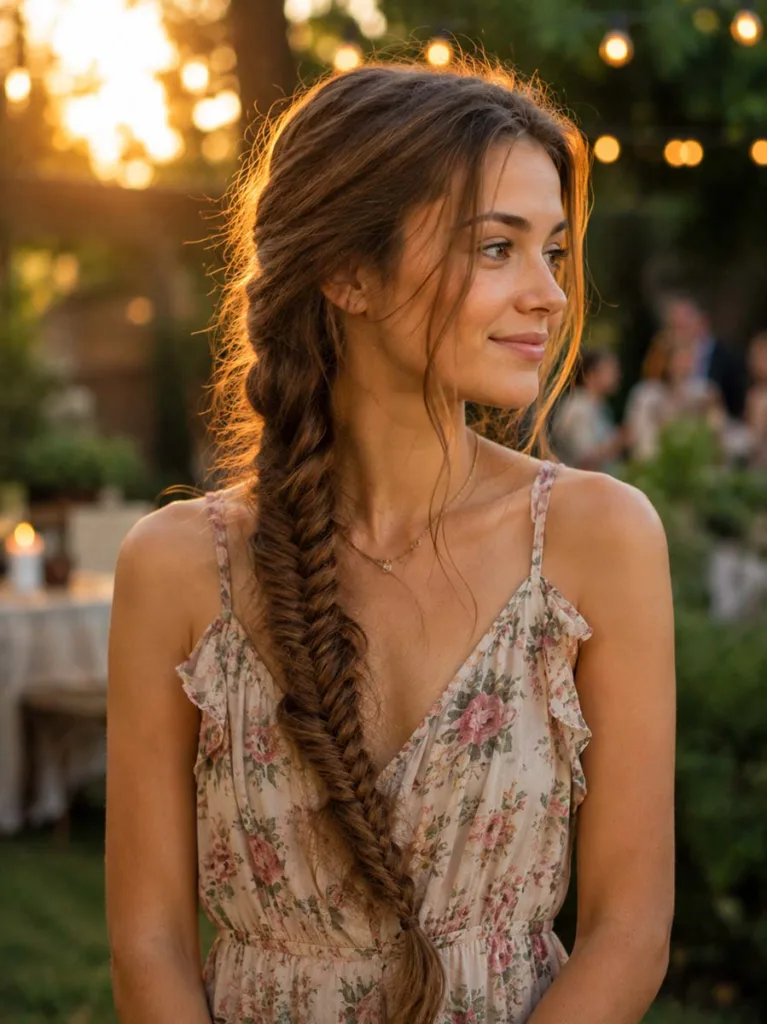
Best for: garden parties, romantic looks
A fishtail braid styled over one shoulder feels romantic without trying too hard to get there. It suits outdoor weddings and garden parties especially well when the setting already does some of the work. That slightly imperfect look is the whole appeal here. Relaxed and pretty wins over tight and precise every time with this one.
- Step 1. Gather your hair to one side and split it into two sections.
- Step 2. Take a small piece from the outer edge of one section and cross it to the other.
- Step 3. Repeat down the length, alternating sides, then loosen gently with your fingers.
Braided Hairstyles for Long Hair That Protect Your Strands
Long hair takes years to grow and only weeks to damage. Braided styles reduce daily friction from clothing, bags, and pillows, which makes them a smart default even outside special events.
15. Dutch Braid
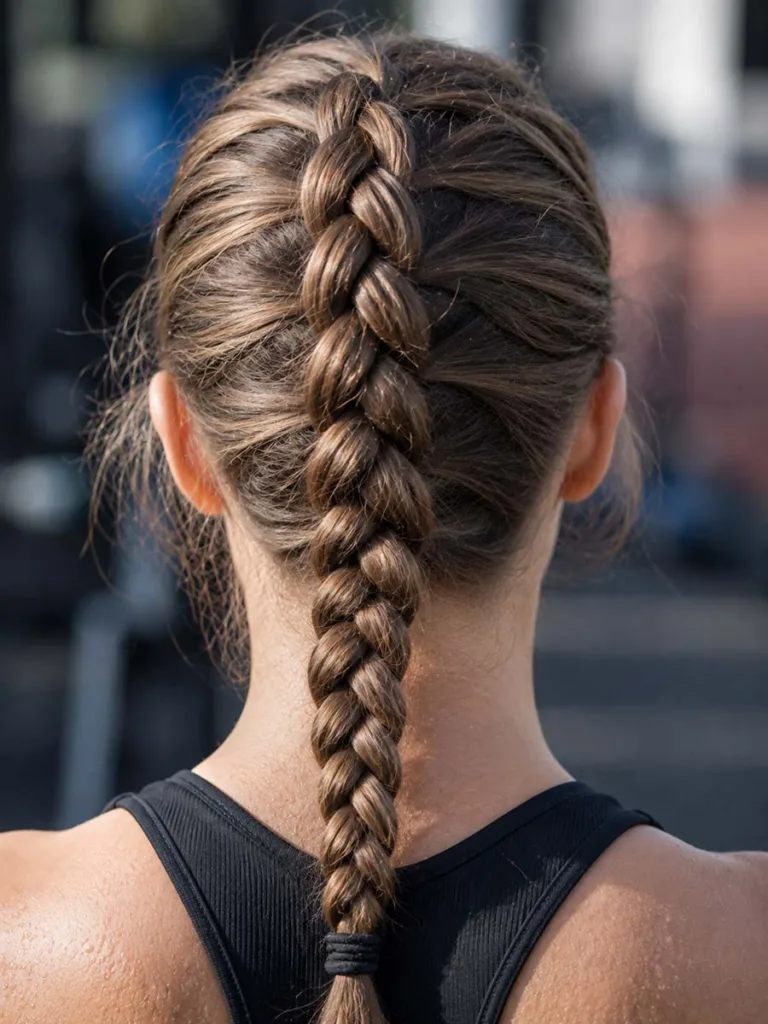
Best for: workouts, overnight wear
A Dutch braid worn close to the scalp keeps your hair contained during a workout or a windy commute. It also works well as an overnight style on its own. Sleep in it, and you’ll wake up to loose waves instead of a tangled mess the next morning. Because it sits so close to your head, very little loose hair is left to snag on a pillow overnight.
- Step 1. Split a section of hair at the crown into three strands.
- Step 2. Cross the outer strands under the middle strand, instead of over.
- Step 3. Add hair to each strand as you braid down, then secure the end.
16. Waterfall Braid
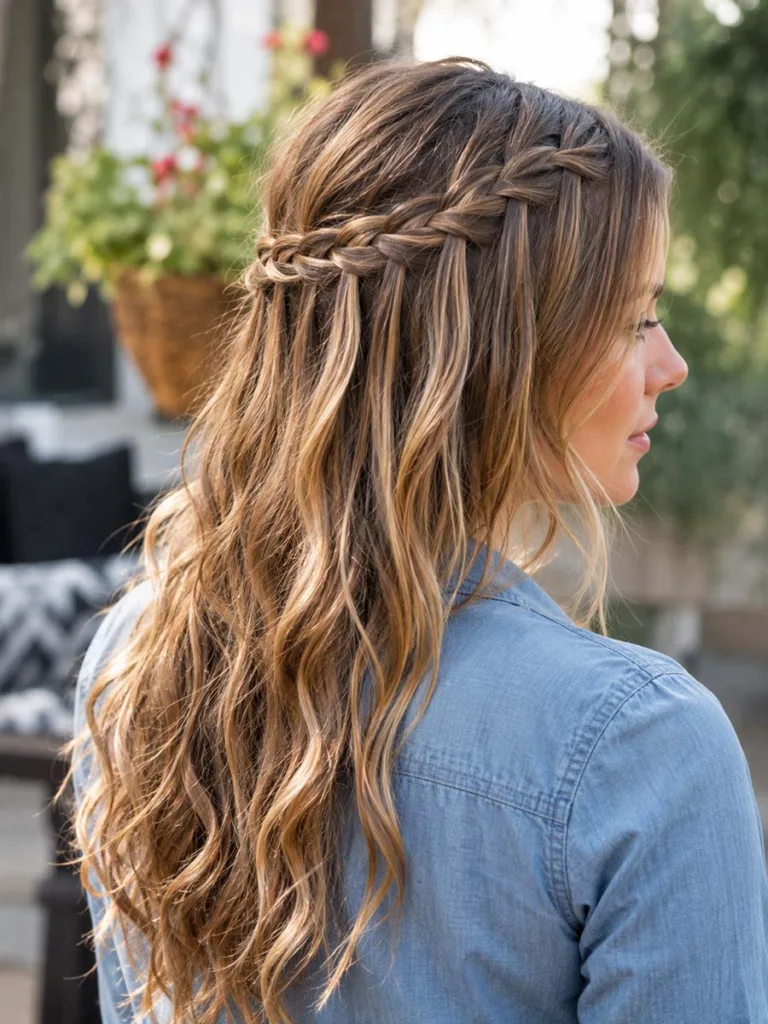
Best for: second-day hair, half-up styling
The waterfall braid releases small sections of hair as it moves across your head. You get styling and protection at the same time. Only the braided portion stays contained. The rest cascades naturally below it, untouched. This makes it especially forgiving on second-day hair, since the braid hides oil and texture right near your roots. It also photographs beautifully from behind.
- Step 1. Start a three-strand braid at one temple.
- Step 2. Each time you’d normally cross the bottom strand, drop it and let it fall instead.
- Step 3. Pick up a new strand from below to replace it, and keep braiding across.
17. Milkmaid Braid
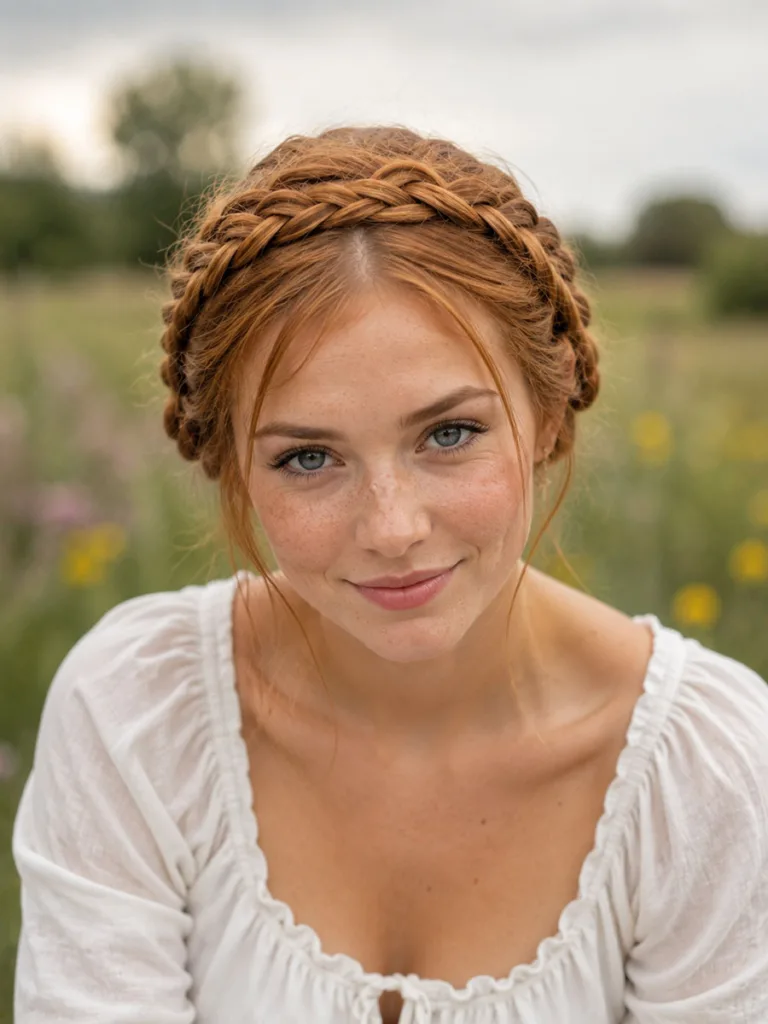
Best for: maximum end protection
A milkmaid braid tucks the ends of your hair completely out of the way. That matters more than most people realize. Your ends are the oldest, most fragile part of your hair. They absorb the most damage from friction over time. Covering them fully, even for a single day, gives them a genuine break from that wear. It also looks intentional, not just practical.
- Step 1. Braid two low braids, one starting at each side of your head.
- Step 2. Cross both braids over the top of your head.
- Step 3. Pin each one in place near the opposite ear.
18. Bubble Ponytail
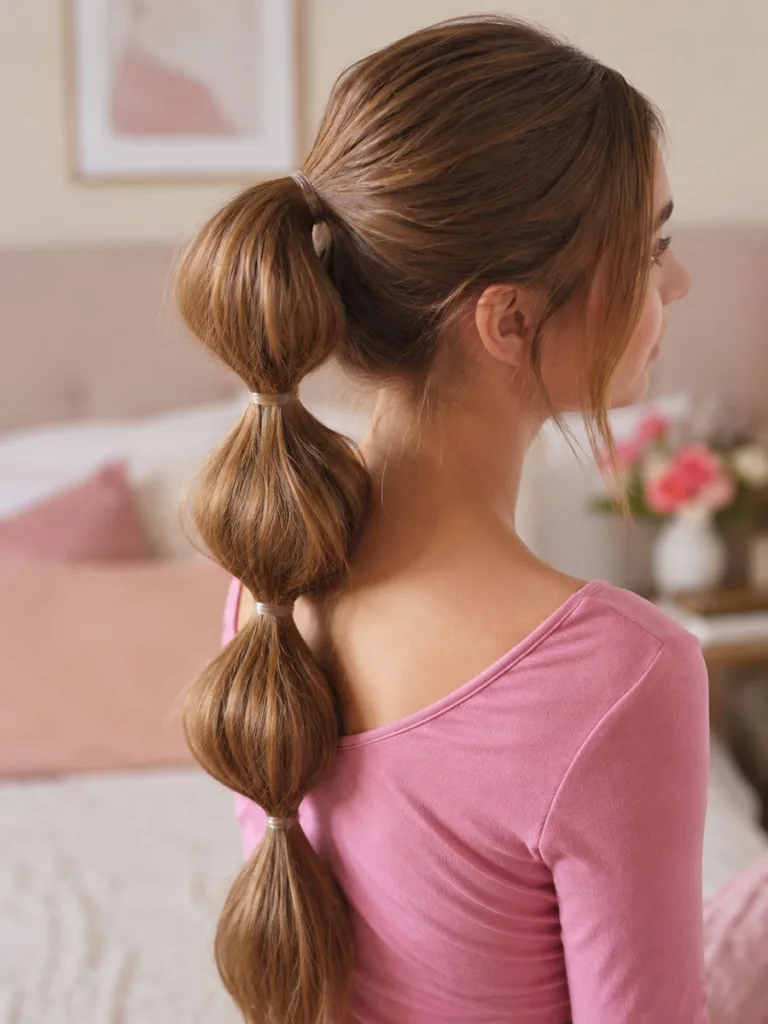
Best for: fine hair, added fullness
A bubble ponytail spreads tension across several small points instead of concentrating all of it at your roots. That spacing lowers your breakage risk right at the hairline, where it matters most. It also has a nice side effect: fine hair suddenly looks fuller, with zero extra product involved. It’s a small trick that photographs far better than a plain ponytail ever does.
- Step 1. Gather hair into a ponytail and secure the base with an elastic.
- Step 2. Add a second elastic a few inches down.
- Step 3. Gently pull the hair between the two ties apart, then repeat down the length.
Common Mistakes That Damage Long Hair
Even great hairstyles for long hair can cause harm if a few habits sneak into your routine. None of these mistakes are dramatic on their own. They just add up quietly over months until you notice thinning or breakage you can’t easily explain.
Tight Elastics and Traction
Tight elastics pull directly on the hairline, and that pulling adds up over time. Dermatologists call the resulting thinning traction alopecia when it happens again and again. Choose fabric-covered ties instead of thin rubber bands. They grip your hair just as well without concentrating all that tension in one small spot near your scalp.
Rough Brushing and Skipped Trims
Brushing from the roots down tears through knots and snaps strands unnecessarily. Start detangling at the ends instead, then work upward in small sections. Use a wide-tooth comb on wet hair to avoid pulling too hard. Skipping regular trims lets split ends travel up the hair shaft, weakening length you worked hard to grow. A trim every ten to twelve weeks keeps ends healthy without sacrificing the length you’re after.
Heat Styling Without Protection
Heat styling without any protection is another common issue people overlook. Any tool above 300 degrees Fahrenheit can weaken your hair’s protein structure with repeated use. A lightweight heat protectant spray, applied before curling or straightening, forms a barrier against that damage. It takes ten extra seconds, and it changes how your hair holds up over months of regular styling.
FAQ Section
1. What is the easiest hairstyle for long hair?
A low ponytail or messy bun takes under two minutes and needs no special tools. Both work on clean or second-day hair.
2. How do I keep long hairstyles from falling out during the day?
Use bobby pins that match your hair color and cross them in an X pattern for maximum hold. Finish with a light-hold hairspray at the base.
3. Are braids bad for long hair growth?
Braids are not bad for growth when worn loosely. Tight braids at the scalp can cause tension and breakage over time.
4. What hairstyle works best for thick long hair?
A voluminous chignon or thick Dutch braid manages bulk well. Both distribute hair evenly instead of piling it in one spot.
5. How often should I change my long hairstyle to avoid damage?
Rotate between at least three different styles each week. Repeating the same part or bun daily stresses the same strands every time.
6. Can I sleep in a hairstyle without damaging my hair?
Loose braids and low buns are the safest overnight options. Avoid tight ponytails while sleeping, since prolonged tension can weaken the hairline.
Conclusion
The right hairstyle for long hair should fit your morning, not add to it. Long hair rewards a little variety, since rotating styles spreads out tension and keeps strands stronger over time. Repeating the same tight bun every day stresses one spot near your hairline. That’s exactly where breakage tends to start.
Build a small rotation instead of relying on one go-to look. Pick one quick style for rushed mornings, like the messy bun or low ponytail. Add one braided option for workdays, plus one protective style, like the Dutch braid, for overnight wear.
Pick one look from this list and practice it this week. Keep it in rotation alongside two others to protect your hair from repeated stress.