The Ordinary Skincare Routine for Dry Skin: Quick Guide

Ever notice how your skin feels tight again just minutes after you moisturized? That’s not bad luck. It means your skin barrier has gaps, and those gaps let moisture escape as fast as you put it back in. The Ordinary skincare routine for dry skin works because it goes straight to that barrier, using hyaluronic acid, ceramides, and squalane in the right order.
This guide walks you through a full morning and night routine, built around eight simple products. It covers what most guides skip too: sunscreen, safe active use, and a real timeline for results. Every product here costs under 20 dollars, so the full routine costs less than one jar of department store cream. Most guides list far more, and you don’t need it.
Is Your Skin Dry or Dehydrated? Know This First
Dry skin vs. dehydrated skin is the first thing to sort out, since they feel similar but need different fixes. Dry skin lacks oil. Dehydrated skin lacks water. You can have both at once, and most people do.
The One-Hour Check
Wash your face, then wait an hour. If your skin feels tight, flaky, and rough, that’s a dry skin type. If it feels tight but also looks dull, with fine lines that vanish after moisturizer, that’s dehydration. Dry skin wants richer oils like squalane. Dehydrated skin wants humectants, like hyaluronic acid, first.
The Pinch Test
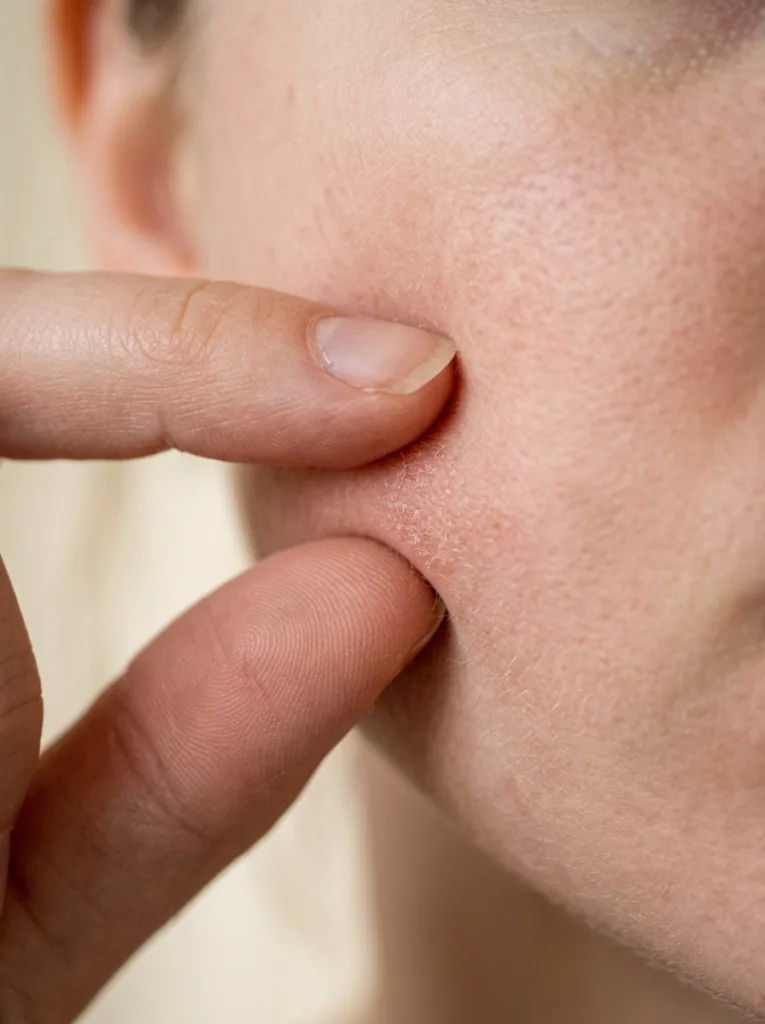
Pinch the skin on your cheek for a second. Skin that snaps back fast is just dry. Skin that stays slightly creased is usually dehydrated, since it’s missing water deep down. A lot of people over 25 deal with both at once. It shows up most after air travel, cold weather, or a rough night of sleep. That’s exactly why this routine layers water-based hydration under an oil-based seal. You need both, not just one.
The Ordinary AM Routine for Dry Skin
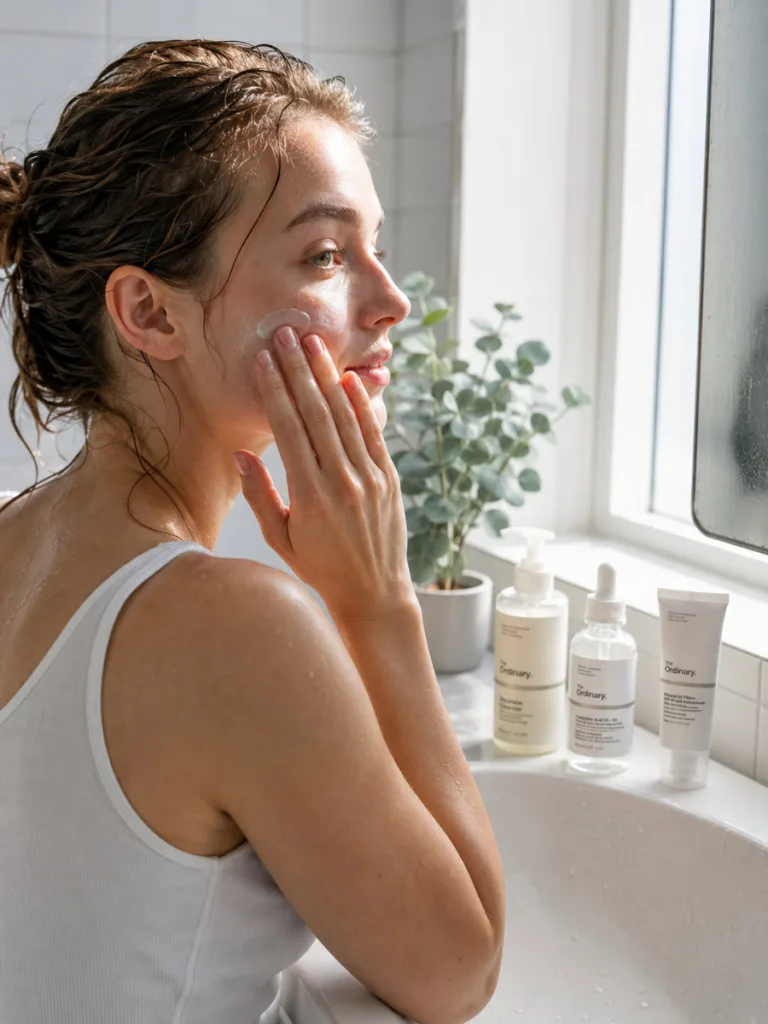
Mornings are about protection, not treatment. Your skin barrier rebuilds itself overnight, so your morning routine needs to lock that moisture in and shield it from the day ahead. Four products. That’s it.
Step 1: Squalane Cleanser
Start with Squalane Cleanser. It clears overnight buildup without stripping your natural oils. Most foaming cleansers do the opposite, pulling moisture straight out of dry skin. Use a dime-sized amount, massage for 30 seconds, then rinse with lukewarm water, never hot.
Step 2: Hyaluronic Acid 2% + B5
Apply Hyaluronic Acid 2% + B5 while your skin is still damp. Hyaluronic acid for dry skin works best this way, since it pulls water from its surroundings, and applying it in a dry room can backfire.
Step 3: Natural Moisturizing Factors + HA
Seal everything in with Natural Moisturizing Factors + HA. It mimics your skin’s own lipids and amino acids. It’s lighter than a night cream too, so it sits well under makeup or sunscreen. Warm a pea-sized amount between your fingers first, then press it into skin instead of rubbing.
Step 4: Broad-Spectrum SPF
Finish with a broad-spectrum SPF 30 or higher. Dry skin burns faster because the barrier is already thin. Skip sunscreen, and you undo everything you just did. This is the one step almost every routine guide leaves out. It’s not optional.
Reapply if you spend more than two hours outside, even on cloudy days. UV rays get through clouds and windows anyway, and dry skin shows sun damage faster than oily skin, since it already has fewer natural defenses. A mineral SPF with zinc oxide tends to feel gentler on reactive skin than a chemical one.
The Ordinary PM Routine for Dry Skin

Night is when your skin repairs itself. Cell turnover speeds up, and your skin absorbs more from whatever you put on it. Use this window for deeper hydration and richer, heavier products.
Step 1: Squalane Cleanser (Second Cleanse)
Double cleanse if you wore makeup or SPF that day. Use Squalane Cleanser again, or swap in Glycolipid Cream Cleanser on nights your skin feels extra tight or receptive.
Step 2: B5 Hydration Support Serum
Layer on B5 Hydration Support Serum for an extra hydration boost. Its main ingredient, panthenol, calms redness while it supports your skin barrier at the same time.
Step 3: Natural Moisturizing Factors + PhytoCeramides
Switch to the richer, ceramide-heavy version at night. Natural Moisturizing Factors + PhytoCeramides rebuild your lipid layer while you sleep. That matters most if you deal with chronically dry or flaky patches. Apply a thicker layer than your morning moisturizer, focusing on cheeks, jawline, and any flaky patches.
Step 4: 100% Plant-Derived Squalane (Two to Three Nights a Week)
Press a few drops of 100% plant-derived squalane over your moisturizer. Just two or three nights a week, though. Use it nightly, and it can feel heavy. Use it sparingly, and it locks in every layer underneath.
On nights you skip squalane, reach for an eye cream instead. The skin around your eyes has fewer oil glands, so it dries out first and shows it fastest, usually as fine lines.
Barrier Repair: The Step Everyone Skips
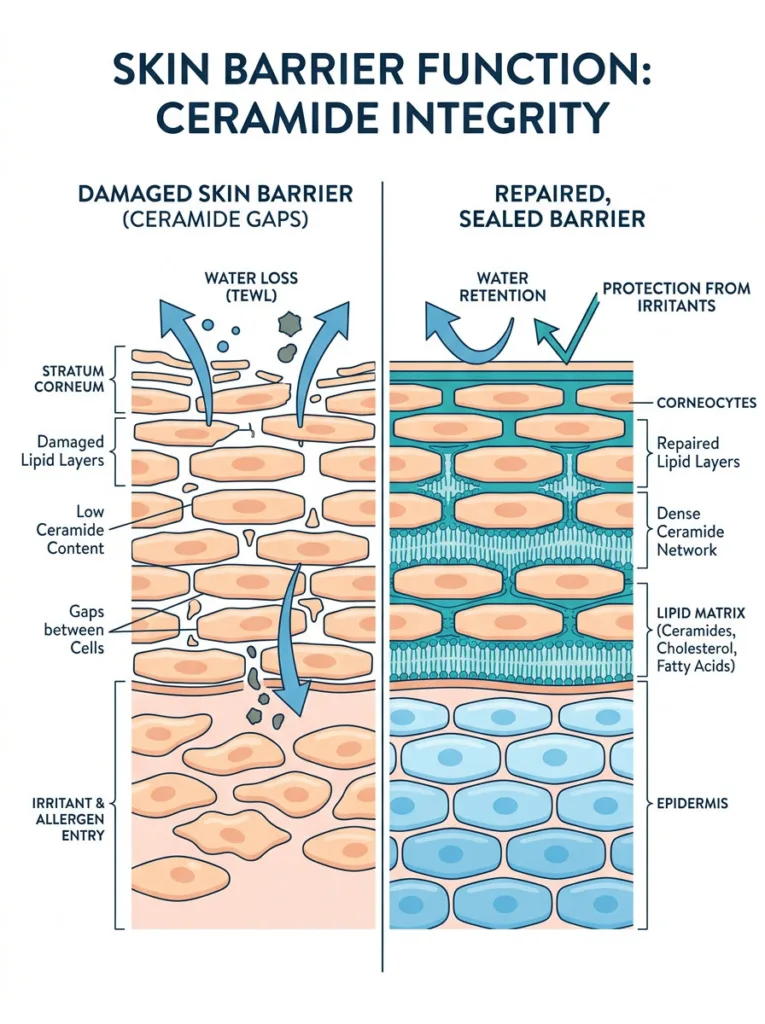
Most guides list products without explaining why order matters. Real barrier repair skincare treats your skin barrier like a wall made of skin cells and lipids, mainly ceramides, cholesterol, and fatty acids. Dry skin usually means that wall has gaps in it.
What Your Skin Barrier Actually Does
Ceramide-based moisturizers fill those gaps directly. Hyaluronic acid pulls water in, sure, but without ceramides sealing it, that water evaporates within an hour. That’s why order matters more than how many products you own. Treat first with humectants, then seal with ceramides and oils, every time.
Why Ceramides Matter More Than Product Count
A 2021 review in the International Journal of Molecular Sciences backs this up. It confirms that the skin’s permeability barrier depends on how well ceramides, cholesterol, and fatty acids stay organized in the outer skin layer, the same lipids a compromised, dry barrier is short on. It matches what dermatologists have said for years. Barrier repair beats surface hydration every time.
Think of your skin barrier like grout between bathroom tiles. Missing grout lets water leak straight through, no matter how much you mop. Ceramides are that grout, holding everything else in place.
Can You Use Niacinamide or Acids on Dry Skin?
This question stops a lot of people from trying activities at all. The answer is yes, but timing and concentration matter more here than they do for oily skin.
Niacinamide for Dry Skin

Niacinamide works well on dry skin, since it supports your barrier instead of stripping oil. Start low, around 5%, two or three times a week. Watch how your skin reacts, then adjust from there.
Exfoliating Acids for Dry Skin
Exfoliating acids need more caution. A mild PHA works well here. So does a low-strength lactic acid. Used once or twice a week, either one clears away dullness without damaging a barrier that’s already thin. Skip daily exfoliation, since dry skin repairs slowly, and over-exfoliating resets that progress every time.
Ground rules for using actives on dry skin:
- Pick one active per night. Never both.
- Always follow an active with a ceramide moisturizer.
- If skin stings or turns red within minutes, stop and go back to the basic four-step routine for a week.
Mistakes That Keep Dry Skin From Healing
Small habits sabotage even the best routine. Fixing these often matters more than buying anything new.
- Hot showers: Water above 100°F strips natural oils fast, even if you follow up with a gentle cleanser.
- Skipping moisturizer on clear-skin days: Barrier repair needs consistency, not occasional effort.
- Rubbing skin dry with a towel: Pat instead. Friction irritates skin that’s already compromised.
- Layering too many actives at once: Mixing acids, retinoids, and vitamin C overwhelms weak skin fast.
- Ignoring your environment: Low humidity, heating, and air conditioning all pull moisture out, even indoors.

Simple changes help more than you’d think. Lower your shower temperature and run a humidifier at night set to 40 to 50 percent humidity. It can visibly cut down morning flaking within a week, especially in winter.
Building the Routine on a Budget
You don’t need all eight products on day one. Buy in this order if money’s tight, then add the rest once the basics are working:
- Cleanser – gentle, non-stripping
- Ceramide moisturizer – seals in whatever moisture you have
- Hyaluronic acid – adds hydration back
- SPF – protects the barrier you’re rebuilding
- Night serum (B5 Hydration Support) – deeper overnight hydration
- Second moisturizer (PhytoCeramides) – richer nighttime barrier repair
- Squalane oil – an occlusive top layer for extra-dry patches
- Eye cream – thinner skin dries out first
Space purchases over two or three months. You’ll still get the full routine without straining your budget, and it’s easier to spot what’s causing irritation as you add each product.
How Long Until You See Results
Most people notice less tightness within one to two weeks of sticking with it. Full barrier repair, the kind that stops flaking for good, usually takes four to six weeks. Skin cell turnover slows down with age, so results might take a little longer once you’re past your mid-30s.
Stick with the routine for a month before judging it. Switching products every week never gives your barrier time to rebuild. Take a photo on day one, then compare it to week four. The difference usually shows up more in photos than in the mirror.
If flaking or redness hasn’t improved after six weeks of consistent use, the cause might not be a product problem at all. Conditions like eczema, or even a thyroid imbalance, can mimic ordinary dryness, and no amount of layering fixes those on its own. A dermatologist can check this fast, and it’s worth the visit if home care isn’t working.

FAQ Section
1. Is The Ordinary good for dry skin?
Yes. The Ordinary’s hyaluronic acid, ceramide creams, and squalane products target dryness directly, without unnecessary fragrance or filler.
2. What is the minimum ordinary routine for dry skin?
Four products cover the basics: a gentle cleanser, hyaluronic acid, a ceramide moisturizer, and daily SPF. Add richer products once those are working.
3. Can I use squalane oil every night?
No. Stick to 100% plant-derived squalane two or three nights a week. Nightly use can feel heavy, and it may clog pores for some skin types.
4. Does The Ordinary have a good SPF for dry skin?
The Ordinary’s own SPF options work fine, and any broad-spectrum SPF 30+ from a trusted brand pairs well too. Consistency matters more than the brand name.
5. Why does my skin still feel tight after moisturizing?
Your barrier probably needs more ceramides, not more water. Switch to a richer moisturizer, like Natural Moisturizing Factors + PhytoCeramides, for two weeks, then reassess.
Conclusion
A working dry skin routine needs eight focused products, not twenty-five. Skip the guesswork guides that never explain their order. Cleanse gently, twice a day. Layer hyaluronic acid onto damp skin, then seal it in with a ceramide moisturizer. Never skip your morning SPF, even on cloudy days. Give the routine four to six weeks before judging results, not just four days. If flaking or redness sticks around past that point, check for eczema or a thyroid issue before buying another serum. Start tonight. Cleanse, layer, seal, and let your skin barrier do the rest of the work.
For more skincare tips, please visit VelvetBoard.