22 Shag Haircuts With Serious Main-Character Energy

The shag haircut is the rare cut that looks better the less you fuss over it. Born in the 70s and rebuilt for right now, it trades precision for movement. Choppy layers through the crown, a fringe that does what it wants, and ends with visible texture. The 2026 version is softer than the rock-and-roll original, which is exactly why it works on more people.
The difference between a shag and ordinary layers is intent. Regular layers blend quietly into the background. A shag announces itself. The top is shorter, the ends are piecey, and the whole shape is built to look good air-dried, which most layered cuts are not. Got a natural wave or curl? The cut practically styles itself. Pin-straight hair works too; it asks for a little help from texture spray and your fingers.
How To Choose Your Shag
Start with your texture, not a celebrity photo. Fine hair gains the appearance of volume from light layering, but heavy texturizing can eat it alive, so keep the layers shallow. Thick hair needs the opposite: internal weight removal so the shape moves instead of sitting like a helmet. Wavy and curly hair are the shag’s natural habitat, since the cut lets texture do the talking.
Length changes the whole feel of a shag haircut. A bob-length version looks bold and graphic. A medium length, sitting at the collarbone, is the easiest to wear and grow out. A long shag barely looks like a shag at all, which suits anyone wanting movement without commitment. The shag was also named among 2026’s defining haircut trends. Neale Roger, style director at STIL salon in London, sums up the softer direction: “Think soft, feathered layers that build volume and create easy movement.” His salon-chair guidance is concrete: “Ask for feathered layers throughout, soft ends, and a length that sits somewhere between the neck and shoulders.”
One honest warning: the shorter crown layers will escape a ponytail. If you wear your hair scraped back most days, keep the crown layers long or pick a different cut. And bring two or three reference photos. Your idea of “choppy” and your stylist’s idea of “choppy” may be two different haircuts.
1. The Classic 70s Shag Haircut
This is the blueprint everything else descends from. Feathered layers start high at the crown, flip outward through the mid-lengths, and melt into a curtain fringe. On the right hair, it still looks completely current, not costumey. The trick is keeping the feathering soft rather than crunchy, which is where modern styling products earn their keep.
Best for: Thick, wavy hair that needs shape carved into it.
Ask your stylist for: Feathered layers through the crown, face-framing that starts at the cheekbones, and point-cut ends.

2. The Modern Soft Shag
The 2026 update sands down the edges of the original. Layers are blended, not chunky; the fringe is wispy, not heavy; the effect reads polished-undone. Show this to your stylist if you love the shag idea but flinch at anything aggressive. It grows out more gracefully than any other cut here.
Best for: Shag first-timers and anyone who needs a workplace-friendly edge.
Ask your stylist for: Soft blended layers, minimal texturizing, and a length between the chin and shoulders.

3. Curly Shag
A curly shag might be the smartest pairing in all of haircutting. The layers follow your curl pattern instead of fighting it, which kills the dreaded triangle shape. Volume lands at the crown where curls look best, not at the bottom where they look heavy. This cut genuinely gets better on day two and three.
Best for: Curl types 2B through 3C with medium to thick density.
Ask your stylist for: A dry cut, layers carved curl by curl, and no thinning shears anywhere near your head.

4. Wavy Shag
If your hair dries with a bend in it, this is your wash-and-go sweet spot. The shag amplifies natural wave instead of demanding you create it with hot tools, which means most mornings end at scrunching in a little product and walking out the door. Long layers keep the shape from going poufy, and the fringe is entirely optional.
Best for: Natural wavy hair and chronic low-maintenance stylers.
Ask your stylist for: Long layers, point-cut ends, and a curtain fringe only if you want one.

5. The Medium Shag Haircut
Shoulder-grazing and endlessly wearable, the medium shag is the version most people picture. If you want a shag haircut, medium length is the easiest place to start: short enough for real crown lift, long enough to pull back. Torn between lengths? This breakdown of modern shag lengths shows how the same layers read differently at each one.
Best for: Almost everyone, especially the commitment-shy.
Ask your stylist for: Collarbone length, internal layers for movement, and a soft fringe.
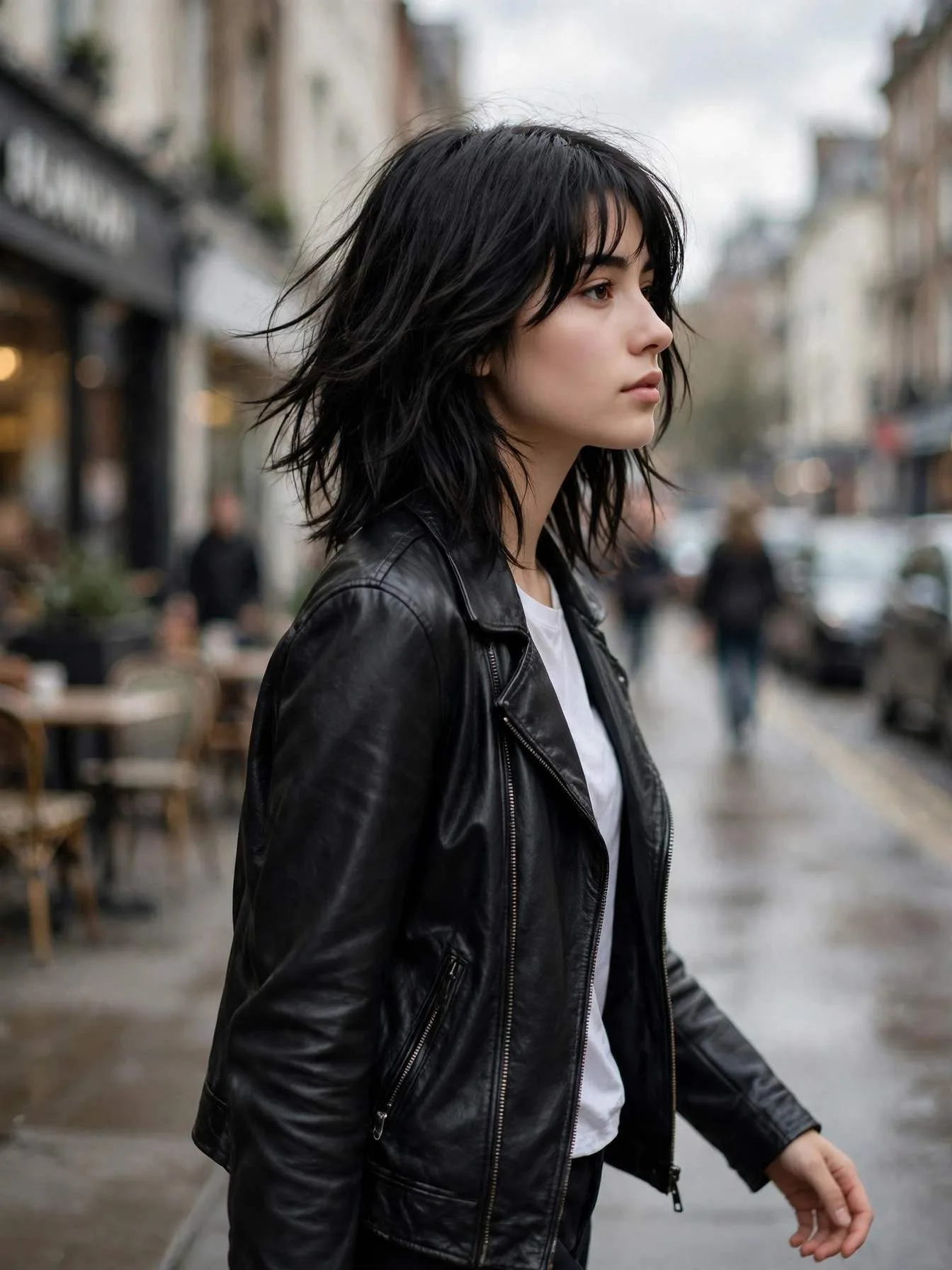
6. Shaggy Bob
A bob got into a fight with a shag and both won. The perimeter stays at bob length, usually at the jaw or a touch below, while the interior gets full shag treatment: short crown layers, lots of texture, and separated ends. The result has more volume than any bob has a right to. Graphic from the front, gloriously messy from every other angle.
Best for: Fine hair that needs the look of density.
Ask your stylist for: A jaw-length bob baseline with shag layering through the interior and a piecey fringe.

7. Long Shag
Proof that you can keep your length and still have a personality. The layers start around the collarbone. From the front you read “long hair,” from the side you read “interesting.” It is also the easiest shag to change your mind about, since growing it out means growing it out.
Best for: Long hair that hangs flat and bored.
Ask your stylist for: Layers beginning at the collarbone, face-framing throughout, and softly blended ends.

8. Shag With Curtain Bangs
The pairing everyone pictures, and for good reason. A center-parted fringe melts into the face-framing layers so there is no visible line where the bangs end and the cut begins. The parted shape draws the eye diagonally across the face, which comes across softer than a straight-across bang and flatters more face shapes with less precision required.
Best for: Anyone who wants bangs without the every-three-weeks trim cycle.
Ask your stylist for: A curtain fringe parted at the center, blended seamlessly into the face frame.

9. Shag With Bottleneck Bangs
Bottleneck bangs are narrower at the temples and wider across the cheeks, like the neck of a bottle. On a shag they create a beautiful frame that echoes cheekbone width, which has a balancing effect on narrower chins. They grow out into curtain bangs, so you get two fringes for the price of one appointment.
Best for: Heart-shaped faces and fringe commitment-phobes.
Ask your stylist for: A textured bottleneck fringe with blended sides.

10. Choppy Textured Shag
This is the shag at maximum attitude. The choppy layers are deliberate and visible, the ends jagged, the texture the entire point. On straight hair it creates movement that would otherwise need a curling iron. On wavy hair it looks like you stepped off a motorcycle. Subtlety is not on the menu.
Best for: Straight hair that needs visible texture and strong personalities.
Ask your stylist for: Razor-cut or point-cut choppy layers with disconnected, piecey ends.

11. Feathered Shag
The softest interpretation here, and very much 2026’s direction. Layers are feathered, meaning each one tapers to a fine point instead of ending bluntly, which creates movement without any harsh lines. It is the shag for people who want flow rather than edge. On medium to thick hair with a little natural wave, it practically styles itself.
Best for: Medium to thick hair with natural wave or texture.
Ask your stylist for: Feathered layers throughout, soft ends, and a length between the neck and shoulders.

12. Shag Haircut For Fine Hair
Fine hair and shags are friends, with one condition: restraint. Light layering builds the appearance of volume at the crown, which is exactly what flat hair needs. But aggressive texturizing removes the very density you are trying to fake, so the ends should stay relatively solid. Done right, this cut makes fine hair look like there is more of it.
Best for: Fine, flat hair that falls limp by noon.
Ask your stylist for: Light, shallow layering, fairly solid ends, and no over-texturizing.

13. Shag Haircut For Thick Hair
A shag haircut does its most dramatic work on thick hair. Strategic internal layers remove serious weight: the difference between hair that moves and hair that sits. The cut also tames the width that turns thick hair triangular, and most people report faster drying times.
Best for: Thick, heavy hair that eats ordinary layers for breakfast.
Ask your stylist for: Internal layers for weight removal and texturized ends.
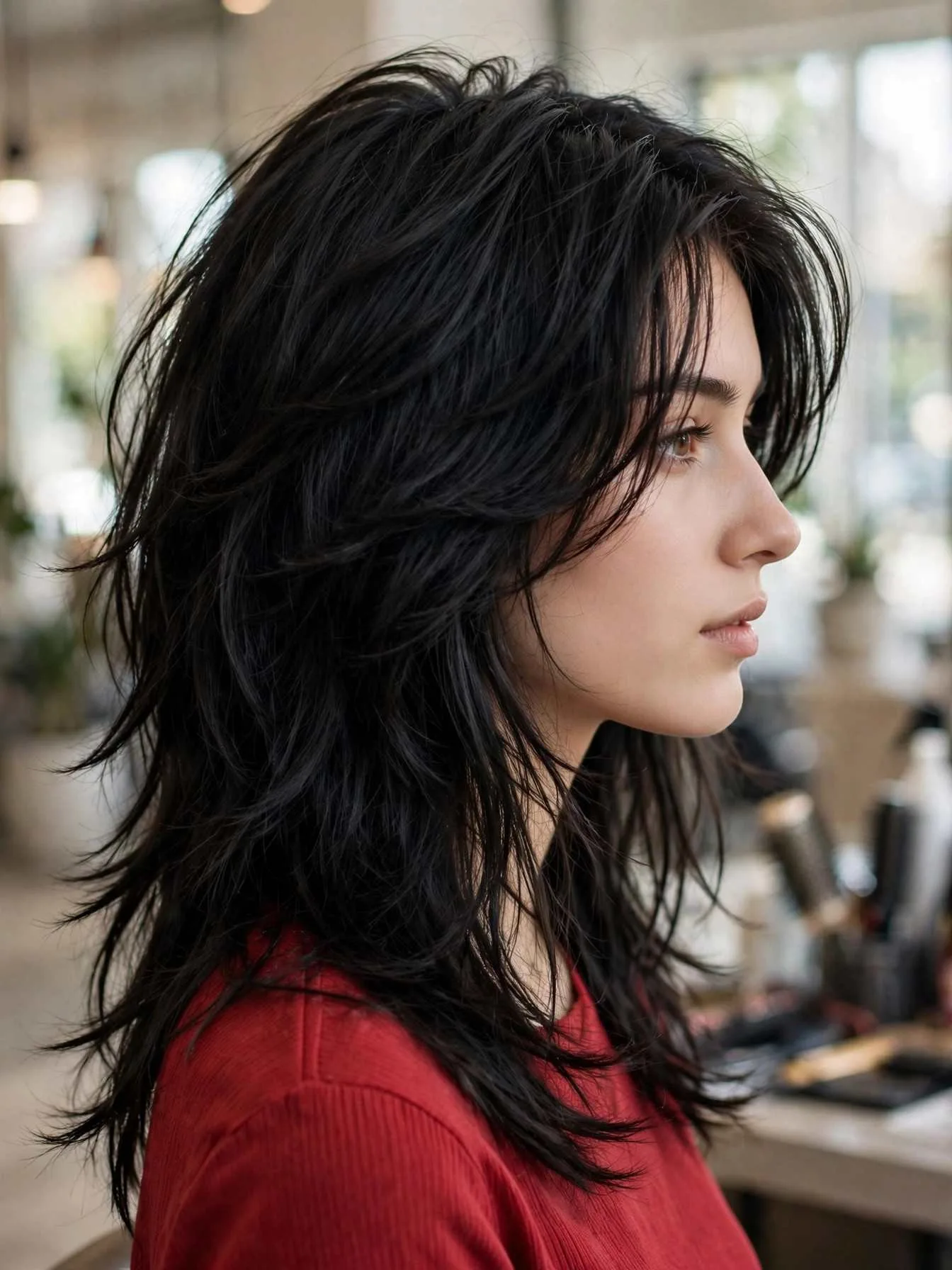
14. 90s Grunge Shag
Flatter crown, messier ends, zero interest in looking polished. The 90s grunge shag is the anti-blowout: it looks best slightly slept-in and asks almost nothing of you in the morning. The choppy layers do all the visual work. This is the cut for people who find most hairstyle advice exhausting.
Best for: Straight hair and anyone allergic to styling routines.
Ask your stylist for: Choppy layers, a grown-in looking fringe, and ends cut for matte texture.

15. The Wolf Cut
The shag’s wilder cousin. The wolf cut keeps the shag’s DNA but pushes it further: much shorter crown layers, much longer back length, a deliberate disconnect between the two. It is the boldest cut here and the least forgiving grow-out. Know that going in and you will love it.
Best for: Thick hair and people whose style is already loud.
Ask your stylist for: Heavy crown layers with disconnected length through the back.
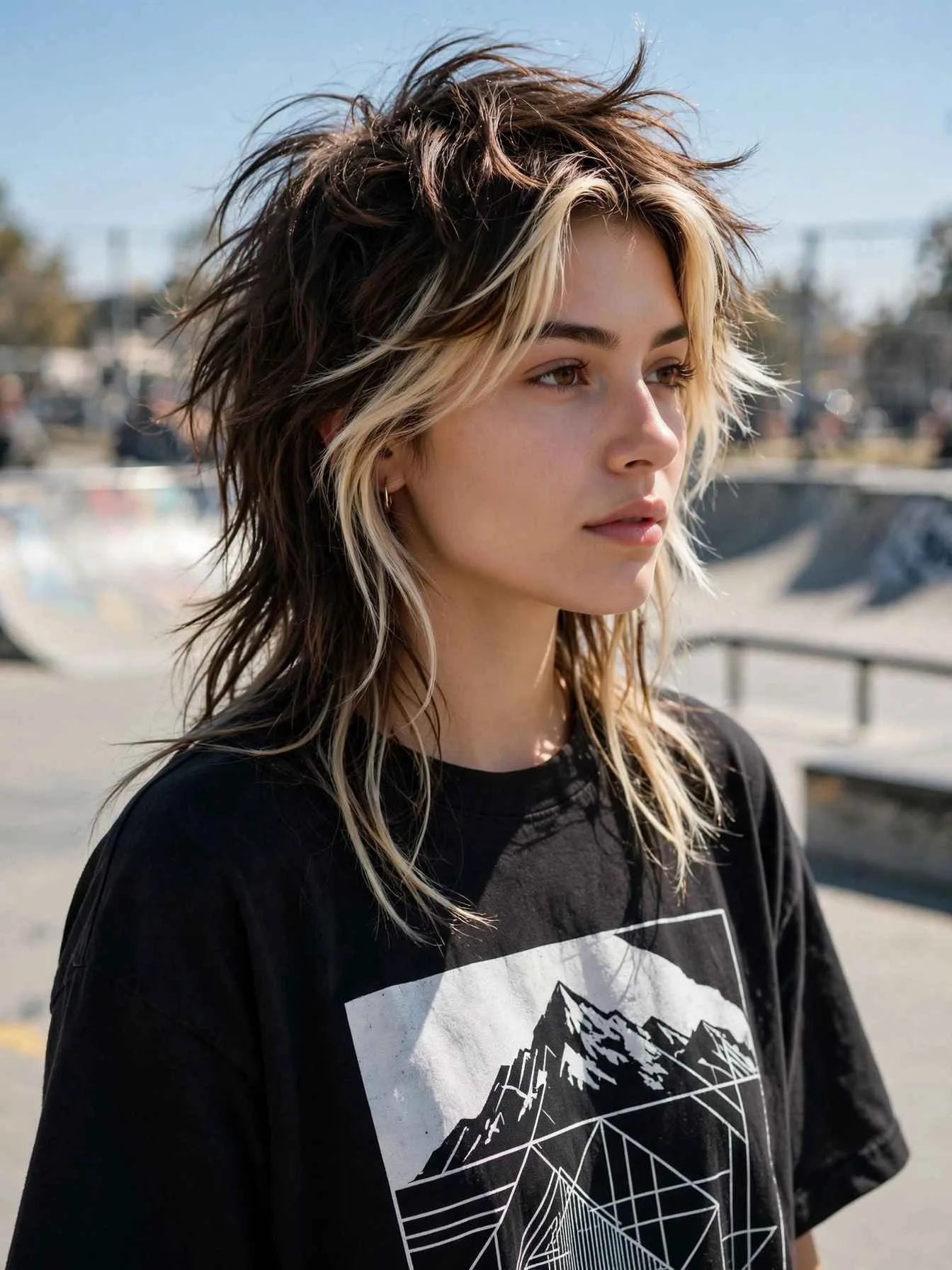
16. Shaggy Lob
The lob keeps its clean collarbone baseline, and the shag happens on top of it. You get the swing of a long bob with the movement of a shag, which makes this the most office-compatible cut here. It is also a smart first step if you are growing out a bob and want the in-between stage to look intentional.
Best for: Shoulder-length hair that wants movement without losing the lob line.
Ask your stylist for: A clean lob perimeter with shag layering through the crown and interior.

17. Curly Shag With Bangs
A curly fringe is not for the faint of heart, but on a curly shag it is spectacular. The bangs should be cut dry and left longer than you think, because shrinkage is real and a wet-cut fringe becomes a surprise headband. Once the length is right, the curls fall into a frame that no straight-haired person can replicate.
Best for: Confident curl types 3A through 3C.
Ask your stylist for: A dry-cut curly fringe, cut with shrinkage in mind, blended into the layers.

18. Disconnected Shag
In a blended shag the layers melt together. In a disconnected shag they do not, and that visible separation is the style. Short pieces sit over long pieces with clear daylight between them, which creates dramatic texture on hair that otherwise looks one-note. It is architectural, a little punk, and fantastic on thick straight hair.
Best for: Thick, straight hair that swallows blended layers whole.
Ask your stylist for: Disconnected layers with strong, visible texture, not blended.
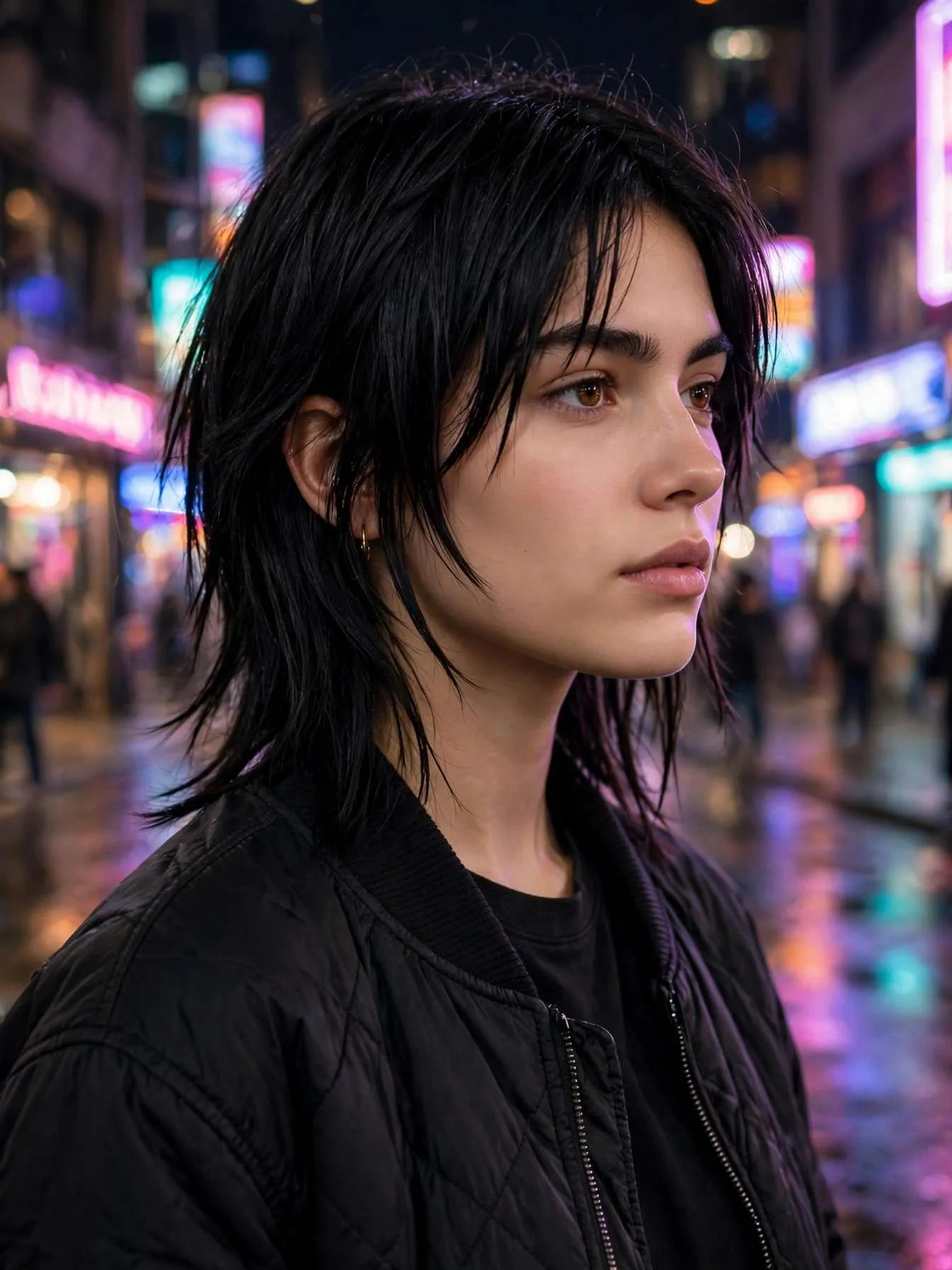
19. Rocker Shag
Joan Jett walked so this cut could run. The rocker shag is piecey, eyeliner-adjacent, and completely unbothered by trends. Heavy fringe, jagged ends, layers with something to say. It is less a haircut and more a stance. Fair warning: it pairs badly with conservative dress codes and beautifully with leather jackets.
Best for: Medium-density straight to wavy hair and bold personal style.
Ask your stylist for: A choppy shag with a heavy fringe and jagged, textured ends.

20. Wispy Shag
The shag for people who want the idea without the commitment. Ends are feathered to fine points, layering stays soft, and the fringe is barely there. From across the room it looks like pretty layered hair; up close, the shag structure reveals itself. It is also the easiest version to explain to a cautious stylist.
Best for: Fine to medium hair and conservative environments.
Ask your stylist for: Wispy, feathered ends, soft layering, and a minimal fringe.

21. Shag With Face-Framing Layers
Here the frame is the feature. Layers are cut to start at the cheekbones and cascade forward, creating horizontal movement across the face. That sideways motion has a visually shortening effect, which longer faces tend to like, and it draws attention to the eyes and cheekbones on everyone. It is the most universally flattering detail a shag haircut can have.
Best for: Long faces and anyone who wants their cheekbones noticed.
Ask your stylist for: Face-framing layers starting at the cheekbones, blended through the lengths.
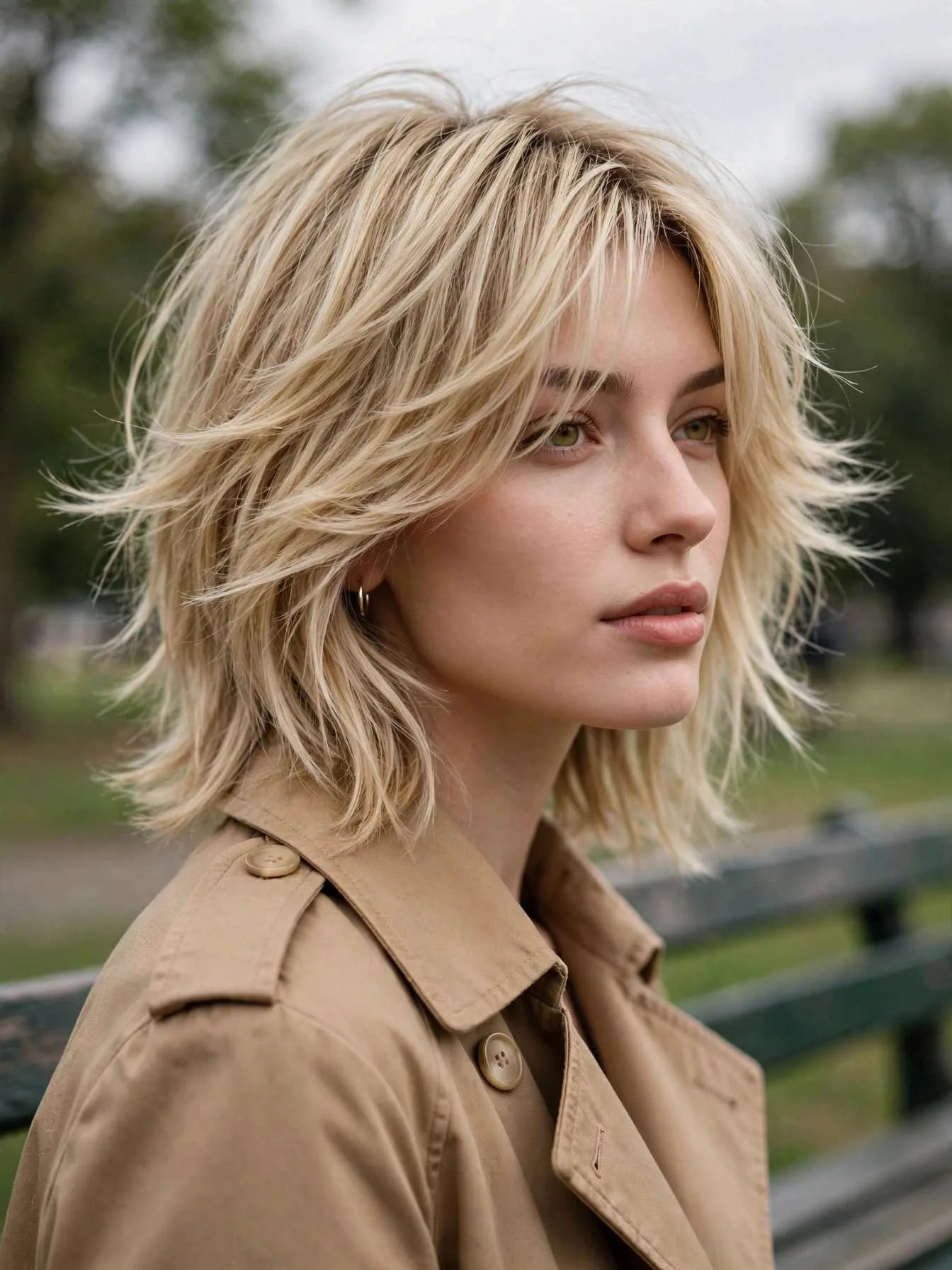
22. Grown-Out Shag
Three months past your appointment, the shag becomes a style in its own right. The crown layers have lengthened, the fringe has melted into the face frame, and the whole thing looks like expensive, lived-in hair. Unlike precision bobs that collapse the moment they grow, a shag is designed to look intentional at every stage.
Best for: Infrequent salon visitors and the low-maintenance devoted.
Ask your stylist for: A cut with grow-out in mind and a soft perimeter that will not shelf as it grows.

Styling A Shag Without The Fuss
The shag haircut was built for people who do not want a morning routine, so keep yours short. Rough-dry the roots upside down for lift, scrunch texture spray or mousse through the mid-lengths, and leave it alone. The cut looks better a little messy, which means perfectionism is actively counterproductive.
If the crown falls flat, the fix is technique, not more product. Lift sections at the root with your fingers, hit them with warm air, then cool air to set. Piling paste at the roots weighs down exactly the part that is supposed to lift. For second-day hair, dry shampoo at the crown and a quick flat-iron pass over the face-framing pieces resets the shape in under two minutes.
Conditioning matters more than most shag wearers expect. Textured ends are vulnerable ends, and dry ends frizz instead of piece. Celebrity stylist Paul Edmonds puts conditioning first for shag maintenance. A weekly mask or light oil through the ends keeps the texture looking deliberate rather than damaged.
FAQs
What Does A Shag Haircut Cost?
As of fall 2026, as a rough US guide, expect $60 to $120 at a mid-market salon for the cut, wash, and style. Curly specialists run $90 to $180, since dry cutting takes roughly twice as long, and coastal cities typically add 25 to 40 percent. These figures match mid-market US salon pricing tracked for 2026. Salon tier, city, and curl specialization move the number most, so confirm the price at booking.
How Often Does A Shag Need Trimming?
Most versions of the shag haircut hold their shape for 8 to 12 weeks. Shorter, bolder cuts like the shaggy bob or wolf cut need refreshing closer to 8 weeks, while longer versions stretch to 12. The fringe is the exception: with bangs, expect a trim every 3 to 4 weeks, or learn to dust the ends yourself between appointments.
Will A Shag Work On Thin Or Fine Hair?
Yes, with restraint. Light layering creates the appearance of volume at the crown, which is exactly what fine hair needs. The mistake is over-texturizing, which removes the density you are trying to fake. Keep layers shallow and ends fairly solid. Hollie Rose Clarke, stylist ambassador for Living Proof, notes that fine or flat hair gains “the appearance of more volume and movement” from a shag cut this way.
Can I Get A Shag With Very Straight Hair?
You can, but be honest about the styling trade. On pin-straight hair the cut will not air-dry into texture by itself the way it does on waves or curls. Budget two minutes for texture spray and scrunching, or a quick rough-dry upside down. The result is worth it: straight hair shows off choppy layers better than any other texture.
Does The Shag Work On Curly Hair?
On curly hair, a shag haircut works beautifully, arguably better than on any other texture. The key is a stylist who cuts curls dry, curl by curl, so the layers follow your actual pattern instead of a guess made on wet, stretched hair. Curly shags need trims less often, around every 3 to 4 months, since the shape forgives growth.
What Should I Bring To My Salon Appointment?
Two or three reference photos showing the length, layering, and fringe shape you want. Mention your natural texture, your density, and how much daily styling time you have, not the aspirational version. A good stylist adapts the cut to your hair rather than copying the photo strand for strand. That adaptation is where the magic happens.
Final Thoughts
The shag haircut endures because it respects real life. It does not demand daily heat styling, it forgives skipped appointments, and it looks better with a little chaos in it. Pick the version that matches your texture and your tolerance for upkeep, bring photos to your stylist, and give the cut two weeks to settle. Most people who try the shag haircut do not go back to one-length hair.