Skincare Routine For Oily Skin That Actually Works
A skincare routine for oily skin that calms midday shine without stripping your face is absolutely possible. Most oily skin gets worse because routines attack it: foaming cleansers used three times a day, alcohol toners, skipped moisturizer. Your skin answers by pumping out more oil.
Oil itself is not the enemy. Your sebaceous glands make sebum to shield skin from dryness and germs. Trouble starts when glands overproduce. The fix is balance: clear pores, steady hydration, and sun protection. This guide lays out a five-step routine built on ingredients dermatologists recommend, plus the mistakes that undo progress. No ten-step marathon and no miracle claims.
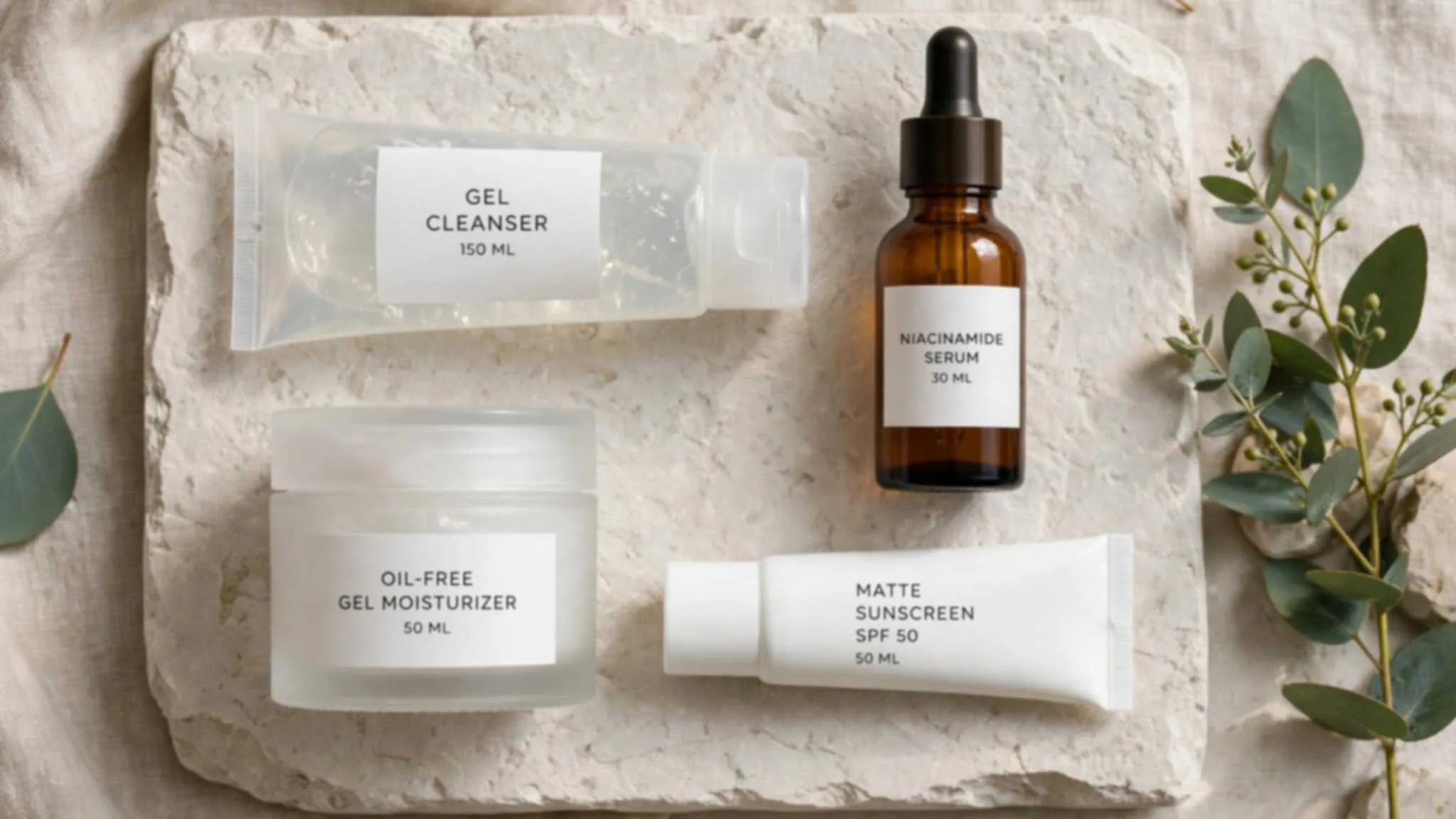
Here is the direct answer. A skincare routine for oily skin has five daily steps. Cleanse twice a day with a gentle gel cleanser. Apply an alcohol-free toner. Treat with salicylic acid or niacinamide. Moisturize with a lightweight oil-free gel. Wear broad-spectrum SPF 30 every morning.
Why Oily Skin Overproduces Oil
Blaming your products is tempting, but oil production starts deeper. Understanding how to control oily skin begins with the glands themselves. Each pore houses a sebaceous gland, a tiny factory releasing sebum onto your skin. Genes set your baseline output. Androgens, the hormones that surge in puberty and shift with cycles, turn the dial up.
That is why the T-zone, the forehead, nose, and chin, shines first. It holds the densest cluster of glands. Heat, humidity, and stress can nudge output higher too. Oily and dehydrated skin often coexist. A dry barrier makes glands pump extra oil to compensate. None of this means your skin is dirty or neglected. It means your routine should work with active glands instead of punishing them.
The 5-Step Skincare Routine For Oily Skin
Five steps cover everything oily skin needs. Each one has a job, and the order matters: thinnest formulas first, sunscreen last. If you are building your first full routine, start with our step-by-step skincare routine guide. It walks through the same logic for every skin type.
Consistency beats intensity here. Give the full lineup six to eight weeks before judging it. Skin needs a full renewal cycle to show real change.
Step 1: Cleanse Twice A Day With A Gel Or Foaming Cleanser
Wash morning and night, never more. A gel or light foaming cleanser lifts overnight oil and sunscreen without squeaky-tight dryness. Massage for 30 to 60 seconds so the formula can dissolve buildup, then rinse with lukewarm water. Hot water irritates and can prompt extra oil production.
Pick formulas labeled oil-free and non-comedogenic. Skip bar soaps and strong fragrances. Both tend to irritate oily skin that is already reactive.

Step 2: Apply An Alcohol-Free Toner
Toners are optional but useful for oily skin. The right one removes last traces of cleanser and preps skin to absorb treatment. Look for niacinamide, green tea, or glycerin on the label. Apply it with clean hands while skin is still slightly damp. Avoid astringents built on denatured alcohol. They strip fast, and oil comes back heavier within hours.
Step 3: Treat With Salicylic Acid Or Niacinamide
This is the workhorse step. Salicylic acid is oil-soluble, so it slips inside pores and dissolves the plugs that become blackheads. Niacinamide helps regulate sebum and calms redness. You can use both: the acid two or three nights a week and a niacinamide serum every morning.
Board-certified dermatologist Dr. Muneeb Shah names retinol, salicylic acid, green tea, and niacinamide as strong options for controlling oil production. Start with low strengths, 0.5 to 2% salicylic acid, and build up only if your skin stays calm. For a deeper look, see the niacinamide ingredient breakdown on INCIDecoder.
Step 4: Moisturize With A Lightweight Gel
Skipping this step is the classic oily-skin error. Dehydrated skin signals glands to produce more oil, which defeats the whole routine. A pea-sized amount of oil-free gel moisturizer locks in hydration without grease. Formulas with hyaluronic acid or glycerin hydrate well, and ceramides support the barrier. If your T-zone shines within an hour, you used too much. Halve the amount before switching products.

Step 5: Finish Mornings With Broad-Spectrum SPF 30 Or Higher
Sun protection is non-negotiable in any skincare routine for oily skin. UV damage thickens skin over time, which traps oil and enlarges the look of pores. Choose an oil-free or matte-finish sunscreen labeled broad-spectrum SPF 30 or higher, and apply it as the last morning step. The American Academy of Dermatology’s guide to how to control oily skin reinforces the same basics. Gentle cleansing, non-comedogenic products, and daily sun protection.

Morning Vs. Night: How The Routine Shifts
The five steps of a skincare routine for oily skin stay the same around the clock. Mornings defend, nights repair. The products shift slightly to match each job.
Your Morning Lineup
Cleanser, toner, niacinamide serum, gel moisturizer, and sunscreen. Keep layers light so nothing pills under sunscreen or makeup. Let the sunscreen set for two minutes before foundation.
Your Night Lineup
Night starts with a deeper cleanse. If you wore sunscreen or makeup, try double cleansing. An oil-based first cleanse followed by your gel cleanser removes everything without harsh scrubbing. Follow with toner, then treatment. Try salicylic acid two or three nights a week, or a retinoid on alternate nights once tolerated. Finish with moisturizer and skip the sunscreen.
Five Mistakes That Make Oily Skin Worse
Most oily skin care tips focus on products, but habits matter just as much. These five mistakes undo a good skincare routine for oily skin faster than any product can fix. Viral oily face remedies fail for the same reason: they treat symptoms, not causes.
Washing Three Or More Times A Day
Extra washing feels productive. It is not. Each cleanse strips surface lipids, and glands compensate with a fresh wave of oil. Twice a day is the ceiling for almost everyone.
Skipping Moisturizer
Bare skin loses water fast, and oil rushes in to replace it. That extra grease is often dehydration in disguise. The gel step takes twenty seconds and prevents the whole cycle.
Using Alcohol-Heavy Toners
Astringents that sting feel like they are working. The sting is irritation. Denatured alcohol dissolves oil on contact, then triggers rebound shine within hours. Swap to alcohol-free formulas and the sting disappears with the problem.
Scrubbing With Harsh Exfoliants
Gritty scrubs and stiff brushes create micro-tears and inflammation. Inflamed pores look larger and produce more oil. Chemical exfoliants like salicylic acid clear pores without the physical damage.
Layering Too Many Actives At Once
Acid plus retinoid plus vitamin C in one night is a recipe for a damaged barrier. Introduce one active at a time, weeks apart. Calm skin means continue. Stinging means pause.
How To Choose Products For Oily Skin
Labels matter more than marketing. Two phrases do the heaviest lifting: oil-free and non-comedogenic. The first means no added oils. The second means the formula was tested not to clog pores. Neither guarantees a perfect match, so patch-test anything new on your jawline for a day or two. Of all oily skin care tips, reading labels ranks near the top.
Skip DIY oily face remedies like lemon juice or baking soda. Both disrupt your skin’s pH and cause irritation that no routine can outrun.
When To See A Dermatologist
A steady skincare routine for oily skin handles everyday shine and mild breakouts. See a dermatologist if acne turns painful or cystic. The same applies if oil production changes suddenly alongside other symptoms. If nothing improves after eight to twelve consistent weeks, get professional input. Bring a list of the products you use. It helps the dermatologist spot irritants fast. Prescription retinoids and hormonal options exist for cases drugstore products cannot touch.
Frequently Asked Questions
How Often Should I Wash Oily Skin?
Twice a day, morning and night. A third wash after heavy sweating is fine, but routine over-washing strips your barrier and triggers more oil. Use lukewarm water, massage for 30 to 60 seconds, then pat dry.
Should I Still Moisturize Oily Skin?
Yes, every day. Moisturizer prevents the dehydration that makes glands overproduce oil. Choose an oil-free gel with hyaluronic acid or glycerin and use a pea-sized amount. Shine after moisturizing usually means you used too much product.
What If Sunscreen Makes Me Shiny?
Switch formulas instead of skipping protection. Matte-finish, oil-free sunscreens with zinc oxide absorb shine while blocking UV. Blotting papers at midday handle breakthrough oil without disturbing your SPF layer.
Does Oily Skin Need Exfoliation?
Yes, two to three times a week. Salicylic acid suits oily skin best because it dissolves oil inside pores. Start at 0.5 to 2% strength. Daily exfoliation irritates more than it helps, so keep rest days.
Why Is My Face Oily Again By Noon?
Glands produce oil continuously, and heat, humidity, and hormones speed them up. Even the best skincare routine for oily skin cannot switch glands off entirely. Blotting papers or a light dusting of translucent powder manage midday shine without a full rewash.
Can This Routine Shrink Large Pores?
Pores do not shrink permanently, since their size is genetic. Keeping them clear with salicylic acid makes them look smaller, and matte sunscreen prevents the stretched look sun damage causes. That visible refinement is the realistic win.
Final Thoughts
A skincare routine for oily skin works when it stays simple and consistent. Five steps, twice a day, and six weeks of patience will tell you more than any product haul. Start tonight with the cleanser and moisturizer steps. Add the treatment once those feel settled, and keep sunscreen every single morning. Your future self, the one not blotting at noon, will thank you. That is the whole routine.