Top 10 Tips for Skincare for Anti Aging: Look Years Younger
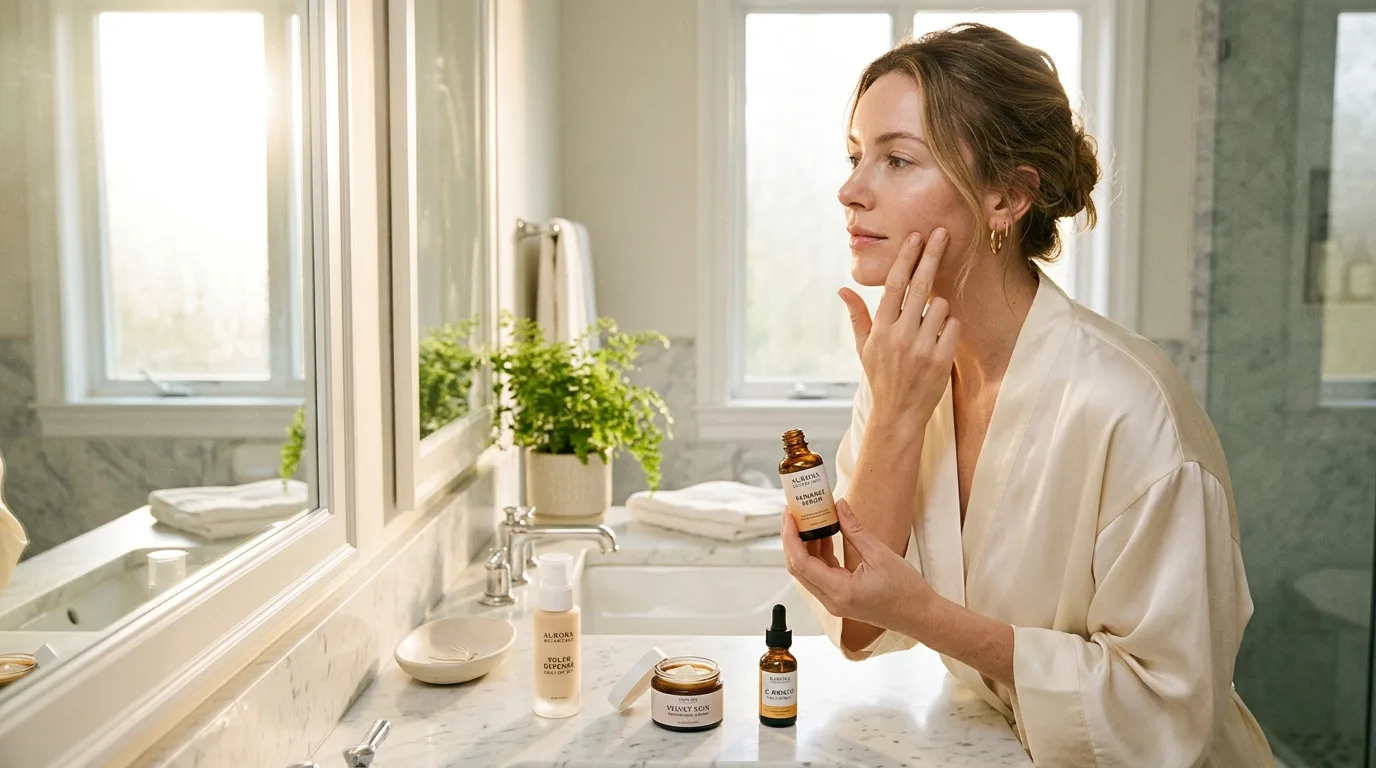
Are you moisturizing, cleansing, and still watching fine lines get worse every year? You’re not alone, and your routine isn’t entirely the problem. Most anti-aging skincare advice skips the ingredients and habits that actually make a difference. Collagen production starts declining at 25, and by your 30s, years of unprotected UV exposure, poor sleep, and the wrong products begin to show.
These top 10 tips for skincare for anti aging are dermatologist-backed. They cover the right actives, the daily habits, and the lifestyle choices that actually protect your skin.
Why Your Skin Ages Faster Than You Think
Most people assume wrinkles and sagging are mostly genetic. They’re not. Studies show that up to 80% of visible skin aging comes from external factors: UV exposure, pollution, poor sleep, and diet. Your DNA plays a smaller role than most people think.
Collagen and elastin are the proteins that keep skin firm. Your body produces less of both with age — output drops roughly 1% per year after your mid-20s. Add accumulated UV damage on top of that, and skin ages faster than it should.
Knowing how to prevent skin aging is mostly about starting early and being consistent. The 10 tips below cover what most basic anti-aging guides miss, from the right ingredients to the habits that age skin from the inside.
The Top 10 Anti-Aging Skincare Tips
Every tip below has research behind it. They work best as a system, not a checklist. Apply them consistently rather than perfectly.
1. Wear Sunscreen Every Single Day
UV radiation is the single biggest driver of premature skin aging. It breaks down collagen, causes hyperpigmentation, and increases skin cancer risk. According to the American Academy of Dermatology, daily sunscreen is the most effective anti-aging step available. Nothing else is close.
Use a broad-spectrum sunscreen with at least SPF 30 every morning, even on cloudy days and even indoors. UV rays penetrate cloud cover and glass, causing cumulative damage daily. Apply it as the last step in your morning routine, before makeup.
Which formula is right for you?
- Mineral sunscreens (zinc oxide, titanium dioxide) — sit on the skin’s surface; best for sensitive skin
- Chemical sunscreens (avobenzone, octinoxate) — absorb UV energy; feel lighter under makeup
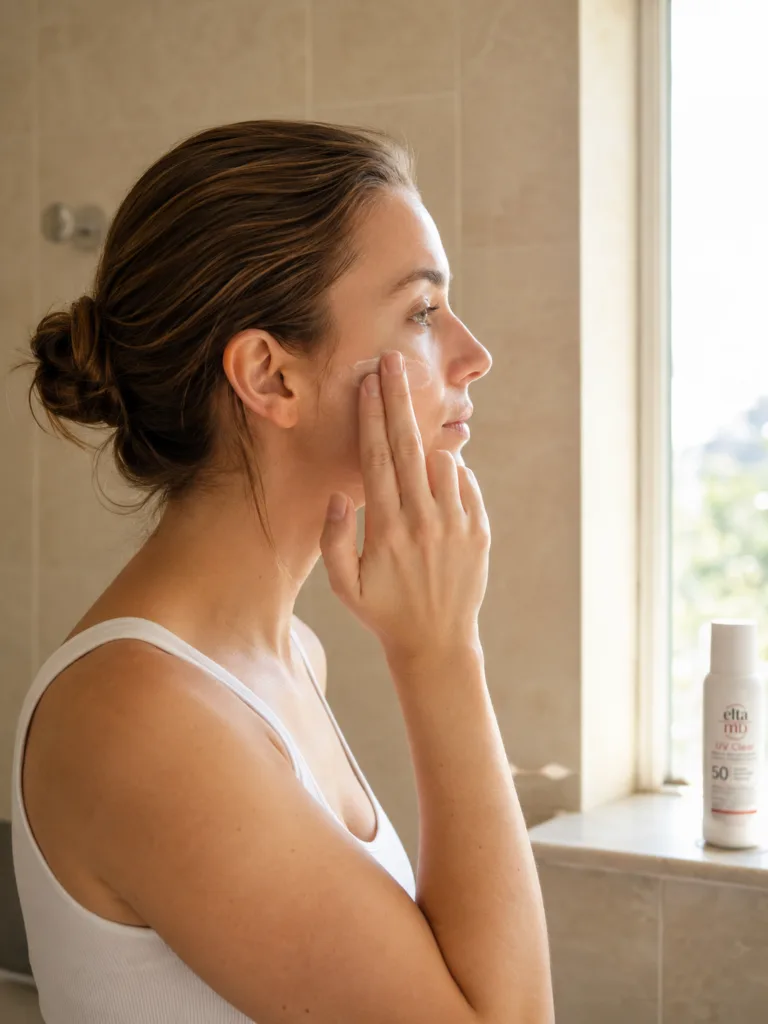
Either works. The best sunscreen is the one you’ll actually apply every day.
2. Start Using Retinol at Night
No ingredient has more clinical research behind it than retinol. A derivative of vitamin A, it accelerates cell turnover, stimulates collagen production, and fades fine lines and dark spots. Studies show visible improvements in as little as 12 weeks.
How to start without irritating your skin:
- Begin at a 0.1–0.25% concentration
- Apply 2 nights per week to start
- Build up gradually as your skin adjusts
- Always apply at night—sunlight breaks retinol down
- Follow with SPF the next morning

Some initial dryness and flaking is normal; it means the ingredient is working. Prescription retinoids like tretinoin work faster but require a doctor. Over-the-counter retinol is a solid starting point for most skin types.
3. Add a Vitamin C Serum Every Morning
Vitamin C is your skin’s daytime defense. This antioxidant neutralizes free radicals from UV exposure and pollution before they break down collagen and elastin. It also brightens skin tone and supports collagen production on its own.
Apply a vitamin C serum after cleansing and before moisturizer each morning. Look for 10–20% L-ascorbic acid, the most bioavailable form. Vitamin C oxidizes quickly, so store it in a cool, dark place and replace it once it turns orange or brown.
Pro tip: Pairing vitamin C with vitamin E and ferulic acid boosts antioxidant protection considerably. Many well-formulated serums already include this combination. Check the label before buying them separately.

4. Keep Skin Hydrated with the Right Moisturizer
As skin ages, it loses its ability to hold moisture. That shows up as dryness, more visible fine lines, and a dull complexion. The right moisturizer addresses all three, but not all moisturizers work the same way.
The best anti-aging ingredients in a moisturizer fall into three categories:
| Type | Examples | What It Does |
| Humectants | Hyaluronic acid, glycerin | Draw water from the air into the skin |
| Emollients | Squalane, fatty acids | Smooth and soften the surface |
| Occlusives | Ceramides, dimethicone | Seal moisture in and protect the skin barrier |
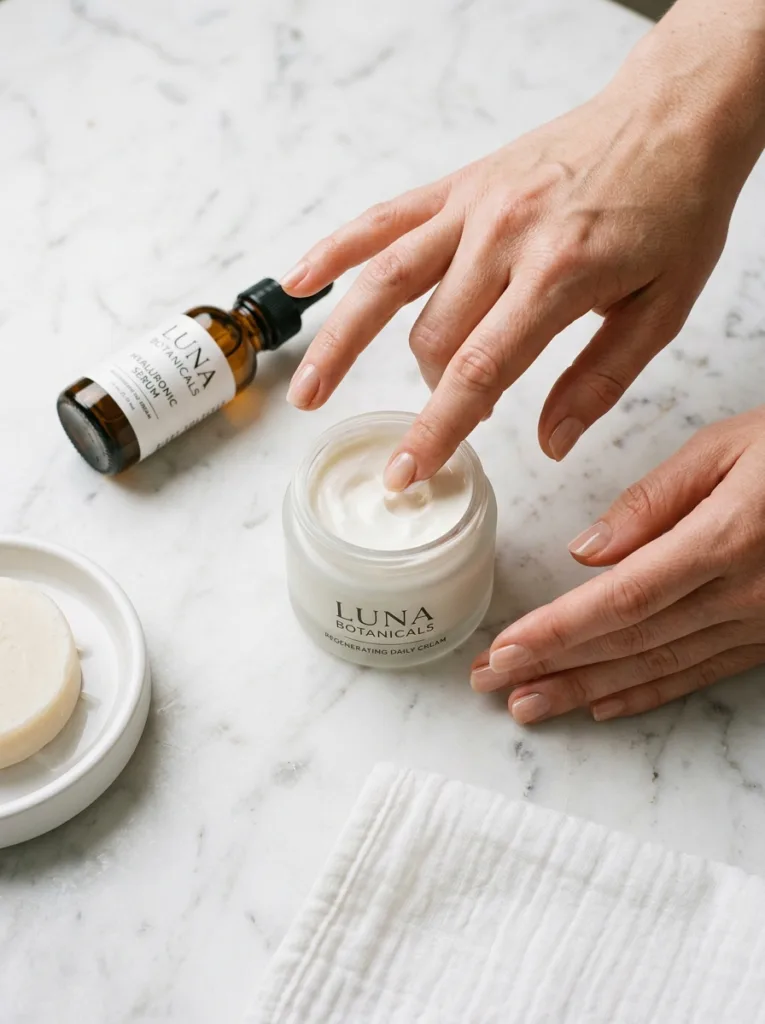
Hyaluronic acid deserves special attention. One molecule holds up to 1,000 times its weight in water. Apply it to damp skin, then follow with a moisturizer to seal it in. Skipping this step pulls moisture from your skin instead of the air.
5. Exfoliate Gently 1–2 Times a Week
Cell turnover naturally slows with age, leaving skin rougher, duller, and thicker-feeling. Regular, gentle exfoliation removes dead cells and brings fresher skin to the surface.
AHAs vs. BHAs: Which should you use?
- AHAs (glycolic acid, lactic acid)—work at the skin’s surface; best for texture and uneven tone
- BHAs (salicylic acid)—penetrate deeper into pores; best for oily or acne-prone skin
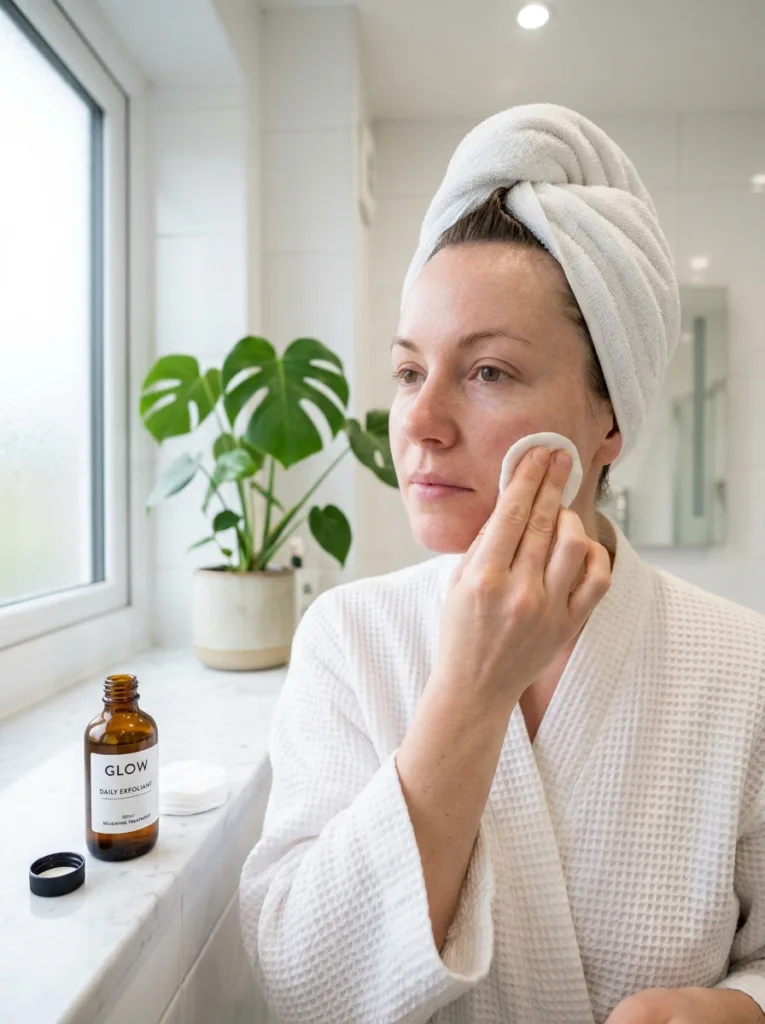
Use it either once or twice per week, never daily. Over-exfoliation strips the skin barrier, triggers inflammation, and speeds up the aging it was supposed to prevent. Apply SPF the morning after, since freshly exfoliated skin is more UV-sensitive.
6. Use Peptide-Rich Serums to Boost Collagen
Peptides are short chains of amino acids (essentially mini-proteins) that tell your skin cells to make more collagen and elastin. Unlike retinol, they cause no irritation, so they work for all skin types, including those who can’t tolerate stronger actives yet.
Best peptides to look for on the label:
- Matrixyl (palmitoyl pentapeptide-4) — stimulates collagen production
- Argireline (acetyl hexapeptide-3) — relaxes facial tension, reduces expression lines
- Copper peptides — support skin repair and firmness
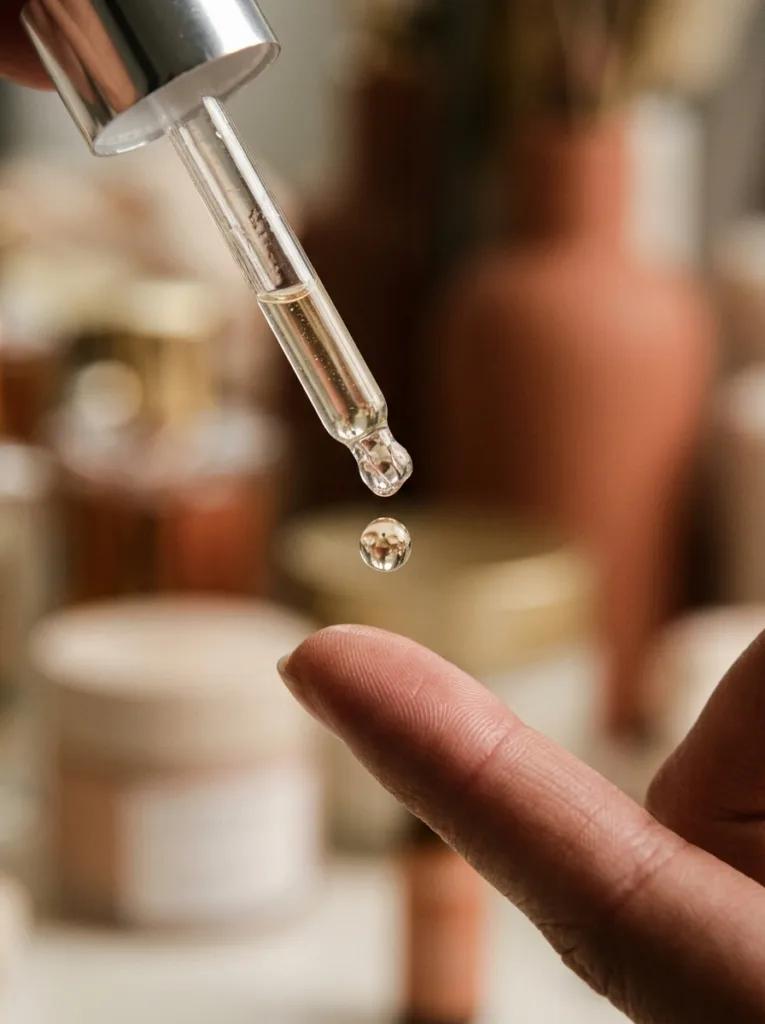
Apply a peptide serum after your vitamin C and before your moisturizer. They layer cleanly with retinol routines: retinol at night, peptides in the morning.
7. Never Skip Your Eye Cream and Neck Care
The skin around the eyes and on the neck is thinner than the rest of your face. It ages faster, and it’s usually the first place where fine lines, crepiness, and sagging show up. Most people still stop their routine at the jawline.
For the eye area: Apply eye cream using your ring finger — the lightest touch — to avoid pulling at the delicate orbital area. Look for formulas containing:
- Retinol — for fine lines
- Peptides — for firmness
- Caffeine — for puffiness and dark circles
- Vitamin K — for discoloration
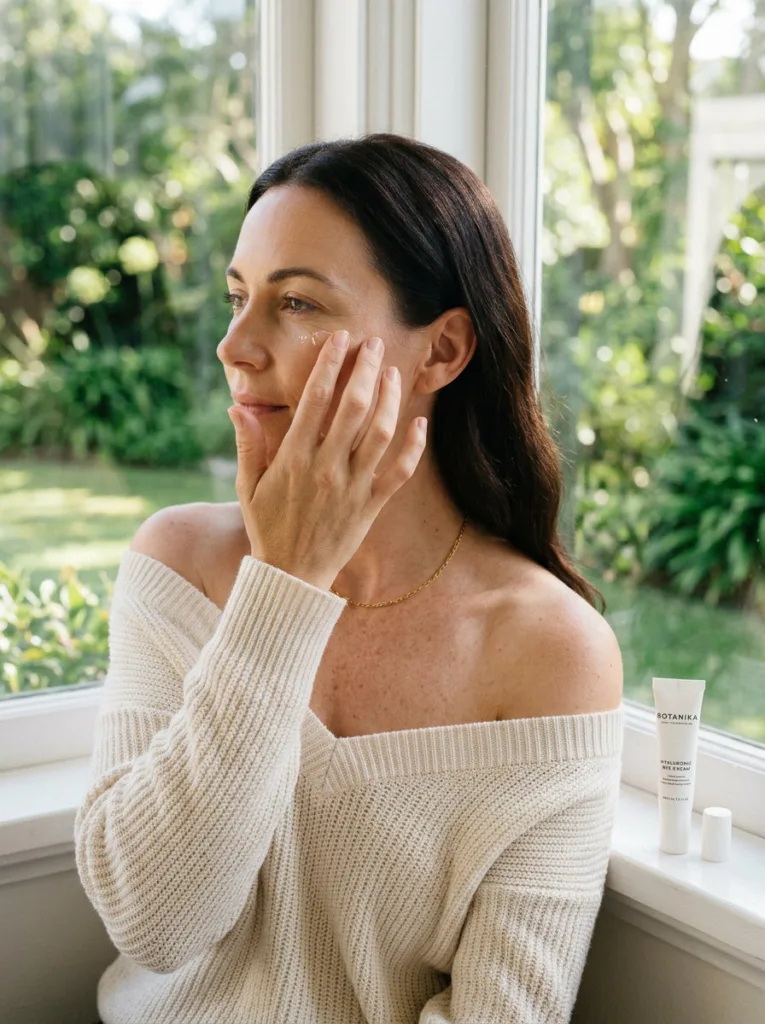
For the neck and décolletage: Use the same products as your face: SPF, your serum, your moisturizer. A well-cared-for face next to an untreated neck is one of the clearest signs of a skipped routine.
8. Eat for Your Skin
What you eat shows up on your skin. A diet rich in antioxidants, omega-3 fatty acids, and whole foods supports collagen production and reduces oxidative stress, which drives cellular aging.
Best foods for anti-aging skin:
- Fatty fish (salmon, sardines) — omega-3s reduce skin inflammation
- Berries — antioxidants neutralize free radicals
- Leafy greens — vitamin C and folate support collagen synthesis
- Avocado — healthy fats reinforce the skin barrier
- Nuts and seeds — vitamin E, zinc, and selenium for skin repair

Cut back on refined sugars and processed foods. When sugar molecules attach to collagen fibers, a process called “glycation,” the collagen stiffens and skin loses “glycation.” High-sugar diets age skin faster than most people realize.
9. Prioritize Sleep and Stress Management
Chronic stress raises cortisol, a hormone that breaks down collagen. High cortisol over time speeds up visible aging. Sleep deprivation makes it worse: during deep sleep, the body releases human growth hormone, which is essential for skin repair.
Simple habits that make a real difference:
- Aim for 7–9 hours of sleep each night
- Sleep on a silk pillowcase to reduce friction on skin and hair
- Sleep on your back if possible—face-down sleeping creates compression lines that can become permanent
- Lower cortisol through regular exercise, mindfulness, or time outdoors

None of this cost anything. They just require consistency.
10. Build an Age-Specific Routine
Anti-aging needs change as you age. Building a routine that fits your decade makes everything else you do more effective.
| Decade | Priority | Key Products to Add |
| 20s | Prevention | Daily SPF, vitamin C serum, lightweight moisturizer. Introduce retinol early. |
| 30s | Maintenance | Add a peptide serum. Address early hyperpigmentation. Stay consistent. |
| 40s | Repair | Increase retinol strength gradually. Richer moisturizer. Add niacinamide for tone and pores. |
| 50s+ | Restoration | Deep hydration, firming peptides, gentle exfoliation. Barrier repair is critical. Annual derm visits. |
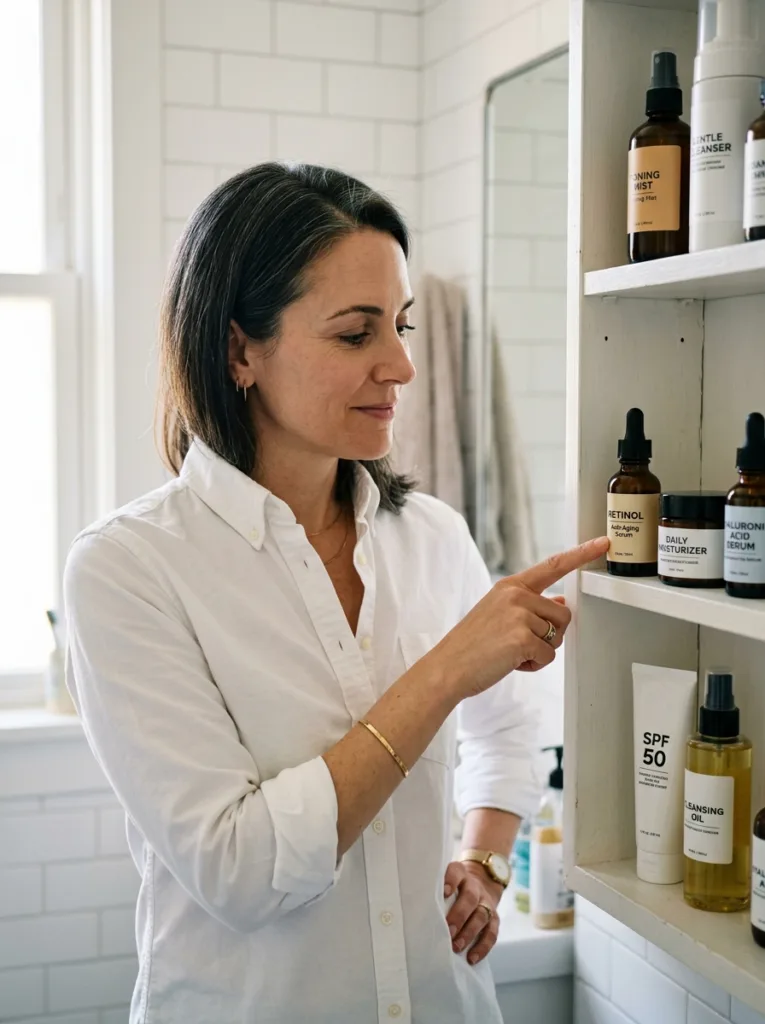
Your Anti-Aging Skincare Routine at a Glance
These tips work best when structured into a consistent anti-aging skincare routine.
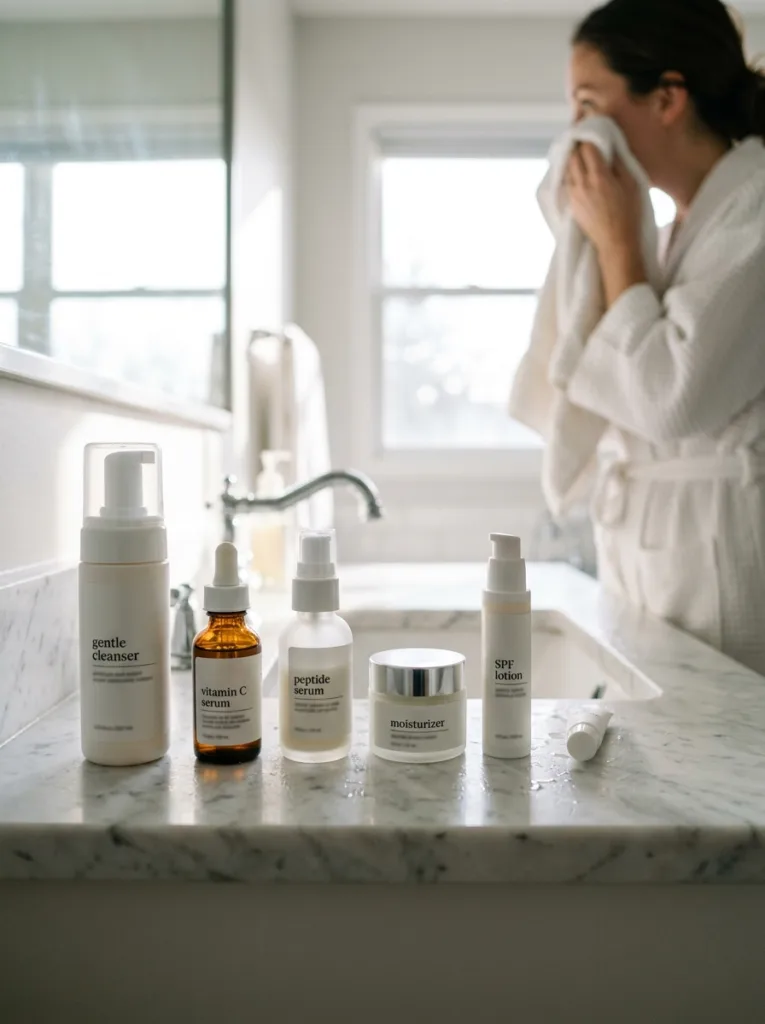
| Time | Step | What to Use |
| Morning | Cleanser | Gentle, non-stripping formula |
| Vitamin C serum | 10–20% L-ascorbic acid | |
| Peptide serum | Matrixyl, Argireline, or copper peptides | |
| Moisturizer | Humectant + emollient + occlusive blend | |
| Eye cream | Caffeine, peptides, or vitamin K | |
| Sunscreen | Broad-spectrum SPF 30+ (last step, always) | |
| Evening | Cleanser + makeup removal | Double cleanse if wearing SPF or makeup |
| Retinol | Start 2x per week and build up gradually | |
| Moisturizer | Richer formula than daytime if skin is dry | |
| Eye cream | Retinol or peptide formula | |
| 2–3x per week | Exfoliant | AHA or BHA — never on the same night as retinol |
Don’t use exfoliants and retinol on the same night. Alternate them to protect your skin barrier.
Mistakes That Speed Up Skin Aging

What you skip matters as much as what you add. These habits speed up skin aging, often without the person realizing it.
- Skipping sunscreen on cloudy days — UV rays penetrate cloud cover and glass daily. Cumulative damage adds up every time you skip.
- Over-exfoliating strips the skin barrier, triggers inflammation, and drives collagen breakdown. More is not better.
- Smoking — constricts blood vessels near the skin’s surface, reducing oxygen delivery and flooding skin with free radicals. Causes premature wrinkling around the mouth and eyes.
- Not removing makeup before bed traps pollutants against skin overnight, exactly when it needs to repair itself.
- Layering too many actives at once—mixing retinol with strong AHAs or stacking multiple acids—causes irritation and barrier damage. Introduce one new active at a time, spaced several weeks apart.
When to See a Dermatologist

A consistent home routine covers most anti-aging needs. But a board-certified dermatologist can offer prescription treatments and in-office procedures that go well beyond what’s available over the counter.
Book an appointment if you notice the following:
- Persistent hyperpigmentation that doesn’t respond to vitamin C or niacinamide
- Pronounced volume loss in the cheeks or under-eye area
- Rosacea or chronic redness that disrupts your routine
- Any moles or spots that change in size, color, or shape
In-office anti-aging treatments to ask about:
- Chemical peels — resurface and brighten
- Microneedling — stimulate collagen production
- Laser resurfacing — target texture, tone, and deep lines
- Injectable fillers and neuromodulators (Botox)—restore volume and reduce expression lines
These complement a strong home routine. They don’t replace it. Annual skin checks are worth scheduling at any age, for anti-aging guidance and cancer screening alike.
FAQ
What is the single most important anti-aging skincare step?
Daily broad-spectrum sunscreen with SPF 30 or higher. UV exposure drives up to 80% of visible skin aging. No serum, cream, or treatment comes close to its preventive impact.
When should I start an anti-aging skincare routine?
Ideally in your mid-20s, when collagen production begins to slow. Prevention beats correction every time. That said, starting in your 40s or 50s still makes a real difference. It’s never too late.
Can I use retinol every night?
Not at first. Start 2–3 nights per week at a low concentration (0.1–0.25%) and build up slowly over several weeks. Most skin types can tolerate nightly retinol after a 4–8 week adjustment period. Always follow with SPF the next morning.
Conclusion
Good skin doesn’t come from expensive products or complicated routines. It comes from consistent habits: daily SPF, retinol at night, vitamin C in the morning, and enough sleep. Start with whichever tip you’re currently missing. The results show up slowly, then all at once.
For more skin care tips, please visit VelvetBoard.