12 Night Skin Care Routine For Glowing Skin

Ever wonder why your skin looks dull by evening, no matter how much moisturizer you pile on? The problem usually isn’t your products. It’s your order, your timing, and what you skip while you sleep.
Most guides hand you a list and walk away, leaving you to guess what to buy, how much to use, and what happens if two actives collide. This night skin care routine for glowing skin fixes that with real ingredient percentages, a five-minute version for busy nights, and the safety rules dermatologists actually care about.
Your skin repairs itself while you sleep. Collagen production rises. Cell turnover speeds up. This nighttime skincare routine works with that cycle, not against it, starting tonight.
Quick answer: Got five minutes? Cleanse, apply one serum, moisturize. Got more time? Use all 12 PM skincare steps below and follow the weekly plan so your actives never clash.
Why You Need A Night Skin Care Routine For Glowing Skin

Your skin acts differently after dark. Skin permeability rises at night. That means active ingredients soak in faster and work harder. Blood flow to your skin picks up too, feeding cells the oxygen they need to rebuild. A review in the Journal of Clinical and Aesthetic Dermatology found that skin barrier repair, collagen synthesis, and skin cell division all peak between 11pm and 4am. That’s exactly when most of us are asleep.
Skip your routine, and your skin spends the night defending itself instead of healing. Cortisol, dead skin cells, and leftover pollution sit on your face and block that repair process. Dermatologists see the same habit stall people’s results over and over: treating morning and night care the same way. Morning skin needs protection. Night skin needs repair. Diet, sleep, and hydration matter too. Products speed up work your body is already trying to do on its own.
The 5-Minute Minimalist Routine (For Busy Nights)

Some nights, twelve steps just isn’t happening. That’s okay. Skipping skin care completely does more harm than a short version ever could. Got five minutes? Do these three things, in this order.
Cleanse
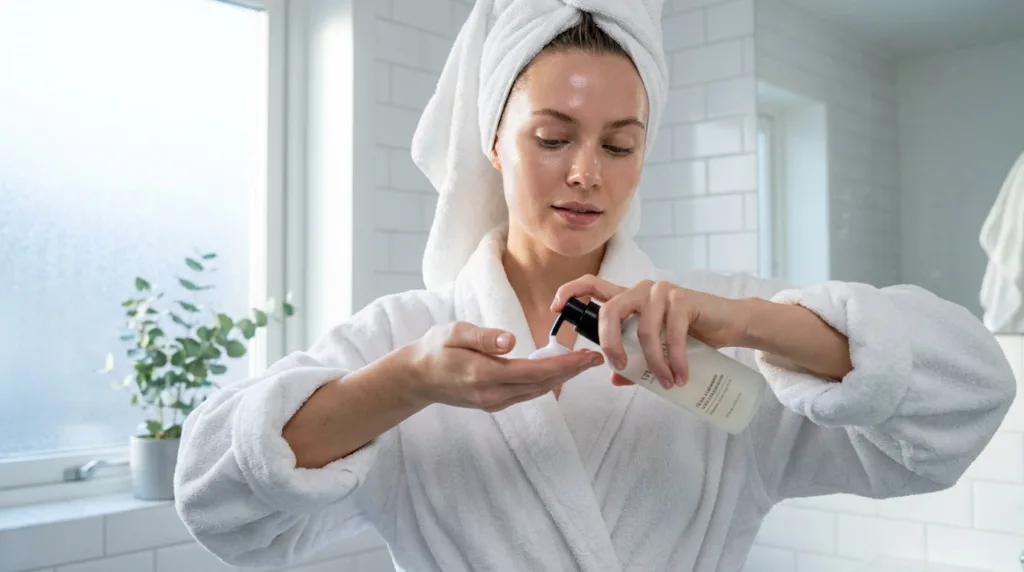
Wipe away your makeup and the day’s grime first. Reach for a micellar water or a gentle, sulfate-free cleanser, like CeraVe Hydrating Facial Cleanser. This step matters more than people think. Leftover makeup and sunscreen trap dirt and bacteria against your skin all night, which leads straight to clogged pores and dullness by morning. Even on your laziest night, cleansing takes under a minute, and it’s non-negotiable.
Treat
Apply one active serum picked for your biggest concern. Dullness and oily patches respond well to 10% niacinamide. Tight, dehydrated skin wants 1% hyaluronic acid instead. You don’t need five serums stacked on top of each other. One targeted product, applied while your skin is still slightly damp, absorbs better and does the actual work. Pick the ingredient your skin needs most tonight, and skip the rest until you have more time.
Moisturize
Seal everything in with a basic moisturizer. Check the label for ceramides or glycerin near the top of the ingredient list, since those hold onto water and rebuild your skin’s barrier overnight. This is the step people skip when they’re tired, and it’s the one that matters most for locking in whatever you just applied. Without it, your serum evaporates before it finishes working, and you wake up just as dull as before.
No toner, no eye cream, no exfoliant required. This three-step version still covers what matters most: clean skin and locked-in hydration. Build up to the full routine on nights you have time, and skip the guilt on nights you don’t.
The Full 12-Step Routine, With What To Actually Use
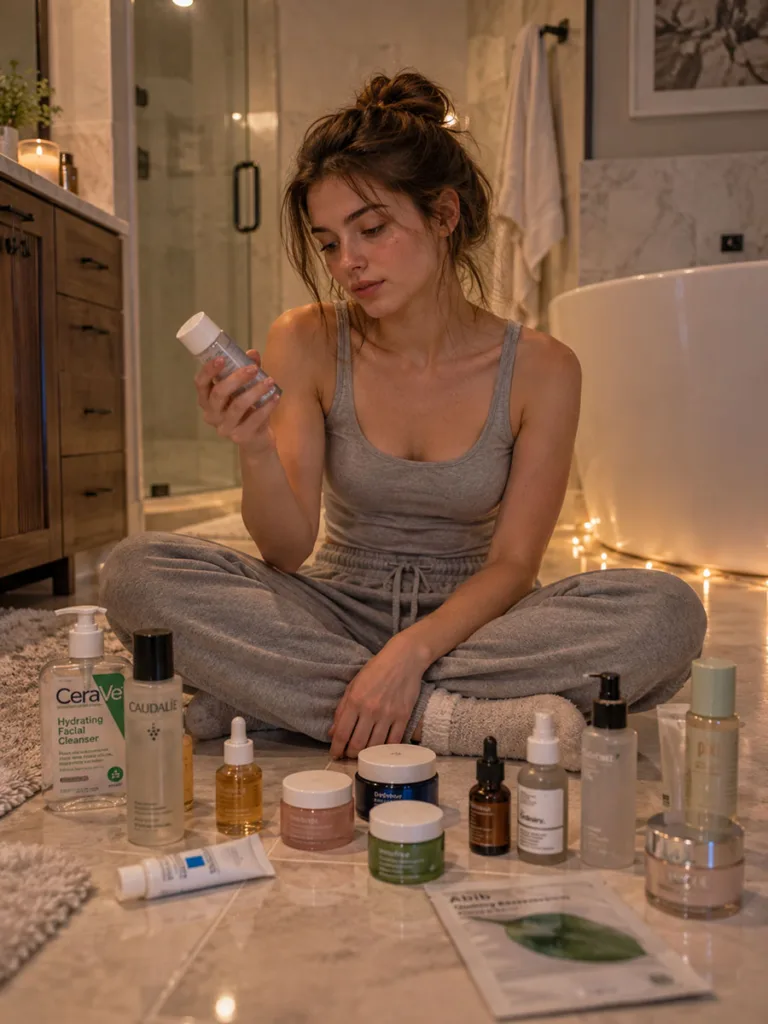
When you’ve got more time, these PM skincare steps add targeted treatments and protective layers on top of the basics. Every step below names a real ingredient percentage, not just a category, so you know exactly what to look for on the label.
Step 1: Remove Makeup And SPF First
Start here, always. Use a cleansing balm or micellar water, like Bioderma Sensibio H2O, to melt away makeup and sunscreen. This step exists because a regular cleanser alone can’t fully break down waterproof mascara or SPF. Skip it, and that residue sits in your pores all night, mixing with sweat and oil. The result is dull, congested skin by morning, no matter how good your serum is. It takes about sixty seconds, and those sixty seconds decide how well every product after it works.
Step 2: Follow With A Gentle Cleanser
After makeup removal, wash your face again with an actual cleanser. Look for a sulfate-free formula, like CeraVe Foaming Facial Cleanser, especially if your skin leans oily or acne-prone. This second wash clears whatever the balm left behind: sweat, excess oil, and daily grime. Sulfates strip your skin’s natural barrier, which is exactly what you don’t want at night, when your skin should be repairing instead of fighting off irritation. Go gentle here, every time.
Step 3: Exfoliate Two To Three Times A Week
Exfoliation clears away dead skin cells so your other products can actually absorb. Use 5% to 10% glycolic acid or 2% salicylic acid, not a gritty scrub. Scrubs create tiny tears in your skin that you can’t see but definitely feel later. Stick to two or three nights a week, never every night. Over-exfoliating is one of the fastest ways to wreck your skin barrier and end up with redness instead of the glow you were chasing.
Step 4: Apply A Hydrating Toner
Toner isn’t filler, even though it gets treated that way. A good one rebalances your skin’s pH after cleansing and adds a light layer of hydration before your serums go on. Look for glycerin or rose water, and skip anything with alcohol high on the ingredient list, since that dries you out instead of prepping you. Pat it in with your hands rather than a cotton pad. You’ll waste less product, and your skin absorbs more of it.
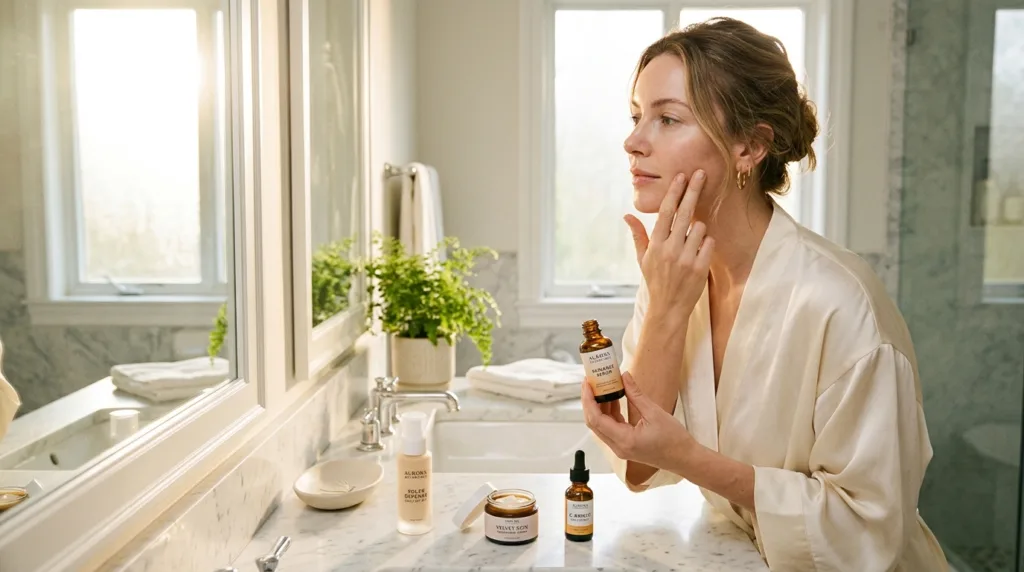
Step 5: Apply A Niacinamide Or Vitamin C Serum
This is where you start targeting real concerns. A 10% niacinamide serum calms redness and controls oil. A 15% vitamin C serum fades dark spots and brightens tone over time. Pick one, not both, since layering them together can cause pilling and irritation for some skin types. Apply two to three drops and press it in gently with your palms. Give it a minute to sink in before you move to the next step.
Step 6: Use Retinol Two To Three Nights A Week
Retinol is the single most effective ingredient for boosting collagen and speeding up cell turnover, but it’s also the one people misuse the most. Start at 0.25% to 0.5% strength, and use it only two or three nights a week at first. Daily use right out of the gate almost always leads to redness, flaking, and a face that looks worse before it looks better. Build up slowly. Your skin needs weeks, not days, to adjust to it.
Step 7: Spot-Treat Active Breakouts
If you’ve got an active pimple, treat it directly instead of coating your whole face. A 2% salicylic acid gel or benzoyl peroxide works well applied right on the spot. Treating your entire face with acne products when only a few areas are breaking out just dries out skin that never needed it. Dab it on with a clean finger or cotton swab after your serum, and let it dry down fully before your moisturizer goes on.
Step 8: Layer Hyaluronic Acid On Off Nights
On the nights you skip retinol, don’t skip hydration too. A 1% to 2% hyaluronic acid serum pulls water into your skin and keeps it plump while you sleep. Apply it to slightly damp skin, since hyaluronic acid needs moisture in the air or on your face to actually work. On bone-dry skin in a dry room, it can pull moisture out of your skin instead of into it, so apply it while your face is still a little damp.
Step 9: Lock It In With A Night Cream
Your night cream seals in everything you just applied. Choose a richer formula with shea butter or ceramides if your skin runs dry, or an oil-free gel if you’re oily. Don’t stop at your jawline either. Sweep any leftover product down your neck and décolleté, since that skin shows aging just as fast as your face does, and almost nobody treats it. A generous layer here does more work than most people expect.
Step 10: Apply Eye Cream With Your Ring Finger
The skin around your eyes is thinner than anywhere else on your face, which means it needs gentler handling. Use your ring finger to apply eye cream, since it naturally applies the least pressure of any finger. Tap, don’t rub, working from the inner corner outward. This small habit prevents the tugging that speeds up fine lines over time. A pea-sized amount for both eyes is plenty.
Step 11: Finish Lips With A Balm
Lips have no oil glands, so they dry out faster than the rest of your face, especially overnight. Look for a balm with shea butter or ceramides rather than menthol or camphor, which can actually dry lips out further despite the tingly feeling. Apply it as your last step, after everything else has absorbed. Keep one on your nightstand. It’s the step most people forget, and the one that makes the biggest visible difference by morning.
Step 12: Use A Sheet Mask Or Sleeping Mask
Once or twice a week, swap your regular moisturizer for something more intensive. A hydrating sheet mask delivers a concentrated dose of serum in fifteen to twenty minutes. A sleeping mask works overnight instead, forming a seal that locks in moisture for hours. Either one gives your skin a deeper reset than your nightly routine alone. Save this step for a night you’re not also using retinol or acids, since layering actives underneath a mask can overwhelm your skin.
Your Weekly Plan: What To Use Each Night
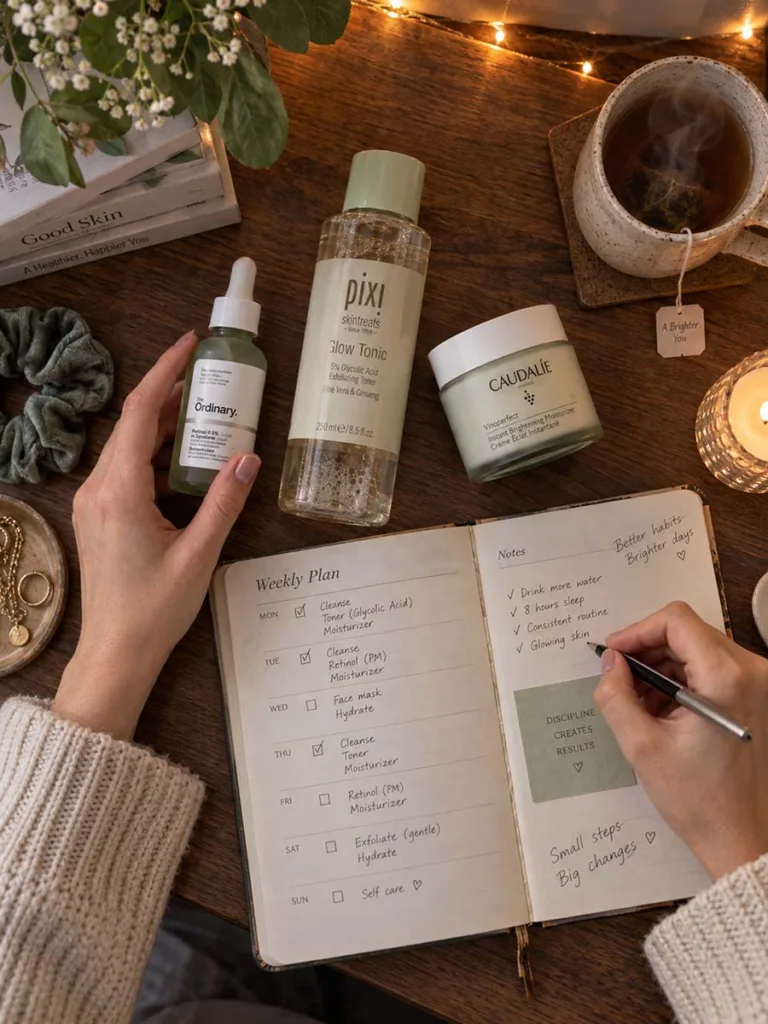
Trying to run all twelve steps every single night usually backfires. Too many actives at once irritates skin instead of helping it glow. Two rules keep you out of trouble: apply thinnest to thickest, waiting 30 to 60 seconds between layers, and never combine retinol with exfoliating acids or vitamin C in the same session. They cancel each other out, or worse, they trigger redness and peeling.
Use this weekly plan to space your PM skincare steps out instead of guessing:
| Night | Focus | What To Use |
| Monday | Retinol | Cleanse, retinol, moisturizer |
| Tuesday | Exfoliate | Cleanse, glycolic or salicylic acid, moisturizer |
| Wednesday | Recover | Cleanse, hyaluronic acid serum, rich moisturizer |
| Thursday | Retinol | Same order as Monday |
| Friday | Mask | Cleanse, sheet mask or sleeping mask |
| Saturday & Sunday | Rest | Cleanse, hydrating serum, moisturizer |
If your skin still feels tight after moisturizing, apply a second thin layer instead of switching products. Your skin is asking for more moisture, not a different formula.
Safety Rules You Shouldn’t Skip

Skip these, and a routine meant to help your skin can end up damaging it instead.
Always Wear SPF After Retinol
Retinol thins your skin’s outer layer temporarily, which raises your sun sensitivity the next day. Wear SPF 30 or higher every morning after a retinol night, even if you’re staying indoors near windows or it’s cloudy out. Skipping this step is one of the most common reasons people give up on retinol, blaming it for dark spots that sunscreen would have prevented. Five extra seconds in the morning saves you weeks of damage control later.
Patch Test Before You Commit
Before any new active touches your face, test it on your inner arm first. Apply a small amount and wait 24 to 48 hours, watching for redness, itching, or bumps. This takes almost no effort, and it catches reactions before they hit the middle of your face, where they’re hardest to hide and slowest to heal. Skipping this step is how a lot of sensitive-skin stories actually start.
Skip Retinol If You’re Pregnant Or Breastfeeding
Retinol and high-strength acids aren’t considered safe during pregnancy or while breastfeeding. Talk to your doctor about safer alternatives, like bakuchiol, which delivers similar benefits without the same risk profile. If redness, burning, or breakouts last more than a week after starting something new, stop using it and see a dermatologist. Your skin is telling you something, and pushing through irritation rarely ends with the glow you wanted.
Adjust Your Routine By Skin Type And Age
The twelve steps stay the same. What changes is what you put into them.
By Skin Type
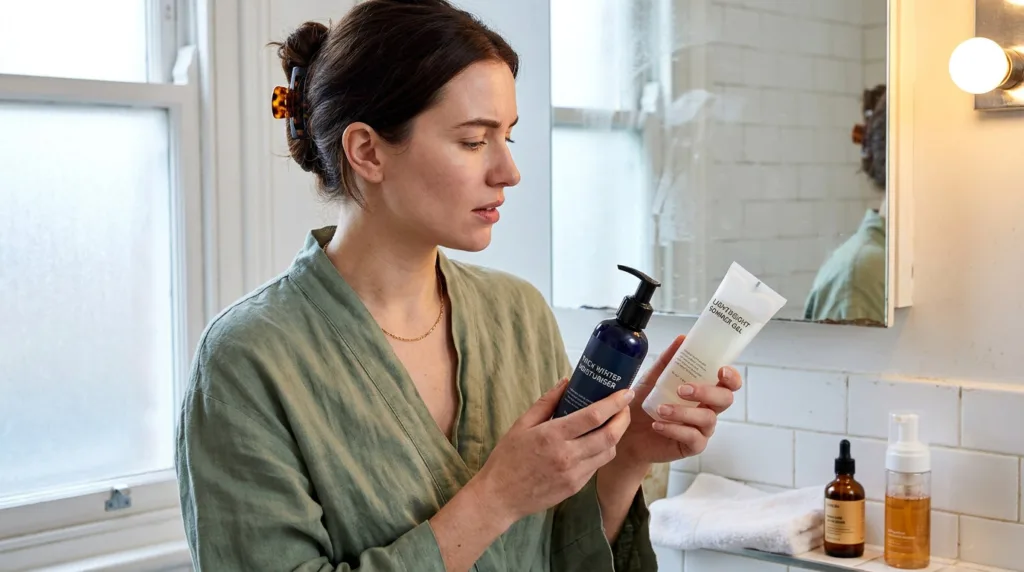
Oily skin does best with lightweight gel textures and niacinamide, which controls shine without clogging your pores further. Dry skin wants richer creams, ceramides, and hyaluronic acid layered underneath to stop that tight feeling by morning. Sensitive skin should skip fragrance entirely and stick to two or three products at most, adding anything new one at a time so you can actually tell what’s causing a reaction if one shows up.
By Age
In your 20s, focus on prevention. Antioxidants, SPF the next morning, and light hydration go a long way before you need anything stronger. In your 30s, retinol and peptides become more important as collagen production naturally starts slowing down. Past 40, richer moisturizers and consistent retinol use help offset slower cell turnover and the deeper fine lines that come with it. Your skin’s needs shift roughly every decade, so your routine should too.
Sleep Environment Secrets That Boost Your Glow

Your products only do half the job. What you sleep on, and how you sleep, matters just as much.
Pillowcase And Humidity
A silk pillowcase creates less friction than cotton, which cuts down on creases and moisture loss while you sleep. Running a humidifier in a dry bedroom stops your skin from losing water overnight, which is a common problem in winter or in air-conditioned rooms. Neither of these costs much, and both make a noticeable difference within a week or two. Small changes to your environment can outperform an expensive new serum.
Sleep Position And Screen Time
Sleeping on your back, instead of face-down, keeps your skin from pressing against fabric for hours at a stretch. Screen time right before bed raises your blue light exposure, and some research links that to oxidative stress in skin cells. Put your phone down thirty minutes before your routine starts. Keep your bedroom on the cooler side too, since an overheated room increases water loss through your skin overnight, leaving you puffier by morning.
Budget-Friendly Vs Splurge Product Swaps
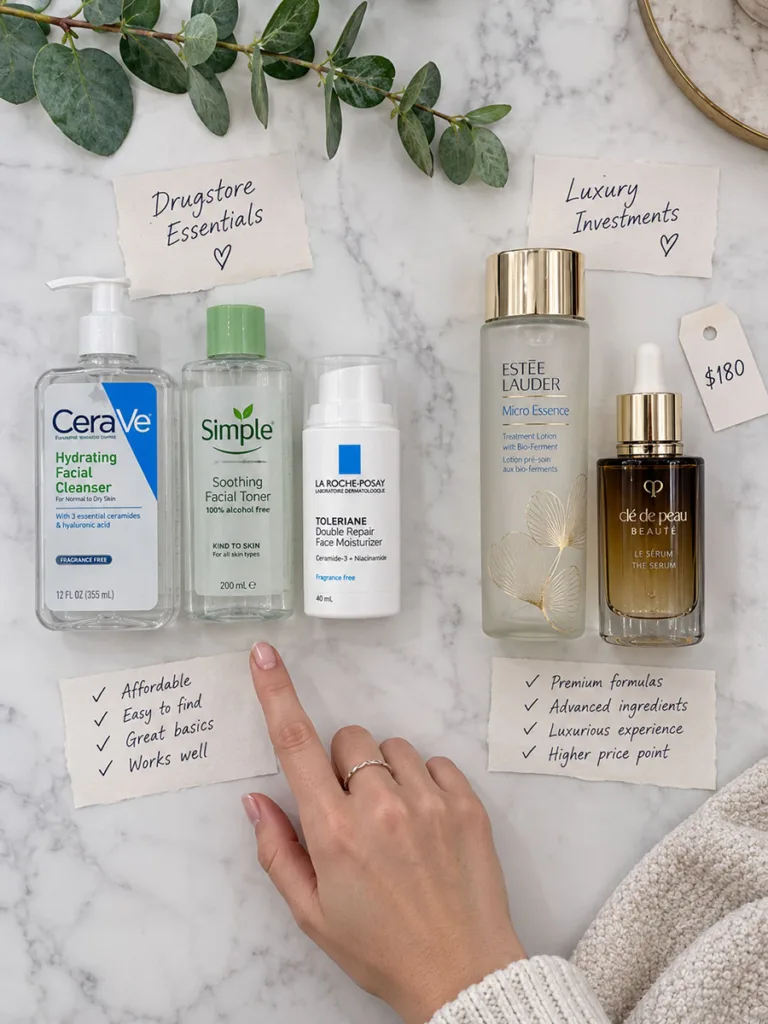
Great results don’t require a luxury budget. Here’s where to save, and where it’s actually worth spending more.
Where To Save
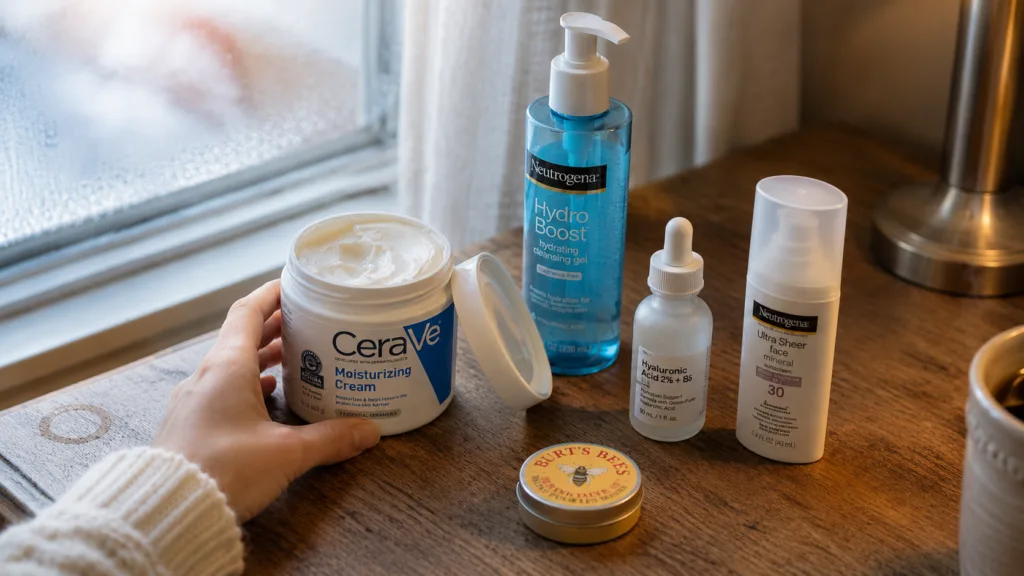
The Ordinary’s Niacinamide 10% + Zinc 1% costs around $7 and uses the exact concentration dermatology studies actually test, compared to $60-plus versions from prestige brands doing the same job. CeraVe and La Roche-Posay both sell ceramide moisturizers under $20 that match the barrier-repair ingredients found in $80 night creams. The concentration on the label matters far more than the logo on the bottle.
Where To Splurge
Save your bigger budget for one category: a retinol or peptide treatment, where formulation stability actually varies more between brands. Cheap retinol can degrade faster once opened, losing potency before you finish the bottle. Check the ingredient list and percentage first, always, before you check the price. A $12 serum with the right concentration usually beats a $60 version with weaker formulation and better marketing behind it.
Common Mistakes That Ruin Your Glow

Even a solid routine falls apart if these habits creep in.
- Sleeping In Makeup: It traps bacteria and oil against your skin for eight hours straight, which leads straight to dullness and breakouts.
- Over-Exfoliating: It strips your skin barrier, and the redness that follows looks like the opposite of glow.
- Skipping Moisturizer: Even on oily skin, this leads to rebound oil production the next day.
- Using Expired Products: Vitamin C serums especially oxidize and turn orange, wasting your money and irritating your skin instead of brightening it.
- Showering With Hot Water Before Bed: It strips your natural oils too. Rinse your face with lukewarm water instead.
When Will You See Results

Nobody gets glowing skin overnight in the literal sense, but the timeline moves faster than most guides admit. Most people notice smoother texture and less dullness within one to two weeks of sticking with this. Deeper changes, like faded dark spots or softer fine lines, usually take six to twelve weeks. Skin cell turnover takes about 28 days on average, and that process slows down even more after age 30.
Patience beats product count here, every time. There’s no real shortcut to glowing skin overnight, just a routine that compounds. Stick with fewer, well-chosen products for a full three months before you judge your results.
FAQs
1. What is the best night skin care routine for glowing skin?
Cleanse, treat with a serum suited to your skin, and seal it in with moisturizer. Rotate retinol and exfoliating acids on separate nights to avoid irritation.
2. Should I use retinol every night?
No. Start with two to three nights a week at 0.25% strength. Daily use often causes redness, peeling, and sensitivity, especially for beginners.
3. Do I need to wear sunscreen after using retinol?
Yes. Retinol increases sun sensitivity. Apply SPF 30 or higher the next morning, even on cloudy days or when staying mostly indoors.
4. Can I skip toner in my night routine?
Yes, if your cleanser already balances your skin. Toner mainly helps if your skin feels tight or dull right after cleansing.
5. Does sleeping position really affect skin?
Yes. Sleeping face-down presses skin against fabric for hours, creasing skin unevenly compared to sleeping on your back.
6. How long before I see glowing skin results?
Expect smoother texture within one to two weeks. Deeper changes like faded spots take six to twelve weeks of consistent care.
Conclusion
A nighttime skincare routine comes down to consistency, not a crowded shelf of products. Start tonight, even if you only have five minutes. Cleanse your face, apply one targeted serum, and seal it in with moisturizer. Add the rest of the twelve steps as you get more time, and follow the weekly plan to keep retinol and acids from colliding. Always pair a retinol night with SPF the next morning, patch test anything new before it touches your face, and give the full routine three months before you judge the results. Real change shows up on that timeline, not overnight.